57 lakh vehicles, half the time: The Samruddhi Mahamarg story of faster connectivity
Visualisation
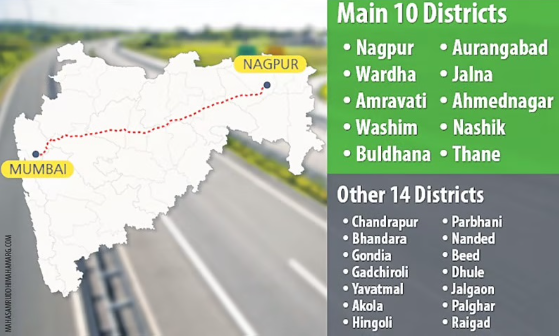
At a Glance
For a truck driver carrying goods from Nagpur to Mumbai, every hour saved on the road matters. For a family travelling across Maharashtra, a smoother journey means less fatigue and more time at the destination. For businesses, fewer delays can make the movement of goods more predictable. These everyday gains offer a more meaningful way to understand the impact of the Samruddhi Mahamarg than road length or construction costs alone.
The Hindu Hrudaysamrat Balasaheb Thackeray Maharashtra Samruddhi Mahamarg has changed the way people travel between Mumbai and Nagpur. The expressway has attracted growing traffic, with reports recording an annual increase of 57 lakh vehicle movements and an additional ₹495 crore in toll collections. These figures point to rising use of the corridor, although its real significance lies in what faster, more predictable travel can mean for commuters, transport operators and businesses.
More than 50,000 vehicles use the Samruddhi Mahamarg every day in 2026, transforming travel between Mumbai and Nagpur. The 701-km expressway provides a faster, smoother alternative to the older road network, cutting travel time and reducing congestion in towns and cities along the route.
Average vehicles per day
Source: MSRDC
Before the expressway, the Mumbai-Nagpur journey involved long stretches of conventional highways and frequent passage through or around urban centres. Traffic, uneven road conditions, intersections, and delays through cities made the journey considerably longer, often taking more than 16 hours. Heavy through-traffic also added to congestion for local commuters.
The Samruddhi Mahamarg has changed that pattern by diverting long-distance traffic away from densely populated urban areas. Connecting the Mumbai region with Nashik, Shirdi, Aurangabad, Jalna, Buldhana, Akola, Washim, Amravati, Wardha and Nagpur, the expressway enables vehicles to cover long distances with fewer interruptions. This has made inter-city travel more predictable while easing pressure on several towns that previously carried a significant share of highway traffic.
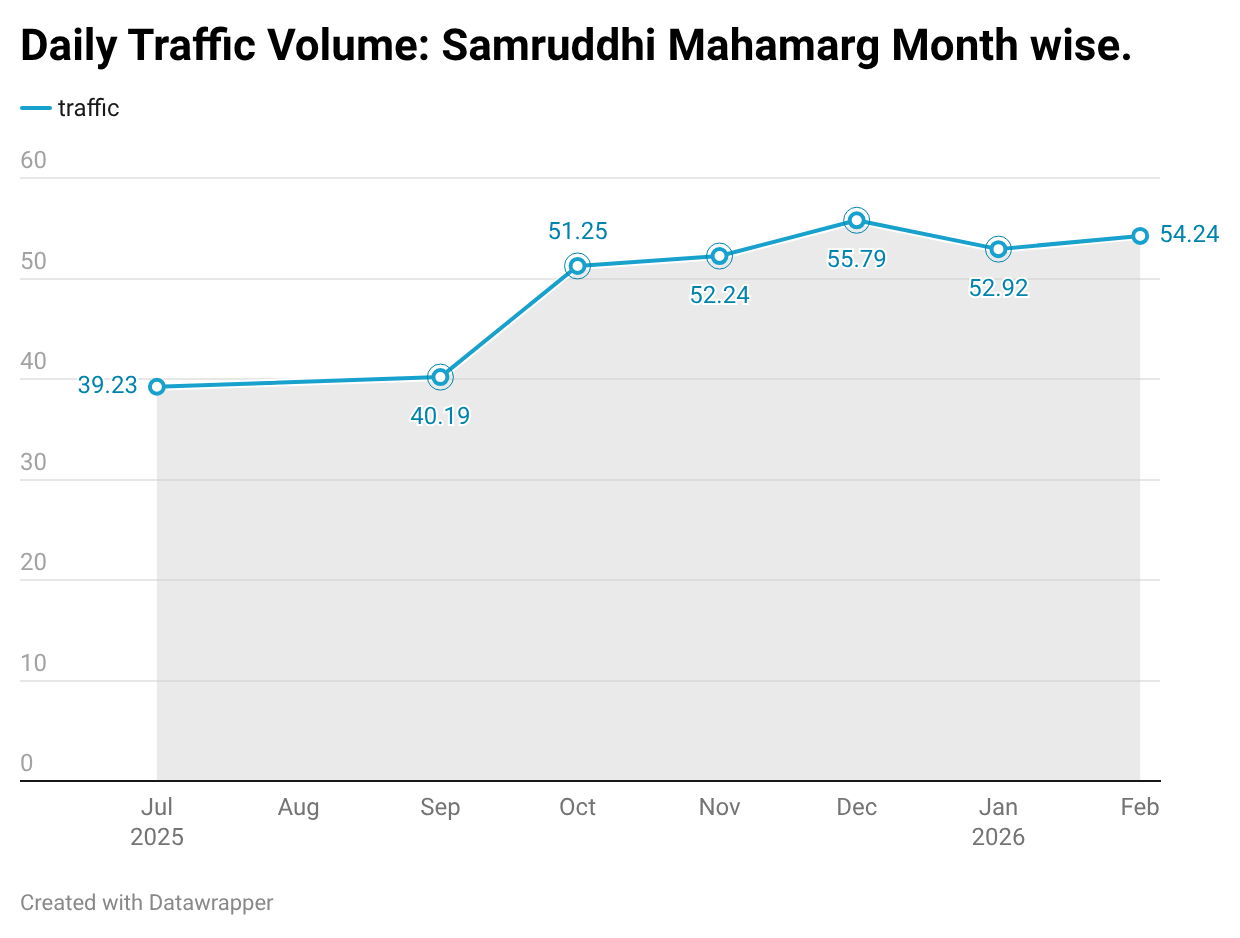
https://www.datawrapper.de/_/9T3JD/
Between July 2025 and February 2026, daily traffic on the Samruddhi Mahamarg increased by around 15,000 vehicles, reflecting its growing importance as a regional transport corridor. The 701-km expressway passes through 10 districts, improving access to the relatively less-developed regions of Vidarbha and Marathwada and strengthening their links with major markets and economic centres.
The expressway also connects with wider logistics networks, including the Delhi-Mumbai Industrial Corridor and the Jawaharlal Nehru Port region near Mumbai. Better connectivity is expected to support the movement of agricultural produce, encourage agro-based industries, attract investment and create employment opportunities along the corridor. Improved road access has also begun influencing commercial activity and real-estate development in several areas.
The Samruddhi Mahamarg was opened in stages. The first section, from Nagpur to Shirdi, opened in December 2022, followed by the Shirdi-Nashik section in May 2023. The final section, completing the Mumbai-Nagpur connection, was opened in June 2025. With the entire corridor operational, the expressway now provides a continuous high-speed link between the Mumbai metropolitan region and Nagpur, while improving connectivity for the districts and regions along its route.
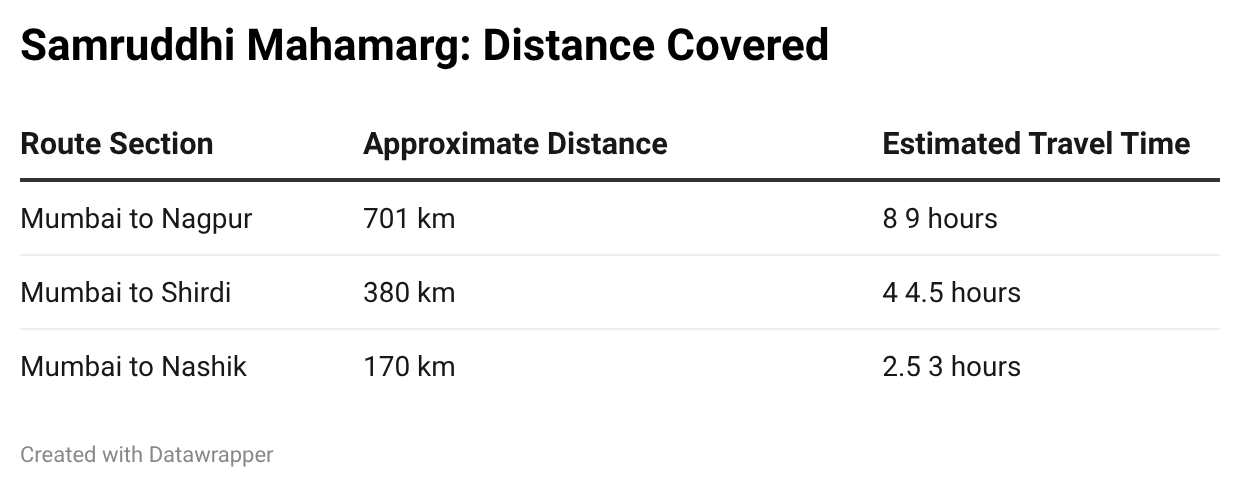
https://www.datawrapper.de/_/F9NrK/
Saving time, fuel and travel costs
The biggest advantage of the Samruddhi Mahamarg is the sharp reduction in travel time between Mumbai and Nagpur. The 701-km journey, which earlier could take more than 16 hours because of congestion, city traffic, intersections, and slower road sections, can now be completed in around 8 to 9 hours. The improvement is even more significant on shorter journeys. Mumbai-Shirdi, a distance of about 380 km, can be covered in around 4.5 hours, while the 170-km Mumbai-Nashik journey takes about three hours.
The smoother alignment and uninterrupted high-speed travel also reduce repeated braking, acceleration and idling, helping vehicles use less fuel. For private motorists, transport operators and freight vehicles, the combination of shorter journey times and more consistent driving conditions translates into savings in both time and fuel. Faster movement of goods also improves the efficiency of supply chains, particularly for agricultural produce and other time-sensitive commodities.
The expressway's electronic tolling system further supports uninterrupted travel. FASTag enables toll collection without stopping at conventional toll booths, allowing vehicles to maintain smoother movement along the corridor. Together, faster travel, reduced stoppages, and more efficient fuel use have made the Samruddhi Mahamarg an important alternative for long-distance travel across Maharashtra.
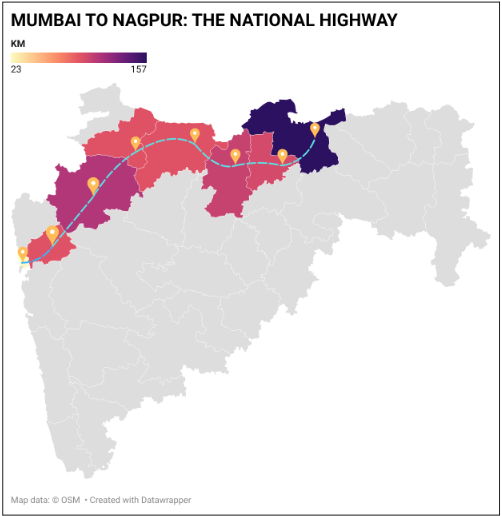
https://www.datawrapper.de/_/z3bMY/
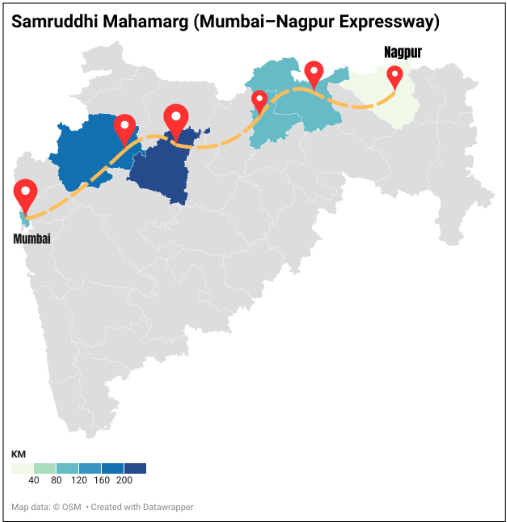
The key difference lies in how the two routes handle long-distance traffic. The traditional highway serves both local and inter-city traffic, so vehicles travelling across Maharashtra often have to negotiate busy town stretches, junctions, and mixed traffic. This makes journey times less predictable and adds frequent interruptions to a long-distance trip.
The Samruddhi Mahamarg separates through-traffic from local movement. As a controlled-access expressway with limited entry and exit points, it allows vehicles to remain on a dedicated corridor for most of the journey instead of repeatedly entering urban roads. This design improves traffic flow, reduces unnecessary stops, and allows drivers to maintain a steadier speed.
The result is more than a shorter journey. It means fewer interruptions, more predictable travel, and lower fuel consumption, particularly for vehicles covering the full length of the corridor.
https://www.datawrapper.de/_/wgt5C/
The Samruddhi Mahamarg took less time because it has access to speeds of up to 100 km per hour. There are no barriers in front of us on the road. The smooth road makes the journey enjoyable. The national highway is used for city routes, and that takes time; it accounts for more than 50%.
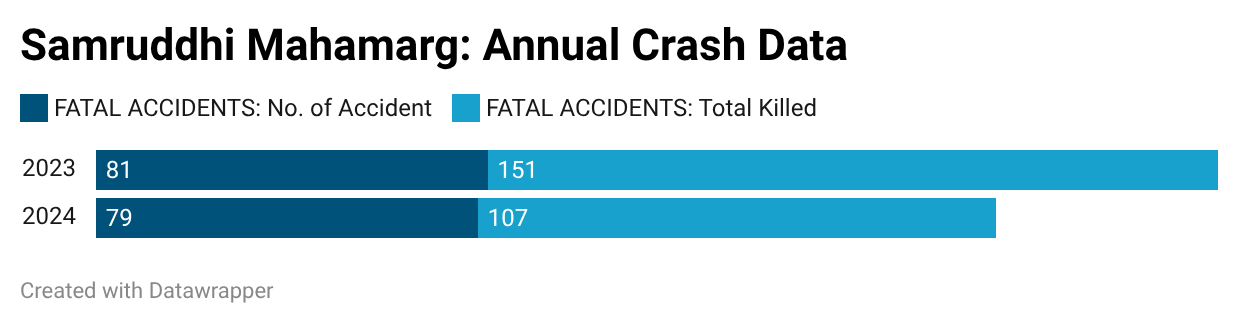
Having fewer relations with cities decreases the number of accidents on the road. From 2023 to 2024, the number of accident cases decreased, and the number of deaths decreased by 30.14%. On the other hand, the number of serious injuries has increased because of the high-speed behaviour of the drivers.
Sources
2. https://timesofindia.indiatimes.com/city/aurangabad/samruddhi-traffic-increases-by-57-lakh-in-a-year-toll-collection-by-rs-495-crore/articleshow/130292427.cms
Frequently Asked Questions
1. How much travel time does the Samruddhi Mahamarg save between Mumbai and Nagpur?
The 701-km expressway cuts travel time nearly in half, reducing the journey from over 16 hours on traditional highways to just 8 to 9 hours. This sharp reduction is achieved because the controlled-access design allows continuous speeds of up to 100 km per hour without the delays of city traffic, intersections, or traditional toll booth stoppages.
2: Which major regions and economic networks does the expressway connect?
The Samruddhi Mahamarg passes through 10 districts, seamlessly linking the Mumbai metropolitan region with Nashik, Shirdi, Aurangabad, Jalna, Buldhana, Akola, Washim, Amravati, Wardha, and Nagpur. By improving access to the Vidarbha and Marathwada regions, it integrates them into major markets like the Delhi-Mumbai Industrial Corridor and the Jawaharlal Nehru Port region.
3: How has the fully operational expressway impacted traffic volume and road safety?
By early 2026, daily traffic surpassed 50,000 vehicles, marking an increase of about 15,000 daily vehicles since mid-2025. While bypassing busy urban centers successfully decreased accident fatalities by 30.14% from 2023 to 2024, the high-speed behavior of drivers has unfortunately led to an increase in serious injuries.