A year of the train to Sairang: What the figures show and what they skip
Visualisation
At a Glance
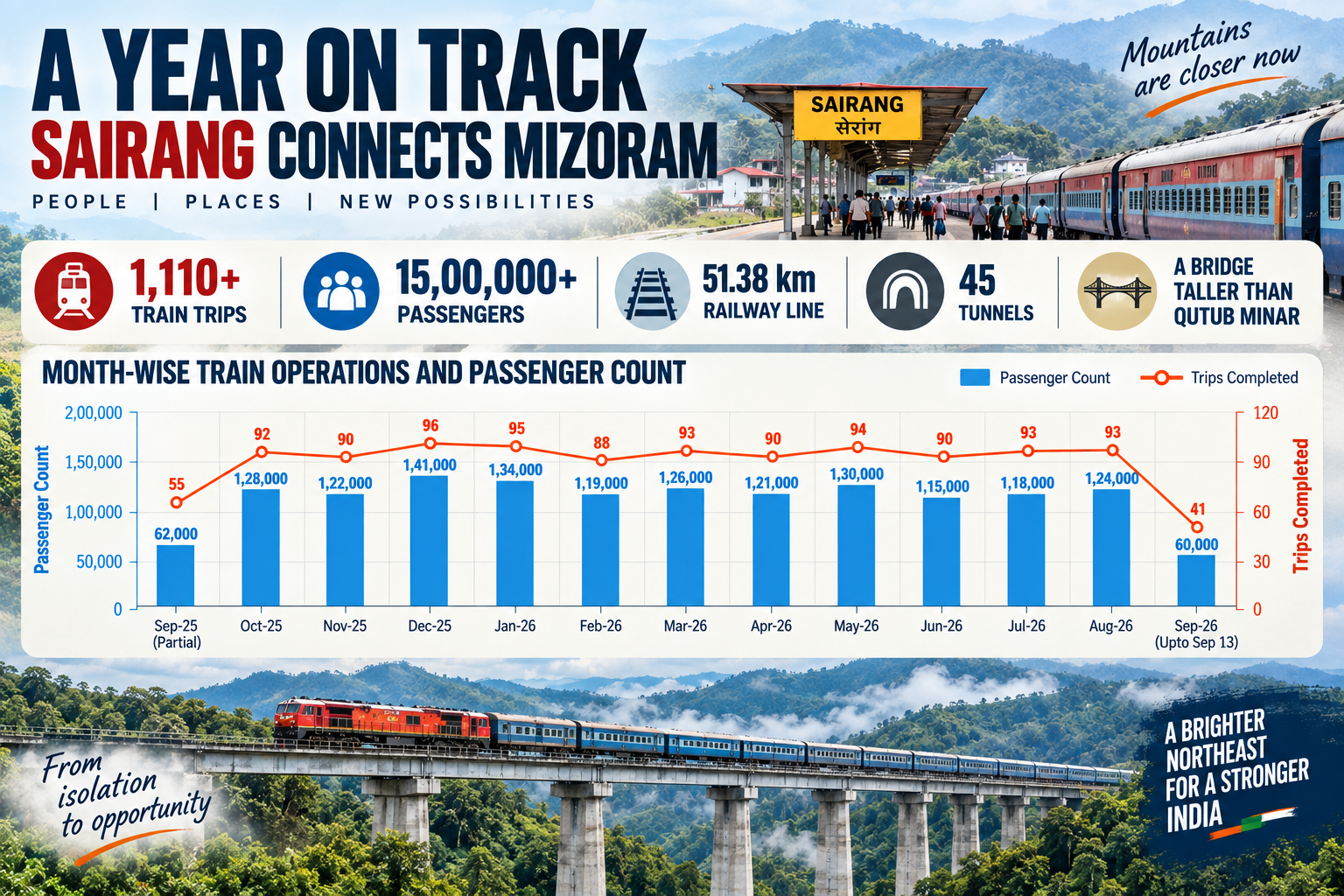
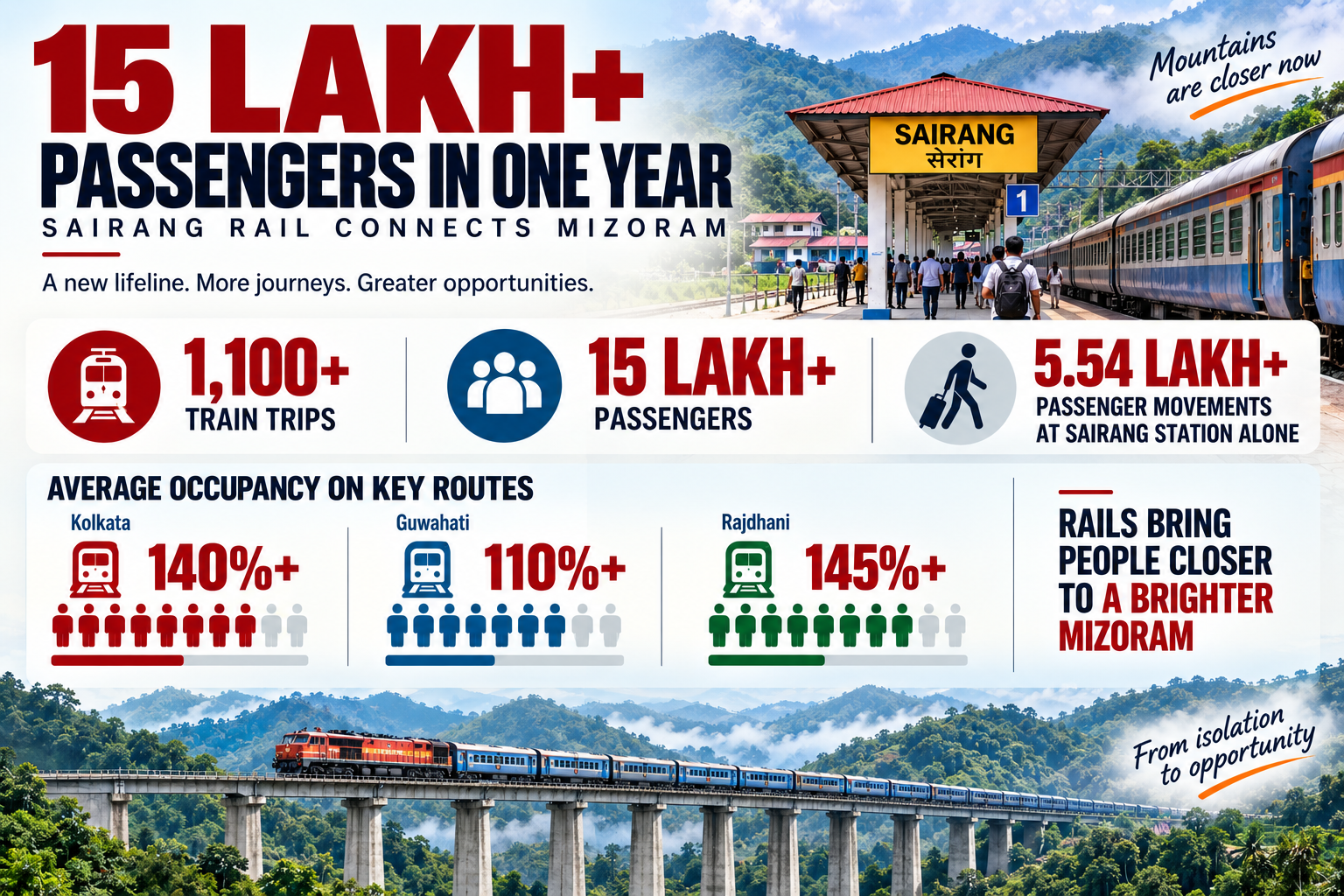
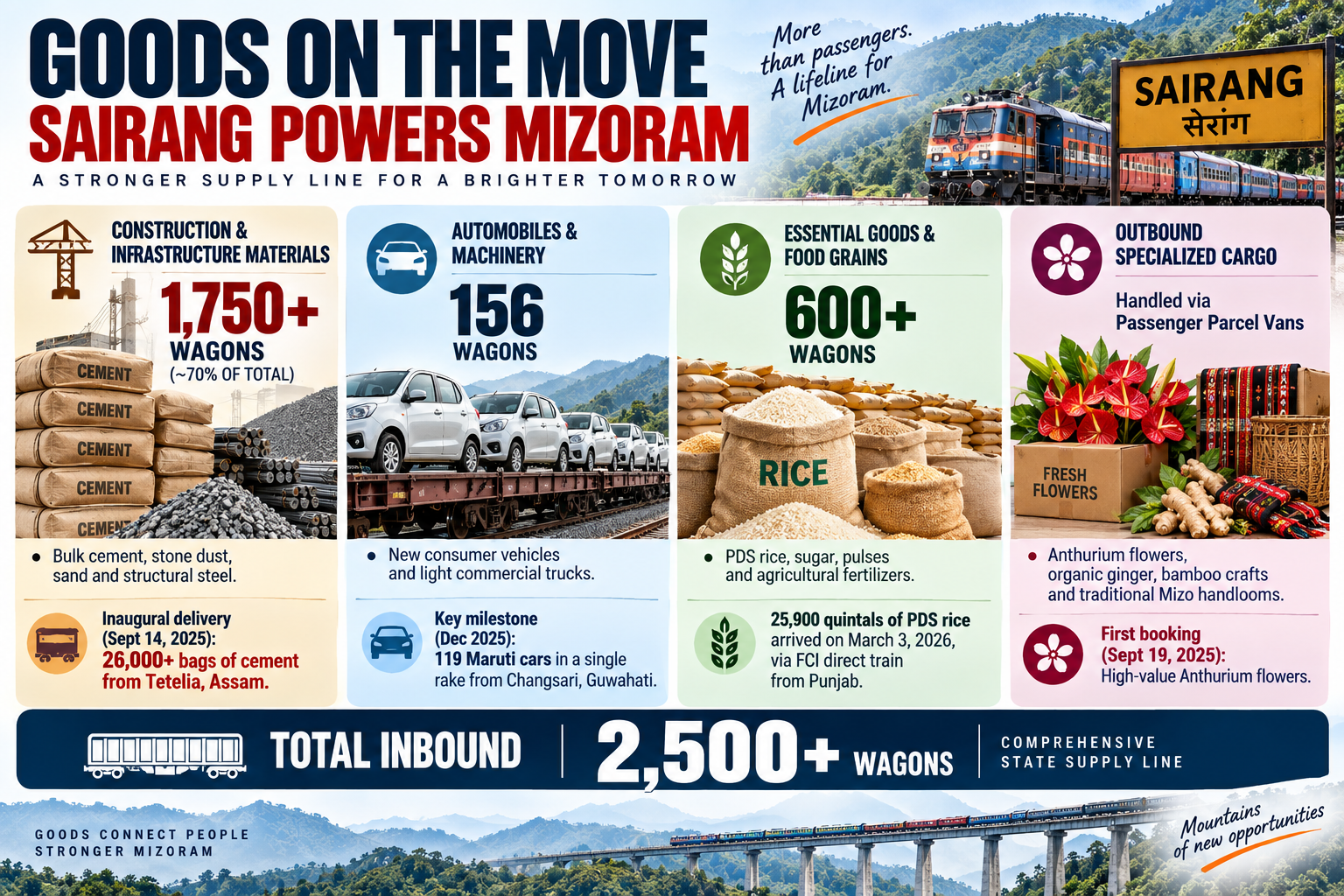
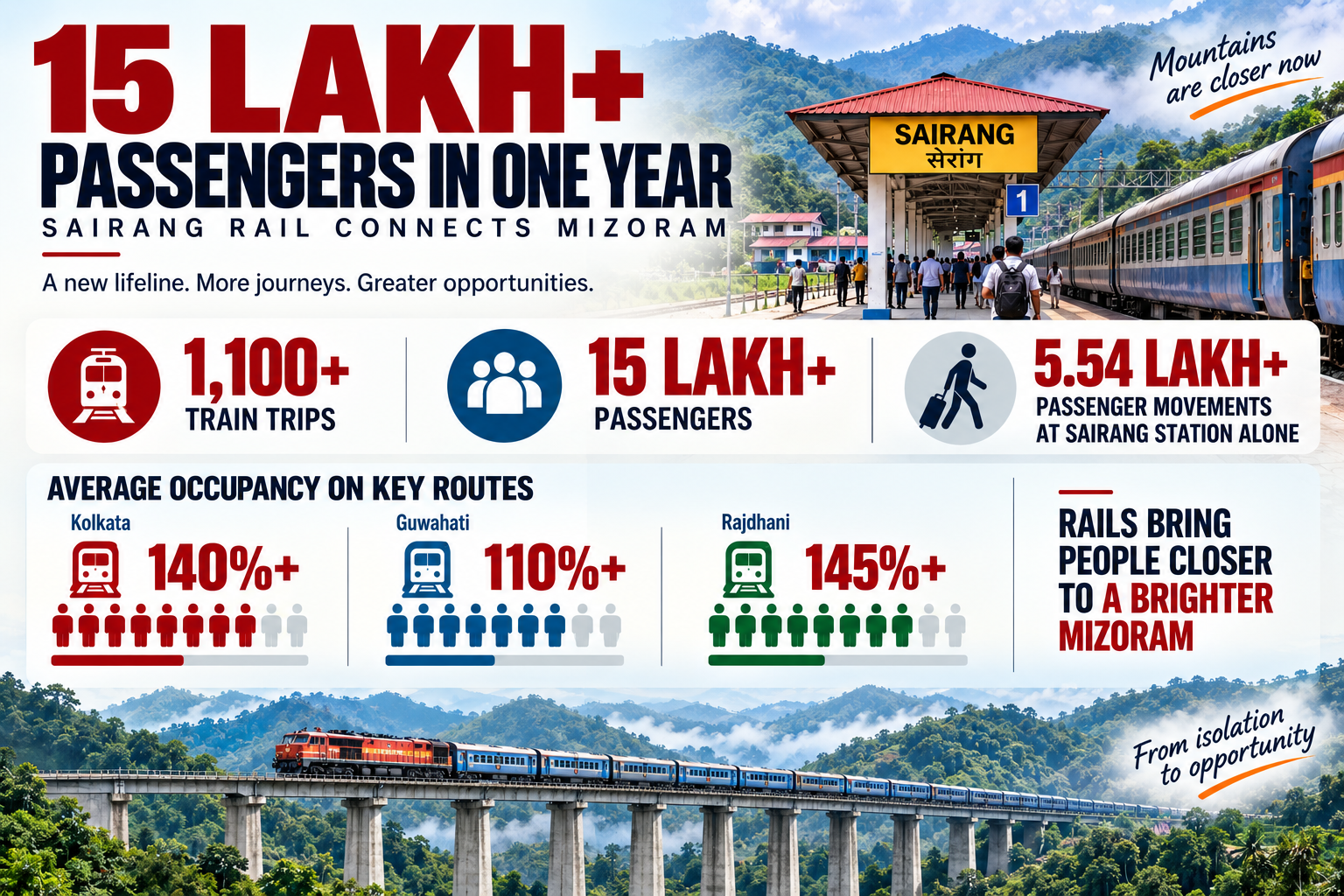
Sairang was a blank spot on India's railway map until last September. For generations, getting in or out of Aizawl meant a flight ticket most families couldn't stretch to afford. Or worse, it meant a grueling road journey that completely vanished the moment the monsoon rains arrived. On September 13, 2025, everything changed. The Prime Minister finally flagged off the first train on a historic 51.38-km line. It cuts through 45 tunnels and crosses a bridge taller than the Qutub Minar. It was one of the engineering marvels. It was, by any measure, a hard line to build through that terrain. One year later, the ridership numbers prove just how desperately this connection was needed. Now the Railway Ministry has put out its one-year report card, and the numbers are big. Over 1,100 train trips. More than 15 lakh passengers. Look closely at how people moved through the year. December was an absolute peak with 96 trips and 1.41 lakh passengers. That meant nearly 1,470 people packed every single average train. It was the ultimate winter homecoming. Students, workers, and holiday travelers filled the carriages. January stayed remarkably strong, boosted by the new Silchar passenger service linking the Barak Valley directly to Mizoram. Even during the heavy monsoon months of June through August, the trains kept moving. While landslides choked the parallel highways, the railway averaged 1,270 to 1,330 passengers per train. The weather used to isolate the state for weeks. This year, the trains just kept rolling. The Kolkata train was running at 140 percent occupancy, the Delhi Rajdhani at 145 percent. Over 2,500 wagons of freight moved in a year. The freight numbers tell an even more powerful story of economic transformation. Out of 2,500-plus wagons arriving in Sairang, roughly 70% carried essential building materials. Cement, stone dust, sand, and steel poured in. These supplies replaced decades of expensive, trucked-in goods that slowed down local development. The impact was immediate. Just one day after opening, a cargo rake delivered over 26,000 bags of cement from Guwahati. Automobiles arrived by rail too, including a December rake carrying 119 pristine Maruti cars. Food security got a massive upgrade as well. In March, a direct Food Corporation of India train brought over 25,900 quintals of rice from Punjab straight to local families, alongside steady shipments of sugar and pulses. The outbound journeys are smaller, but they carry immense hope. In September 2025, the very first parcel booking from Sairang was a batch of delicate Anthurium flowers bound for Delhi. For the first time, a high-value, perishable crop found a fast, reliable route out of the hills. Ginger, bamboo crafts, and Mizo handloom goods soon followed. Volume is still growing, but the door is finally wide open. The Rs 54 crore collected in ticket sales sounds impressive at first glance. Yet, the report leaves out a crucial part of the equation: the actual cost of running three long-distance trains and a busy freight corridor through 45 mountain tunnels. For decades, remote border states like Mizoram faced an artificial separation from the national mainstream, bound by unforgiving terrain and logistical isolation that restricted both human mobility and economic self-reliance. From this ideological vantage point, infrastructure is a vital instrument of national integration and security. Taming 45 tunnels and bridging valleys deeper than historical landmarks is an expression of supreme national will. Critics may tally the construction overruns or point out that passenger revenues do not instantly offset operating expenses, but that misses the deeper civilisational imperative. A nation is bound together not by balance sheets alone, but by ensuring that a citizen in Aizawl shares the same access to the national capital, markets, and educational hubs as anyone else in the heartland. The steady stream of food grains, steel, and cement flowing into the hills—and the historic dispatch of local flowers and handlooms out to Delhi—signals the dismantling of physical barriers that once fostered alienation. Ultimately, this railway line represents a solemn promise kept: weaving the frontier regions securely into the fabric of a confident, self-reliant India.Fueling growth and food security
Opening doors for local producers