Beyond the Taj: India’s forgotten heritage finds global recognition
Visualisation
At a Glance
On September 4, UNESCO’s World Heritage Centre added four Indian entries to the country’s Tentative List: the Rangpur–Sivasagar ensemble in Assam, the colonial penal settlement of the Andamans, the Nicobarese cultural landscape, and the painted havelis of Shekhawati in Rajasthan.
At first glance, it may seem like a routine heritage update. In reality, it marks another step in a much larger shift in how India’s civilisational story is being represented to the world.
The more significant story is the widening map of the civilisation India’s recognised heritage now represents. Slowly, the international idea of Indian heritage is moving beyond a familiar handful of imperial monuments to acknowledge something the country has always possessed: extraordinary civilisational depth, regional diversity and continuity.
A civilisation written in stone
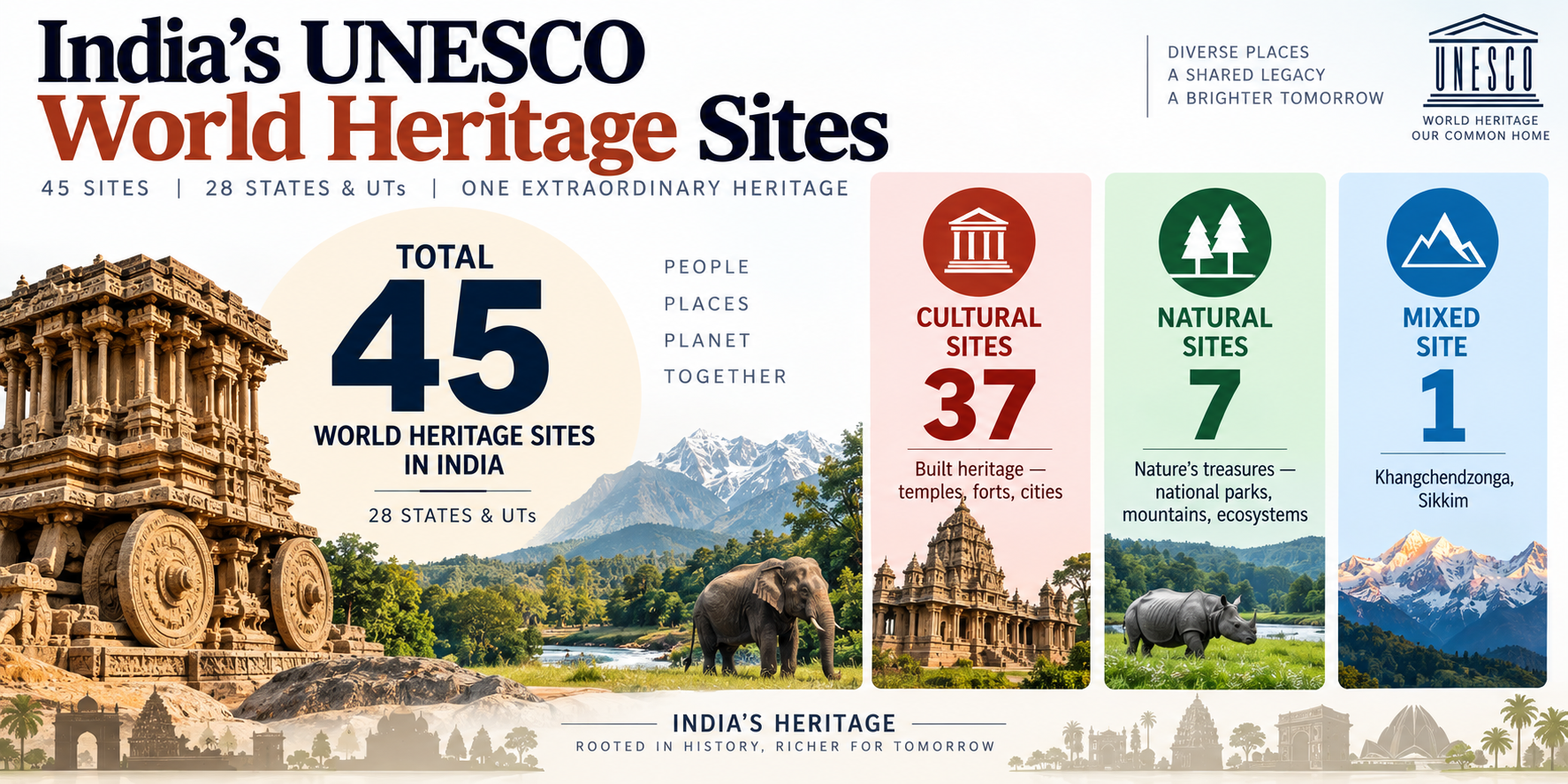
India has 45 World Heritage Sites, of which 37 are cultural, seven natural and Khangchendzonga is recognised under both categories. The ratio says something about how Bharat has staked its claim on world memory: through what its people built, generation after generation, more than through the land that surrounded them. This is a civilisation with stonework going back to the third century BCE, running all the way to the concrete geometries Le Corbusier raised in Chandigarh.
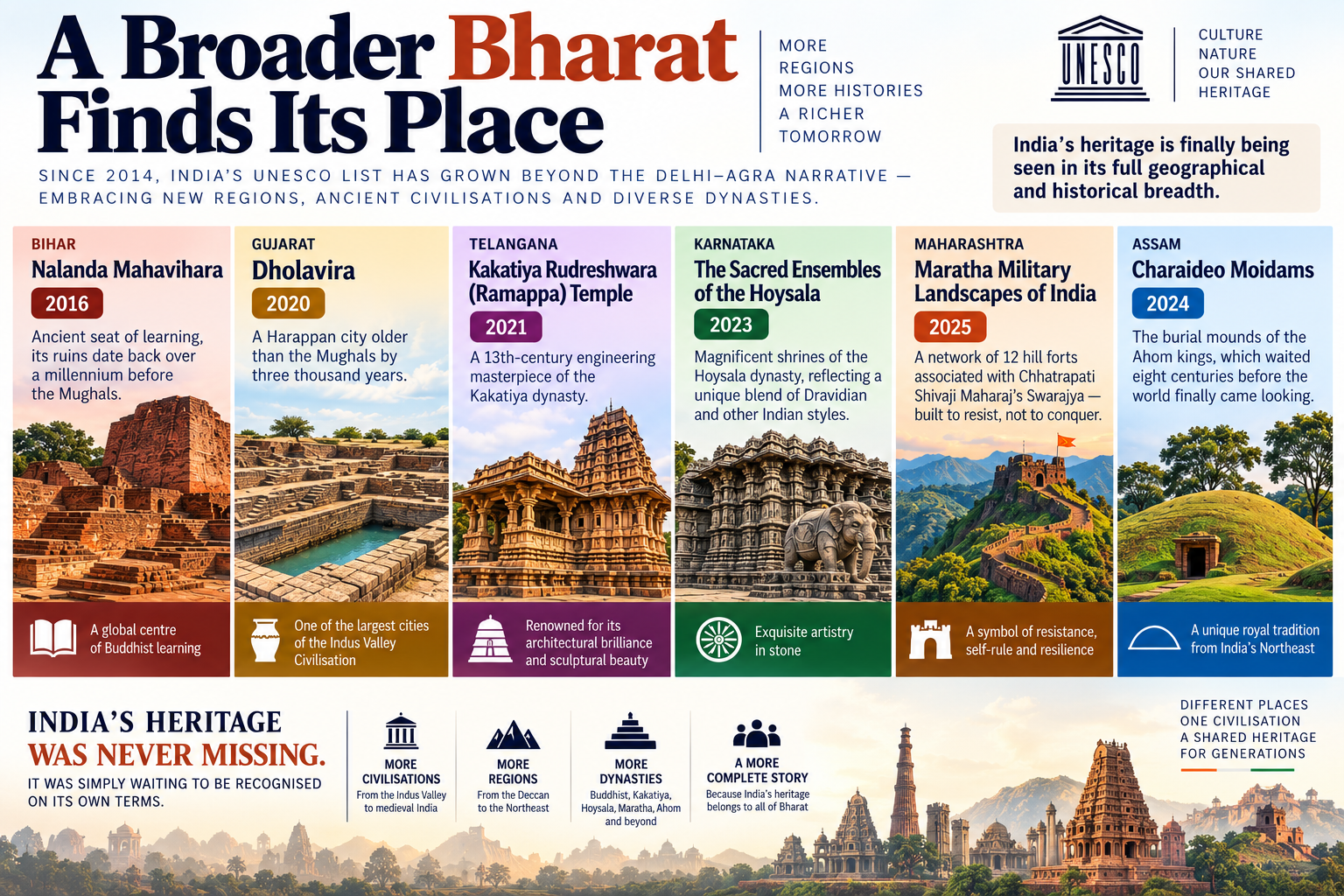
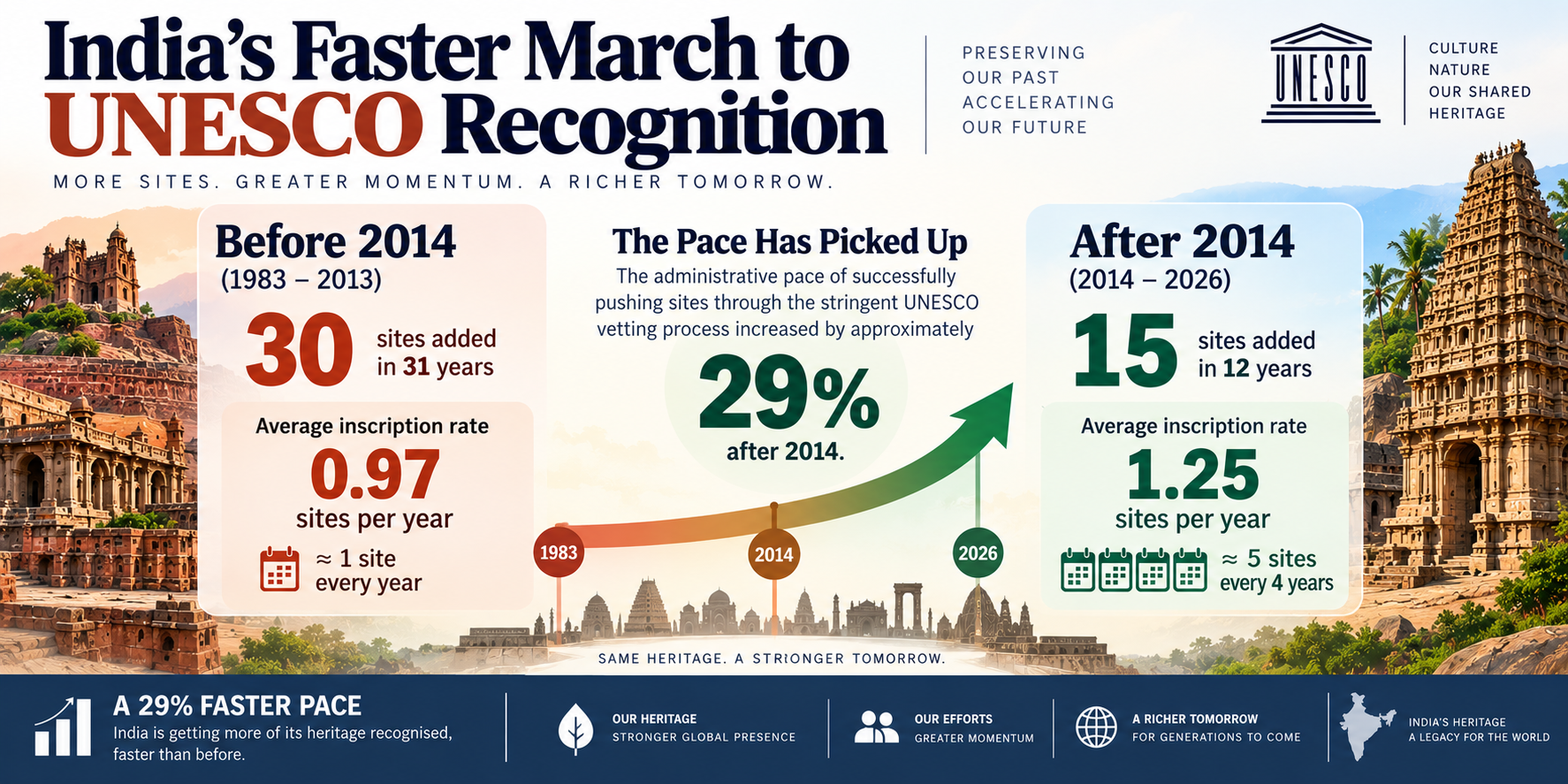
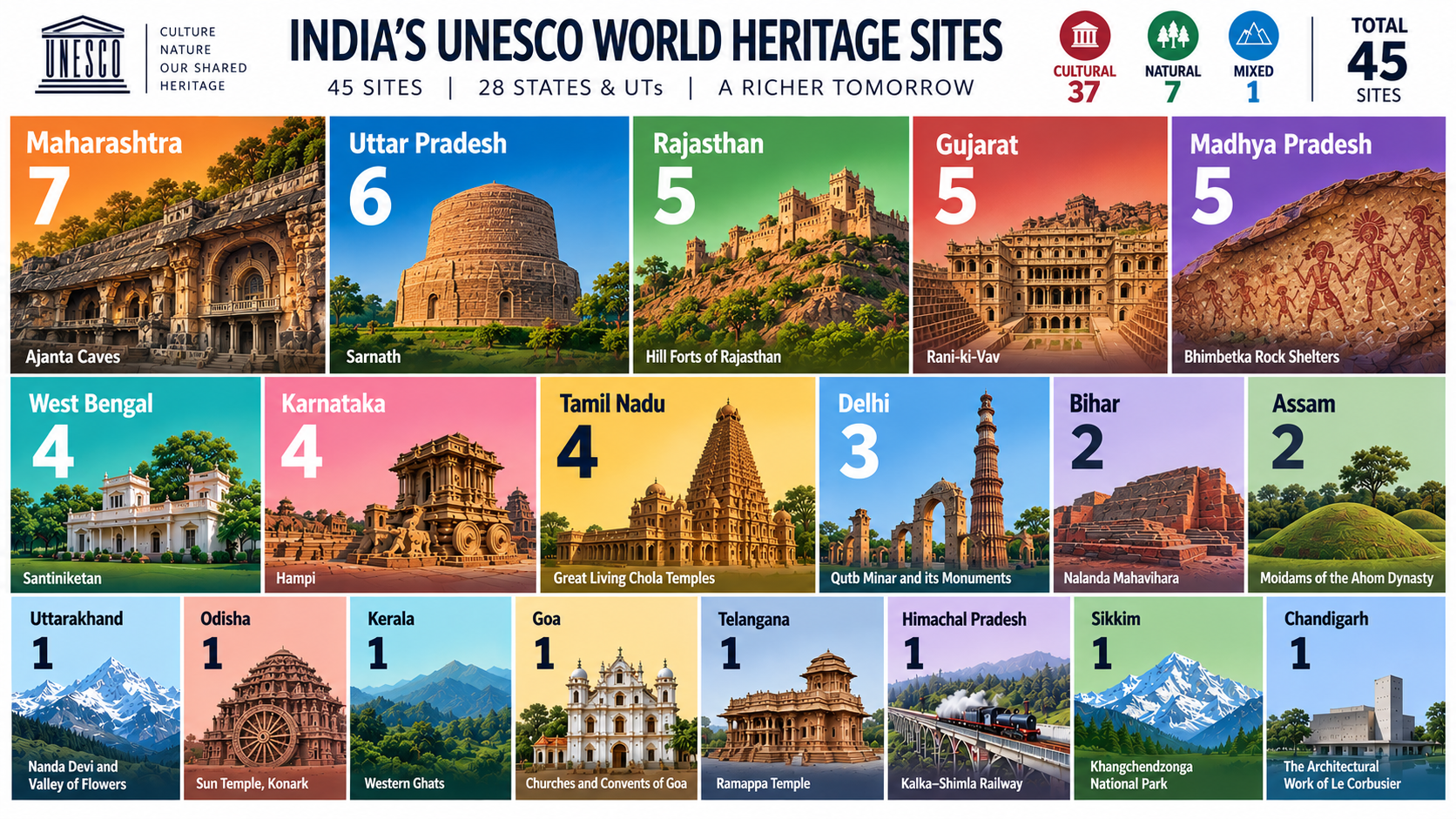
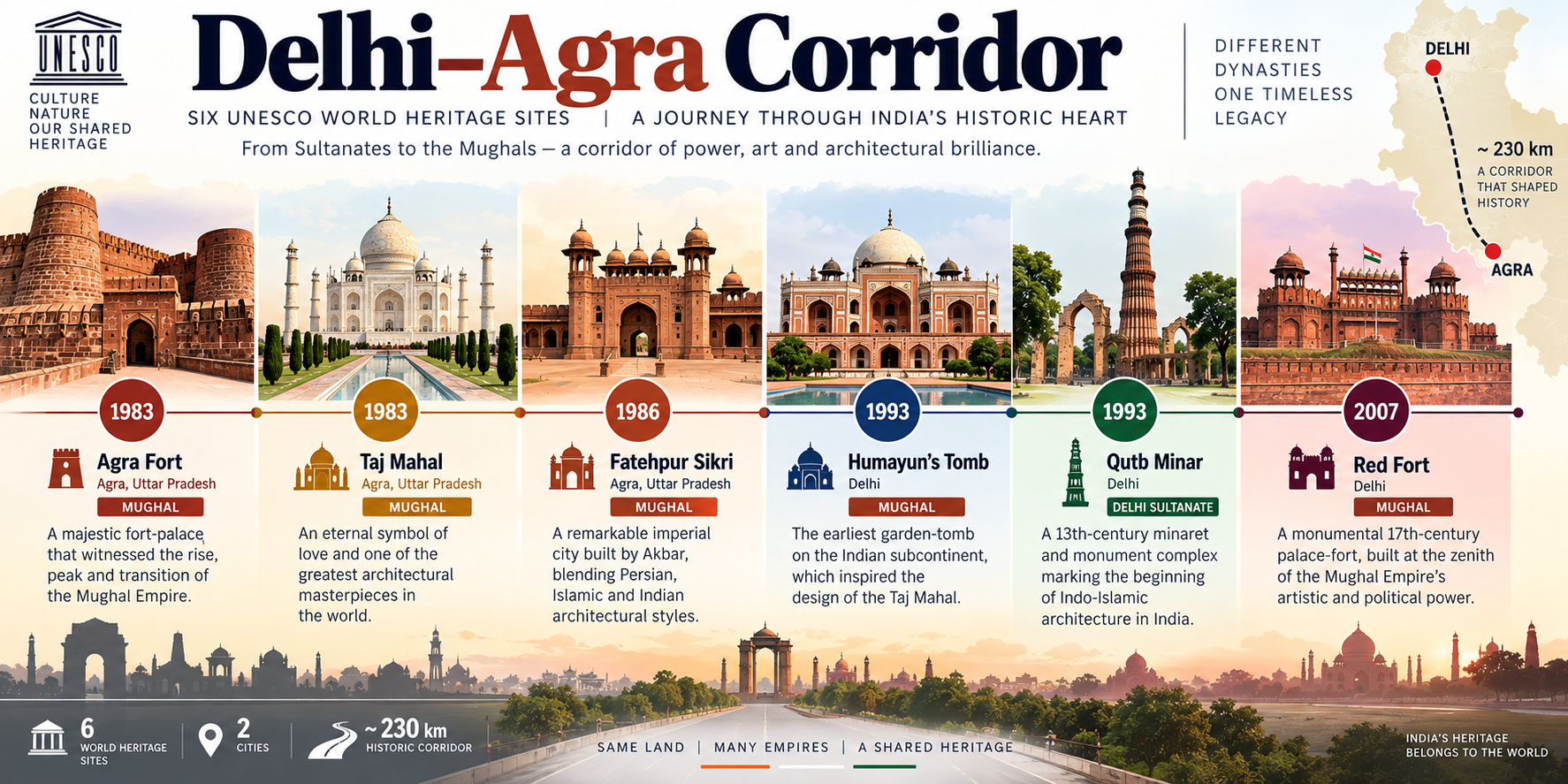
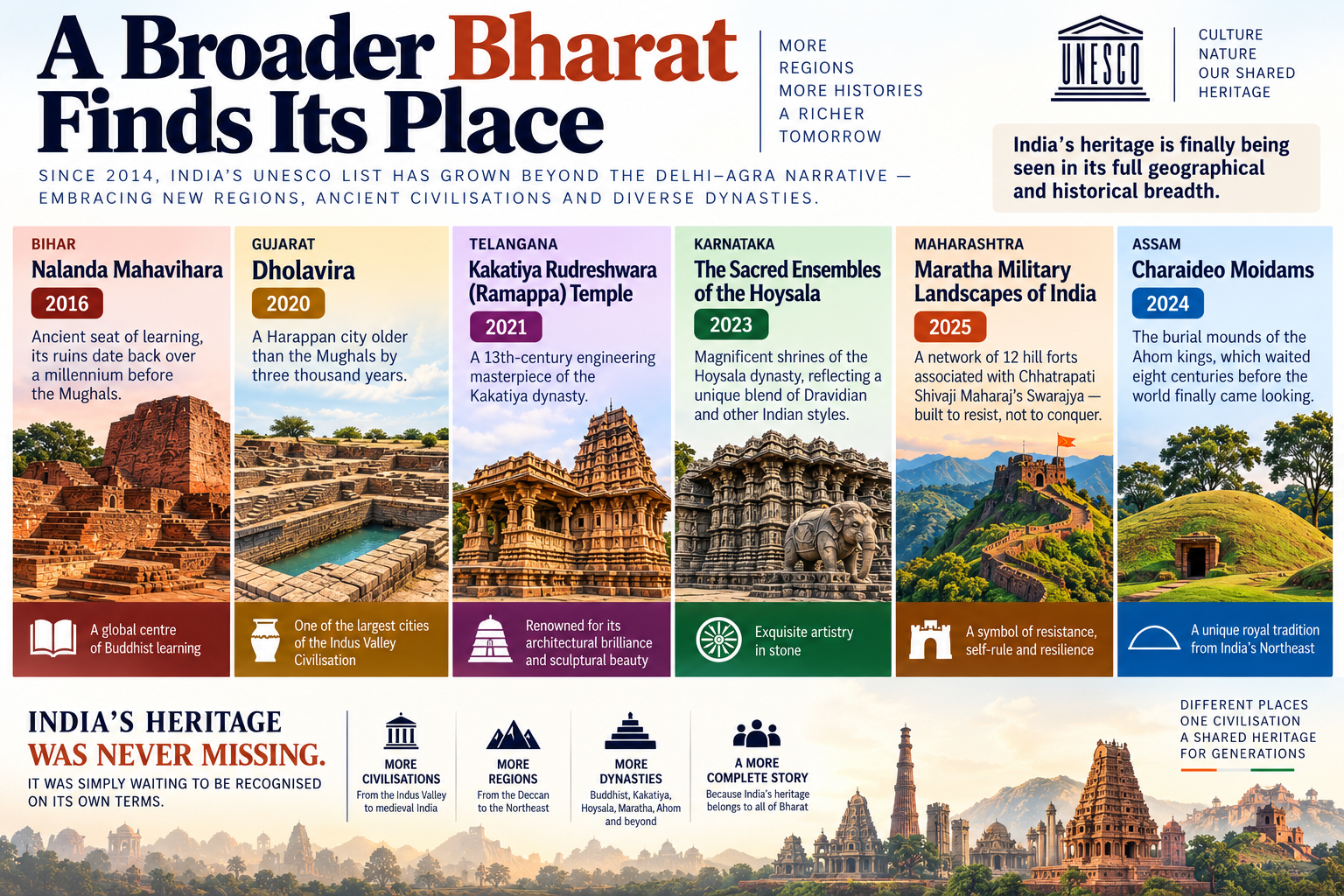
Very few countries can point to that kind of continuous record. Bharat has had it all along. It is only now getting shown in full, instead of the cropped version the world had settled for. Maharashtra leads the country with seven World Heritage Sites, including Ajanta, Ellora, Elephanta, Mumbai’s Victorian Gothic and Art Deco ensembles, and the Maratha Military Landscapes associated with the legacy of Swarajya. Tamil Nadu and Gujarat follow with five each, while Uttar Pradesh, Karnataka and Rajasthan have four apiece. Assam’s rise is especially significant. Long marginal to India’s UNESCO map, it now has three World Heritage Sites, including the Moidams of Charaideo, inscribed in 2024. Their recognition marked an important shift for the Northeast: a region often celebrated internationally for forests and biodiversity was now also being acknowledged for its political history, architecture and civilisational legacy. That change in the map tells a larger story. India’s heritage representation is gradually moving beyond a handful of familiar centres and beginning to reflect the cultural depth of regions that remained underrepresented for decades. Agra Fort and the Taj Mahal entered UNESCO’s World Heritage List in 1983, followed by Fatehpur Sikri in 1986, Humayun’s Tomb and the Qutb Minar in 1993, and the Red Fort in 2007. Over time, this gave the Delhi–Agra corridor an outsized place in the global imagination of Indian heritage, even though these monuments represented only one part of a far older and far more diverse civilisational landscape. These monuments unquestionably deserve their place. But they could never, by themselves, tell the story of a civilisation extending across thousands of years and dozens of distinctive cultural regions. Bharat has always possessed that depth; what is changing now is the extent to which the world is finally seeing its heritage in its full civilisational breadth, rather than through a narrow and incomplete frame. Recent inscriptions have begun correcting that imbalance. Nalanda represents an intellectual tradition that flourished centuries before the Mughal age. Dholavira carries the story back to the Harappan civilisation. Telangana’s Ramappa Temple speaks for the Kakatiyas; Karnataka’s Sacred Ensembles of the Hoysalas celebrate another distinctive architectural tradition. Then came the Moidams of Charaideo in Assam in 2024, monumental burial mounds associated with the Ahom dynasty. Their inscription was especially significant for the Northeast, a region too often represented internationally through its biodiversity while its political, architectural and cultural history remained less visible. Seen in this context, the latest Tentative List additions become more interesting. The Nicobarese nomination expands the meaning of heritage beyond masonry, recognising a living cultural relationship between community, landscape and sea. The Andaman penal settlement carries memories of colonial repression and resistance. Shekhawati brings merchant culture and extraordinary painted havelis into focus. Rangpur–Sivasagar turns attention again towards Assam and the political world of the Ahoms. Together, they suggest that heritage need not belong only to emperors or monumental capitals. It can survive in a prison cell, a painted courtyard, an island community’s traditions or the remains of a regional kingdom. “Vikas bhi, virasat bhi” (development alongside heritage) has become a familiar phrase. Its real test, however, lies beyond slogans. A civilisation cannot move confidently towards the future while remembering only selected fragments of its past. Conservation, documentation and recognition must extend to regions and traditions that remained outside the dominant narrative for decades. That is what makes India’s expanding heritage map important. The Taj remains. So do Agra, Delhi and the great monuments already celebrated across the world. But around them, another India is becoming increasingly visible: Harappan cities, Buddhist universities, southern temples, Maratha forts, Ahom burial grounds, island communities and painted desert towns. Maharashtra leads, and the map shows why
When ‘heritage’ meant one corridor
The map begins to widen
Four new names
Vikas Bhi, Virasat Bhi
Sources
https://x.com/kishanreddybjp/status/2096525178327163089?s=20
https://whc.unesco.org/en/statesparties/in
https://www.pib.gov.in/newsite/PrintRelease.aspx?relid=200305®=48&lang=2
https://asi.nic.in/pages/World-Heritage/HQ
https://www.pib.gov.in/PressReleasePage.aspx?PRID=2243788®=48&lang=2