Delhi Metro moves millions on time
Visualisation
At a Glance
Everyone had warned her about Delhi before she arrived. The traffic that seemed to obey no lane, the horns that began before sunrise and carried on through the day, the sense that the entire city ran on a kind of organised chaos that no outsider could quite decode. Sarah had prepared herself for that version of Delhi, the one from the videos her friends kept sending her, usually with laughing emojis attached.
So when she came down the escalator into Rajiv Chowk station, she expected the chaos to follow her underground.
Instead, she found a quiet, gleaming platform and a small crowd waiting with a patience that seemed almost out of place. Then the doors opened, and her first surprise was not the crowd. It was the clock.
The punctuality surprise
The electronic board above the platform showed 10:47. At 10:47, almost to the second, the train glided into the station and stopped, its doors lining up neatly with the platform markings. There was no hurried announcement, no visible scramble, no sign that anything had gone wrong.
Sarah checked her phone out of habit, half expecting a delay notification that never came. A fellow passenger noticed her expression and casually mentioned that the Delhi Metro was known for its remarkable punctuality.
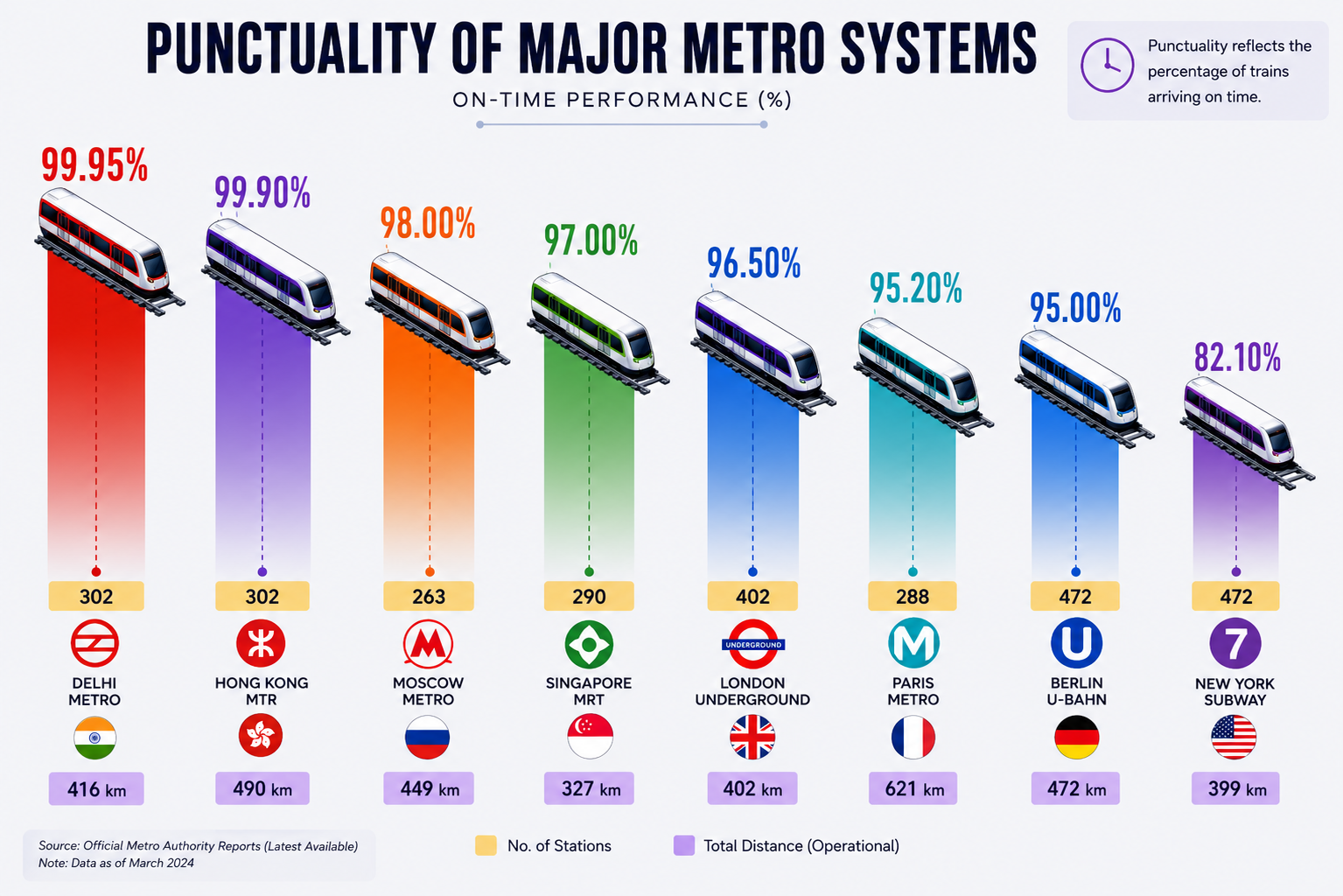
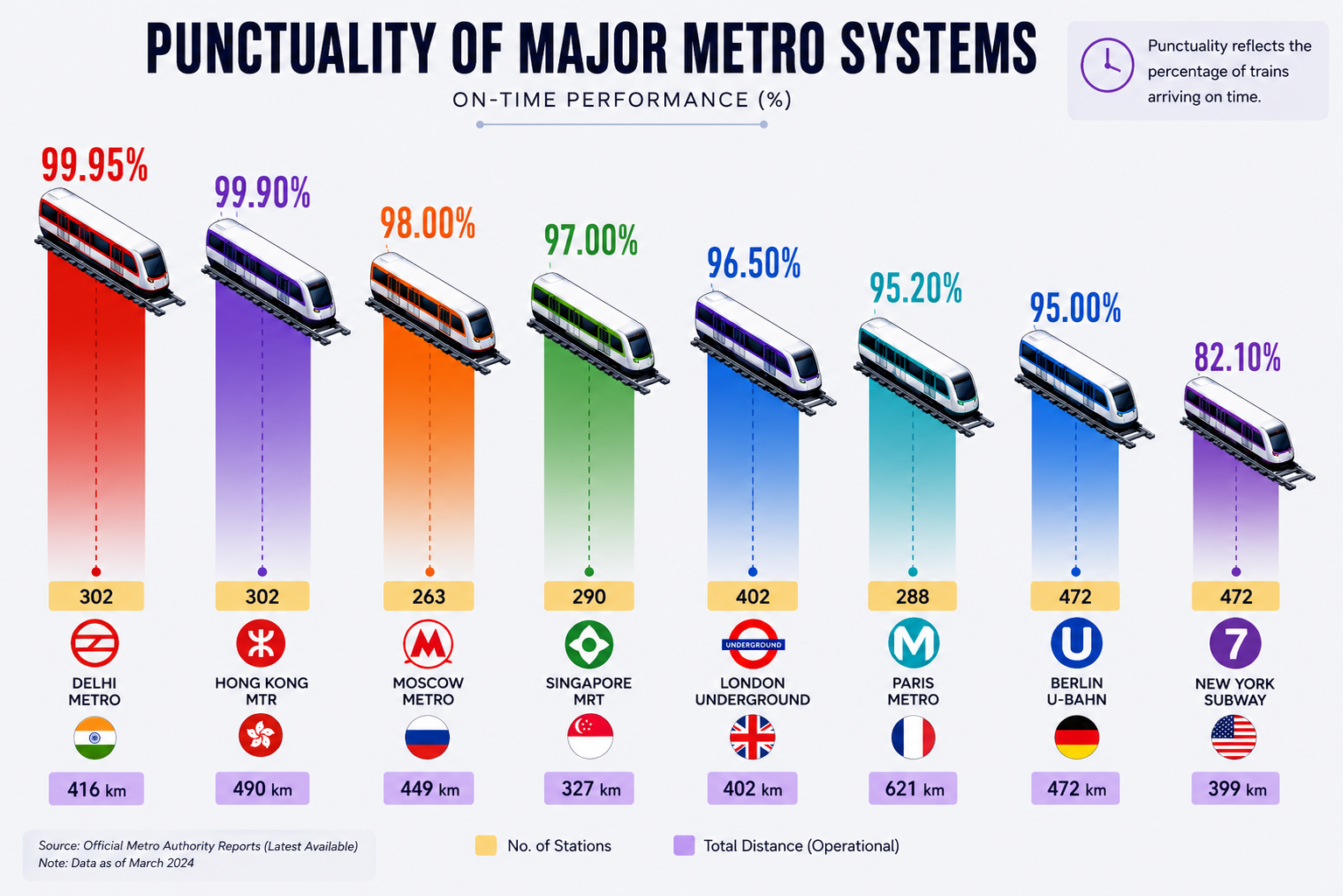
Sarah instinctively began comparing it with the systems she knew back home. The New York subway, which she used every day, was far less predictable. London's Underground was better. Paris was better still. But here, in a city she had been warned would be chaotic, the train had arrived exactly when the clock said it would. For Sarah, Delhi's first lesson was unexpectedly simple: chaos above ground did not necessarily mean disorder underneath it.
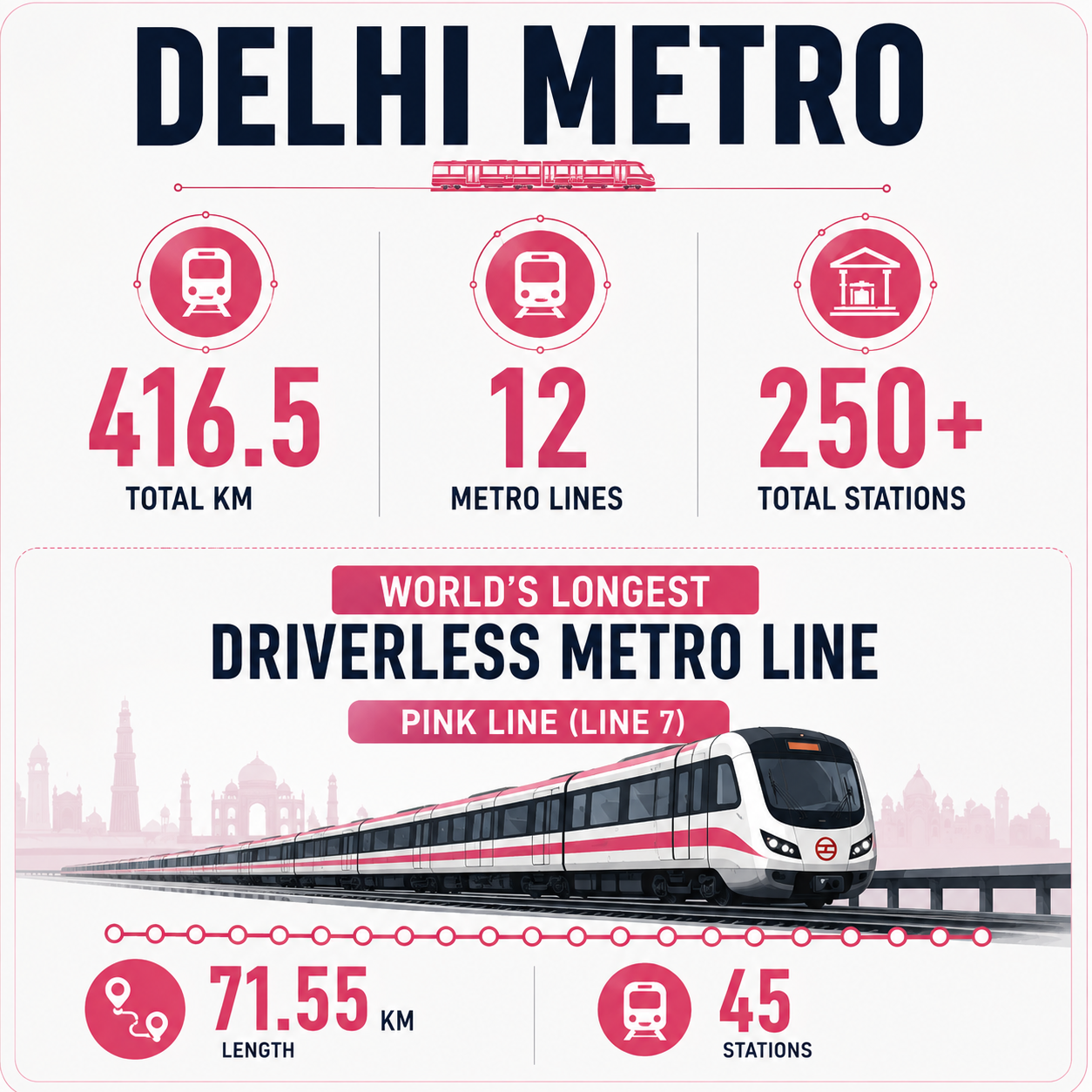
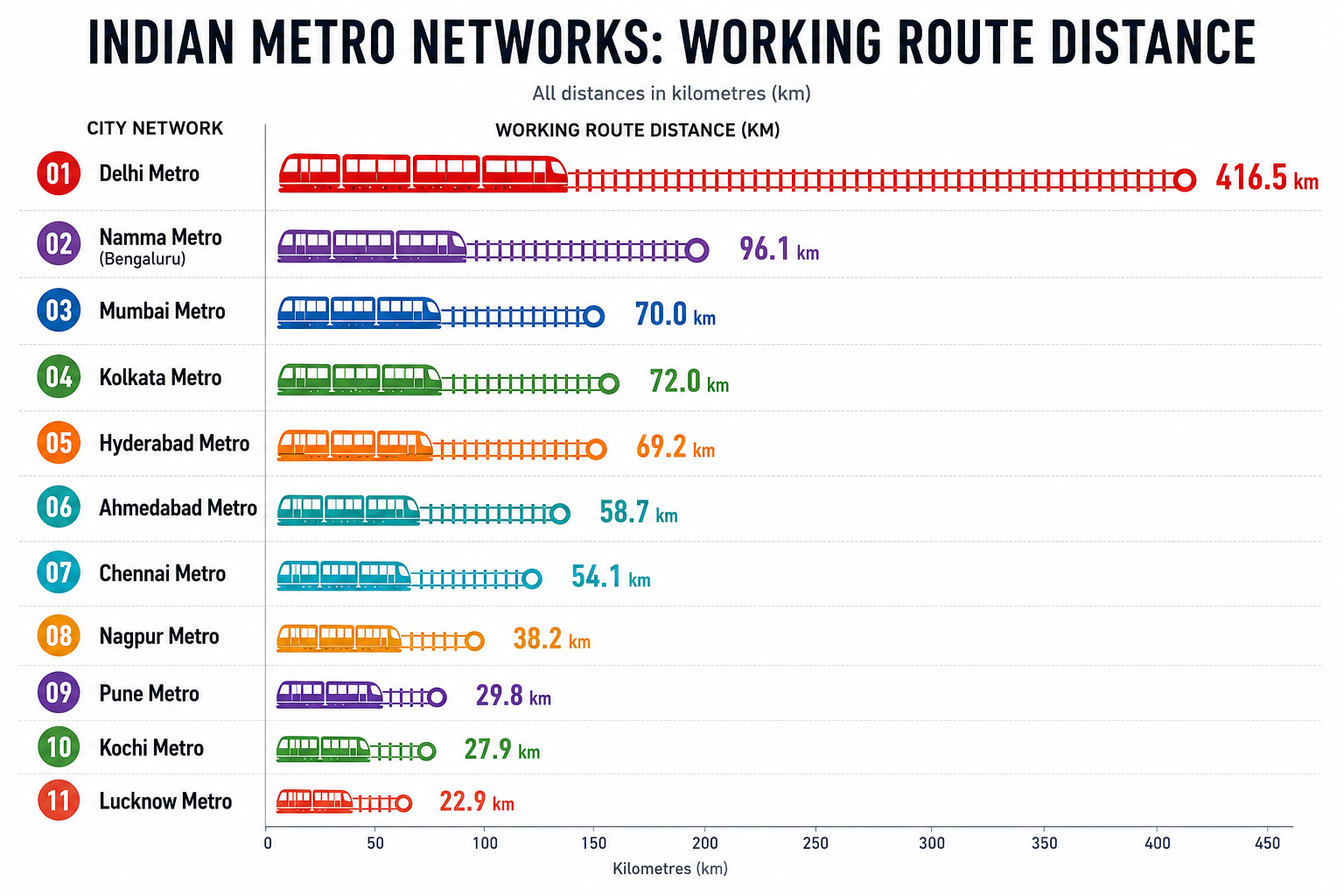
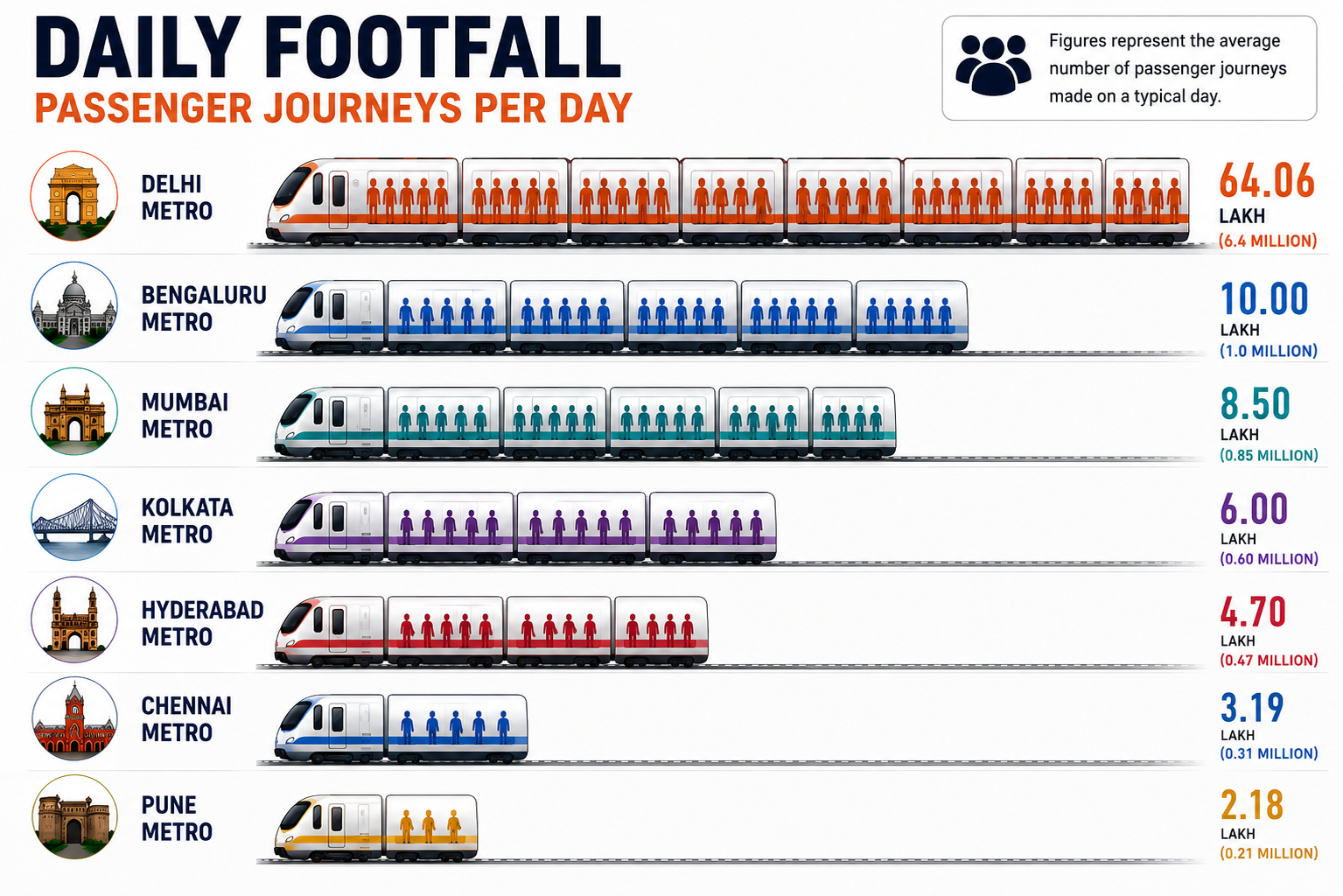
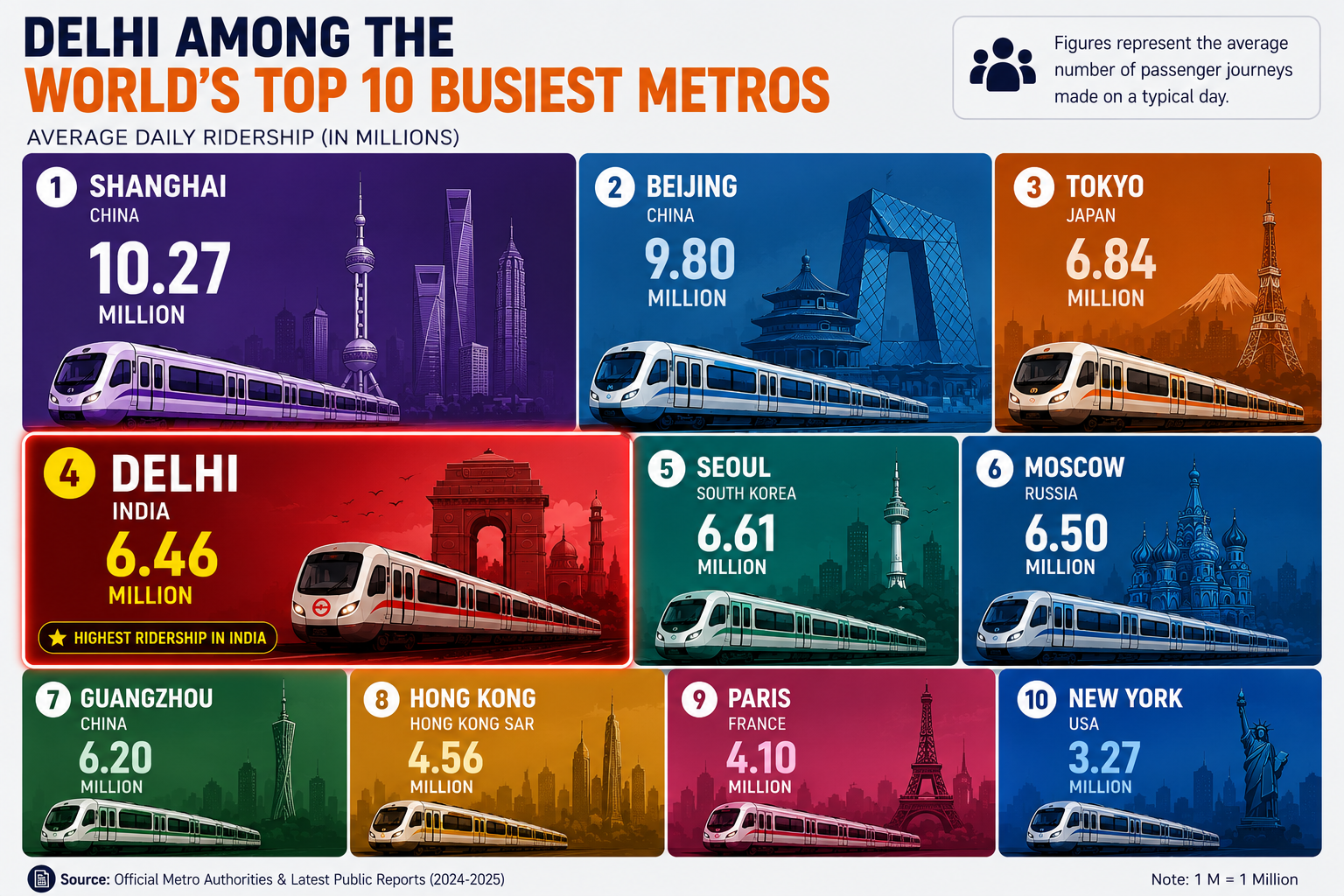
On-time performance: Delhi against London, Paris and New York The World's Longest Driverless Line Somewhere around Karol Bagh, the same stranger offered up another fact. It was the kind, Sarah suspected, that most Delhiites carried around without thinking twice about it. The Pink Line, Line 7 of the Delhi Metro, was recognized as the world's longest driverless metro line. It ran 71.55 kilometres across 45 stations. He called this Unattended Train Operation. No one sat in the cab. Only sensors and signals decided when to start and stop. It was a strange thing to sit with. A system trusted itself enough to run without a human hand on the controls. And the Pink Line, it turned out, was only one thread in a much larger web. Delhi's metro network stretched across roughly416 kilometres of track altogether, more than any other metro system in the country, well ahead of Bengaluru's Namma Metro at around 74 kilometres, Hyderabad's at about 69, Kolkata's at 59, Chennai's at 54, and Mumbai's at just over 50. Sarah was beginning to understand that Delhi's metro wasn't simply busy or punctual. It was, by any measure she could find, simply larger than anything else she was likely to ride in this country. Realising the scale It was only once she was aboard, seated pleasantly between a college student and a woman balancing a tiffin box, that the scale of the thing began to dawn on her. The carriage kept filling at every stop without ever quite feeling overrun, and someone mentioned, in the unbothered way locals discuss numbers too large to picture, that Delhi's metro carried something like 64 lakh commuters a day. Sarah did the conversion under her breath. Six point four million people, in a single day, on one system. Add together the next six busiest metro networks in the entire country, Bengaluru, Mumbai, Kolkata, Hyderabad, Chennai and Pune, and their combined ridership still landed somewhere around 35 lakh, barely half of what Delhi managed by itself, without any apparent strain. Daily footfall: Delhi against the next six Indian metro systems A city on the world stage Sarah had assumed, without ever quite deciding to, that a ranking of the world's busiest metros would be dominated by cities she already knew, the Tokyos and Londons of the world. Somewhere past Chandni Chowk, a fellow passenger pulled up a chart on his phone to settle a small disagreement with his friend, and there was Delhi, sitting comfortably among Shanghai, Beijing, Seoul and Moscow, ahead of Paris and well ahead of her own New York. On an ordinary day, the system carried close to 6.46 million passengers, while its record single day had crossed 8.18 million, a figure that belonged in conversations about East Asia's transit giants rather than in anyone's casual mental picture of an Indian city. Sarah found herself rearranging that picture in real time. The world's busiest metro systems by average daily ridership The cashless city At the gate on her way out, Sarah reached instinctively for coins before remembering she hadn't any, and it turned out not to matter in the slightest. The queue ahead of her moved along on taps and small beeps, cards touched briefly to a reader and pocketed again before anyone had really slowed down. It struck her as such a minor thing to notice, and yet it seemed to say a great deal about how far the system had come. Back in 2018, she later read, digital payments made up barely 22 per cent of all metro transactions in Delhi, with cash and paper tokens covering nearly four rides out of every five. By 2026, that balance had flipped entirely. Digital payments now accounted for around 74 per cent of transactions, cash reduced to a shrinking quarter. Payment mix on the Delhi Metro, 2018 against 2026 Sarah had come with a video already planned, all honking horns and good-natured chaos. But between the 10:47 arriving on the second and a card tapped at the gate, the story rewrote itself. She had meant to explain India to her followers. Instead, she deleted her caption and wrote one line: "Came for the chaos, stayed to brag about Delhi's metro. India, you win this one