From 13 in 40 years to 668 in a decade India’s stolen heritage comes home
Visualisation
At a Glance
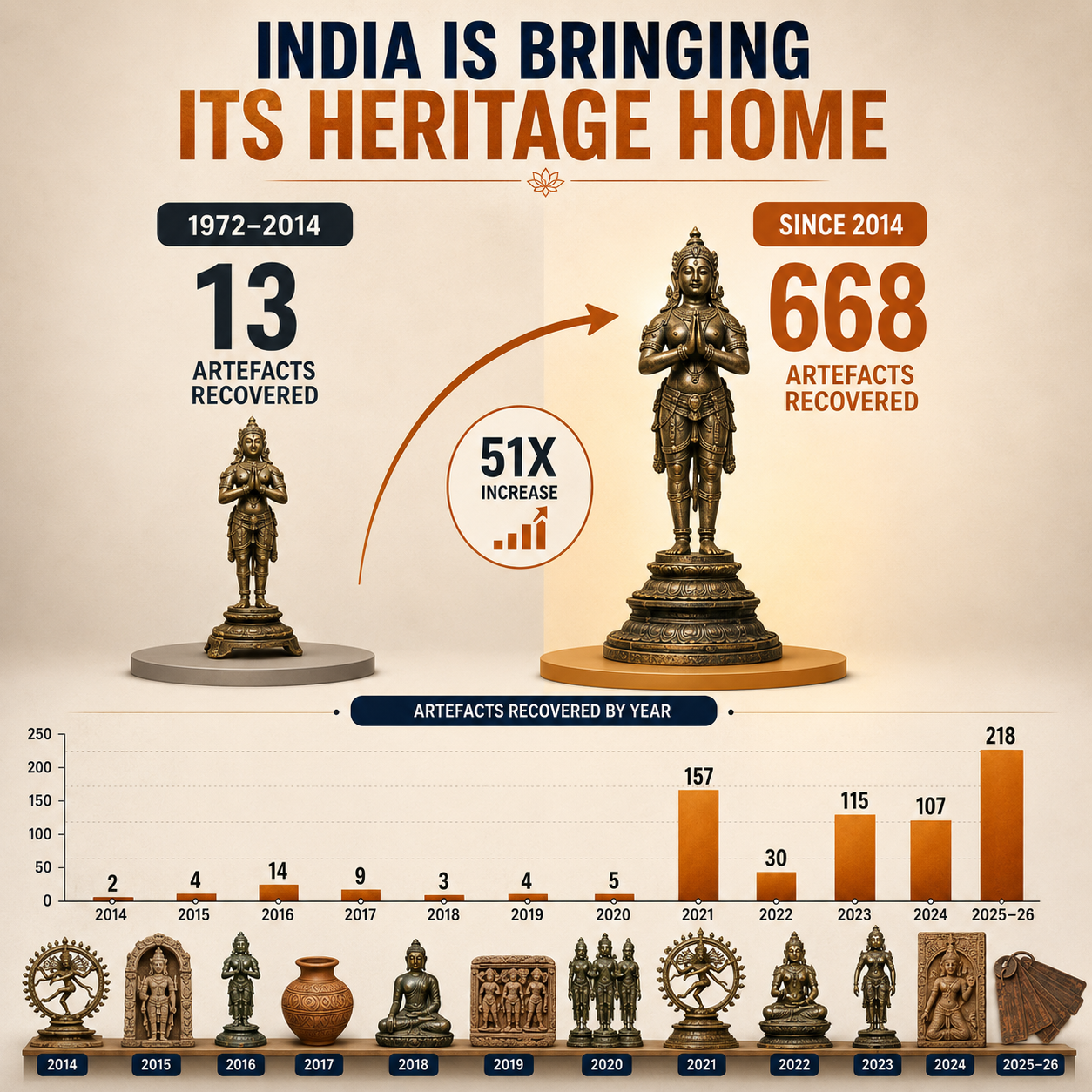
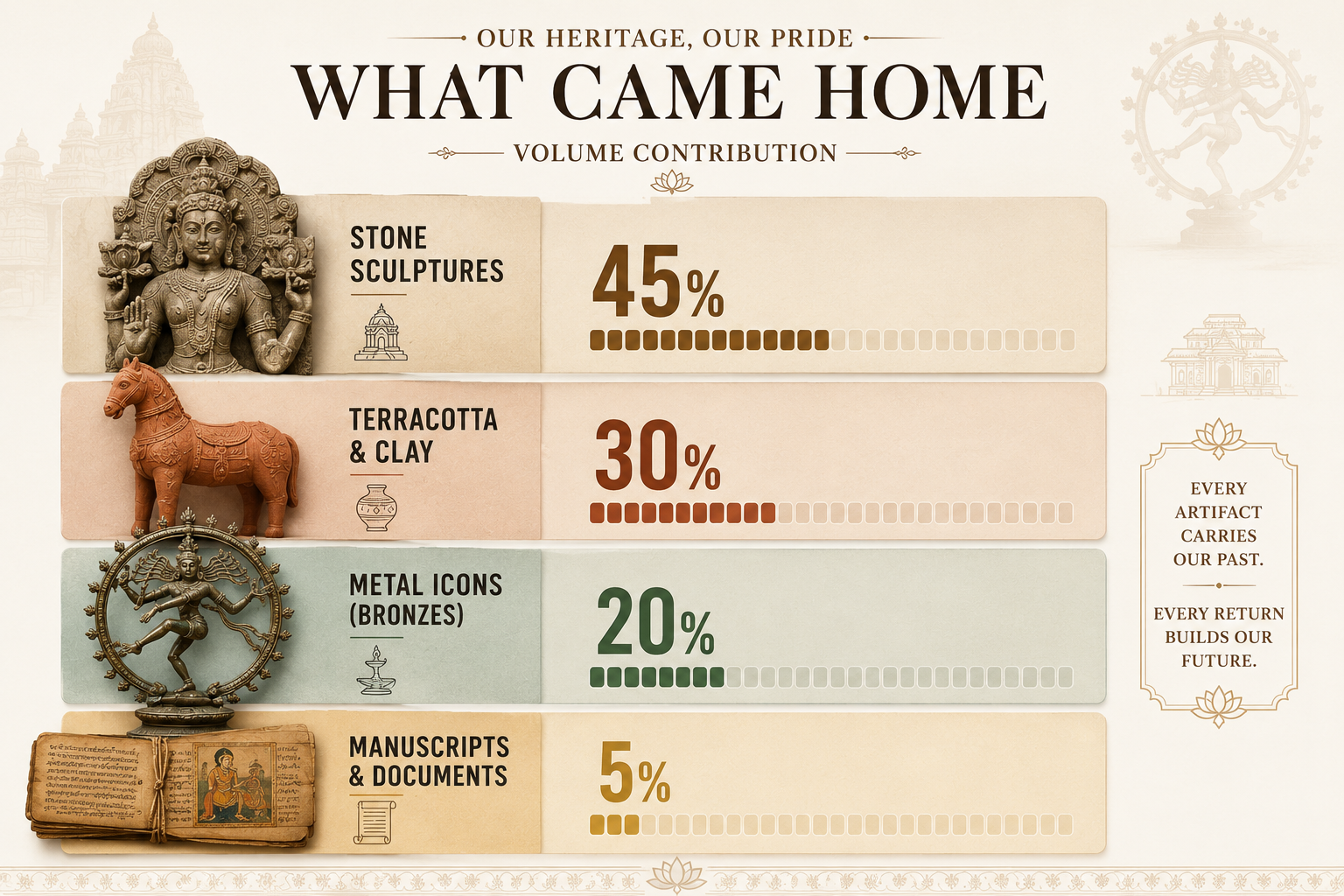
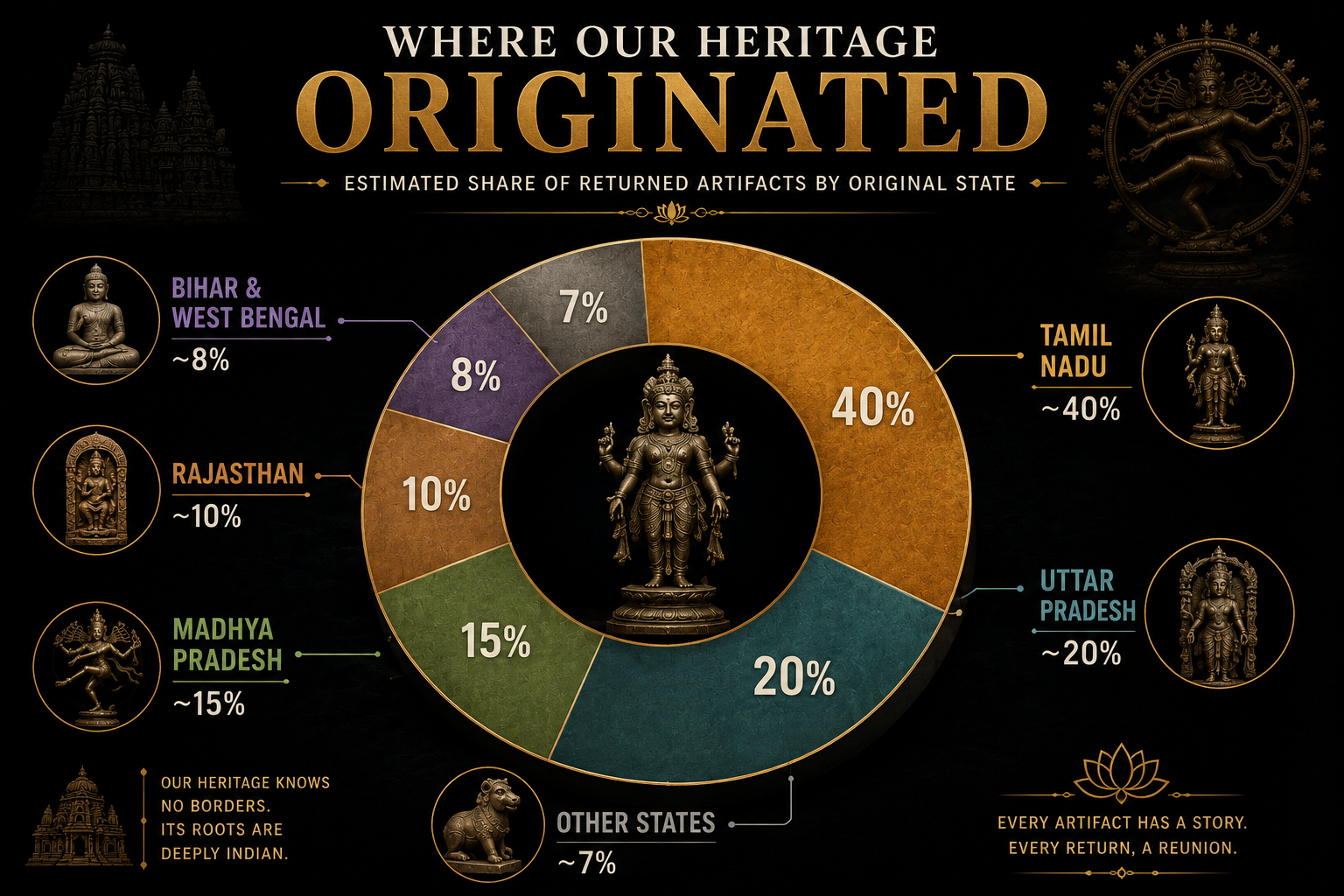
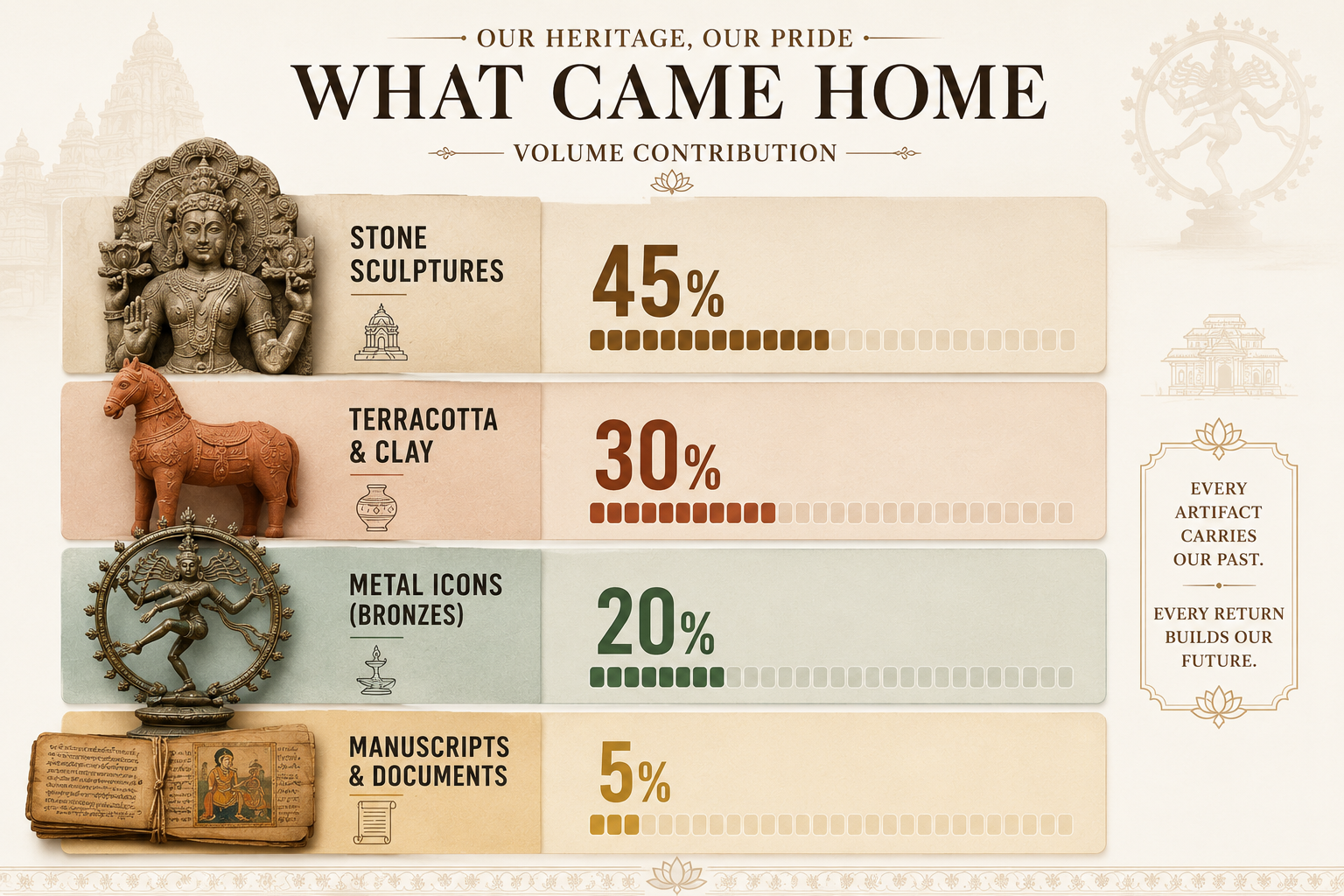
Tucked between high-end watch boutiques on Madison Avenue, a gallery once traded in stolen idols of Indian Gods. A bronze Chola Nataraja mid-dance, priced like designer furniture. A stone Yakshi, pried from a temple wall, relegated to a dinner party talking point. Subhash Kapoor built a quiet empire sourcing ancient Indian antiquities. For decades, nobody asked where they came from. An idol carved for worship sat in a Manhattan drawing room while a village temple thousands of miles away stared at an empty niche. In 2011, the silence broke. Kapoor was arrested, exposing a looting paper trail that ran straight from New York back to temples across Tamil Nadu. The trial took years, but it sparked a fundamental shift: the world’s biggest hub for India’s stolen past slowly became the place leading its return. Before 2014, if you asked how many stolen antiquities India had recovered, the honest answer was effectively none. Then the pace transformed. India began raising missing heritage in the same breath as bilateral trade and defence pacts. By 2021, a single state visit to the US yielded 157 such objects, more than the previous seven years combined. The recovered collection is not dominated by famous bronzes. About half the objects are stone sculptures, including temple figures and sandstone carvings. Terracotta accounts for roughly three in ten. Bronzes make up about one-fifth. The geography is equally revealing. Tamil Nadu accounts for close to 40 per cent of the recovered artefacts traced to their place of origin — a reflection of the scale of temple thefts in the state and the importance of recovering objects that were once part of living religious traditions. That is what makes this more than a customs or museum story. The recovered loot reflects a cross-section of Indian geography and architecture: Stone carvings: Sandstone apsaras and architectural reliefs chipped off remote temple facades. Terracotta: Ancient artifacts excavated from historic riverbed settlements in Bengal and Bihar. Bronzes: Sacred deities from Southern India, primarily Tamil Nadu, which accounts for nearly 40% of all traced origin points. While bronzes represent a smaller volume, they carry immense cultural weight. They were never meant to be decorative artifacts behind glass, they were cast to be living deities, meant to be worshipped. Tamil Nadu alone accounts for close to four in every ten pieces traced back to their origin, a reminder of exactly where the temple-bronze trade did the most damage, and where its reversal matters most. For decades, empty sanctums were treated as settled history. Missing idols were written off, and foreign museum acquisitions went unchallenged. Bringing back 668 antiquities isn't just a political talking point or a win for museum curation. When a Chola Nataraja returns to Tamil Nadu, it isn't an object crossing a border. It is a sacred homecoming. India is no longer treating its heritage as static history buried in textbooks, but as a living culture retrieving what belongs in its temples. Data: Ministry of External Affairs and Ministry of Culture replies to Parliament. The forty-year freeze
For more than four decades, official files gathered dust while ministries changed hands. A stolen idol simply stayed stolen. The graphic below tells the exact story.The New York pipeline
Follow the paper trail today, and it consistently leads to one place.
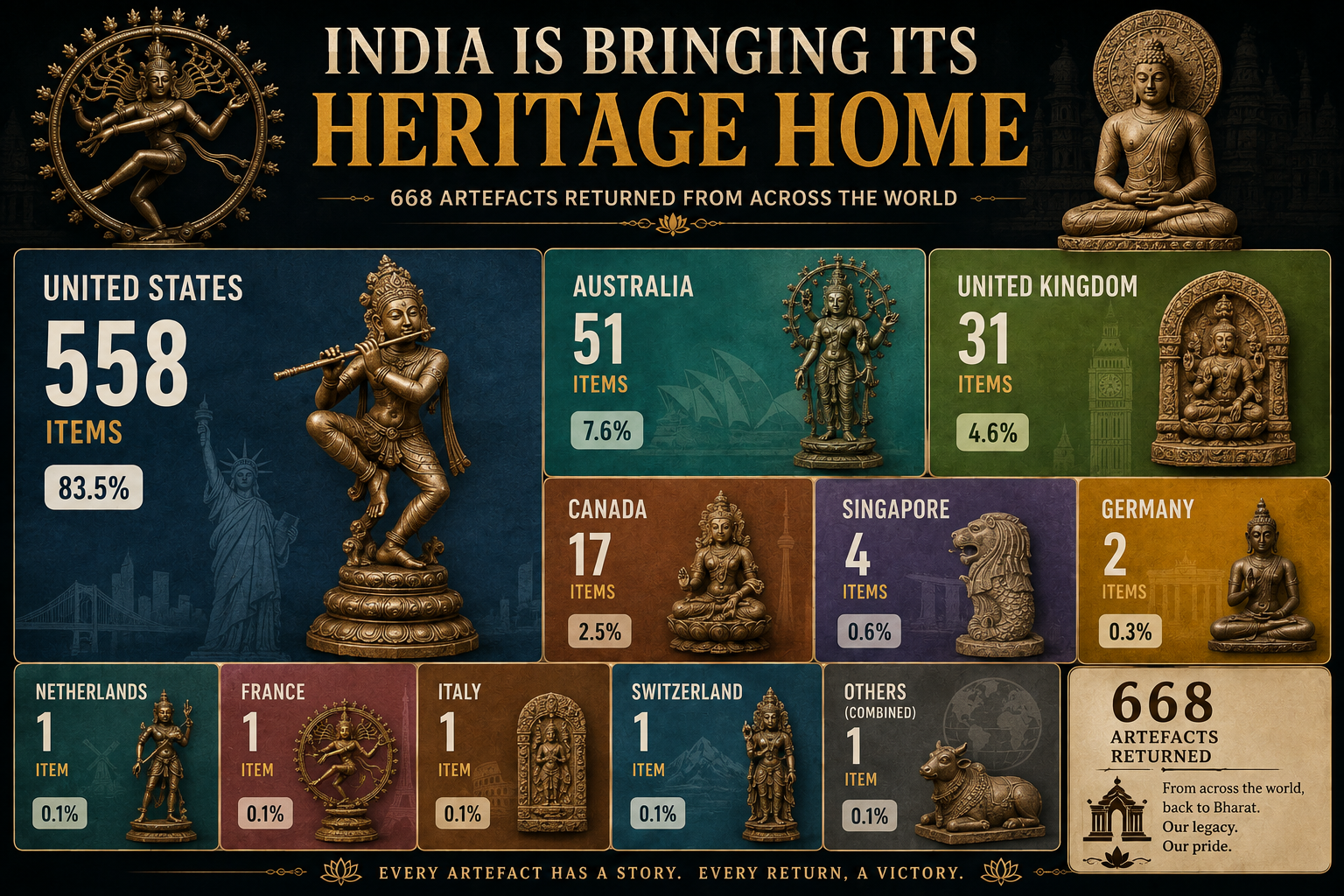
558 out of 668 pieces recovered since 2014 came directly from the United States, that amounts to more than 83% of the total.
The 2024 US-India Cultural Property Agreement established a permanent legal channel for seizures, replacing the tedious process of building every case from scratch.
New York's role cuts both ways: it was the top market for India's illicit antiquities, and it is now the largest source of their return.
What the 668 objects reveal
Reclaiming the sacred