From hill slopes to mugs: The $2 billion story behind Indian coffee
Visualisation
At a Glance
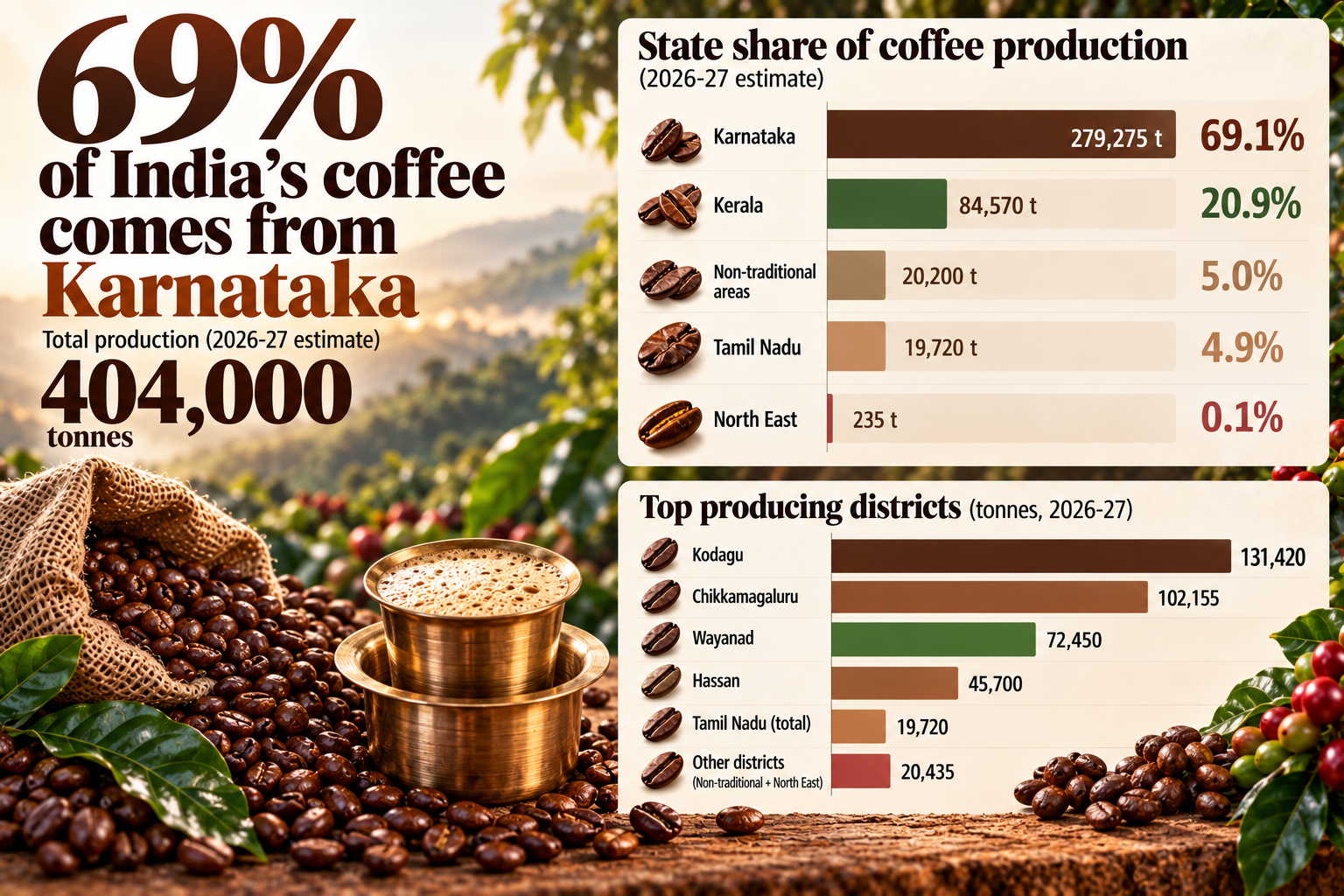
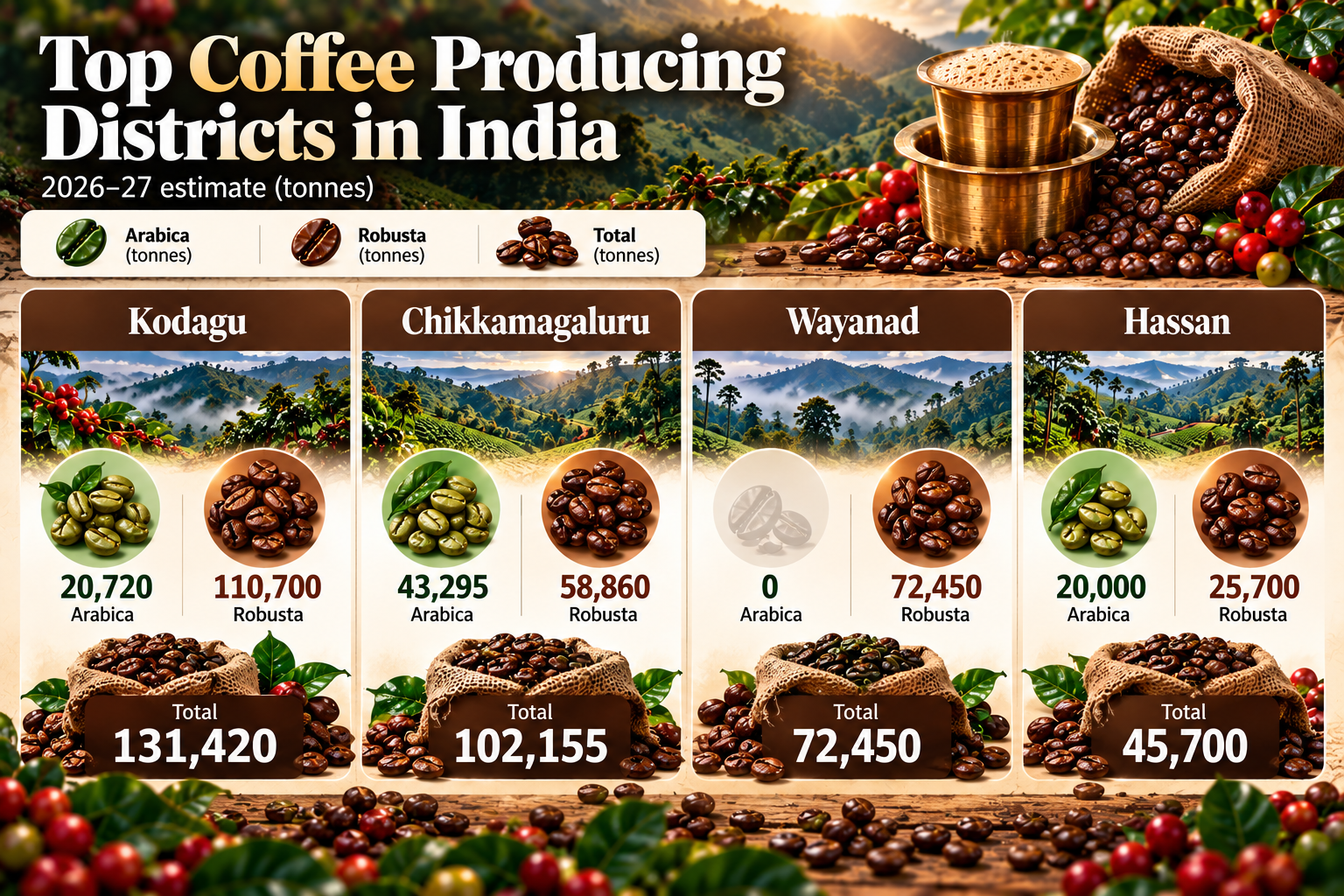
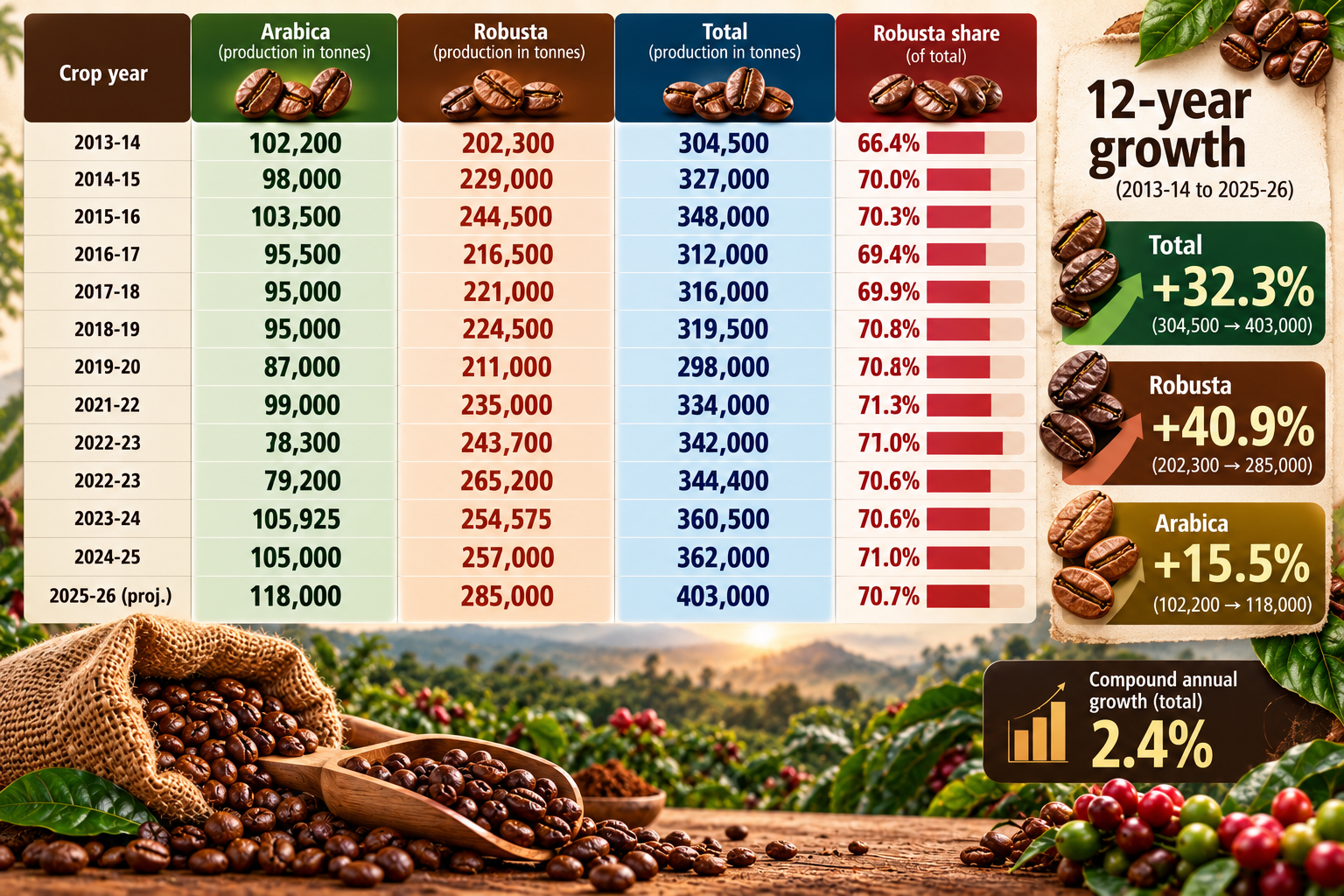
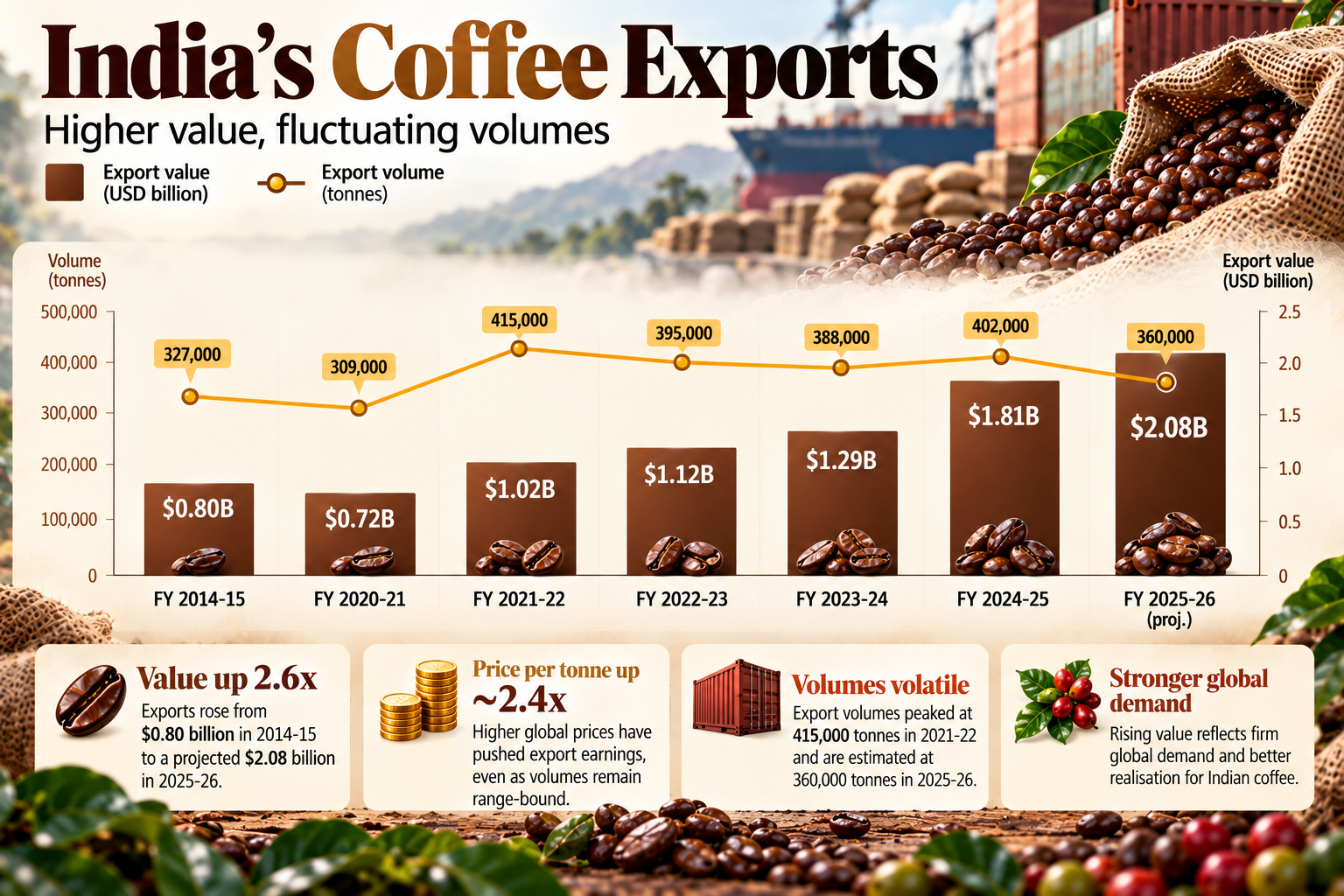
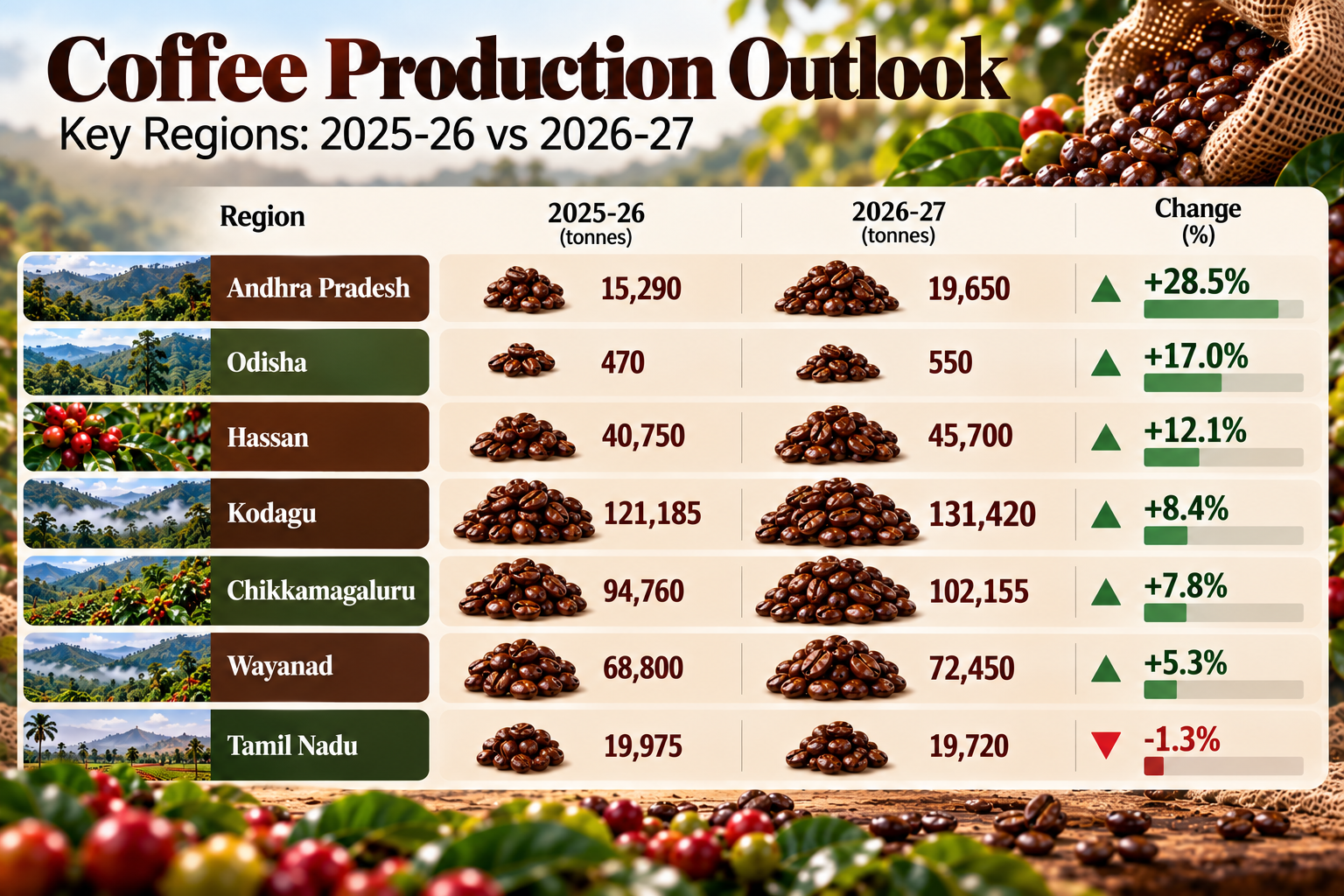
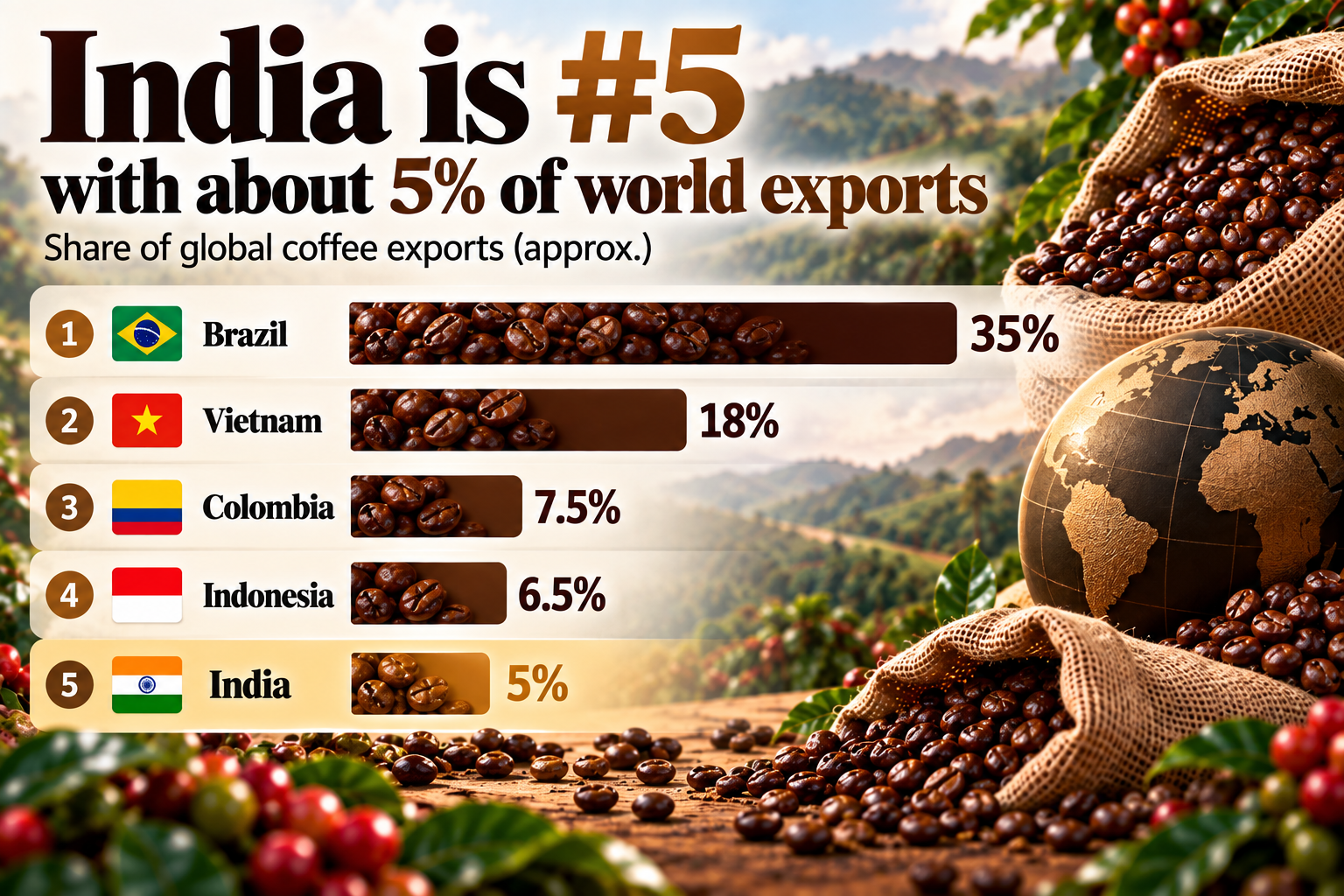
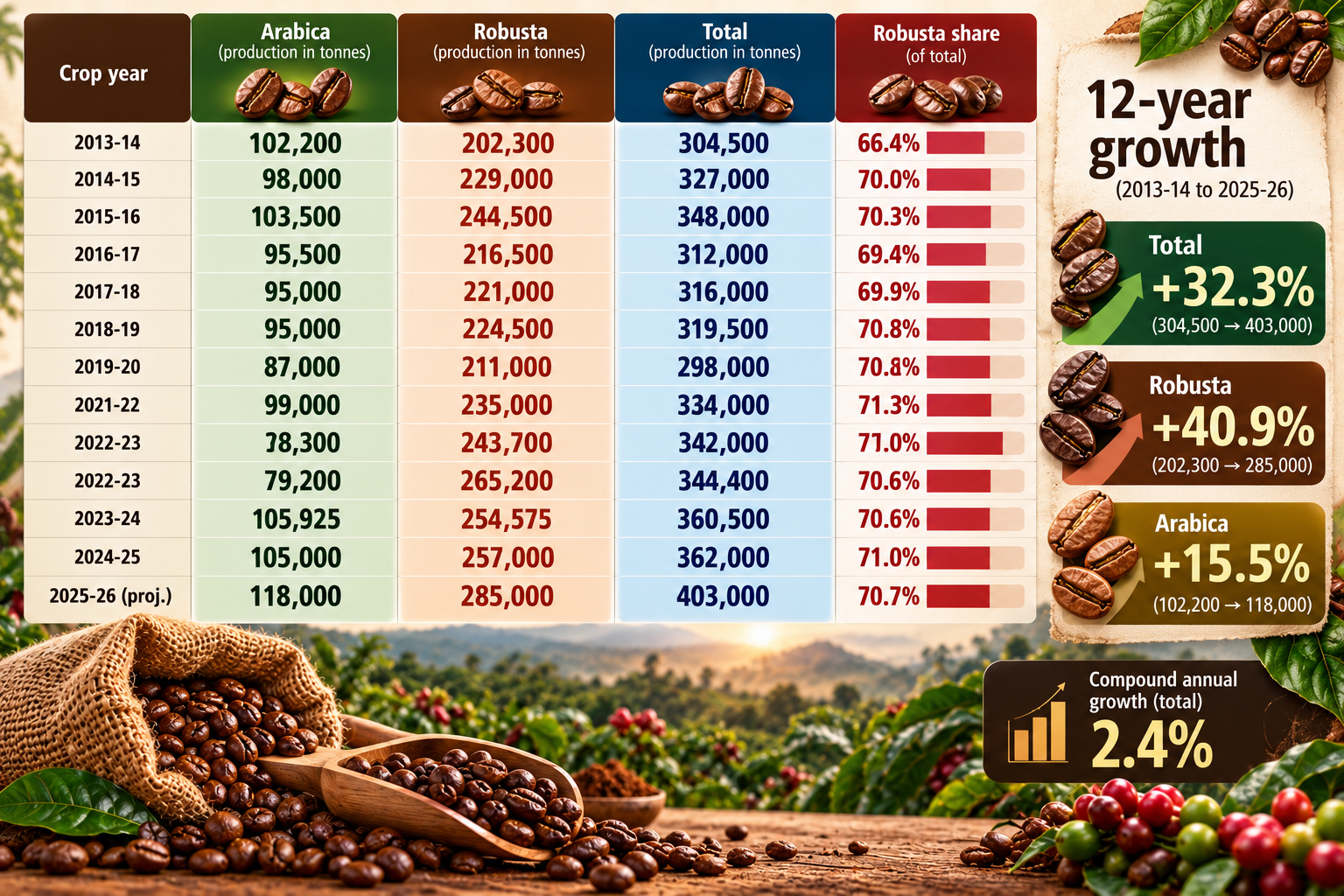
It is six in the morning, and the kitchen is already filled with the aroma of roasted coffee. Hot milk goes into a steel tumbler, followed by a dark, concentrated decoction. Then comes the familiar rhythm: the coffee is poured back and forth between the tumbler and davara until a thick layer of froth forms on top. A traditional South Indian filter coffee may contain 70 to 80 percent coffee and 20 to 30 percent chicory. It costs only a few rupees, yet the story behind that humble cup reaches far beyond the breakfast table. Now follow that coffee backwards. Where were the beans grown, and how did they make their way here? The data offers an answer, and it leads to a small hill belt that has learned how to command a higher price for what it grows. Start with Karnataka. Nearly 69 per cent of India’s coffee comes from the state, with production estimated at about 279,000 tonnes in 2026–27. Within Karnataka, Kodagu is the powerhouse, with production expected to reach 131,420 tonnes. Robusta dominates the district, accounting for 84 per cent of its coffee crop. Chikkamagaluru, the old Arabica heartland, lies next door with an estimated 102,155 tonnes and a more balanced mix of varieties. Hassan is the smallest of the three, but its production estimate is up 12 per cent, making it the fastest-growing of the group. Cross into Kerala and the story tilts even more towards Robusta. Wayanad alone accounts for 72,450 tonnes. Add Tamil Nadu’s Arabica-growing hills, and the three southern states together produce 383,565 of India’s 404,000 tonnes. For now, the rest of the country contributes only a small share. Go back a dozen years and the picture looks more modest. India harvested 304,500 tonnes in 2013–14. By 2025–26, production is projected to reach 403,000 tonnes, a 32 per cent increase. Robusta drove most of the growth, rising 41 per cent from 202,300 to 285,000 tonnes. Arabica grew by 15 per cent. The roughest patch came in 2022–23, when Arabica production fell to 79,200 tonnes, its lowest level in the series. It has since recovered to 118,000 tonnes. Through these ups and downs, Robusta has remained the mainstay, accounting for about 71 per cent of the crop. If the story ended here, it would make for a neat account of steady growth on the farm. But the more interesting part begins when the beans leave the hills. Look at the export numbers. In 2014–15, India shipped about 327,000 tonnes of coffee and earned roughly $800 million. A decade later, the projection for 2025–26 puts exports at about 360,000 tonnes, but earnings at $2.08 billion. The volume has risen by only about 10 per cent. The value, however, has jumped by roughly 160 per cent. Divide one figure by the other and the shift becomes clear. A tonne of Indian coffee fetched roughly $2,450 in 2014–15. In 2021–22, when coffee exports crossed $1 billion for the first time, the realisation was still around $2,460 a tonne. Then the global supply of Robusta tightened and prices began to climb. By 2024–25, a tonne was earning about $4,500. This year, the figure is closer to $5,800. Calendar year 2025 tells the story even more clearly. Coffee exports reached a record $2.06 billion, up 22 per cent in value, while the volume slipped to 348,000 tonnes. India shipped less coffee but earned more from it. Processed and instant coffee, much of it headed to Europe and the Middle East, helped push up the value. The story now takes us to a place that rarely figured in India’s coffee narrative. In Andhra Pradesh’s Araku Valley, tribal communities grow Arabica organically, producing beans with a bright cup profile and notes of cherry and dark chocolate. The state’s output is expected to rise from 15,290 to 19,650 tonnes, a 28.5 percent increase. Odisha is also beginning to move up the coffee map. These emerging regions account for just 2 to 3 per cent of the national crop, so they do not alter the established ranking yet. What they do show is where growth is beginning to happen beyond the traditional coffee belt. India expects to produce 404,000 tonnes next season, 8.3 per cent more than this year’s estimated 373,000 tonnes. Arabica production is projected at 120,000 tonnes, while Robusta is expected to reach 284,000 tonnes. There is, however, a reality check. India is the world’s fifth-largest coffee exporter, accounting for about 5 per cent of global exports. Brazil dominates with roughly 35 per cent, followed by Vietnam at 18 per cent. Colombia and Indonesia each account for between 6 and 8 per cent. India was never going to compete on sheer volume. Its strength lies elsewhere: shade-grown Robusta, Monsooned Malabar beans matured in humid coastal conditions until they develop their distinctive golden colour and spicy character, and Mysore Nuggets, valued in espresso blends. The rise in the price per tonne suggests that international buyers are willing to pay for that distinctiveness. That six-o’clock cup carries a longer story than it first appears. It may have begun on a shaded slope in Coorg or Wayanad, part of a crop that has grown by roughly a third in twelve years. Some of those beans have travelled thousands of kilometres to European markets, where they now fetch more than twice what they did a decade ago. So pour it again. Watch the foam rise, take that first sip, and enjoy it while it is hot. The hills that do the heavy lifting
A crop that kept growing
The twist is in the price
A new corner of the map
Small share, strong character
Back to the tumbler