From ‘swipes’ to social circles: Why dating apps are losing their pull
Visualisation
At a Glance
Dating apps were supposed to make finding someone easier. For a while, the numbers below suggest they did. But the same data that shows how deeply these apps embedded themselves into daily life also shows the toll that habit is taking and, in India, the early signs of people quietly walking back to how relationships used to start: through people they already know.This is the story the data tells, in three acts: how the habit took hold, what it cost the people caught in it, and how one country is starting to opt out.
1. The swipe has become a habit
Dating-app use is concentrated among younger users, with major differences across platforms and generations. The pattern suggests that the swipe-based model is particularly embedded among younger adults, while some platforms retain a more even age profile.
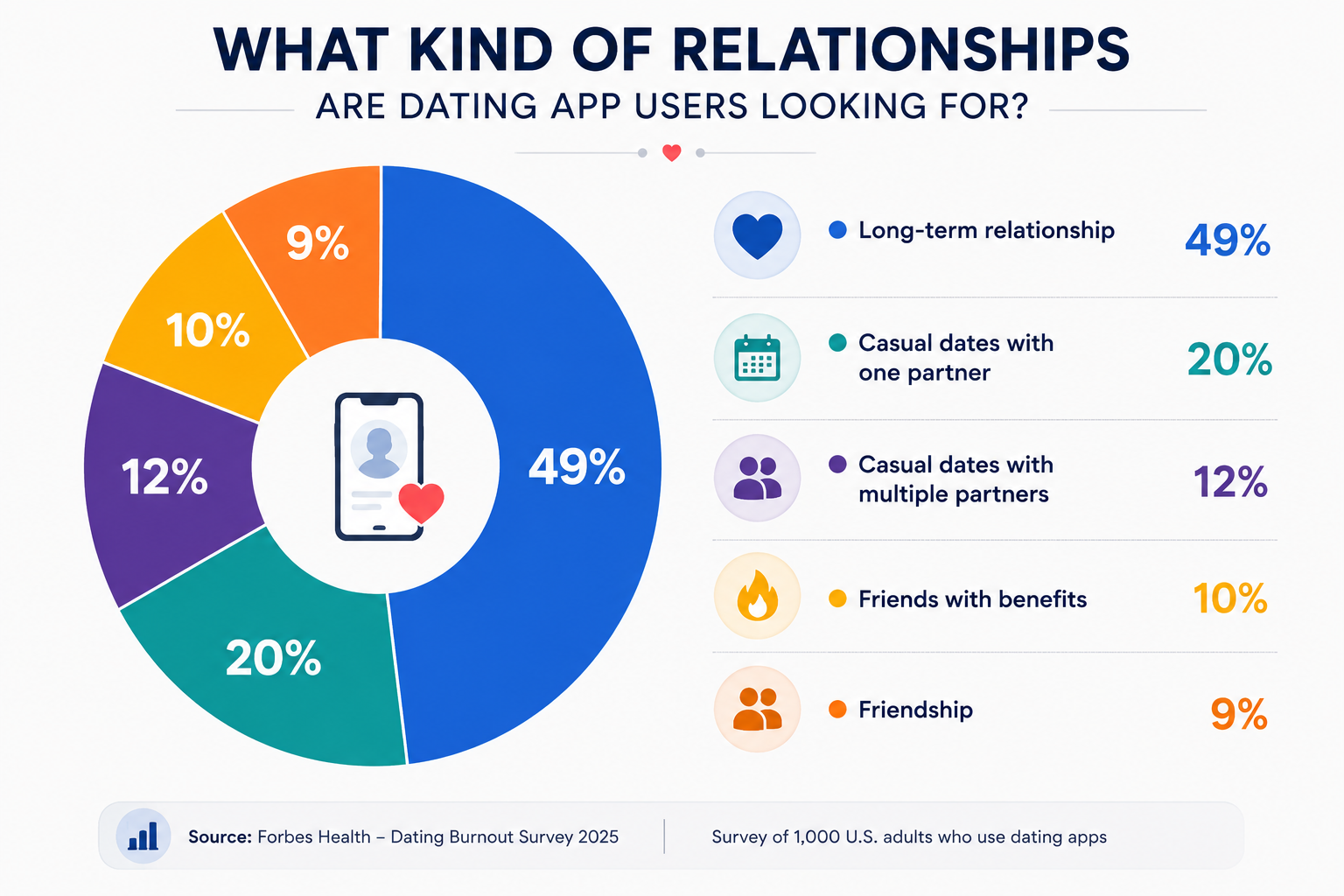
While 49% of users specifically seek a long-term relationship, others prefer casual dating, friendship or other forms of companionship. In short “the form of dating may be changing, but the human need for connection has not. “
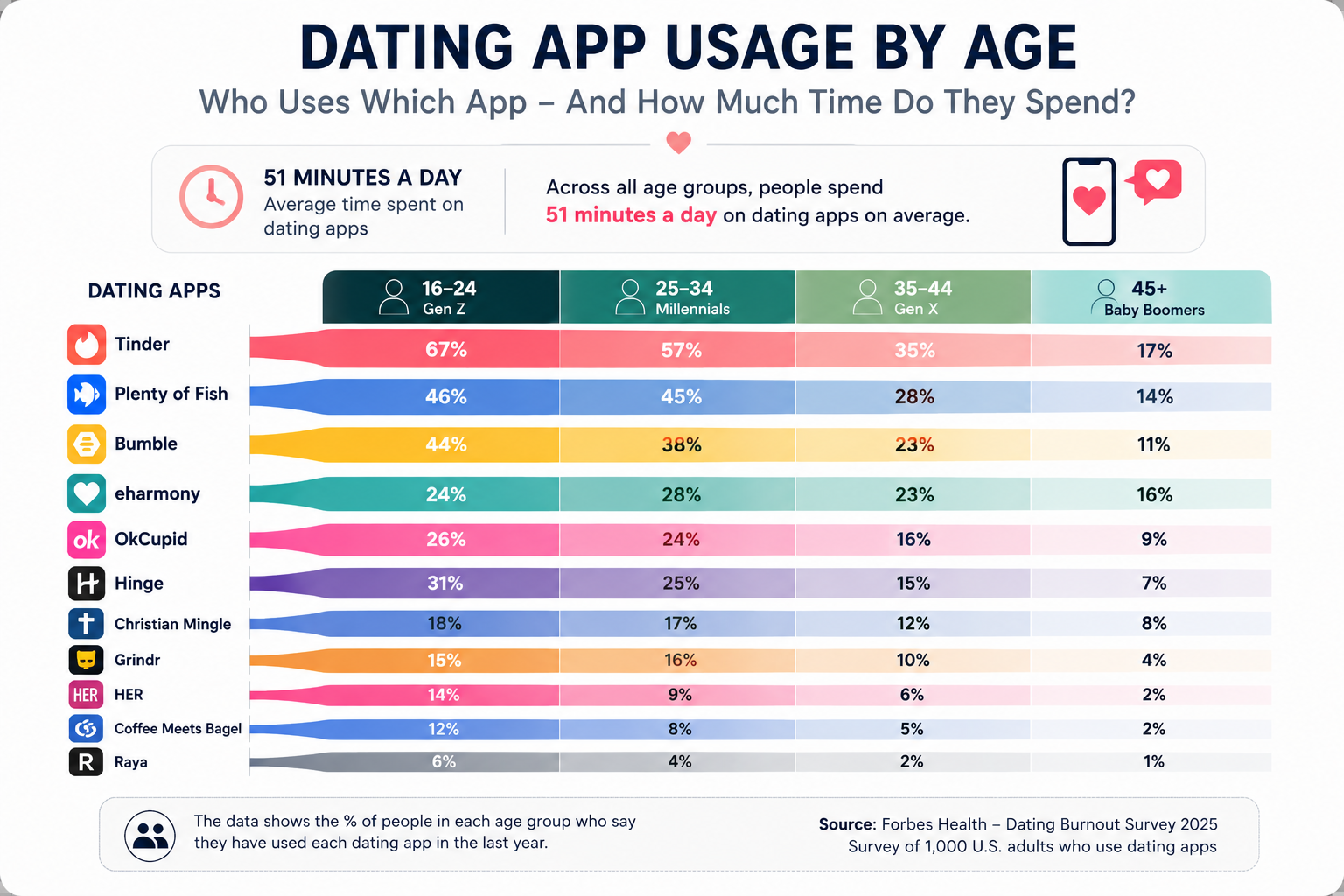
Users in the Forbes Health survey spent an average of 51 minutes a day on dating apps.The pattern shows that dating is no longer simply an occasional search for a partner. For many users, browsing profiles, matching and messaging have become a regular digital activity.But the amount of activity does not tell us whether the activity is producing the desired outcome.That becomes clearer when users are asked what they actually want.
2. The goal is still long-term
The dating culture may have changed across generations, but the fundamental desire has not. Whether Gen Z, Millennials or older generations, people ultimately seek companionship, emotional connection and, for many, a stable long-term relationship
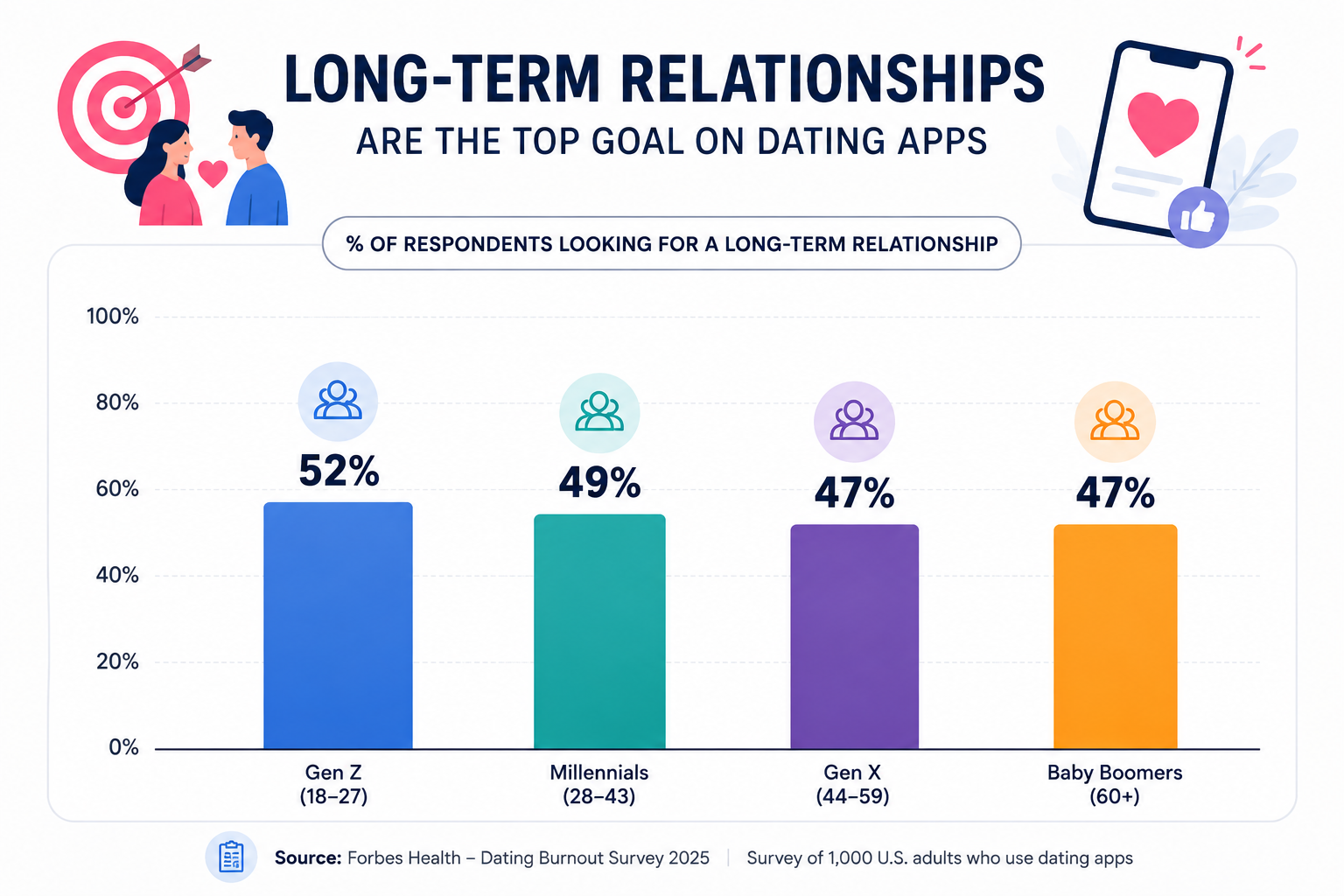
While 49% of users specifically seek a long-term relationship, others prefer casual dating, friendship or other forms of companionship. In short “the form of dating may be changing, but the human need for connection has not. “
This creates a key contradiction. The basic architecture of dating apps is built around rapid decisions: view a profile, swipe, match and move on. But a long-term relationship requires a very different process: repeated interaction, trust and emotional familiarity. So the question is not whether dating apps give people more choices. They clearly do. The question is whether a system designed to maximise discovery can deliver what many users ultimately seek: a genuine, lasting connection.
The answer, according to the data, is NO. And that mismatch may explain the burnout. Dating apps are built to maximise discovery and keep the search moving. But users are looking for connection, companionship and, for many, something lasting. When a system designed for endless exploration is used to pursue emotional certainty, the result can be exhaustion rather than connection.
3. Burnout cuts across generations
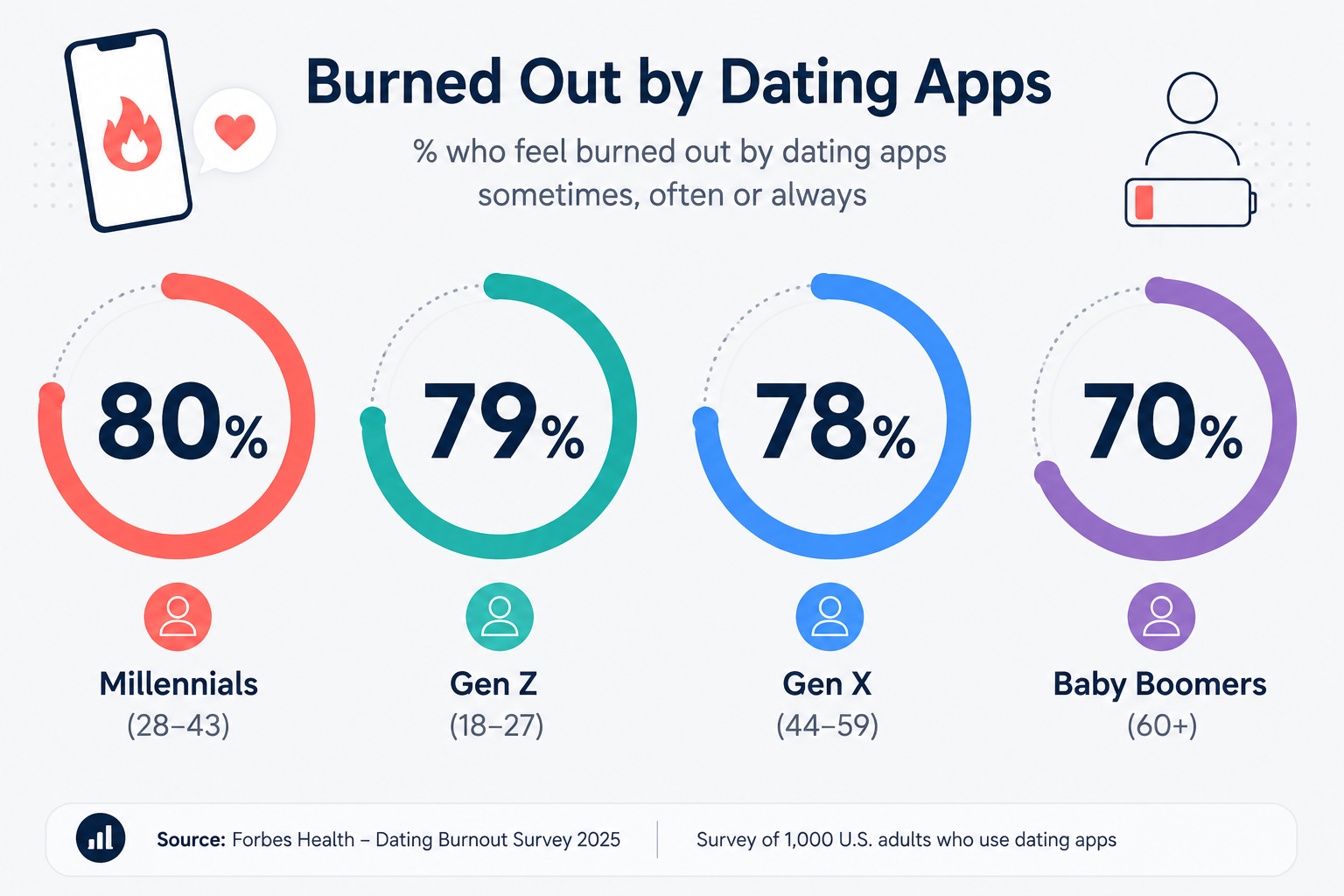
The generational pattern makes the picture more interesting. Millennials report the highest level of burnout, closely followed by Gen Z and Gen X, while older users report a lower level.The gap between generations is relatively narrow. Read alongside the usage table above, this suggests fatigue isn't just a function of time spent this week; it accumulates. The longer someone has been in the pool, the more worn down they appear to be by it.
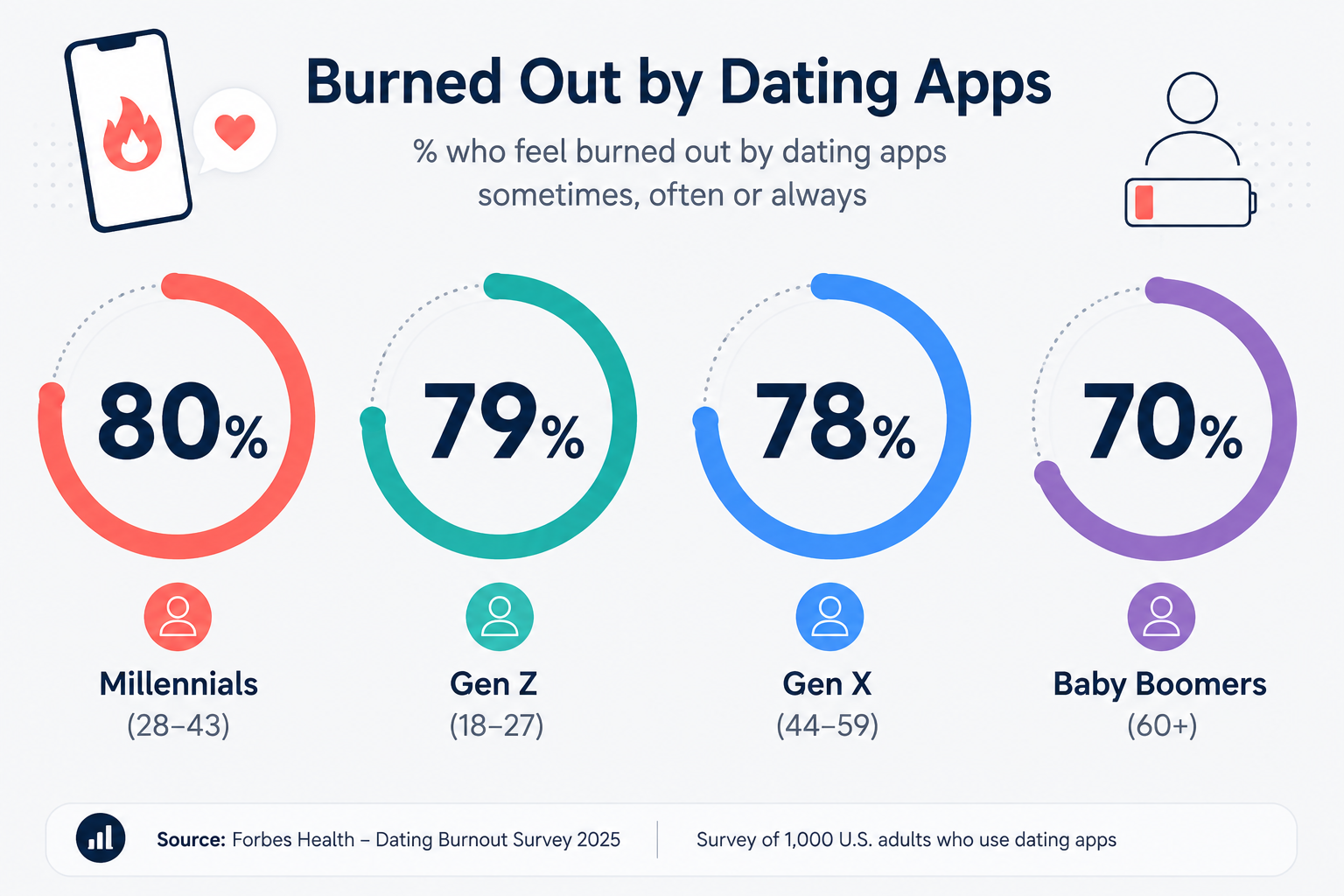
It suggests that dating-app fatigue cannot simply be explained as young people becoming tired of technology. The experience appears across generations that entered the dating-app era at different points.The common factor is the system itself: repeated searching, matching, messaging and rejection.
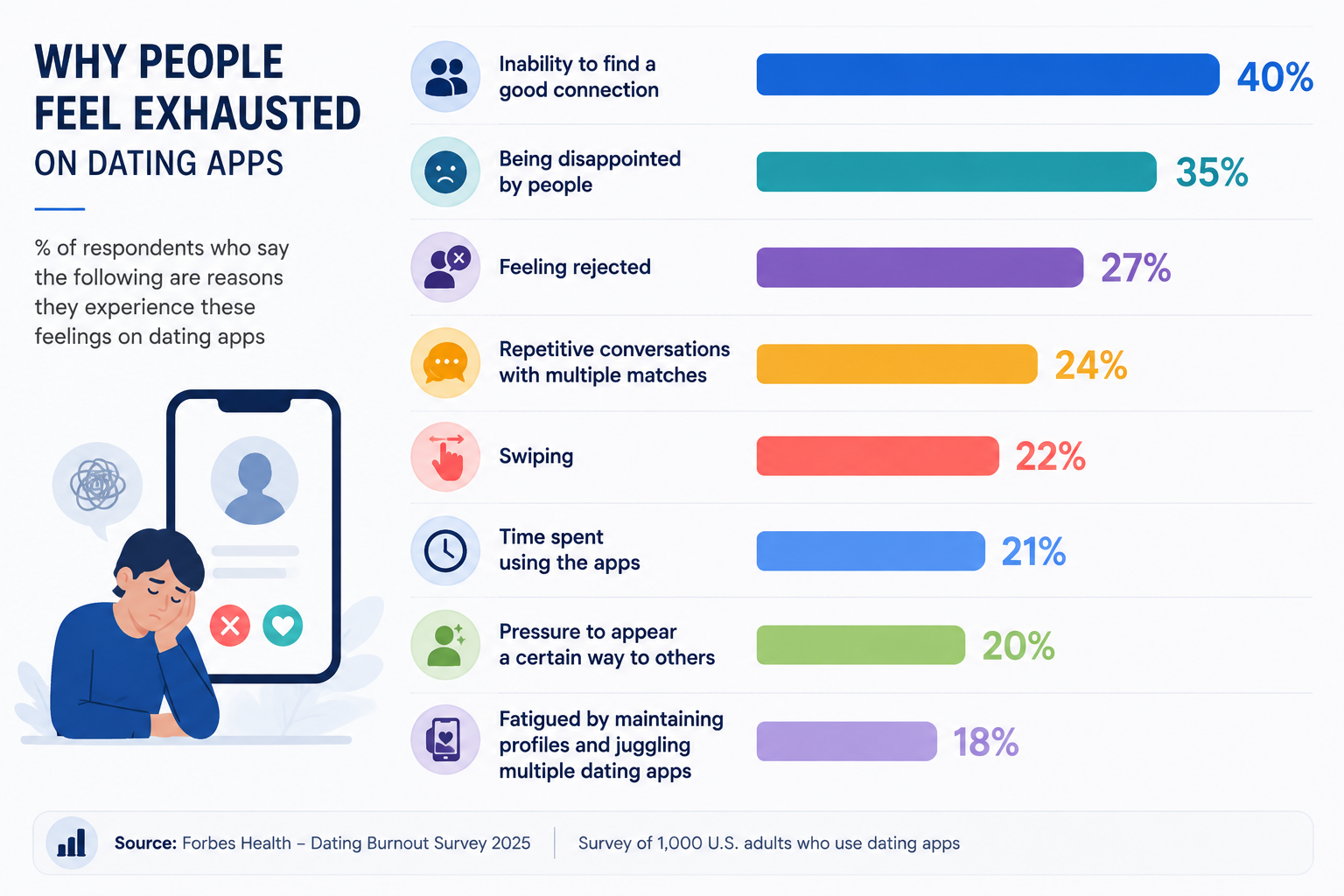
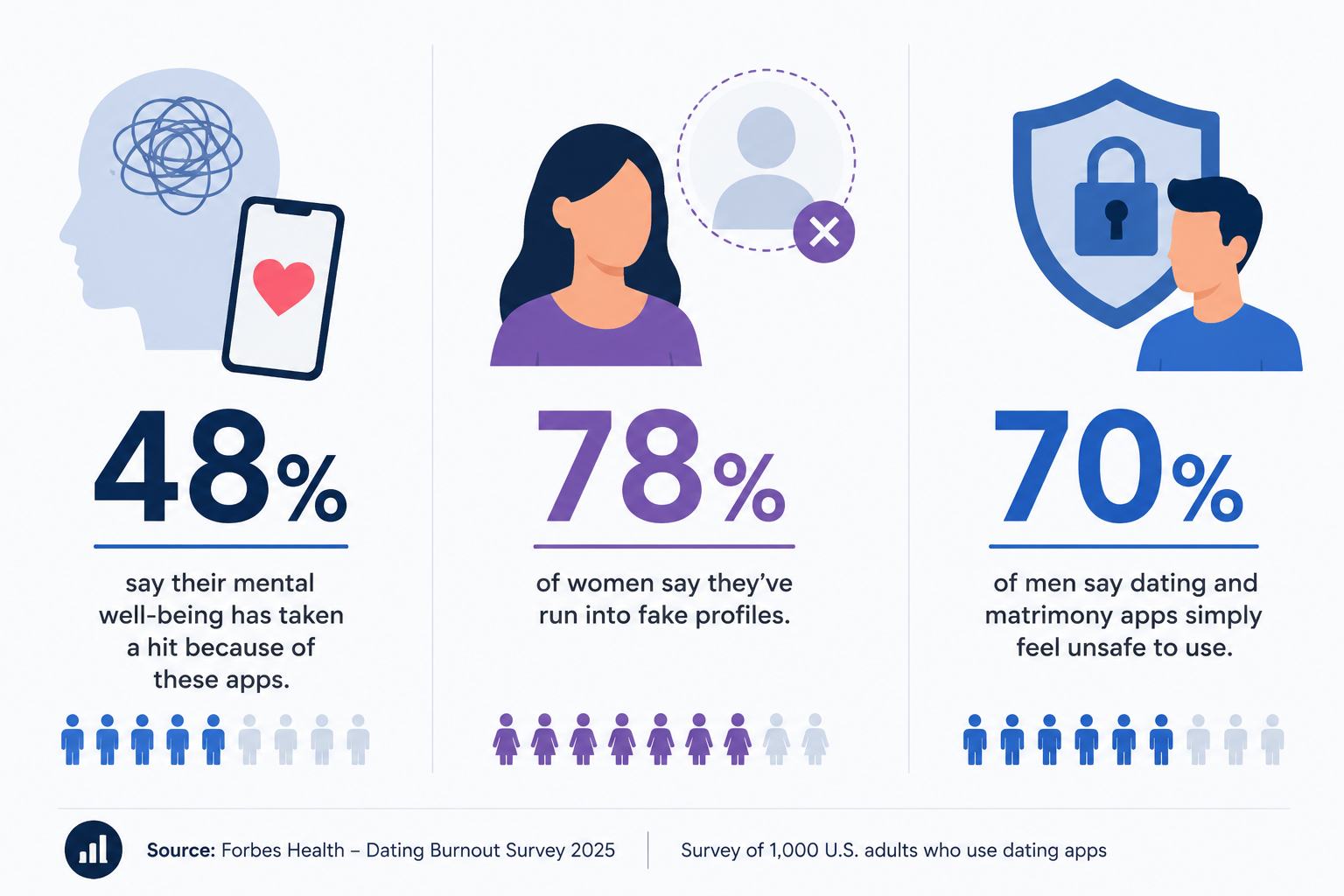
4. India shows a different response India's data adds another dimension to the story. Concerns around mental well-being, fake profiles and safety indicate that the problem can emerge before a user even reaches the stage of long-term dating. According to the Juloo–YouGov Indian Matchmaking Report, nearly half of Indian users say their mental well-being has taken a hit because of dating and matrimony apps. A large majority of women report encountering fake profiles, and more than half of men say these platforms simply feel unsafe to use.
Every generation experiments with relationships in its own way. Dating apps brought speed, choice and new forms of relationships into the picture. But the data suggests that the search for companionship has not disappeared with changing dating habits. At a time when Gen Z is often portrayed as a generation moving away from commitment or marriage, this data offers a more positive possibility. Perhaps the younger generation is not rejecting relationships; it is becoming more selective about what a meaningful relationship should feel like.The return to social circles, familiarity and real-world connection may therefore be less a step backward than a return to something fundamental: the need to be known, respected and accompanied by another person.