Green periods: Why India’s menstrual progress must now pivot to sustainability
Visualisation
At a Glance
Menstrual hygiene awareness has expanded significantly in India over the past decade. Government programmes, health workers and greater access to education have helped make menstrual hygiene a mainstream public-health concern. The change is visible in product use: between 2015-16 and 2023-24, the use of menstrual products rose from 48.2% to 75% among rural women and from 77.2% to 90.7% among urban women, according to the National Family Health Survey – 6, which was released recently.
India has made substantial progress in menstrual awareness and access. The next challenge is to ensure that this progress does not create a growing environmental burden.
As more women gain access to menstrual products, the country must also confront what happens to those products after use. Disposable sanitary pads contain plastic and other materials that can remain in the environment for decades or centuries. Menstrual hygiene, therefore, is increasingly becoming an environmental question as well.
According to the WHO, menstrual products can create significant waste, particularly where formal sanitation and disposal systems are inadequate. Pads and tampons may end up in informal waste dumps, pit latrines, buried waste, or nearby water bodies. Menstrual stigma can make the problem worse when women lack safe and private facilities for disposal.
A growing waste stream
India has an estimated 38.10 crore women aged 15 to 49 in 2026, according to data attributed to the United Nations Population Division. If a woman uses an average of eight pads per menstrual cycle, the annual consumption can reach about 96 disposable pads per woman.
At that scale, menstrual waste becomes a sizeable national waste stream. The annual requirement could amount to roughly 3,658 crore menstrual products if the entire reproductive-age population used 96 products a year. The actual figure will be lower because product use varies considerably by age, menstrual cycle, access, and personal preference.
The NFHS data also shows that menstrual hygiene is far from universal. While product use has risen sharply, a section of women continues to rely on less hygienic materials or has limited access to menstrual products. The challenge, therefore, has two dimensions: ensuring that every woman can manage menstruation safely and ensuring that rising access does not create an equally large environmental burden.
<
>
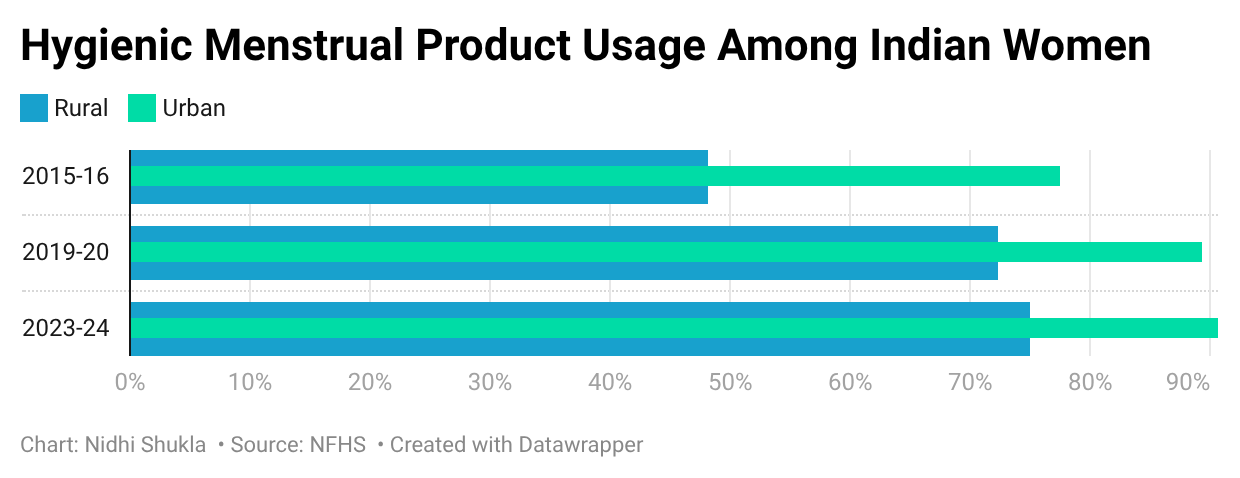
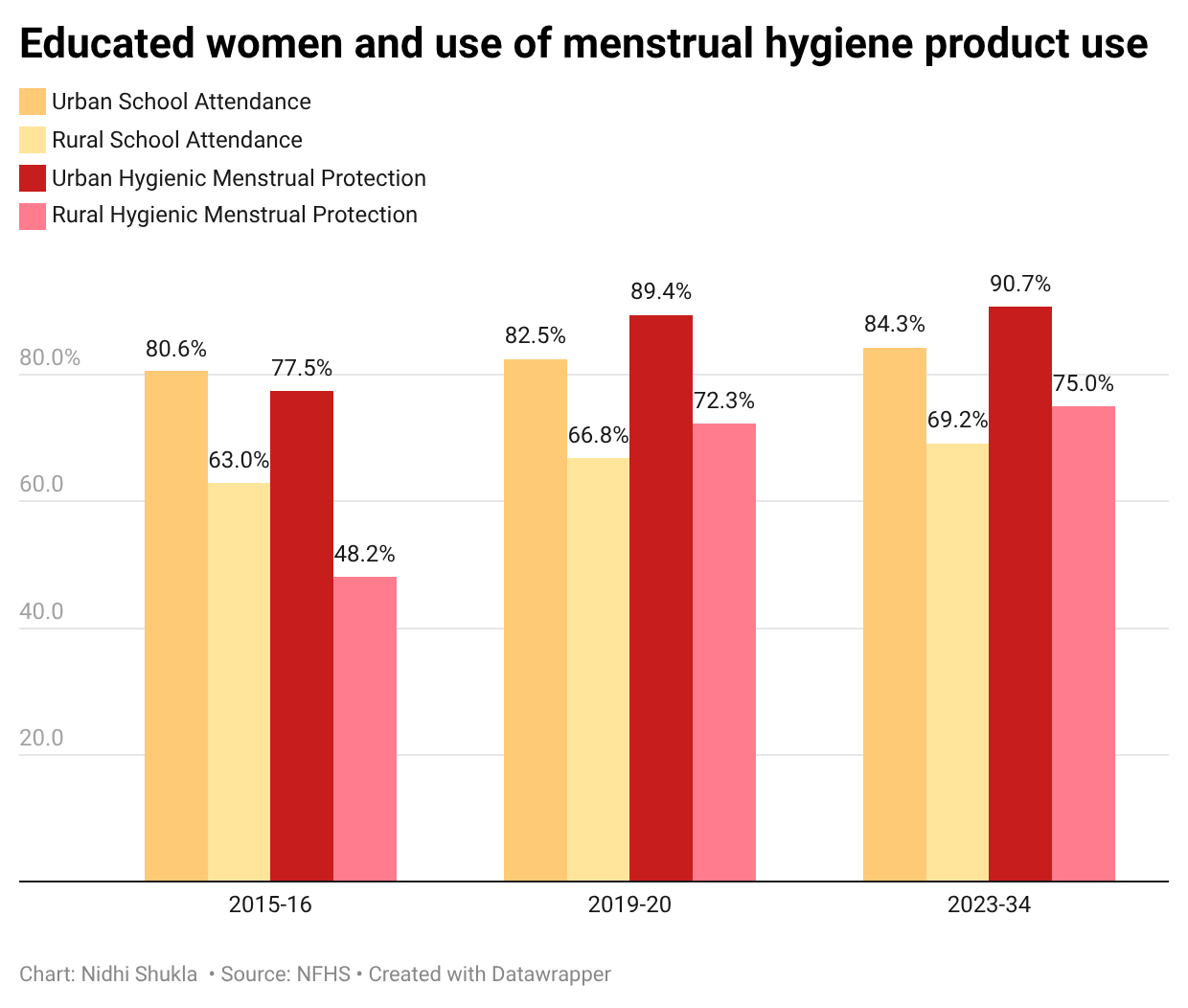
The rise in menstrual-product use is closely associated with greater awareness and education. Between 2015 and 2024, use increased substantially in both rural and urban India. The change reflects a broader social shift in which girls and women have greater knowledge about menstrual hygiene and are better placed to demand safe products and facilities. Education has played a particularly important role in breaking the silence around menstruation. Awareness can influence health practices, encourage school attendance, and make it easier for women to seek appropriate menstrual products. Government intervention has supported this transition. Under the Menstrual Hygiene Scheme, ASHA workers help distribute affordable sanitary pads to adolescent girls, particularly in rural areas. At the same time, institutions such as the Indian Council of Medical Research are examining alternatives that could address both menstrual health and environmental concerns. The next stage is therefore not about reversing the gains made through disposable products. It is about expanding the choices available to women.Education changed the conversation.
From access to sustainability
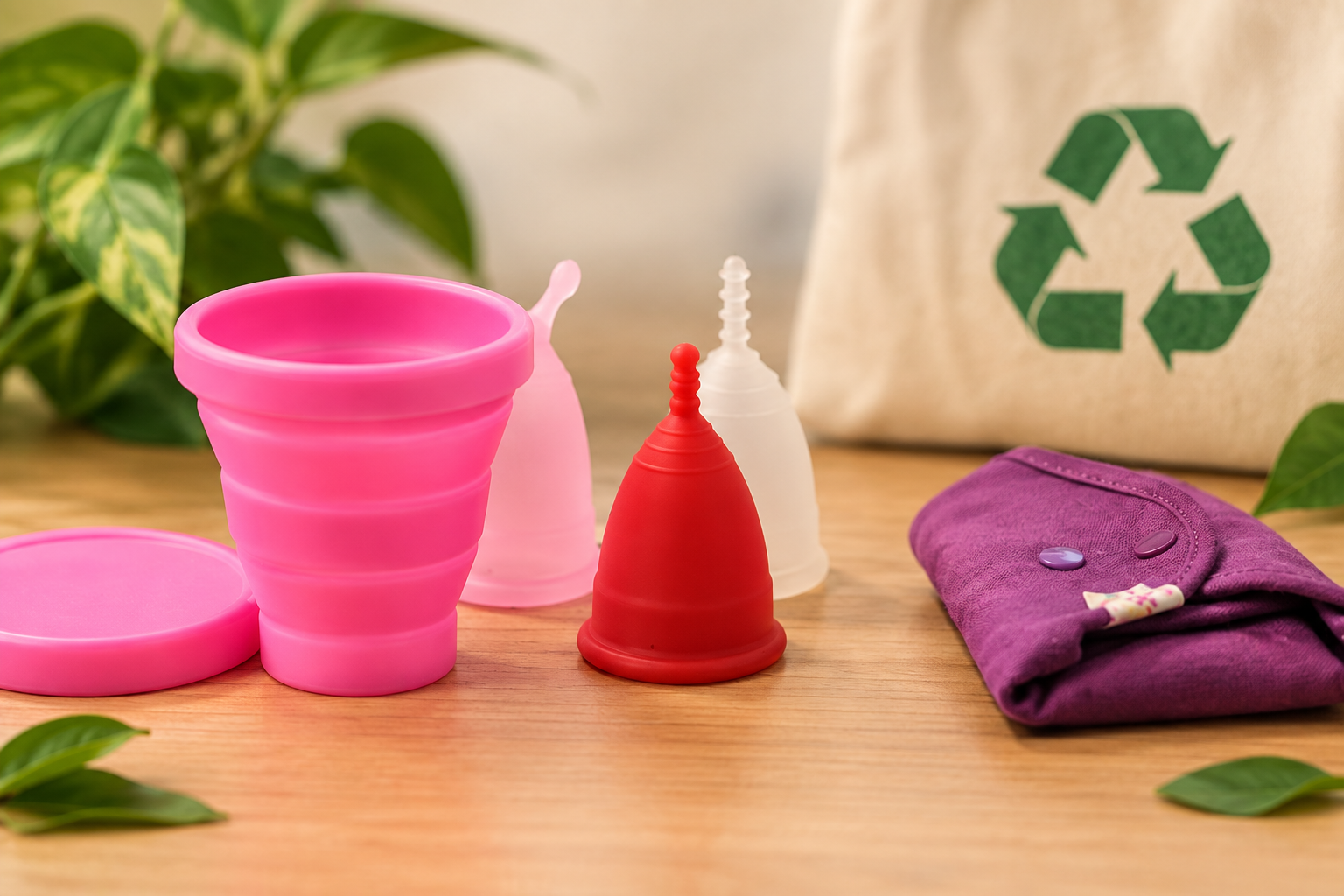
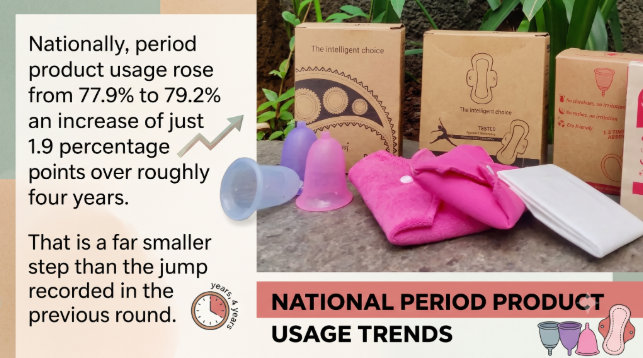
Reusable menstrual products offer one possible way forward. Reusable pads, menstrual underwear, menstrual cups and menstrual discs can reduce the volume of waste generated by single-use products while maintaining menstrual hygiene when used, cleaned and stored appropriately.
The economic argument is also relevant. A disposable pad costing ₹6 to ₹10 can cost roughly ₹576 to ₹960 a year for 96 pads. Reusable pads may cost ₹150 to ₹600 for a multi-pack and can last for several years. Menstrual underwear, generally priced from ₹300 to ₹1,000, can last around two to five years, while menstrual cups, priced approximately between ₹300 and ₹3,000, can last several years with proper care.
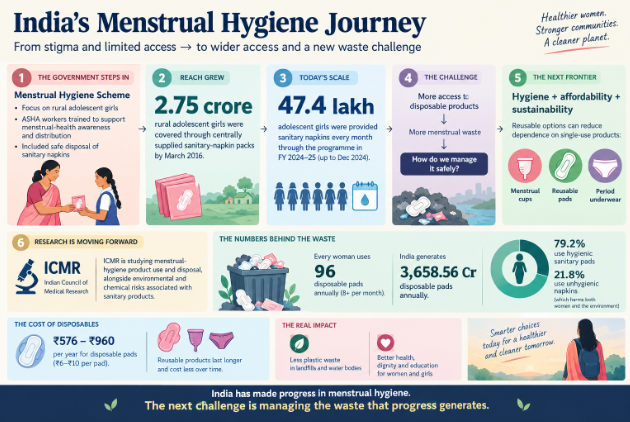
Savings will vary by product, brand, replacement cycle, and individual needs. More importantly, reusable products can reduce the quantity of menstrual waste entering household garbage and, ultimately, landfills and water systems.
The next phase of menstrual awareness
India's menstrual-health journey has moved from awareness and access towards a broader question of sustainability. A few decades ago, the priority was to ensure that menstruation was understood as a normal biological process and that women had access to hygienic products. That work remains important, particularly for women who still lack adequate access.
But rising product use means we can no longer ignore the environmental consequences.
Disposable pads remain an important option for many women, and access to safe menstrual products should not be compromised in the name of sustainability. The objective should instead be to widen informed choices. Where reusable products are practical and acceptable, their greater adoption could reduce recurring household expenditure as well as the volume of menstrual waste.
The next measure of progress, therefore, may be more than how many women have access to menstrual products. It could also be how safely those products are disposed of and how much waste the menstrual-health system generates.
India has made considerable progress in breaking menstrual taboos and improving hygiene. The next step is to make that progress environmentally sustainable.
Sources
1. https://cdn.who.int/media/docs/default-source/bulletin/online-first/blt.24.291421.pdf
2. https://geofactbook.com/countries/india/female-population-of-reproductive-age
3. https://sansad.in/getFile/annex/257/AU277.pdf?source=pqars
Frequently Asked Questions
1. How much has menstrual product usage increased in India over the past decade?
According to recent data from the National Family Health Survey – 6 (NFHS-6), menstrual product usage has risen significantly between 2015-16 and 2023-24. Usage grew from 48.2% to 75% among rural women and from 77.2% to 90.7% among urban women. This shift highlights a major public health milestone driven by government initiatives, increased access to education, and public health outreach.
2. Why is India’s menstrual hygiene progress becoming an environmental concern?
While increased access to menstrual products is a massive victory for health and equity, the overwhelming reliance on single-use disposable sanitary pads poses a severe environmental threat. Standard manufactured single-use pads are made of over 90% plastic and contain synthetic, highly absorbent materials that can take 500 to 800 years to break down in landfills. With an estimated 38.10 crore women of reproductive age in India by 2026, the potential annual volume of non-biodegradable waste is massive, especially in areas lacking formal waste management systems.
3. How do reusable menstrual alternatives compare in cost and sustainability?
Reusable options—such as reusable pads, menstrual underwear, menstrual discs, and menstrual cups—dramatically reduce waste volume and offer long-term financial savings.Financial comparison: While a year's supply of disposable pads costs roughly ₹576 to ₹960, a multipack of reusable pads (₹150 to ₹600), menstrual underwear (₹300 to ₹1,000), or a single menstrual cup (₹300 to ₹3,000) can last for several years with proper care.Sustainability catch: While reusables eliminate landfill waste, they are not a universal panacea; they require the user to have consistent access to clean water, soap, and a private space to dry them safely