How a decade of UPI changed the way India pays
Visualisation
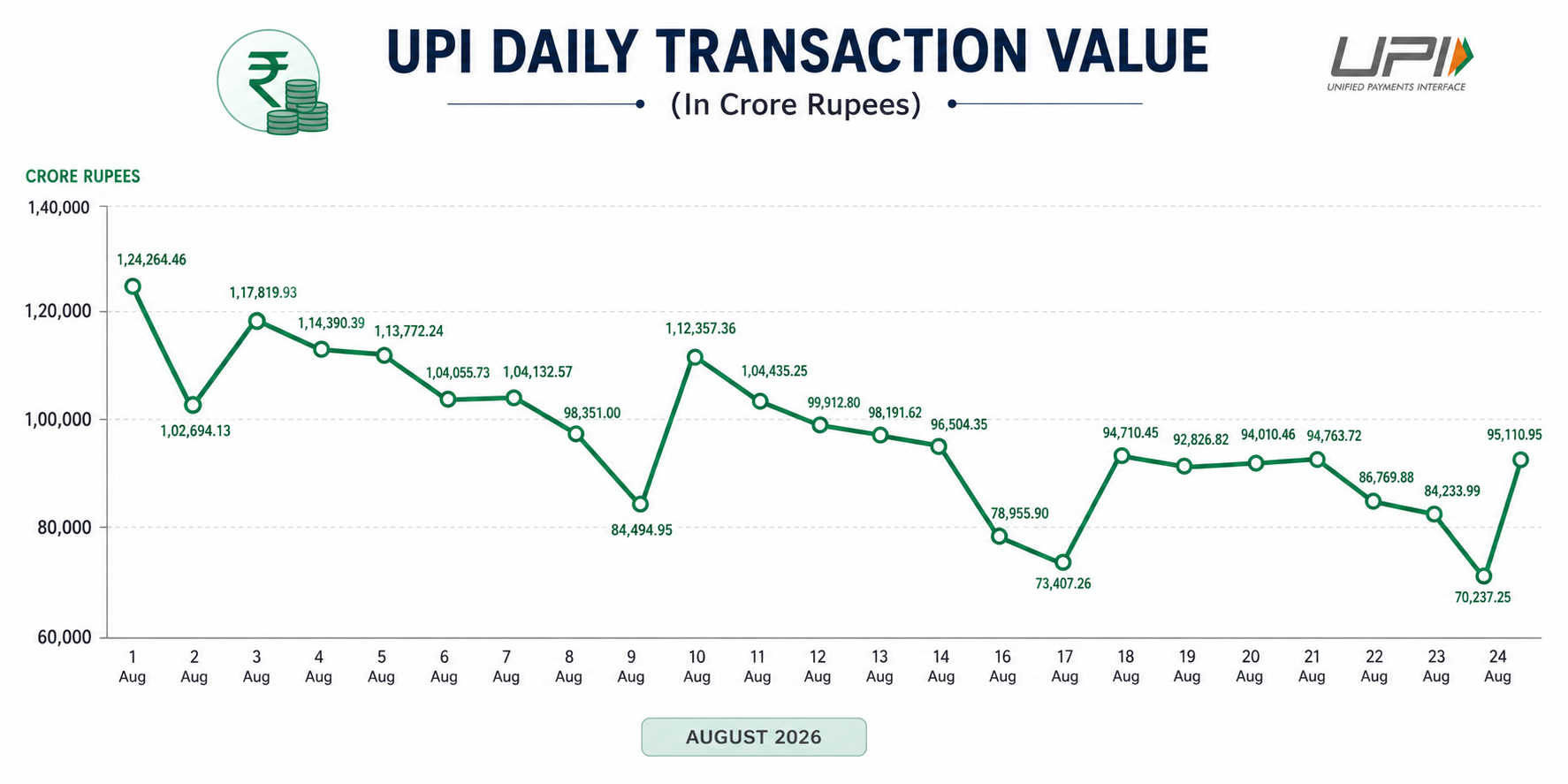
At a Glance
Just ₹1 for a candy. Scan. Beep, Done. Nobody even says thank you anymore, the transaction is too small for gratitude.
A decade ago, that would have sounded absurd. Today, it is simply India. UPI turns ten this year, and in those ten years, the country quietly transformed the way it pays – from bank queues and cheque books to a QR code for almost anything. No fanfare, no fireworks. Just one scan after another, until the extraordinary became everyday.
In 2016-17, UPI (Unified Payments Interface) was barely a whisper: 44 banks, 1.78 crore transactions a year, less than a lakh crore moving through it. Nobody who stood in those bank queues could have imagined that within a decade, the same country would be routing 24,162 crore transactions and ₹314 lakh crore through 703 banks, without most people even calling it a "transaction" anymore. It became something quieter than that. A reflex. A ₹10 tip. A ₹1 bet was settled between friends. Chai split four ways with nobody doing the math out loud.
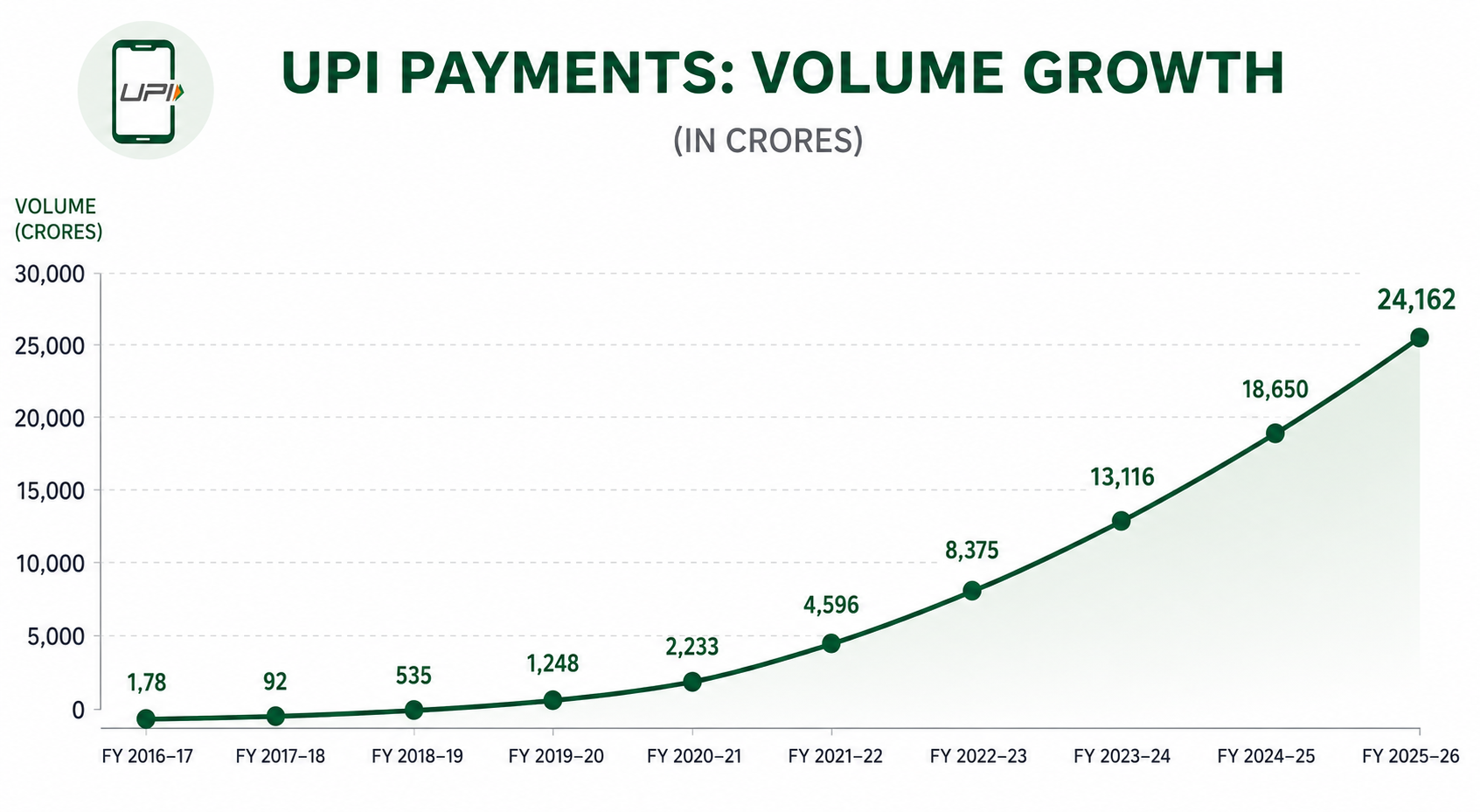
India is at the forefront of the global digital payments revolution, accounting for 49% of global real-time transactions. Today, UPI serves more than 55.49 crore individuals and about 6.5 crore merchants, connecting 731 banks on a single platform.
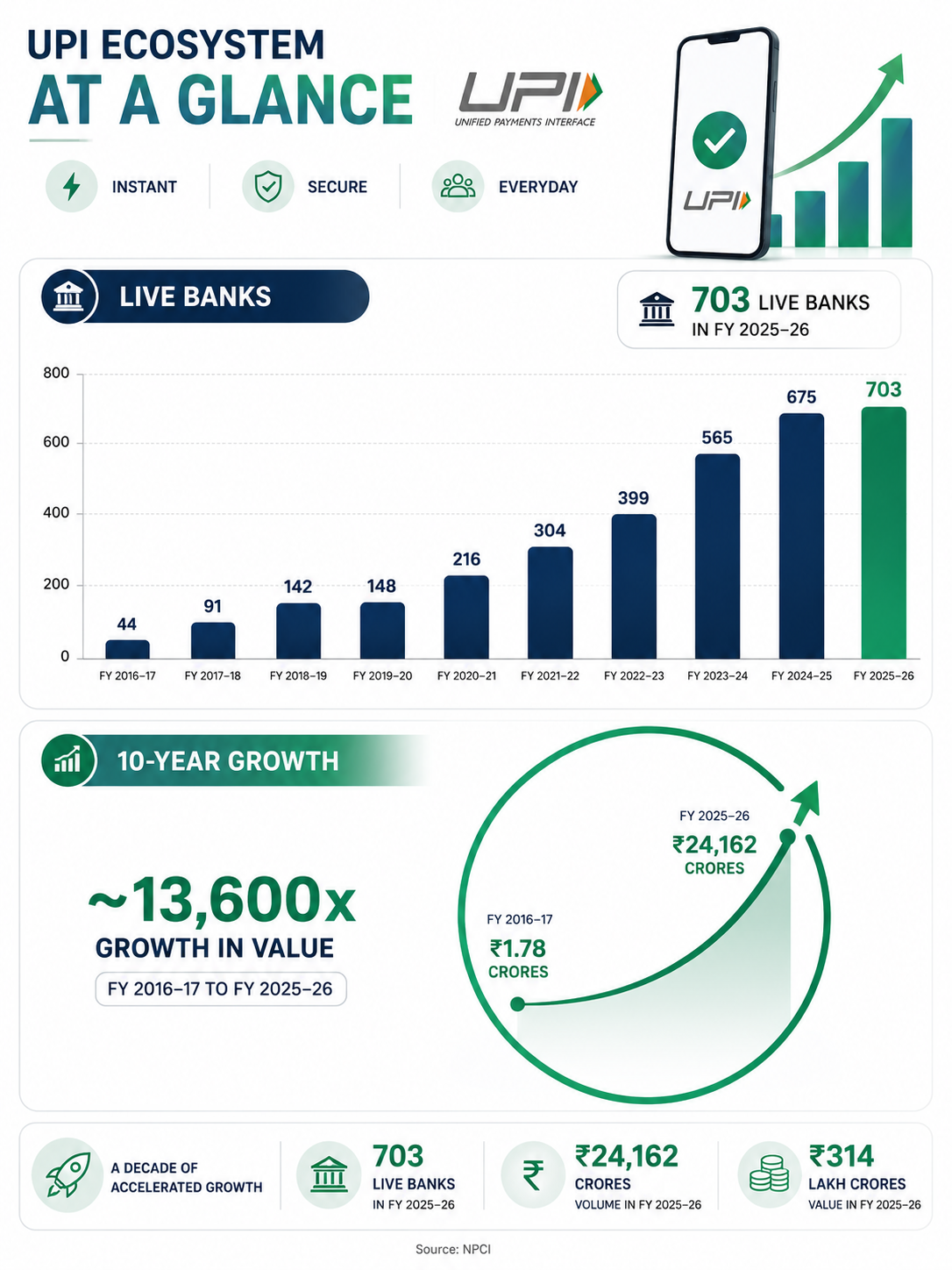
Two apps, one cap nobody's ready for
Ask anyone which app they use and you'll get one of two names. PhonePe and Google Pay together push close to 79% of everything moving on UPI. Nobody calls it a duopoly, but that's exactly what it became, just slowly enough to go unnoticed.
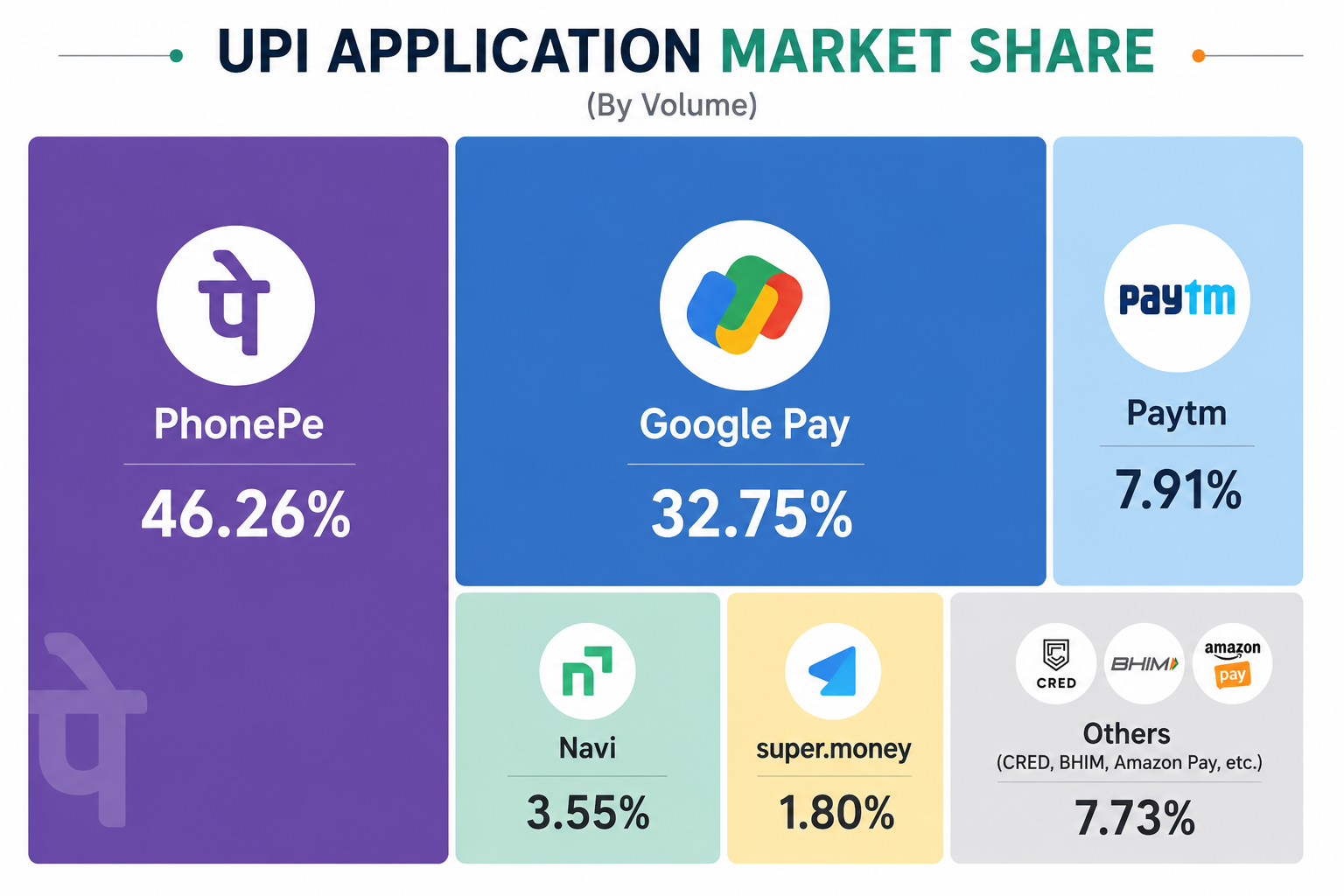
The real UPI story isn’t in the app-store rankings. It’s in the 30% market-share cap regulators have imposed on any single player—and PhonePe is already brushing against it. Once that cap starts biting, the market could change faster than any new feature or “innovation” from the big two. Navi is growing rapidly, super.money is already gaining retail volume, while Paytm is quietly clawing its way back to No. 3 after coming close to being wiped out by regulatory action. The bigger question is no longer who is winning today, but who is best placed for the market that emerges when the cap truly kicks in.
The young spend often, the older spend big
Look at the data behind the scans, and clear patterns emerge:
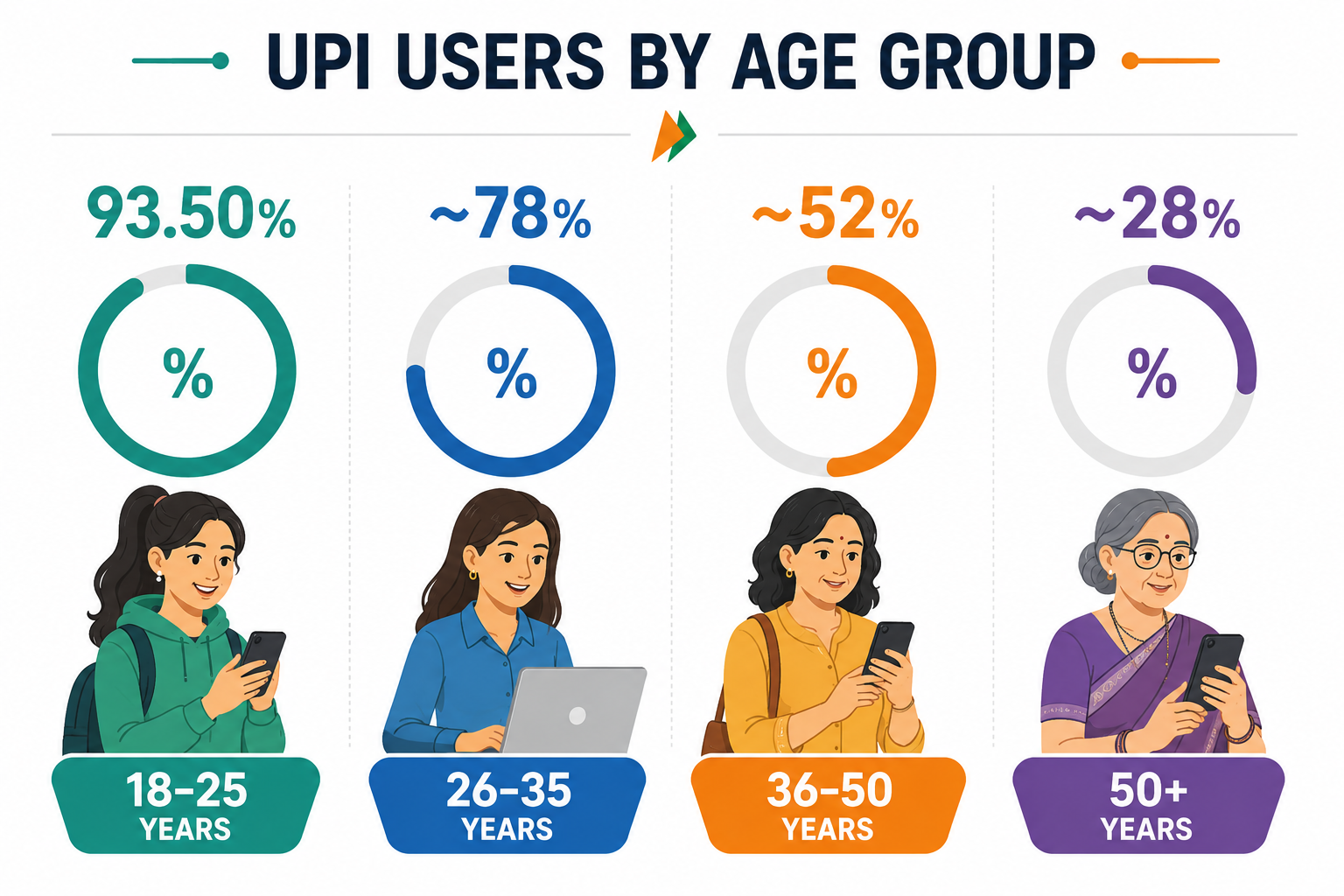
18–25 (94% adoption): High frequency, low value. Students and interns who skipped chequebooks entirely to live on micro-transactions.
26–35 (78% adoption): Moderate frequency, high value. The engine of the payment ecosystem—clearing EMIs, rent, and monthly remittances.
50+ (Under 30% adoption): Low frequency, high growth. Decades of cash-in-hand reliance are shifting.
Retirees scanning QR codes at corner carts—often taught just once by a grandchild—is the ultimate benchmark for UPI's design. When the generation most skeptical of screens adopts digital payments without friction, the shift is permanent.
The ₹50 vegetable buy and the ₹50,000 rent transfer
Two out of every three UPI payments are P2M: buying something, paying a shop, ordering food. That's just 29% of the money moving, though. Flip it: peer-to-peer transfers are only a third of all transactions but carry 71% of the value
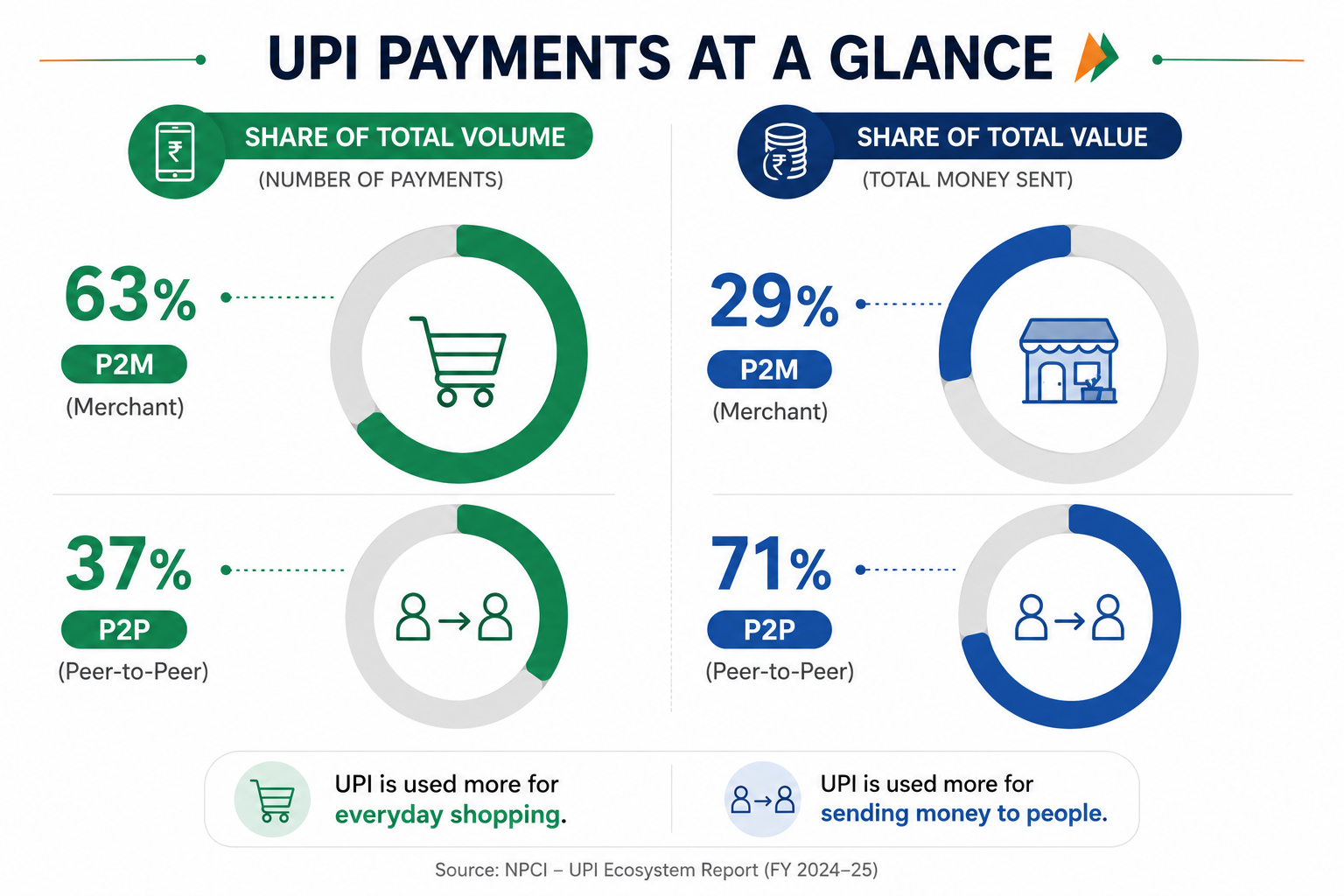
So UPI is two apps wearing one skin. The wallet for small daily life, and the pipe for serious money, sometimes minutes apart on the same phone. A ₹50 vegetable run and a ₹50,000 rent transfer go through the same rails, same app, same four-digit PIN. That's the bigger shift here, honestly. Bigger than the volume numbers.
Map drawn before the app existed
Bengaluru Urban naturally leads the country in UPI volume, driven by tech salaries, startup density, and a digital-first workforce. Right behind it sits Maharashtra's economic engine: Mumbai Suburban, Pune, and Thane. Maharashtra alone accounts for over 11% of India's total UPI value, leading every other state.
Delhi, Karnataka, Gujarat, and Tamil Nadu follow closely. These hubs represent commerce, industrial supply chains, exports, and corporate capital. This isn't merely a function of population; it reflects where economic momentum already existed before the technology arrived. UPI simply illuminated the pre-existing flow of money.
Now, that map is expanding far beyond tier-1 tech hubs. With Bhashini integration, UPI communicates in the user's native tongue whether it is Marathi in a Pune alley or Tamil in a Chennai market. Removing the English-language barrier unlocked true mass adoption: people can finally transact in the language they think in.
Somewhere between a ₹1 candy purchase and a ₹50,000 rent transfer, an entire nation stopped asking "Will this work?" and simply trusted that it would. Many politicians once argued that roadside vendors would never adopt digital payments that cash was too deeply entrenched. Today, that same vendor accepts ₹10 for coriander via a QR scan without blinking. This massive transaction volume wasn't built by top-down mandates or corporate market-share battles; it was built by millions of everyday micro-transactions rewiring national habit.That momentum has crossed borders. Merchants across Singapore, Sri Lanka, the UAE, and France now accept UPI, while other nations study its open-protocol rails to build their own sovereign systems. India did not merely adapt to foreign financial technology—it built a homegrown standard that the world now seeks to replicate. A quiet beep, a green tick, and a domestic innovation that went global.