India Opened The Space Sector Door Kept Shut for Private Companies For 60 Years. The Results Are ‘Wow!’
Visualisation
At a Glance
In July 2026, a rocket called Vikram-1 lifted off from Indian soil and reached Earth’s orbit. It wasn't built by ISRO. It was built by Skyroot Aerospace, a company started by two engineers who once worked at the space agency and then left to build their own rocket.
Put that next to what SpaceX did for the United States. Elon Musk's company didn't just build rockets. It proved a private company could do what only a government used to do, and could do it well enough to be trusted with the job. Skyroot just did the Indian version of that, and did it fast. A private orbital launch, from a company barely eight years old, is not a small strike rate. Most rocket companies take twice that long, if they get there at all. This isn't a story about hope. It's a story about something that's already working.
The number that started it
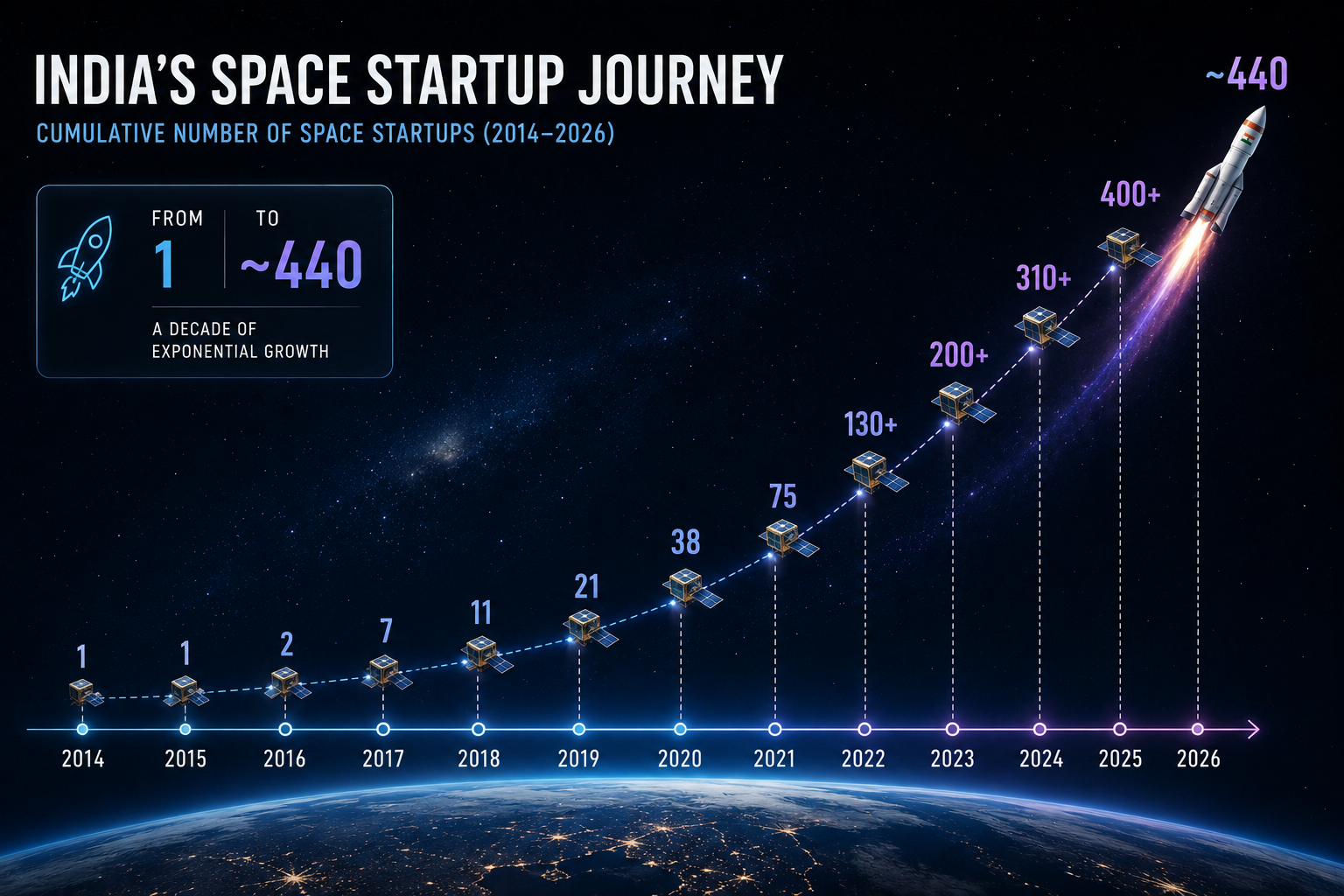
Here's where it gets bigger than one company. In 2014, India had exactly one private space startup. One. By 2020, that number grew to 38. Today, there are close to 440.
Six years of sustained efforts has led to development of a new ecosystem with more than ten-fold rise in the number of space startups. That kind of jump doesn't happen slowly, and it doesn't happen by accident. The turning point It happened because of one decision. In 2020, the government opened India's space sector to private companies for the first time. Before that, building a satellite or a rocket outside ISRO wasn't really something you could start as a business. After 2020, it was. Look at the startup numbers before and after that year, and the line doesn't just rise, it bends upward. One policy change, one clear kink in the data. Where the startups are Almost a third of these 440 companies are in Bengaluru alone. Hyderabad, Skyroot's home, isn't far behind, and together the two cities hold more than half the country's space startups between them. That's not the industry spreading thin. It's what a young industry usually does first: gather around wherever the earliest winners set up, where engineers, investors, and suppliers can all find each other without much searching.
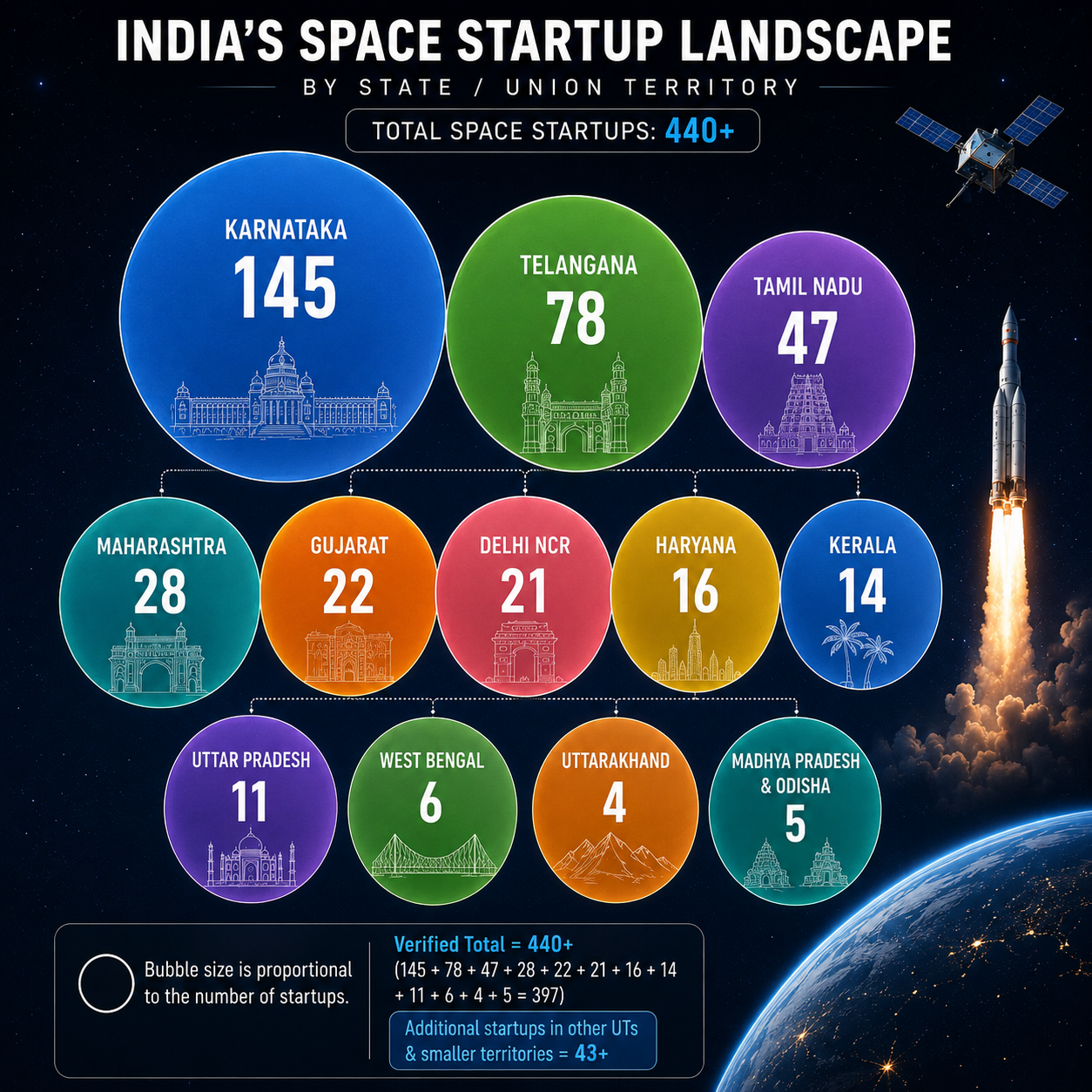
But the map isn't only two dots. Chennai has close to 50 startups of its own, working on rocket parts and deep-tech hardware. Pune and Mumbai are building a base in remote sensing and marine data. Smaller cities are starting to show up too. Ahmedabad, Thiruvananthapuram, even Dehradun, are each carrying a handful of startups tied to a nearby ISRO centre or a local skill the bigger hubs don't have.
That's still worth noticing. An industry doesn't move past its first two cities until there's enough demand to support a second wave, and enough confidence that starting up somewhere other than the obvious hub isn't a disadvantage. The early names in these smaller cities are the ones testing that theory right now. If even a few of them work, the map five years from now won't look like Bengaluru and Hyderabad with everyone else scattered around the edges. It'll cover the whole country that has learned to build this in more than one place.
What kind of companies these actually are
Most of the 440 aren't trying to build rockets like Skyroot. Most are building software that reads pictures from satellites and turns them into something useful for farmers, banks, or defence teams. That might look like the smaller, less exciting version of the dream. It isn't. Industry data on India's space sector shows this software and analytics layer, what the field calls downstream. It is expected to grow into the largest single piece of the space economy within the decade, even though it still holds a smaller share of funded companies today. A rocket company needs someone to use what it launches. That downstream crowd is quietly building the customer base while the rockets get the attention.
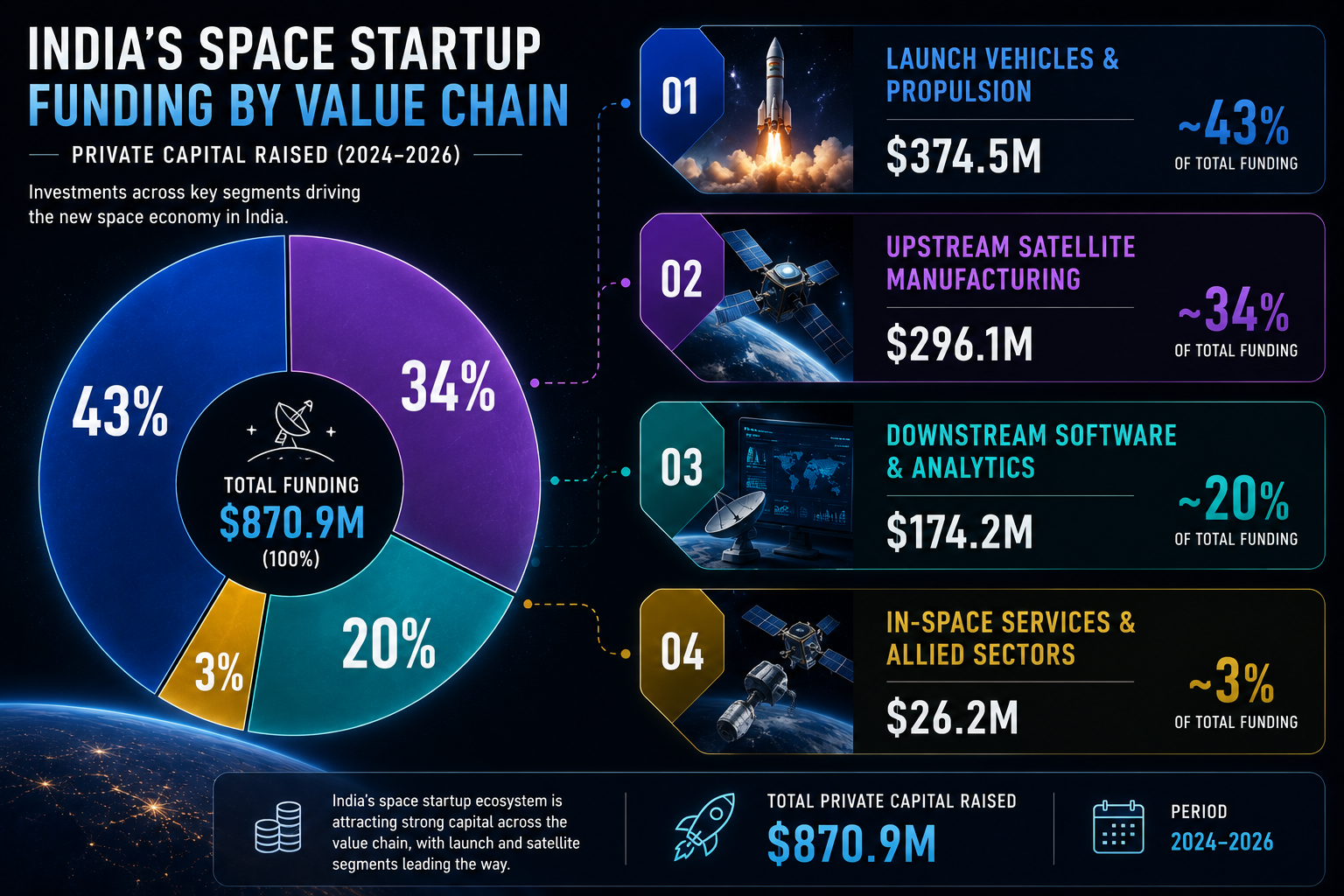
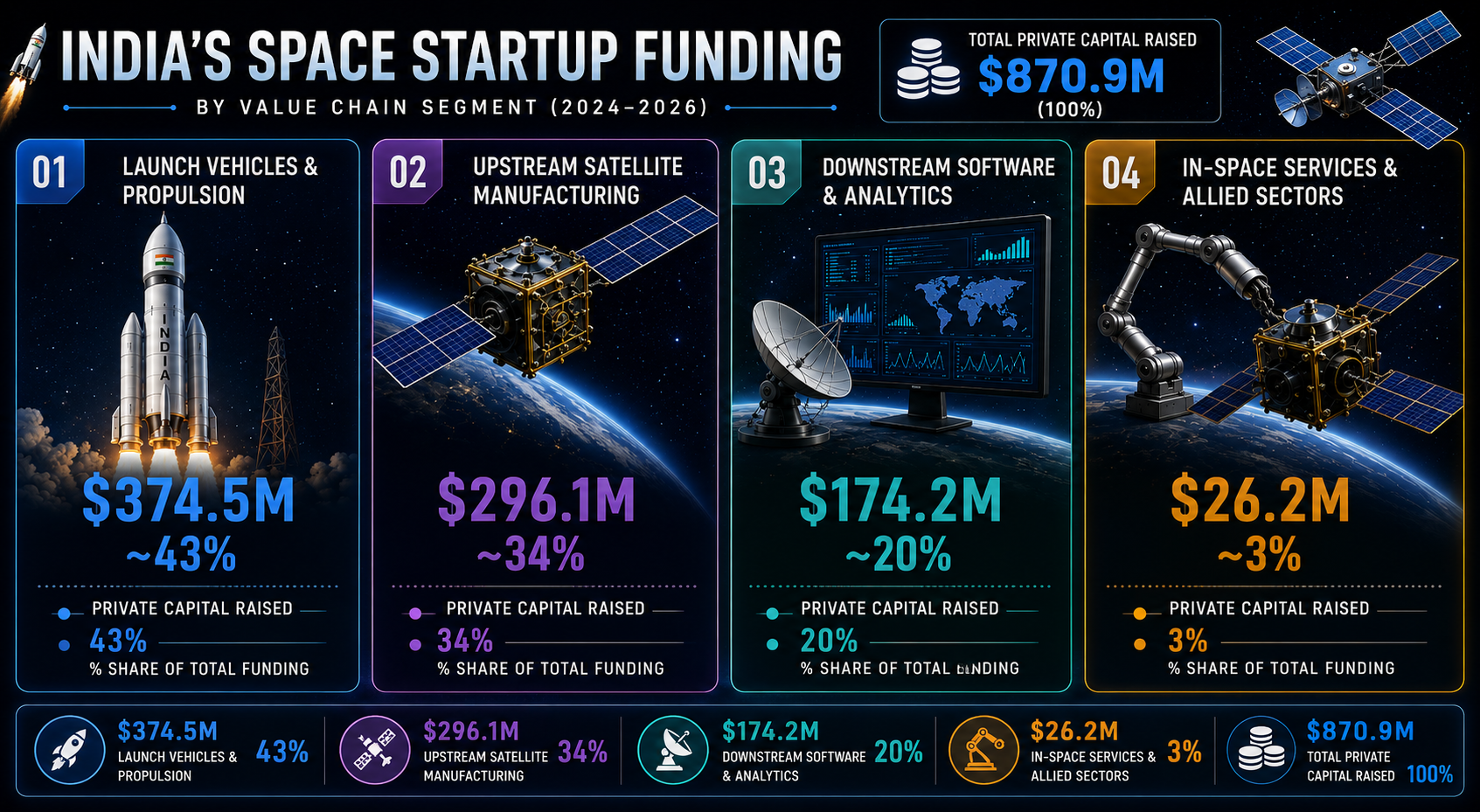
Where the money is going That gap between company count and company type is exactly why the funding looks the way it does. India’s space startups have raised close to $871 million in private capital so far, and industry association data shows the bulk of it, historically well over half, has gone toward launch vehicles and satellite manufacturing. Software and data platforms, despite outnumbering hardware startups several times over, have taken a smaller slice of that pool. A space engineer would read that split as ordinary, not lopsided. An engine has to survive ignition and vacuum on its first real attempt, and a satellite has to run for years in an environment no one can walk into and repair. That kind of hardware fails expensively if it fails at all, so it needs capital before it needs customers. Software doesn't carry that same upfront cost, it can reach a working product for a fraction of what a test stand or a cleanroom demands. Follow the same money forward, though, and the picture starts to shift. ISRO itself is now stepping back from routine satellite and launch vehicle work to hand more of it to private companies, which means more finished hardware entering orbit every year. Someone has to turn what all of that hardware produces into something a bank, an insurer, or a farmer can act on, and that work is its own kind of hard engineering, models built to tell a flooded field from a shadow at a scale where a wrong answer costs someone money. As that layer proves itself, the funding gap it's running today looks less like a shortfall and more like the next place the capital is headed to.
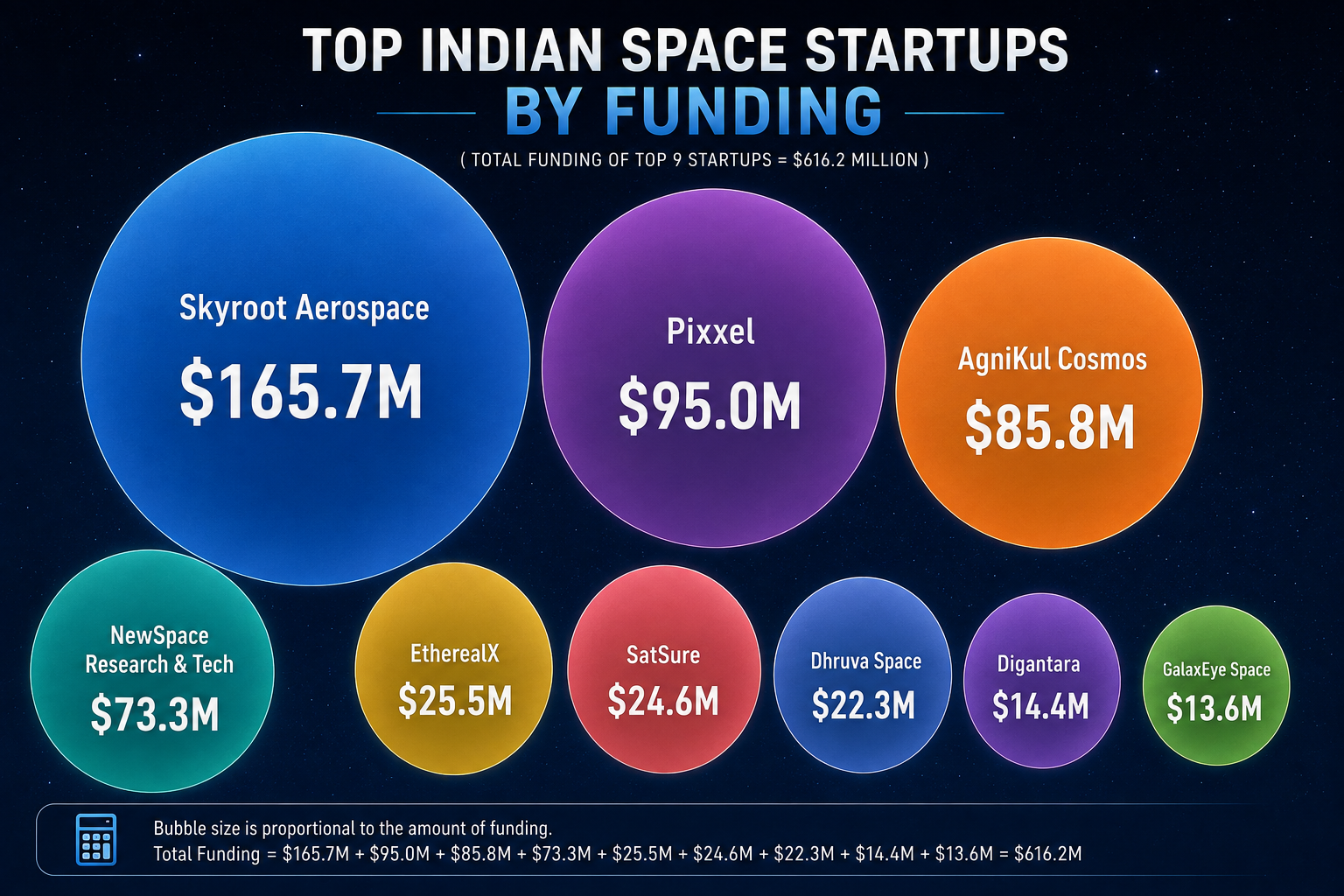
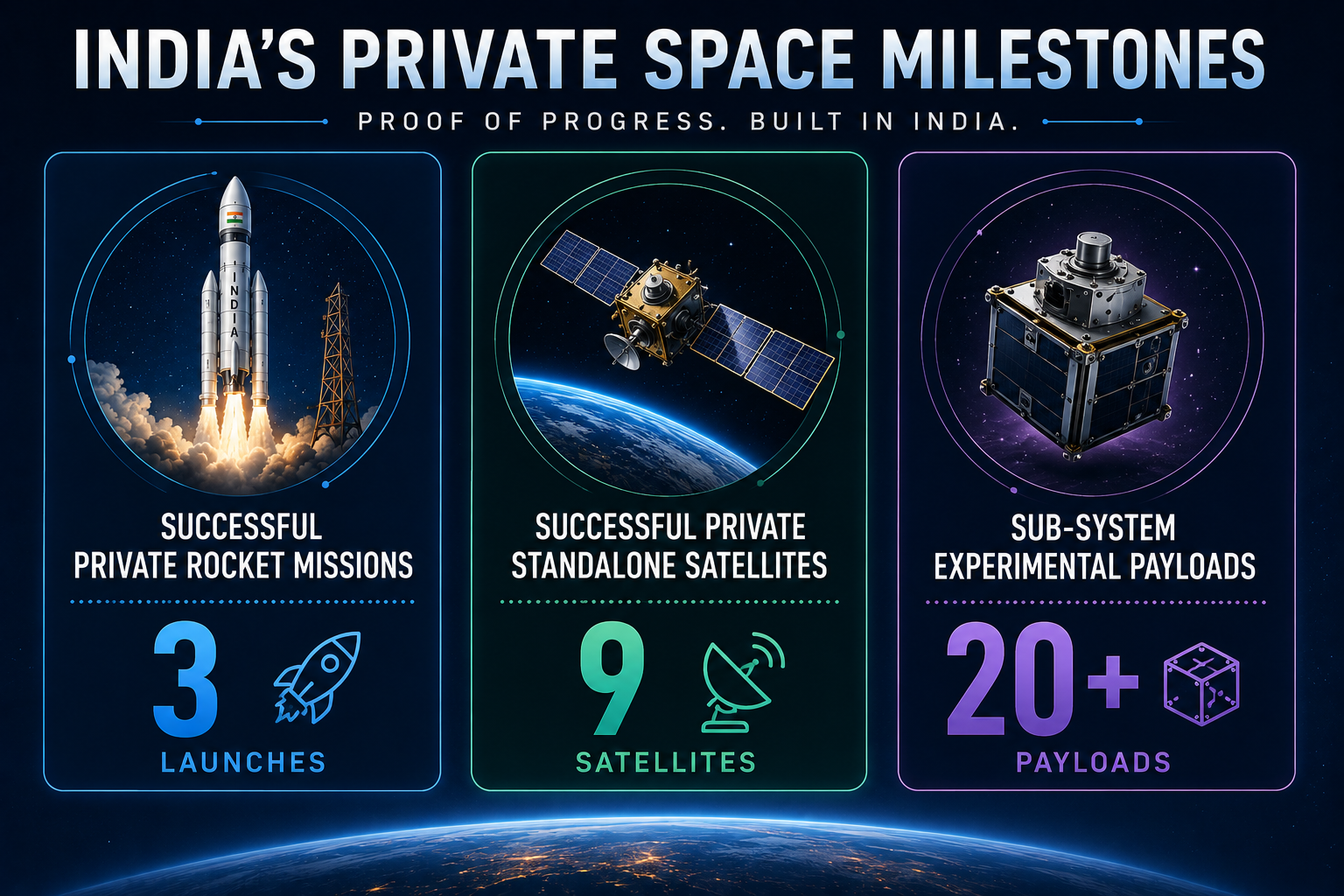
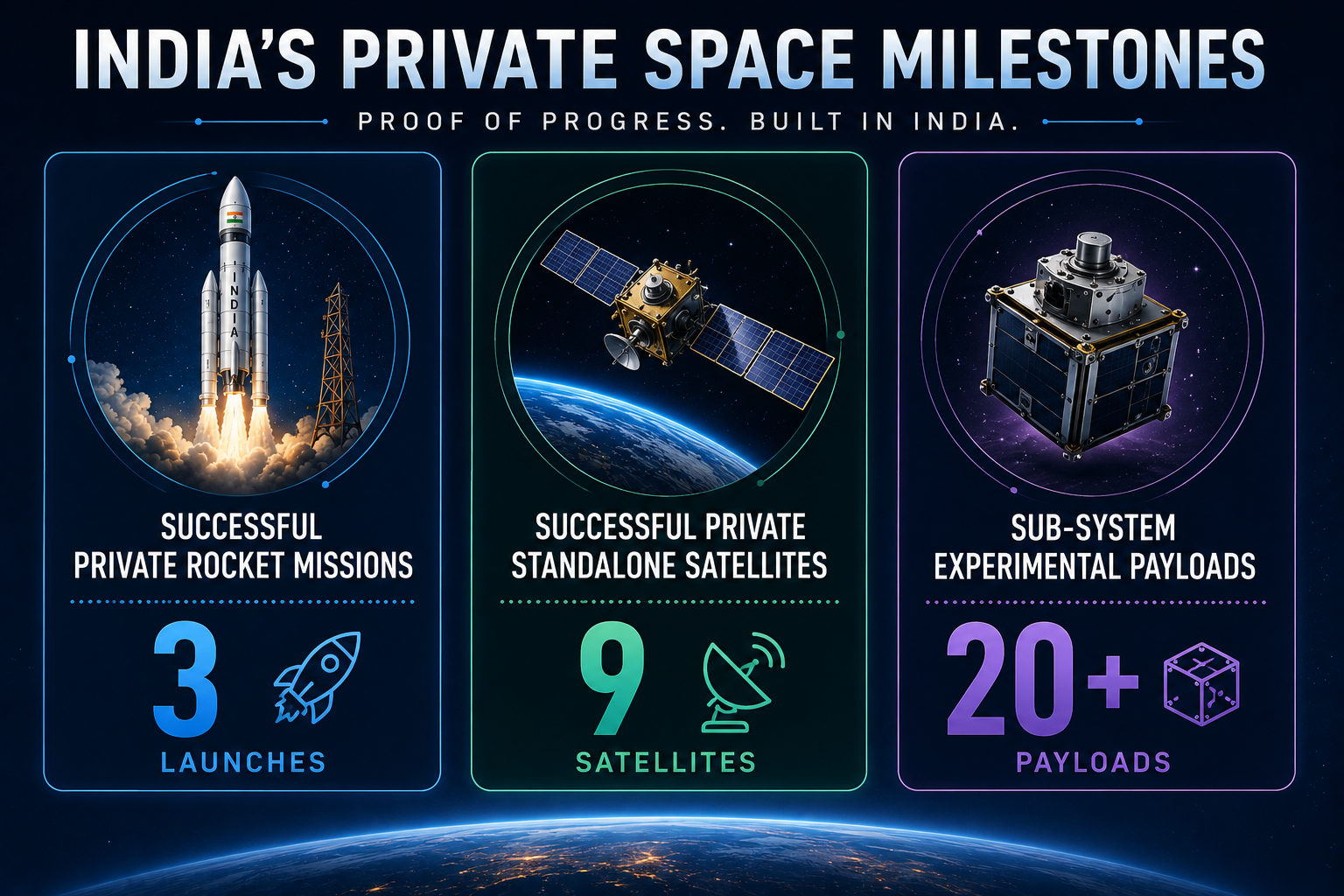
When the sky says ‘yes’ Six years ago, opening India's space sector to private companies was a bet. Today, the sky is the evidence it paid off. Private Indian companies have flown a handful of rocket missions, put close to a dozen satellites into orbit, and tested more than 20 experimental payloads riding along on ISRO's own launches. Skyroot's Vikram-1 sits at the top of that list, an orbital flight from a company that didn't exist before the sector opened up.