India sees fewer crimes against women, but domestic violence remains a concern.
Visualisation
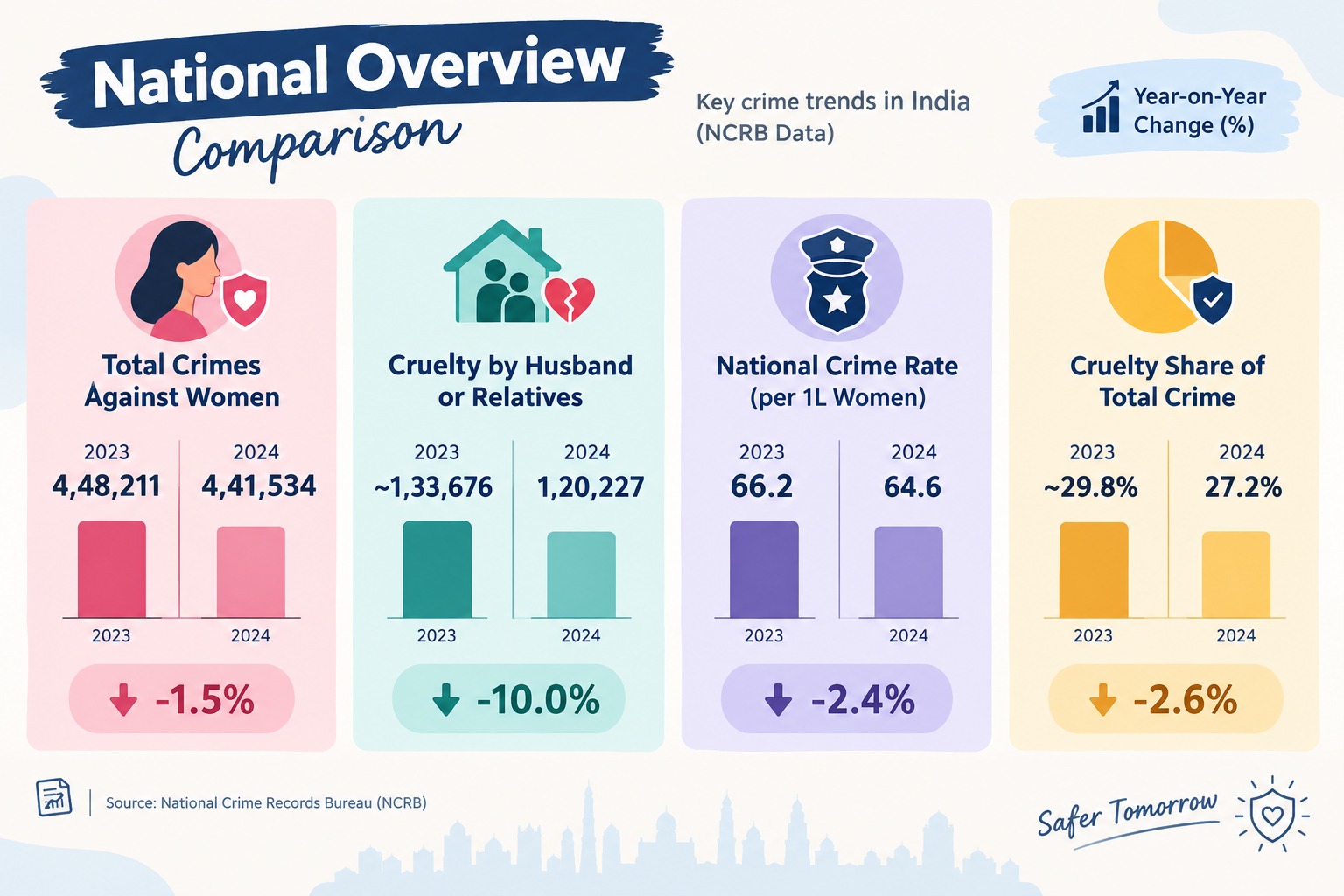
At a Glance
A fall in crime is good news. But numbers become more revealing when we ask which crimes are falling, and which ones are not.
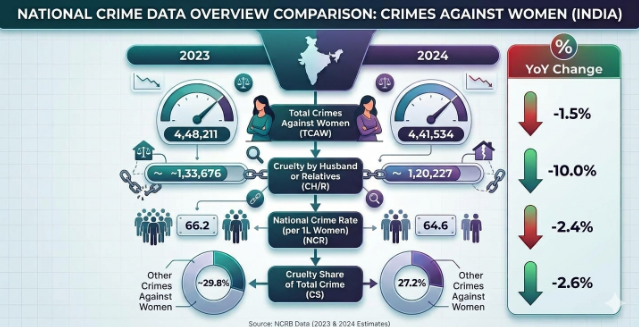
The latest National Crime Records Bureau (NCRB) data shows that registered crimes against women in India fell from 445,256 cases in 2022 to 441,534 in 2024. Several major categories, including kidnapping, rape, sexual harassment and stalking, also recorded an overall decline during this period.
Yet one category continues to stand apart. “Cruelty by husband or his relatives” remained the highest reported crime against women in each of the last three years. There were 140,019 such cases in 2022. Although the number fell to 120,227 in 2024, it still accounted for more than one in four registered crimes against women.
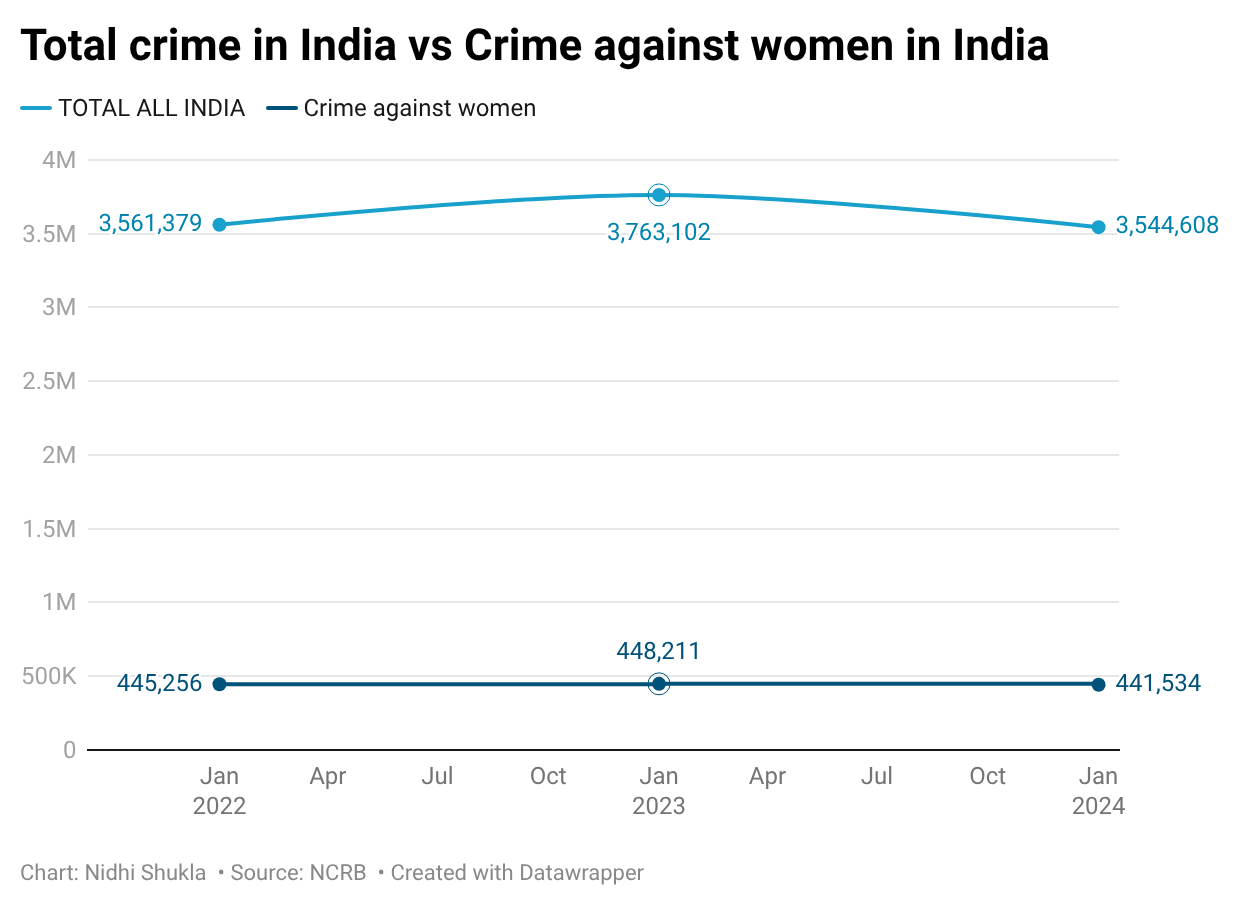
https://www.datawrapper.de/_/lEjYG/
The domestic picture becomes clearer when other related crimes are considered. Dowry Prohibition violations stood at 12,343 cases in 2024, while dowry deaths reached 5,737.
The most striking contrast, however, comes from cases registered under the Protection of Women from Domestic Violence Act. While most major crime categories moved downward between 2022 and 2024, these cases rose from 468 in 2022 to 632 in 2023. They then fell slightly to 616 in 2024, but remained above the 2022 level.
This made domestic violence the only category in the data to record a net increase over the three years.
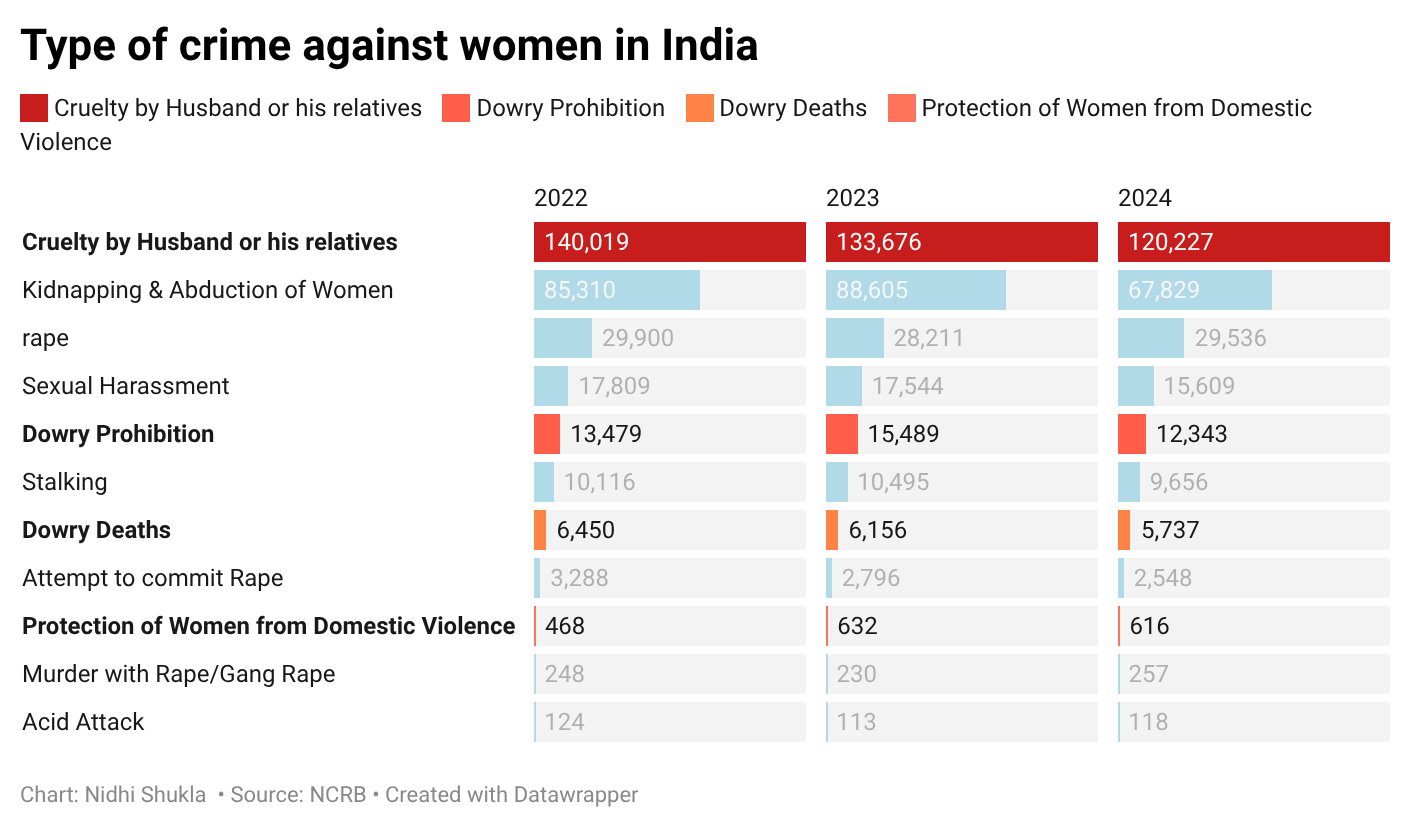
https://www.datawrapper.de/_/ZOnpE/?v=2
Why the home remains difficult
Domestic violence is different from many crimes committed in public spaces because the person responsible may be someone the woman lives with or depends on. This can make reporting abuse more difficult.
According to a study, crimes against women inside the home rank the highest in India due to deep-rooted societal structure and social pressures. In many households, men are raised to hold power over women, leading to a normalised behaviour of control and entitlement.
Dowry-related pressure remains one factor. Despite being prohibited by law, demands for money or property can lead to harassment, threats, and violence when families fail to meet them.
Economic dependence can further limit a woman's choices. Lack of personal savings, property, or employment can make it difficult to leave an abusive household or seek immediate support.
Social pressure can add another barrier. Concerns about family reputation and pressure to keep domestic matters private can discourage women from reporting abuse or seeking legal help until the situation becomes severe.
Research has also linked unequal power within households with controlling behaviour and gender-based violence.
The data tells two stories.
The NCRB numbers point to two trends at once. Overall crimes against women are declining, and several major categories have recorded a fall. At the same time, cruelty by husbands or their relatives remains the largest individual category, while domestic violence cases remain above their 2022 level.
This contrast matters. Improving women's safety is not only about what happens in public spaces. Education, financial independence, awareness of legal rights, and access to support can also strengthen a woman's ability to respond to abuse.
NCRB data shows that, from 2022 to 2024, the total crime rate declined by 0.84%, while the registered crime rate declined by 1.8%. This means the crime rate fell by less than 1%, while crime registration increased by less than 2%. In conclusion, the report says crime has fallen, and the same people refuse to register crime in the nation. This shows people refuse to ask for justice.
https://www.datawrapper.de/_/YVgg9/ The numbers therefore offer an encouraging picture overall, while highlighting an area that still needs attention. The real measure of progress is not only whether crime falls, but whether the decline reaches every part of women's lives.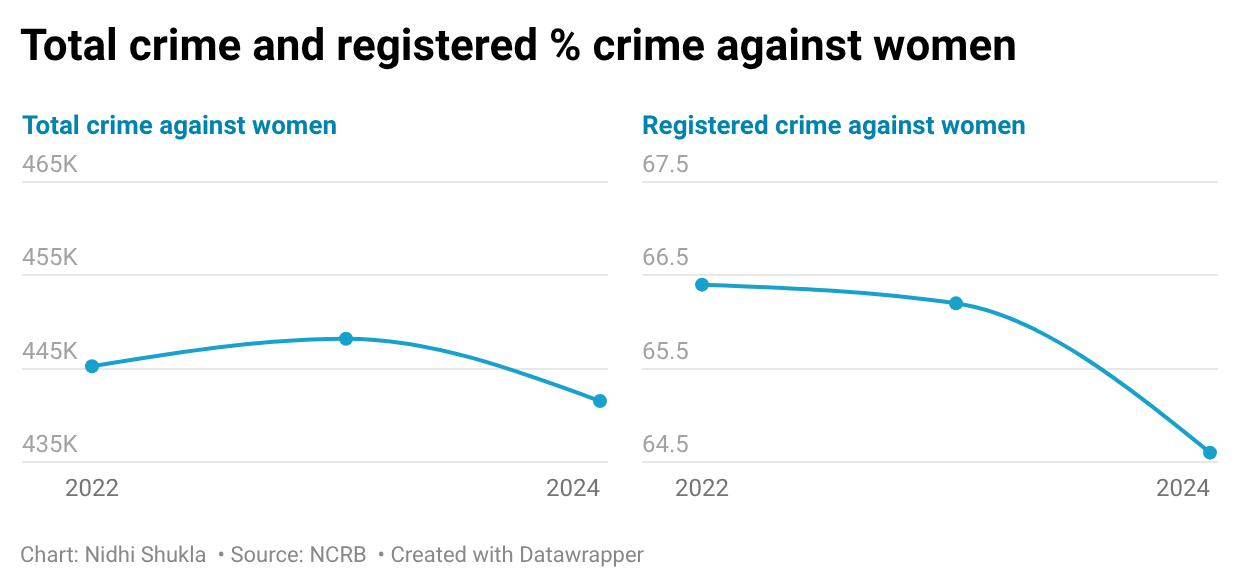
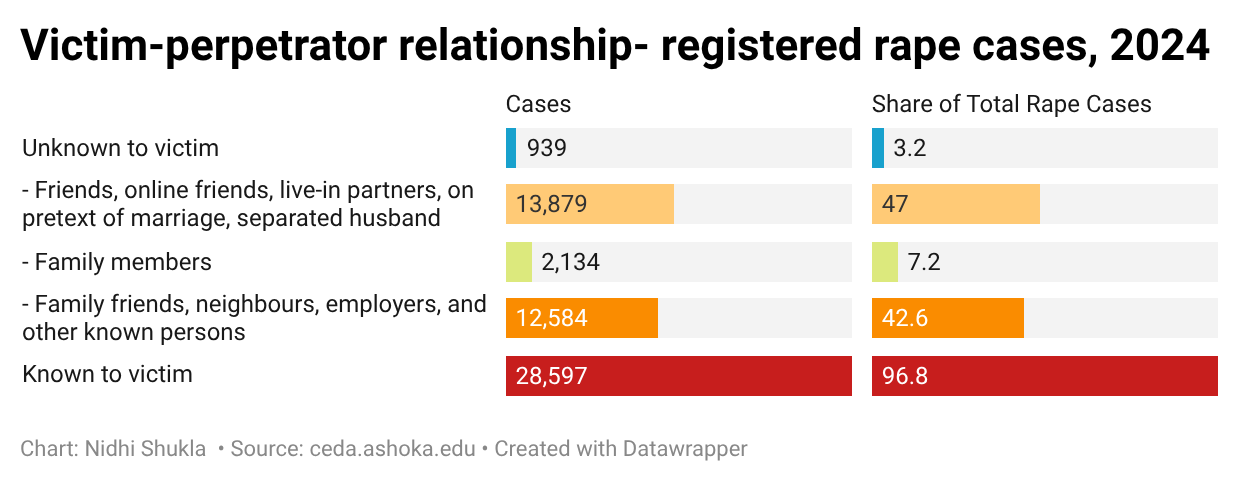
In most cases, the crimes against women are committed by known people. How can this be justified in society when 96.8% of victims are familiar with the accused? 47% of the accused know the victim as friends, online friends, live-in partners, on the pretext of marriage, separated husband; 42% of the accused were Family friends, neighbours, employers, and other known persons. And the most heartbreaking part is when the accused knows the victim as a family member, at 7.2%.
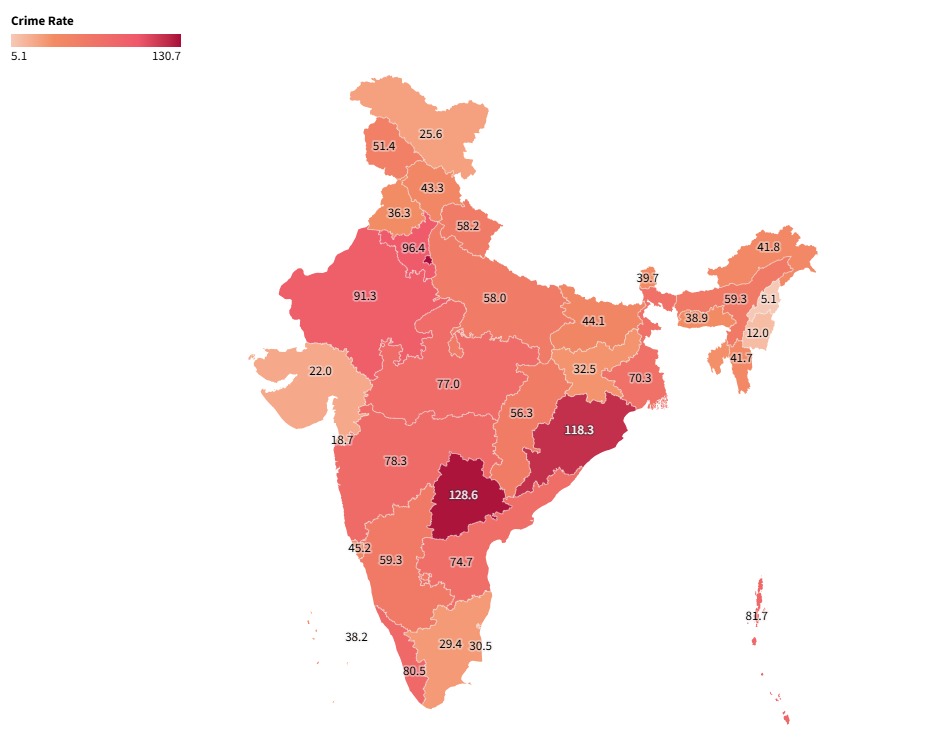
Registered crime rates against women across India
No government or any authority is capable of stopping these crimes. It also means that if the known accused stops the crime, it could end by almost 96.8%. And society could have a really safe space for women, at least at home or in their comfort zone. It doesn’t mean the accused has the right to get out of their home to attempt crime against women. Every type of crime should be reduced in society. It is not only the responsibility of the government but also the ethical value of the members of society to have respect for every individual.
The numbers therefore offer an encouraging picture overall, while highlighting an area that still needs attention. The real measure of progress is not only whether crime falls, but whether the decline reaches every part of women's lives
Sources
Frequently Asked Questions
1. Did crimes against women decline in India between 2022 and 2024?
Yes. Registered crimes against women fell from 4,45,256 cases in 2022 to 4,41,534 cases in 2024. However, NCRB figures represent reported and registered cases, so they do not capture every incident that occurs.
2. Which crime against women remained the largest category?
Cruelty by husband or his relatives remained the largest reported category. Cases declined from 1,40,019 in 2022 to 1,20,227 in 2024, but the category still accounted for more than one in four registered crimes against women.
3. Why does a decline in registered crime not necessarily mean women are safer?
A fall in registered cases can reflect fewer incidents, but it can also be affected by under-reporting, access to police, awareness, and willingness to file complaints. Therefore, NCRB data should be understood as a measure of registered crime, not a complete measure of the actual prevalence of violence against women.