Indian Railways brings accidents down by 93%
Visualisation
At a Glance
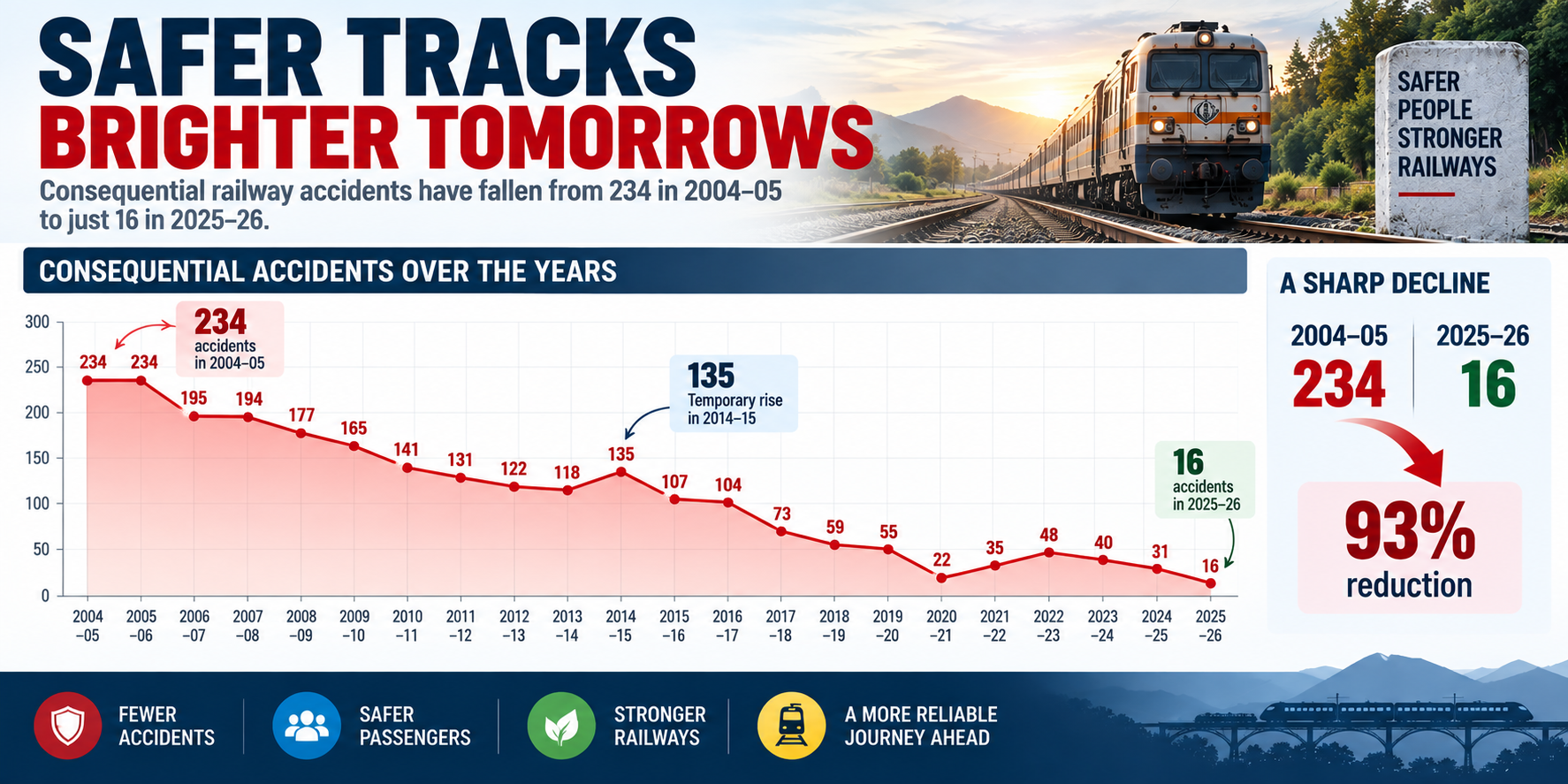
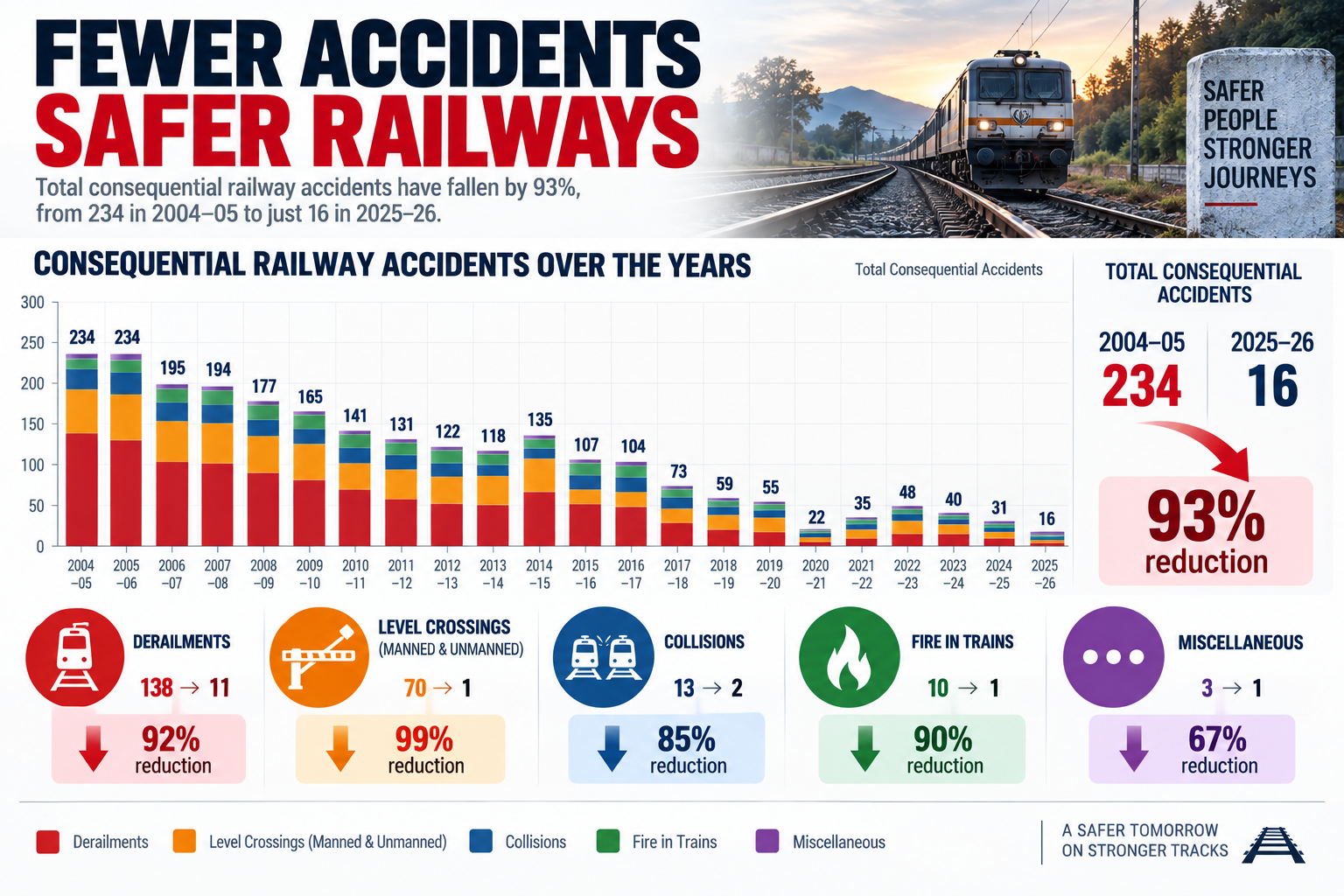
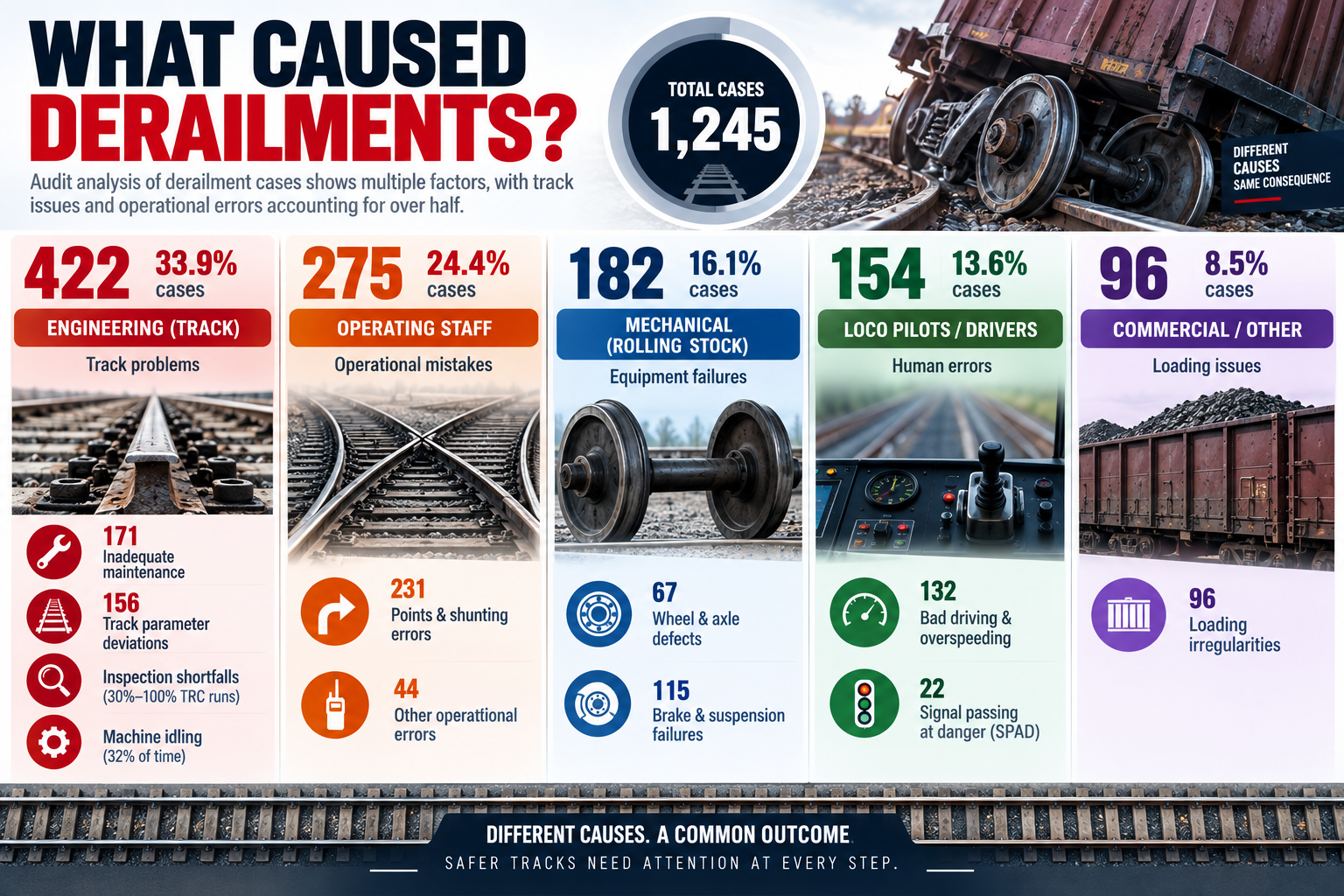
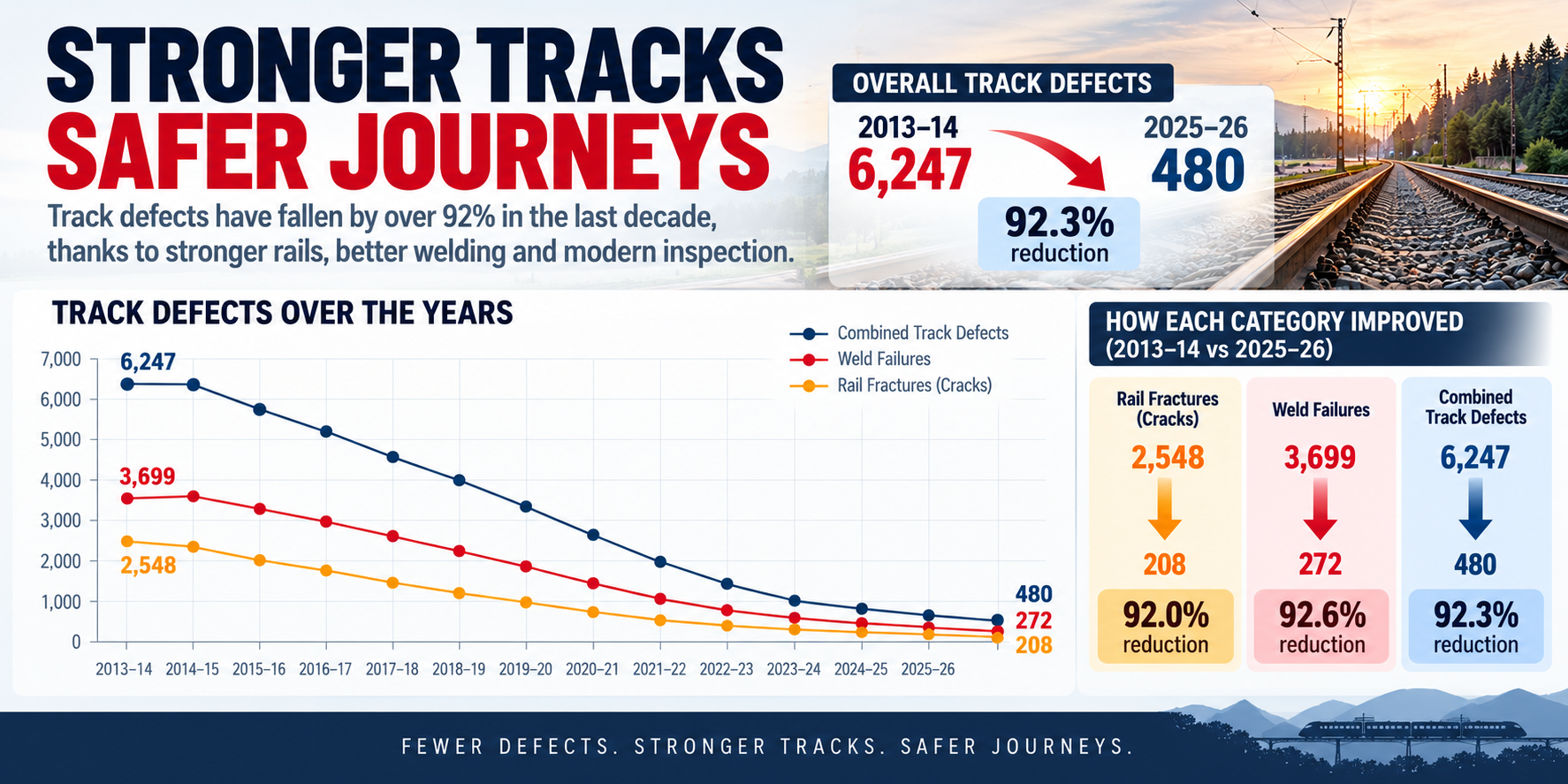
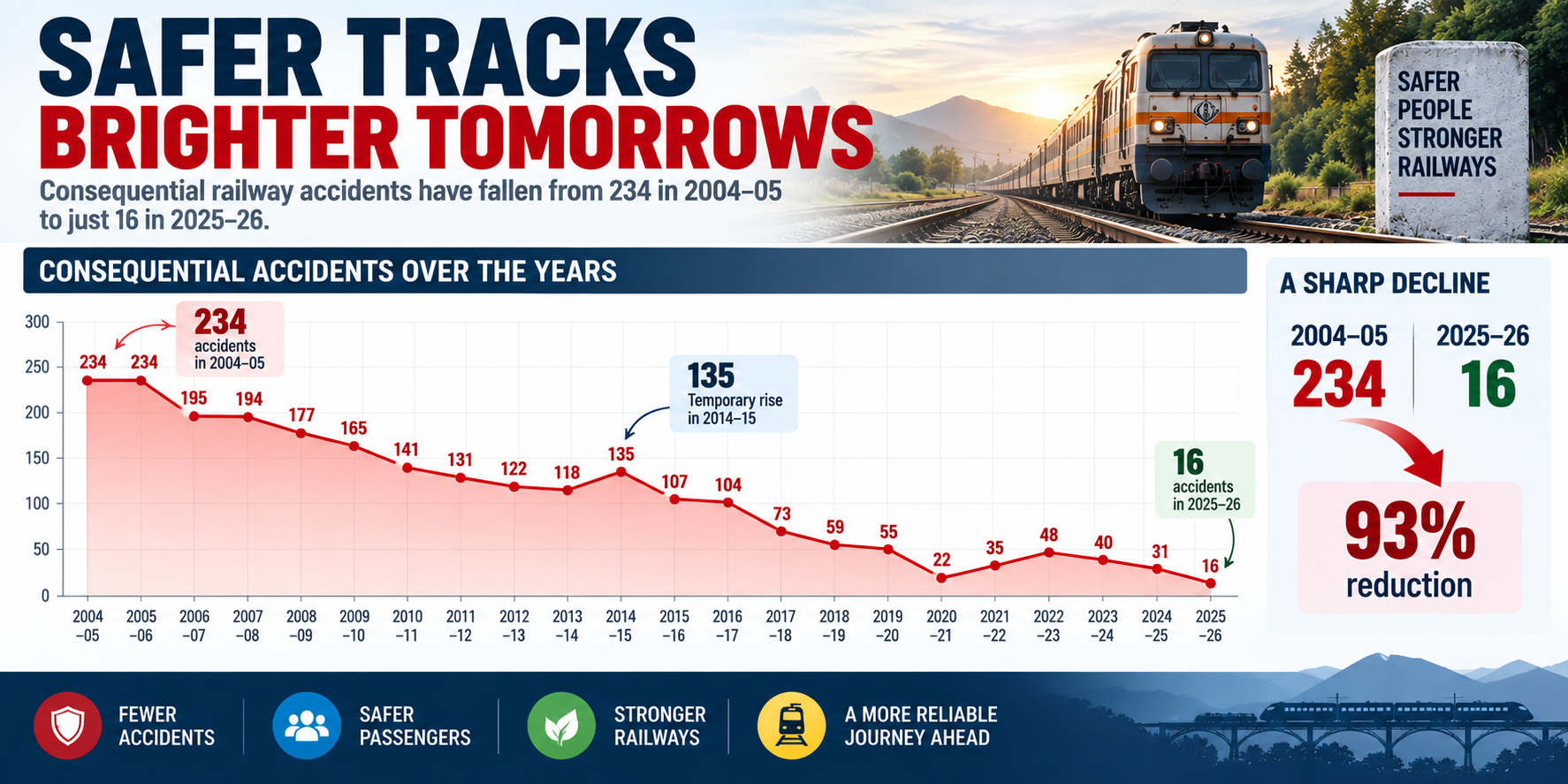
In 2004, boarding an Indian train came with a worry that was hard to ignore. Derailments, collisions, fires and accidents at level crossings regularly made the news, turning an ordinary journey into a reminder of how vulnerable the railway system could be. In that single year, Indian Railways recorded a staggering 234 consequential accidents. Two decades later, the picture is dramatically different. Last year, the number had fallen to just 16, a 93 percent decline. The change is visible in the statistics, but its real significance lies in what those numbers represent: millions of passengers who can now board a train without giving much thought to whether they will reach their destination safely. The real progress In the decade leading up to 2014, the annual average stood at a grueling 171 accidents. The numbers then began to fall sharply, reaching 35 within five years. The 60 per cent drop recorded in 2020–21 looks even more striking on paper, but that year was an anomaly. National lockdowns kept most trains off the tracks, making a comparison with normal operating years difficult. Set that pandemic year aside, and the underlying trend remains clear. The most significant and sustained decline came after 2017–18, when consequential accidents fell from 73 and continued to decrease almost every year thereafter. To understand how this transformation happened, it is important to look beyond the headline number and examine what was causing these accidents in the first place. The data shows that the 93.2 percent fall in consequential railway accidents was driven mainly by two categories: derailments and level-crossing accidents. Derailments fell from 138 to 11, while level-crossing accidents dropped from 70 to just one. Together, these two categories account for around 90 percent of the total reduction. Collisions and train fires also declined sharply, by 84.6 percent and 90 percent respectively. The decline, therefore, is broad-based. But the biggest story is the dramatic reduction in derailments and the near-elimination of level-crossing accidents. Looking at the categories of derailments helps explain where the safety improvements had to happen. The data shows that track-related problems were the biggest cause, accounting for 422 cases, or 33.9% of the total. Poor track maintenance, delayed repairs, inadequate packing and improper ballast depth were major contributors. Track parameter problems, including changes in gauge, cross-level and twist, also increased the risk. The next major category was operating staff errors, which accounted for 275 cases (24.4%). These were mainly linked to mistakes while setting points and shunting trains. Mechanical failures and driving errors were also significant causes. Mechanical issues accounted for 182 cases (16.1%), including wheel, axle, brake and suspension failures. Bad driving and overspeeding caused another 154 cases (13.6%), while loading irregularities accounted for 96 cases (8.5%). Taken together, the data shows that derailments were linked mainly to problems with tracks, train operations, equipment, driving and loading. Railways responded to these risks on several fronts. Track safety was strengthened through ultrasonic testing to detect hidden rail cracks, stronger continuous welded rails, better welding and mechanised maintenance. Older coaches were replaced with stronger LHB coaches designed to perform better in collisions. Unmanned level crossings were removed and replaced with bridges, subways or manned gates. Human errors were addressed through Kavach, electronic interlocking, vigilance control devices and fog-pass systems. The Rashtriya Rail Sanraksha Kosh also provided dedicated funding for track renewals, bridge work and signalling upgrades. The impact is visible in the track-safety data. Combined track defects fell from 6,247 in 2013–14 to 480 in 2025–26, a decline of more than 92%. Rail fractures fell from 2,548 to 208, while weld failures dropped from 3,699 to 272. The wider use of ultrasonic testing, improved welding, stronger continuous rails and regular track renewals has been accompanied by a sustained decline in track defects. What is important is that the fall continued even after train services returned to normal following the pandemic. This shows that the improvement was not only because fewer trains were running. Better inspection helped find problems earlier, stronger rails reduced failures, and mechanised maintenance kept the tracks in better condition. Together, these changes reduced the chances of a track failure turning into a derailment. The numbers tell a simple story: railway safety has improved because the main causes of accidents have been tackled one by one. Consequential accidents have fallen sharply, and track-related defects have also dropped by more than 92%. Better track maintenance, stronger rails, improved welding and early detection of defects have reduced the chances of failures on the tracks. The biggest lesson is that safety is not achieved by one measure — it comes from fixing the small problems before they turn into major accidents.