From 23 medals to 85: India’s sporting rise is no longer a one-off
Visualisation
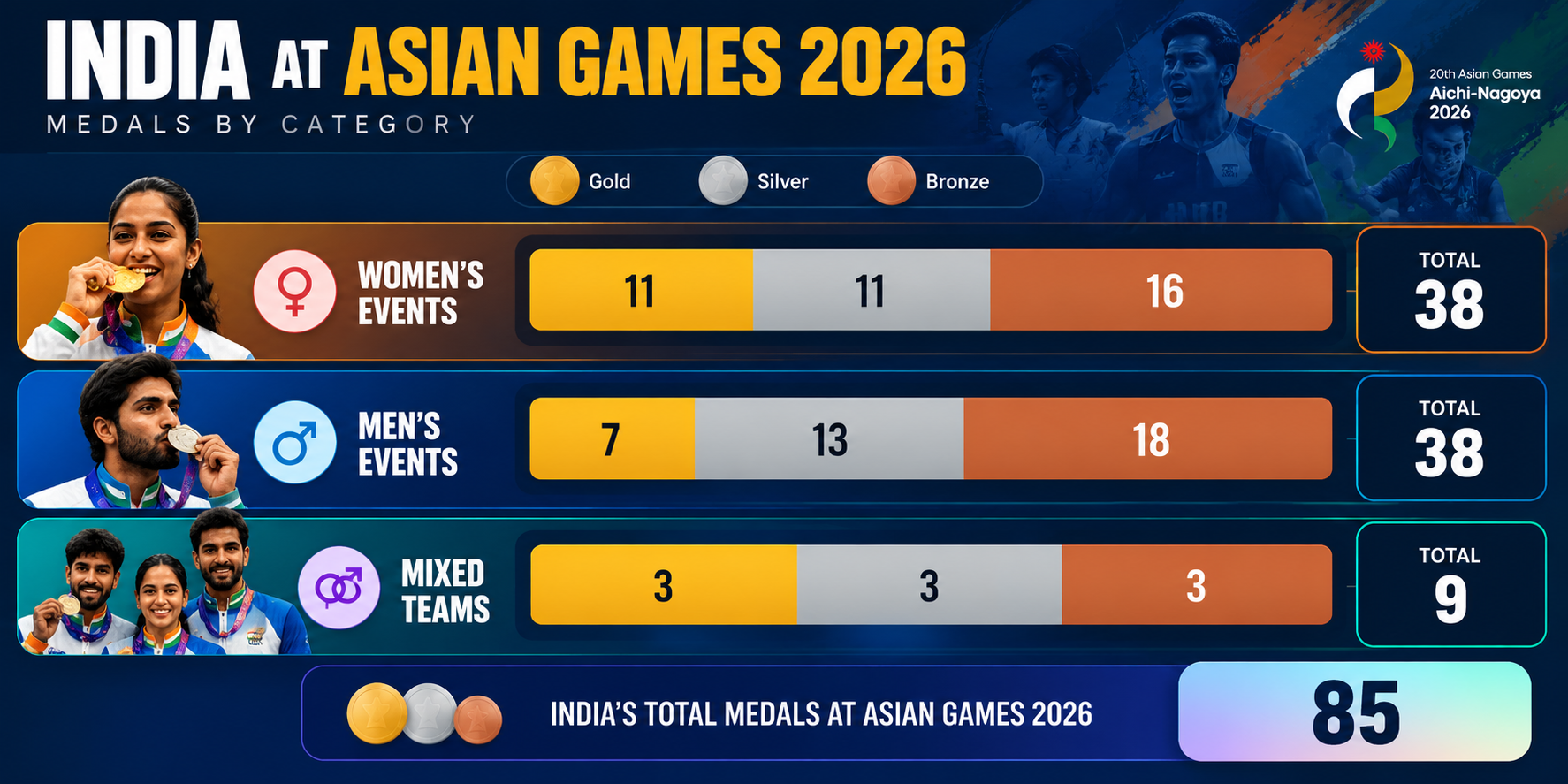
At a Glance
In 1990, India went to Beijing and returned with 23 medals, finishing 11th. Indian sport had little to celebrate that winter. Fast-forward to Aichi-Nagoya 2026. India finished fourth with 21 gold, 27 silver and 37 bronze, 85 medals in all. Only China, Japan and South Korea finished ahead among 46 nations competing across 469 gold-medal events. India matched Uzbekistan’s 21 golds, but finished comfortably ahead on the overall medal tally: 85 to 70.
The leap from 23 to 85 medals was 36 years in the making: early mornings, borrowed grounds, missed festivals and families that kept believing.
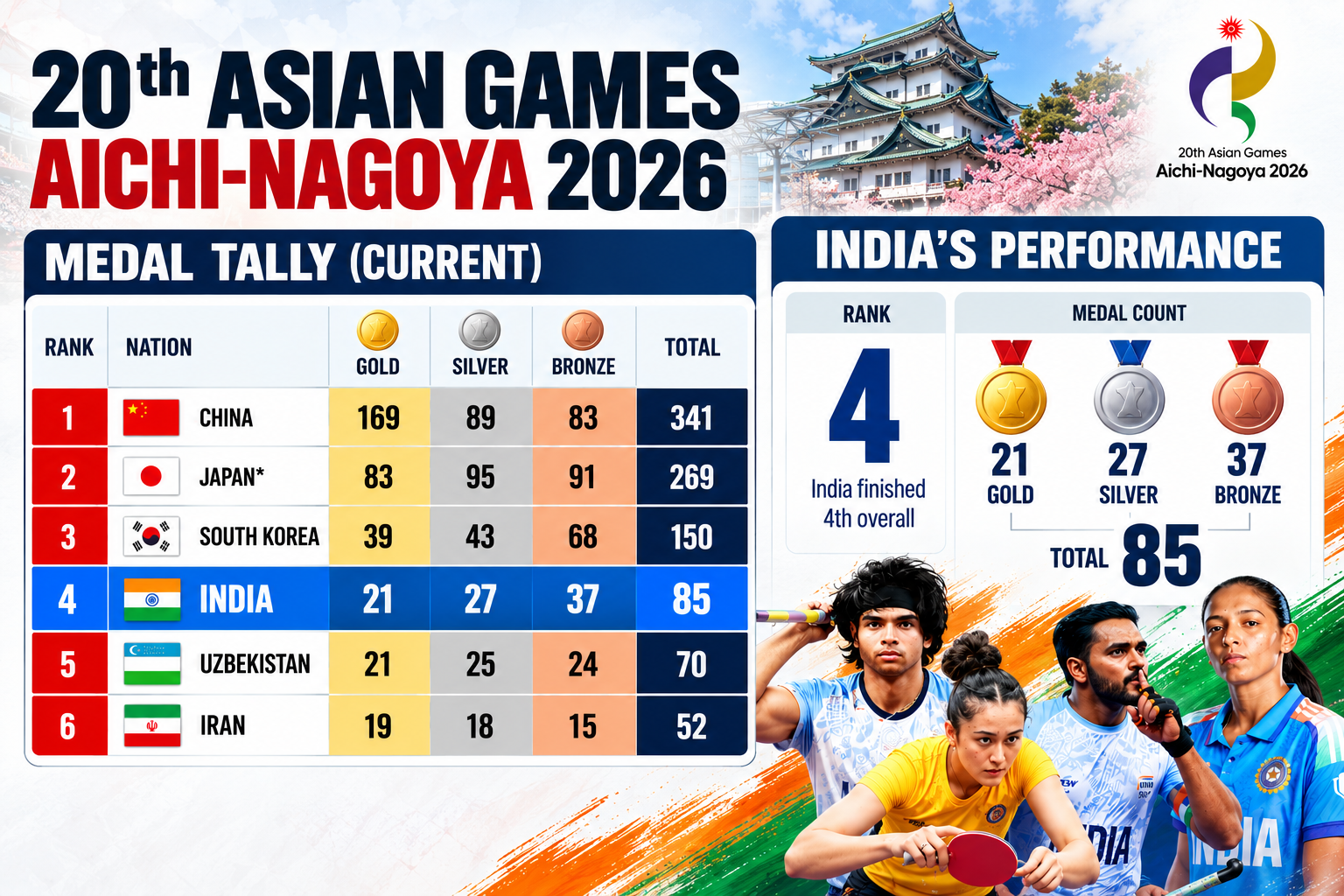
The climb nobody should mistake for luck
In 2006, India won 53 medals. Four years later, 65. By 2018, the tally had reached 70, enough for eighth place. Then came Hangzhou in 2023: 107 medals and fourth place. A spectacular jump, yes. But was it a breakthrough or simply a one-off?
The answer is now becoming harder to dismiss.
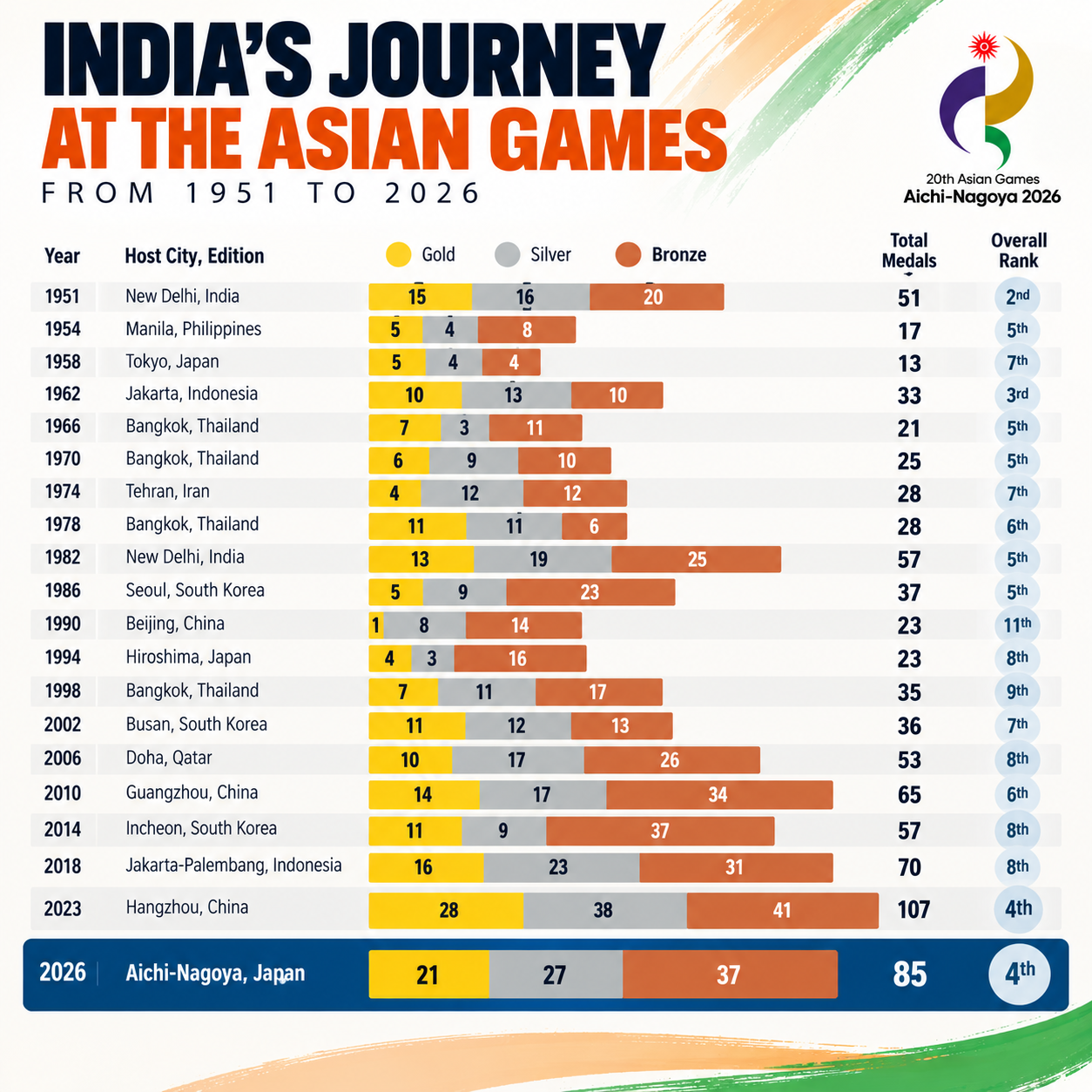
Aichi-Nagoya settled the question. Yes, 85 is below 107, and the gap should not be brushed aside. But 85 is still India’s second-highest Asian Games haul, while 21 golds are also the second-most ever won. Compared with 2018, the gold tally has risen by nearly a third. Fourth place in Hangzhou. Fourth again in Aichi-Nagoya. That is no longer an exception. It is a pattern.
The women carried this team
If one number from these Games deserves to be remembered, it is this: women won 38 of India’s 85 medals, including 11 of the 21 golds. Their contribution was central to India’s fourth-place finish.
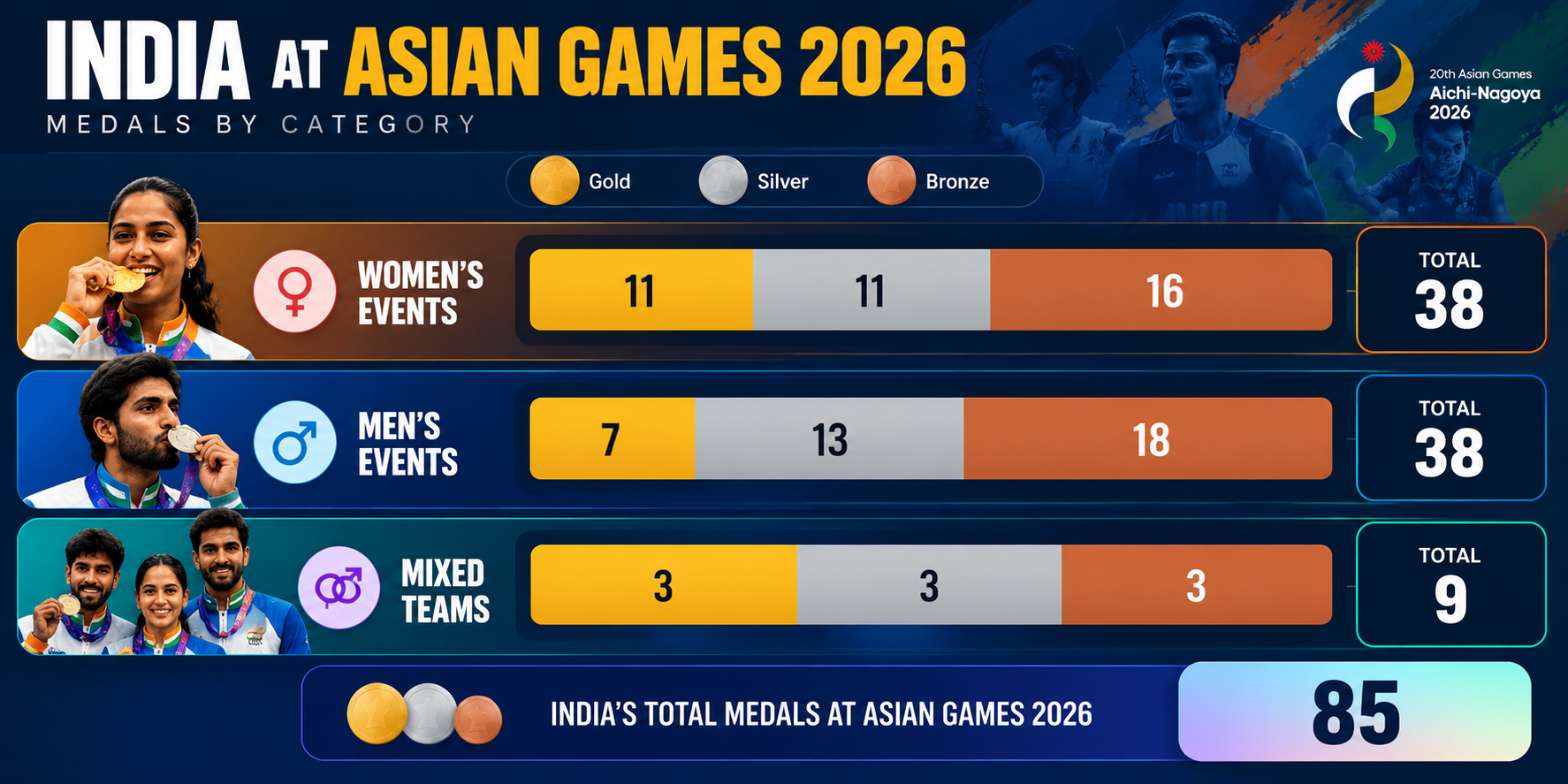
These were not just medals; they carried decades of waiting, missed chances and unfinished dreams:
The women’s hockey team won gold after 44 years of waiting. Imagine how many players retired in that time without ever getting this moment.
Neeru Dhanda won trap gold in an event where India had waited 48 years for a gold.
Pranavi Urs became the first Indian woman to win individual Asian Games gold in golf.
Kumkum Mohod won the first individual recurve gold by an Indian woman, and then helped the women’s recurve team win India’s first gold in that event.
Lovlina Borgohain won India’s first-ever gold in the women’s 75kg boxing category.
Add the men’s hockey team’s gold, and for the first time both Indian hockey teams stood on top of the podium in the same edition.
Comebacks and firsts
Mirabai Chanu won silver in weightlifting, ending India’s 28-year wait for an Asian Games medal in the sport. Some barriers were broken simply by stepping into unfamiliar territory:
Suchika Tariyal won bronze in Mixed Martial Arts, making history in the sport’s Asian Games debut.
Jay Meena gave India its maiden podium finish in soft tennis.
Baranica Elangovan brought India its first women’s pole vault medal.
Satnam Singh and Salman Khan won bronze in men’s double sculls, giving India its first medal in the rowing event.
Aman Sehrawat won India’s first gold in men’s 57kg freestyle wrestling.
Suruchi Singh and Kamaljeet won the inaugural mixed-team 10m air pistol gold with an Asian record.
Some of these athletes train in sports most of us barely follow. They had no crowd and no cameras, and they won anyway.
It was never about one sport
India won medals across 19 different sports this time. Athletics led the haul with 24 medals, followed by shooting with 15 and archery with 9, including five golds. Boxing and wrestling contributed 6 each. Cricket, hockey and kabaddi added two golds apiece.
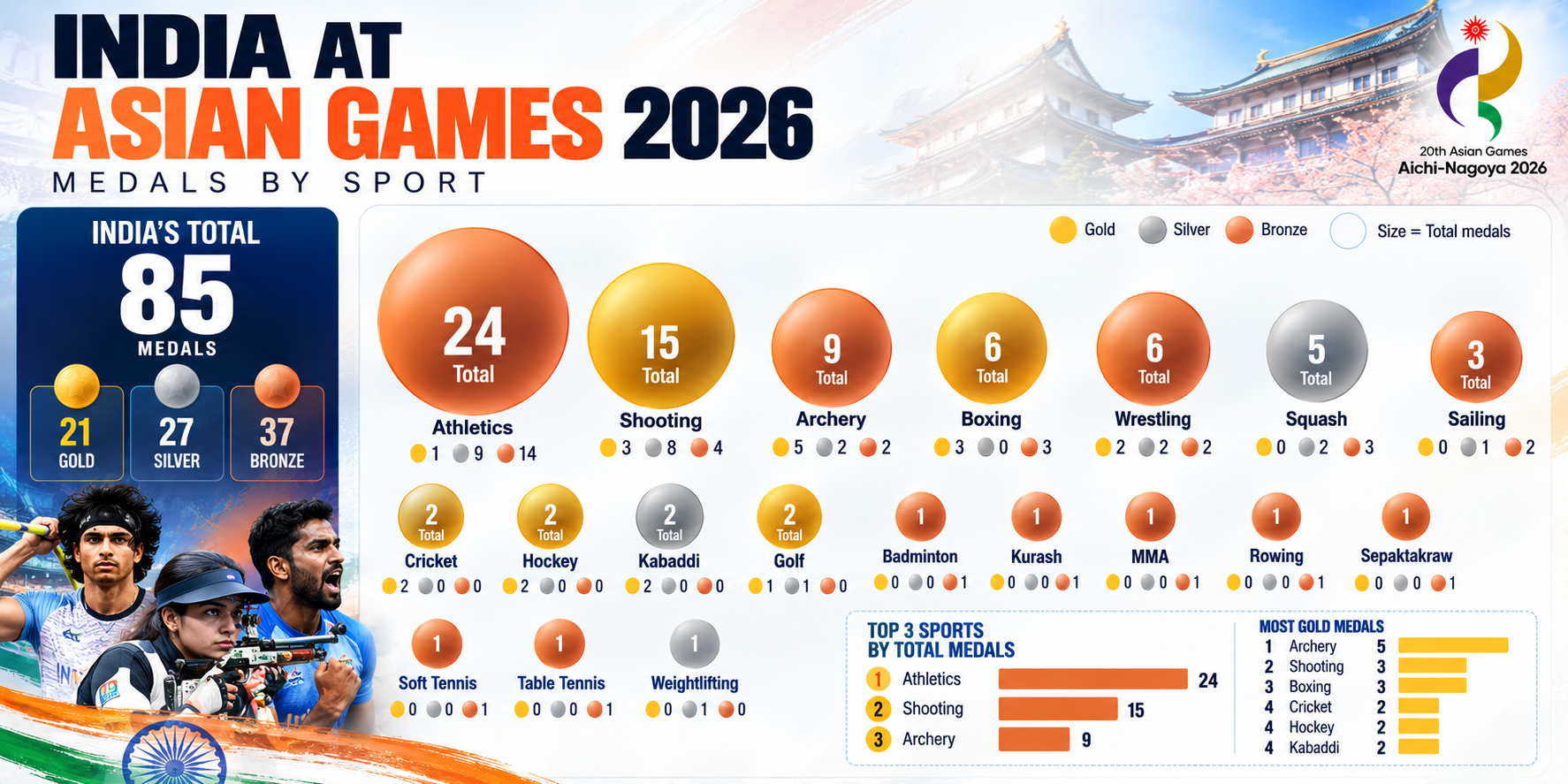
Of those 85 medals, 64 were silver or bronze. That matters. It means dozens of athletes were within a few centimetres, a few seconds or one crucial moment of gold. Athletics alone produced 23 silvers and bronzes against a single gold. The next step is clear, and it is within reach.
The quiet work behind the podium
Medals like these are not won overnight. They begin with talent spotted early, a young athlete given the right stage, and a promising competitor getting the equipment, coaching and travel needed to move up. Programmes such as Khelo India and the Target Olympic Podium Scheme have been doing that work for years, helping athletes from smaller towns enter competition earlier while giving established names better support to train and compete.
The table tells the story. When archery, golf, rowing, boxing, shooting and MMA all produce medal winners at the same Games, it suggests the talent pool is widening and more young athletes are getting their chance.
What this means
Somewhere right now there is a child watching a replay of Pranavi's golf gold, or Lovlina's bout, or the women's hockey final, and quietly deciding that this could be them. For many of them, it might be the first time they have seen someone who looks like them, or comes from a place like theirs, standing on top.
India's Asian Games story is not finished, and the athletes know it. There are more golds to win and more droughts to end. But 23 medals have become 85, and eleventh place has become fourth.
That is a good thing to be proud of today.