India’s avocado shift : From imported luxury to homegrown crop
Visualisation
At a Glance
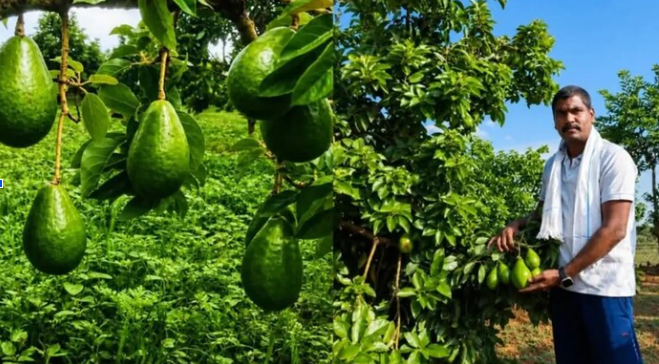
Jaipal Naik, an Oxford MBA graduate left his corporate career in London and Hyderabad to pursue organic avocado farming in Telangana. Source: News18
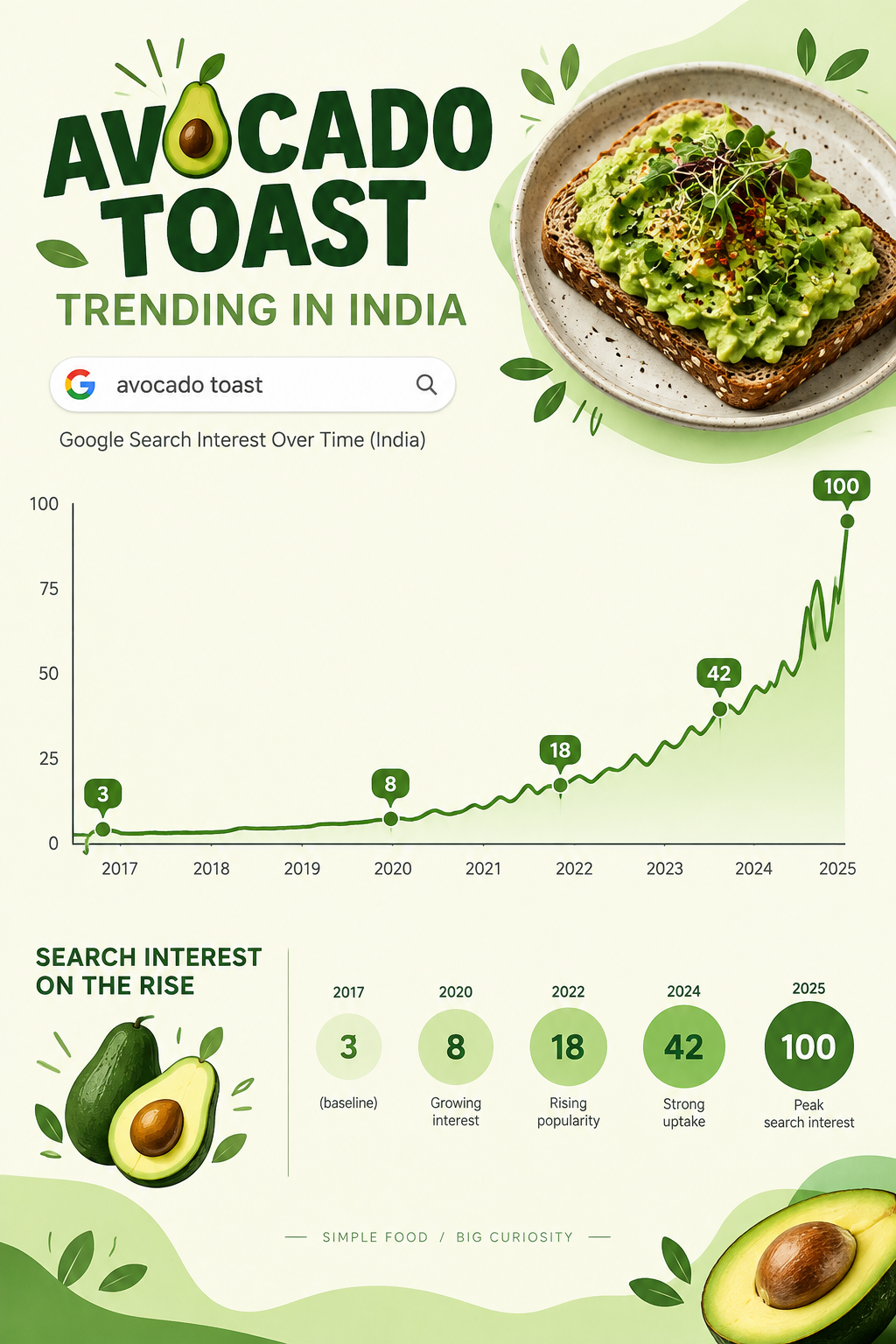
Long before Narendra Modi praised a smallholder named Varadaraj on Mann Ki Baat for swapping traditional tomatoes for avocados in Andhra Pradesh, a quiet agricultural gamble was already playing out across southern India. Driven by urban India’s obsession with avocado toast, smoothies, and fusion chutneys, a foreign fruit with no historical taste memory in Indian kitchens has transformed into one of the country's fastest-growing cash crops. But behind the headline success stories lies a massive economic gap: Indian appetites are expanding at a rate domestic orchards simply cannot match.
Modi also highlighted Chandrashekharan, a farmer in Kodaikanal, Tamil Nadu, who grows avocados on half a hectare. His income improved as the new crop began fetching better prices than the crops he had traditionally grown.
In Chikkamagaluru, Karnataka, coffee growers are planting avocado trees between existing coffee and pepper plants, using them as an intercrop rather than replacing their main crops. This allows them to earn an additional income from the same land.
The consumption boom vs. Production lag
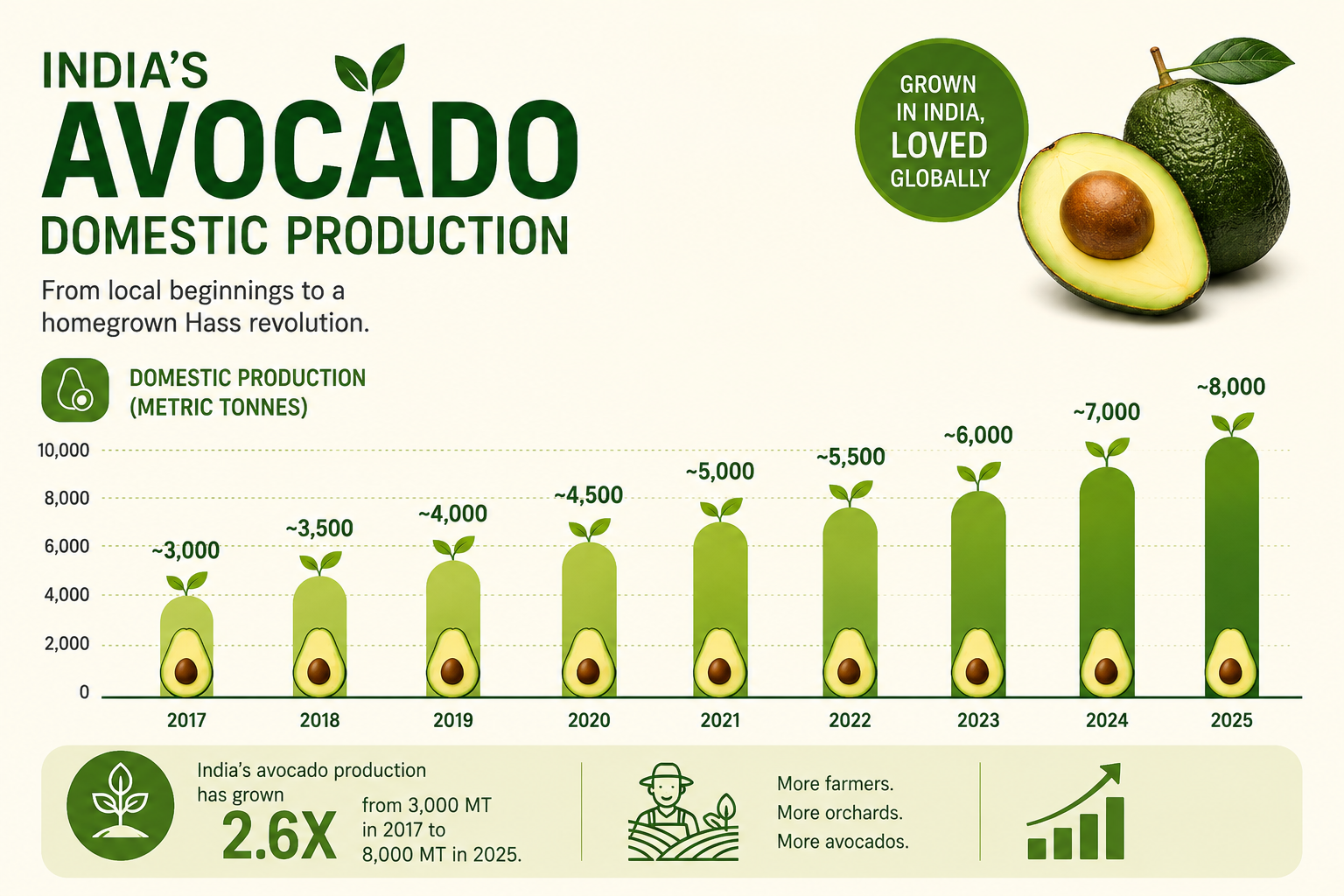
Urban India’s appetite for avocados has outpaced local cultivation. Between 2017 and 2025, domestic production grew at a steady, deliberate pace — rising from an estimated 3,000 tonnes to roughly 8,000 tonnes.
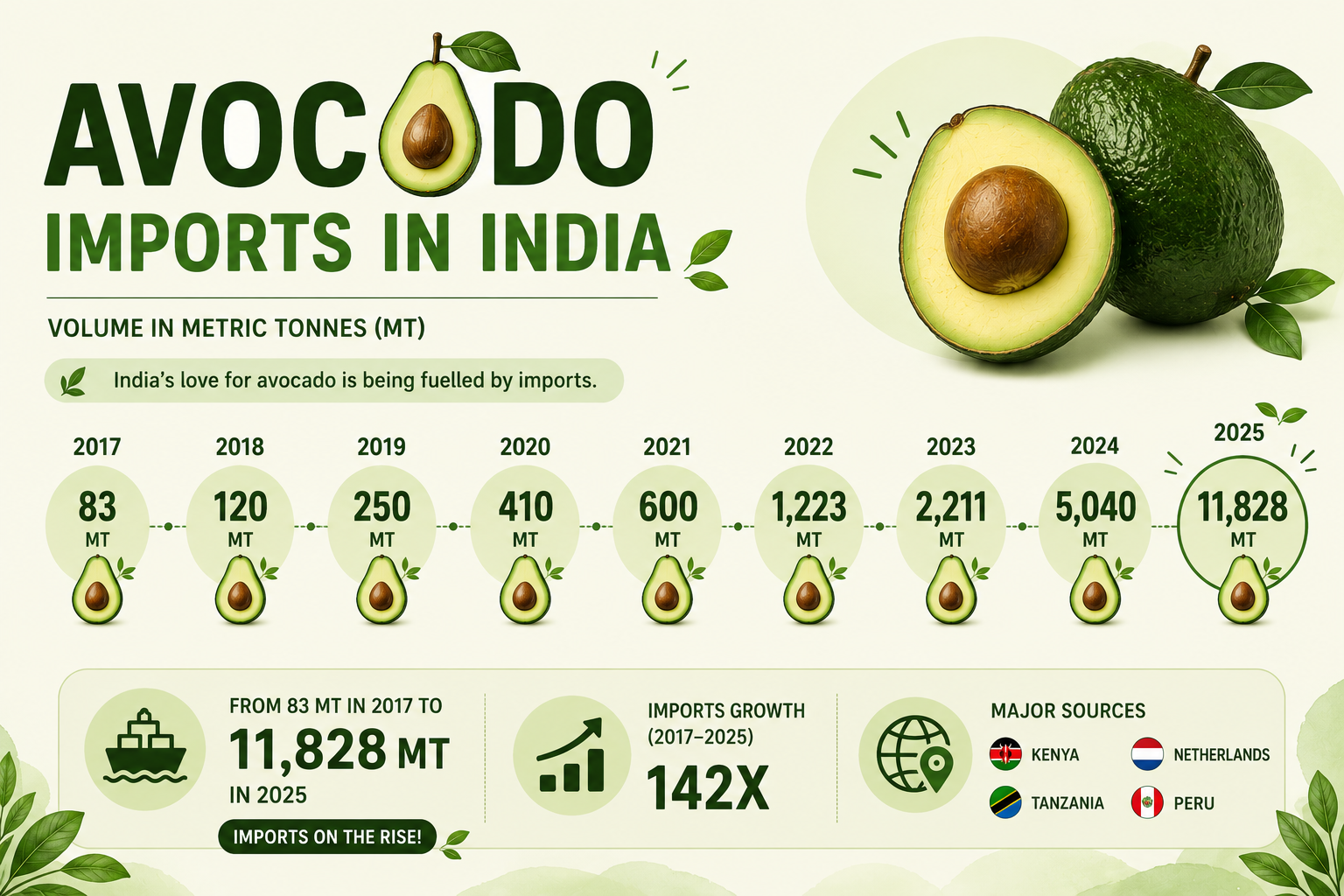
Imports, by contrast, tell a completely different story. Official import volumes skyrocketed from just 83 tonnes in 2017 to nearly 11,828 tonnes by 2025, with the vast majority of that acceleration occurring after 2022. While domestic output managed to slightly more than double over eight years, imports grew by over 14,000%. This steep, sustained curve indicates a structural shift in dietary habits rather than a temporary trend.
The widening supply deficit
This divergence has inverted India's avocado supply dynamic. In 2017, domestic harvests satisfied over 97% of local demand. By 2025, imported avocados accounted for nearly 60% of total national consumption. The widening deficit stems from biology. An avocado tree requires four to five years to yield commercially viable fruit. Consequently, domestic supply cannot react instantly to market signals every bearing tree in 2025 represents a financial risk taken years earlier. While zero-duty trade arrangements (such as imports from Tanzania) fill immediate market shortages, they put severe price pressure on domestic growers who are still waiting out their multi-year maturation cycles.
That is a different kind of farming decision than most cash crops demand. It requires a farmer, or increasingly a company, to commit land and years to a plant with no early return, betting on urban demand that has not yet fully arrived. The steady climb in domestic production is really a record of that confidence building, year after year, among people willing to wait out a fruit's growing cycle.
The import numbers
If domestic growth reflects patience, the import trend reflects the opposite. Official import volumes moved from 83 tonnes in 2017 to nearly 11,828 tonnes in 2025, and most of that climb happened in just the last three years. Domestic production, over the same stretch, barely doubled. That gap is the real story hiding inside the spreadsheet. It shows a market growing far faster than the country's orchards can keep up with.
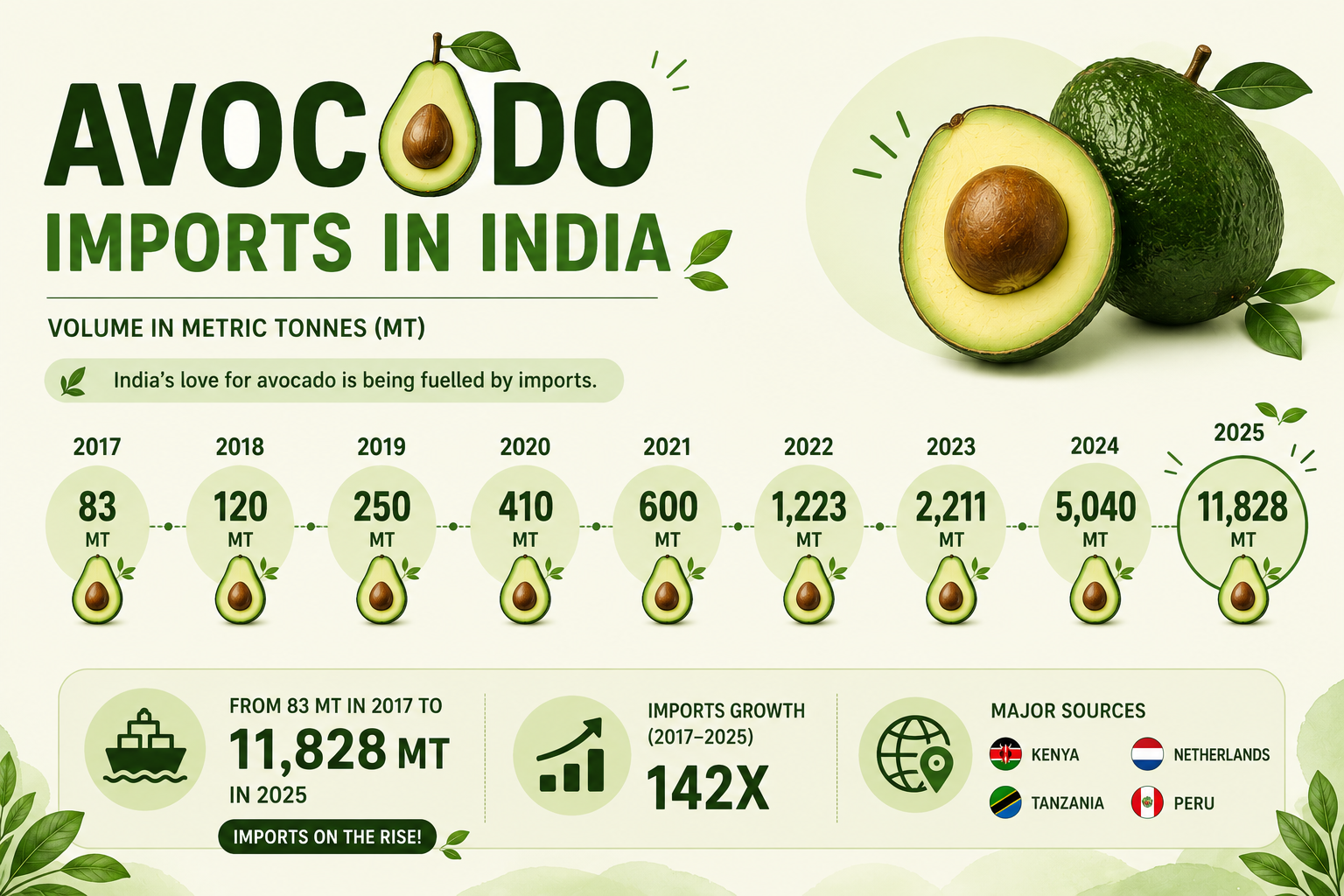
That is not necessarily bad news. It suggests genuine, sustained consumer appetite rather than a passing fad, because nobody imports at that pace to chase a trend that might fade in a season. But it is also a quiet warning. Every tonne that arrives from abroad is a tonne of value, and future orchard investment, that could have gone to an Indian farmer instead. A zero-duty trade opening with a country like Tanzania makes imports easier in the short term, but it also makes the long game harder for domestic growers trying to compete on price while their trees are still young.
Regional geography and cultivation models
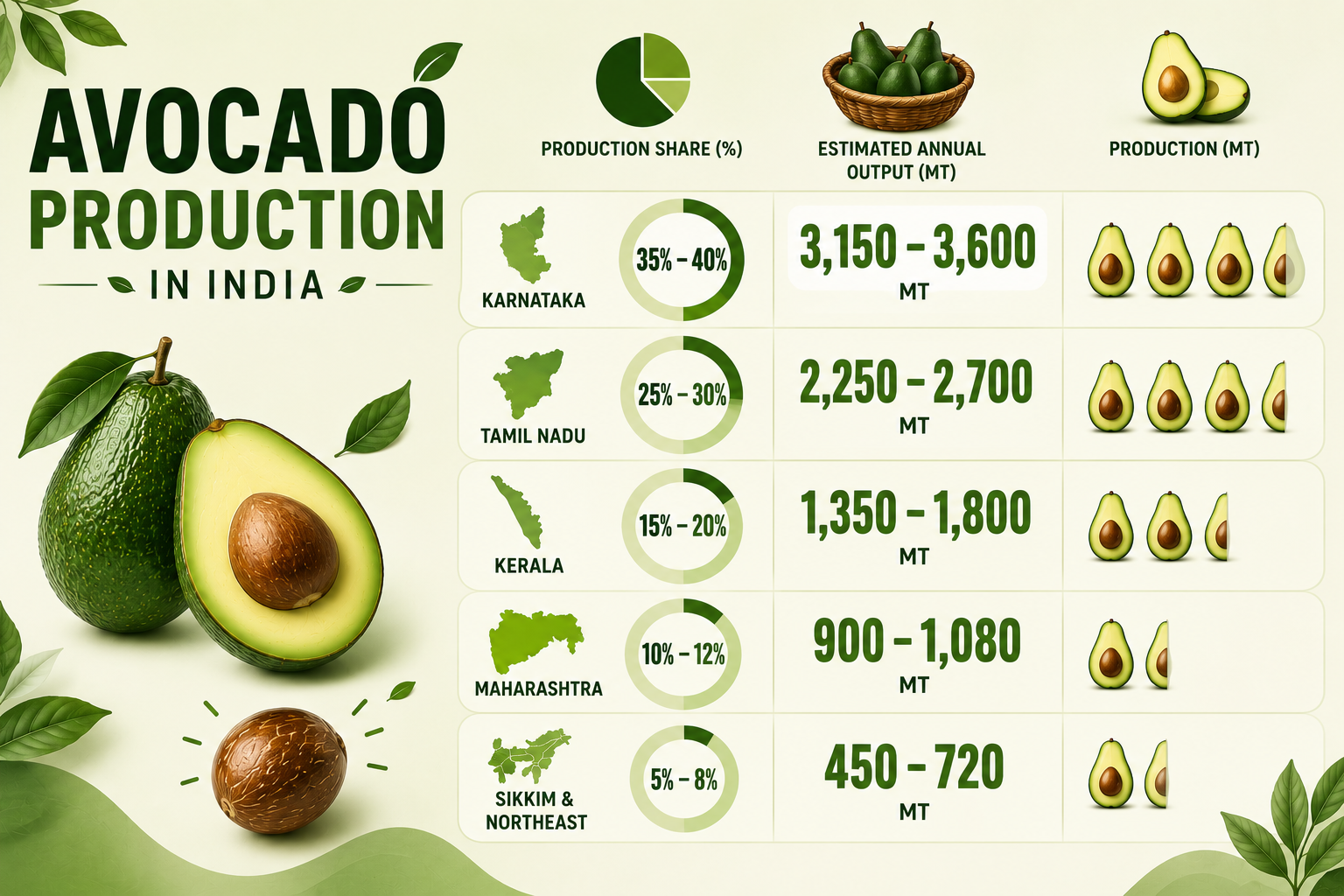
India’s production remains tightly concentrated in specific geographic belts, dictated by topography and existing infrastructure:
Karnataka (35–40% of national output): The market leader. Growers intercrop avocados within established shade-grown coffee and pepper estates in regions like Chikkamagaluru, minimizing initial land-preparation costs.
Tamil Nadu (25%) and Kerala (15%): Cultivation relies heavily on high-elevation homestead gardens and cool-climate hill stations like Kodaikanal.
Maharashtra (10–12%): The notable outlier. Rather than relying on hill stations or intercropping, growers are establishing standalone, irrigated commercial orchards, representing a high-capital bet on future demand.
The two-tiered market divide
India’s avocado economy is split along economic lines, defined by crop variety and distribution channels:
Green-skin varieties (about 70% of domestic production): Predominantly older, local trees. These fruits move through traditional wet markets and neighborhood juice stalls at accessible price points.
Clonal / Hass varieties (15–20% of domestic production): Premium, high-butterfat cultivars. These are funneled almost exclusively into Tier-1 retail chains, cafes, and hospitality businesses.
Because domestic Hass orchards are still maturing, imported fruit currently controls the lucrative premium tier. The key question for the sector is whether upcoming domestic harvests can capture this high-margin market or if the split will harden permanently.
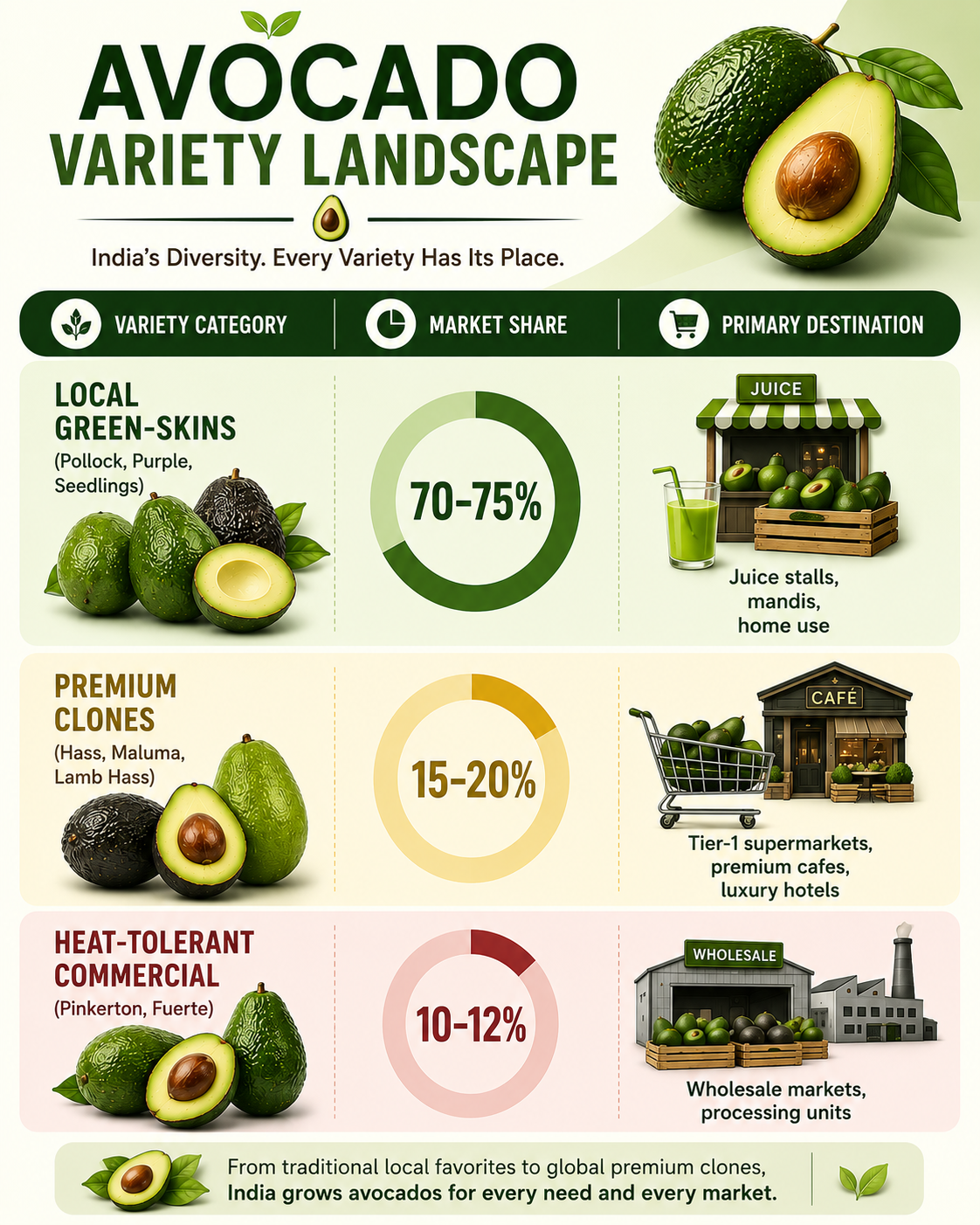
That divide reflects a broader shift in Indian food consumption, where the same crop can increasingly cater to very different consumer groups depending on the variety and the shelf it reaches. The bigger question is whether the gap will narrow as domestic clonal orchards mature, or whether India will settle into a two-tier avocado market — one for everyday consumption and another firmly positioned as a premium product.
What the numbers are actually telling
Seen in that light, the Prime Minister’s reference was about much more than a fruit. It reflected a shift that is already beginning to show up on the ground: farmers experimenting with crops that offer better returns, plantation states adapting their existing expertise to a new crop, and demand rising faster than domestic supply. The real test will come over the next few years. If new orchards mature into a reliable source of Indian avocados, imports could gradually lose their grip on the market. If they do not, India’s growing appetite for avocados could remain dependent on overseas supply.