India’s farm exports are finding their way to the world
Visualisation
At a Glance
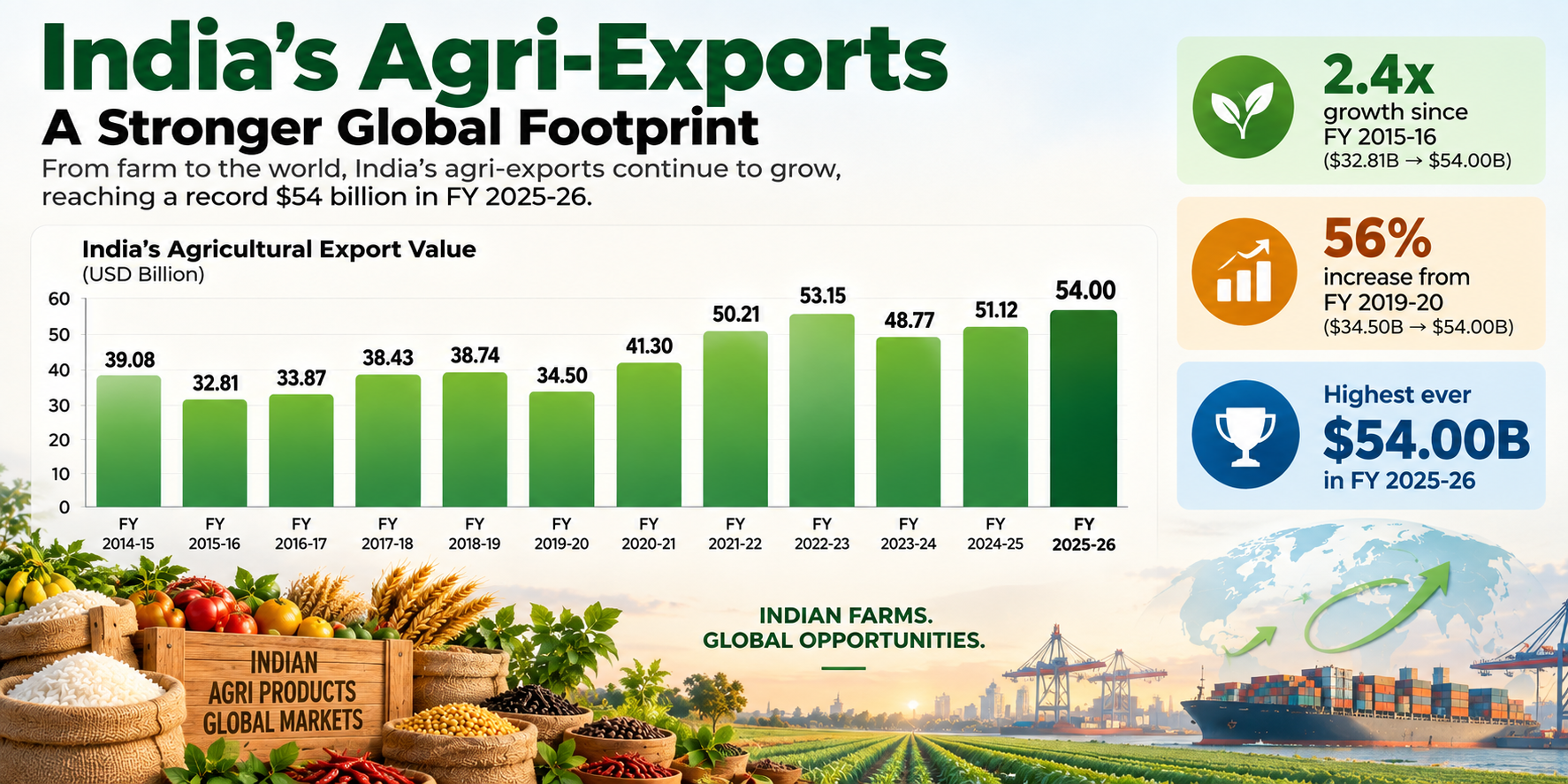
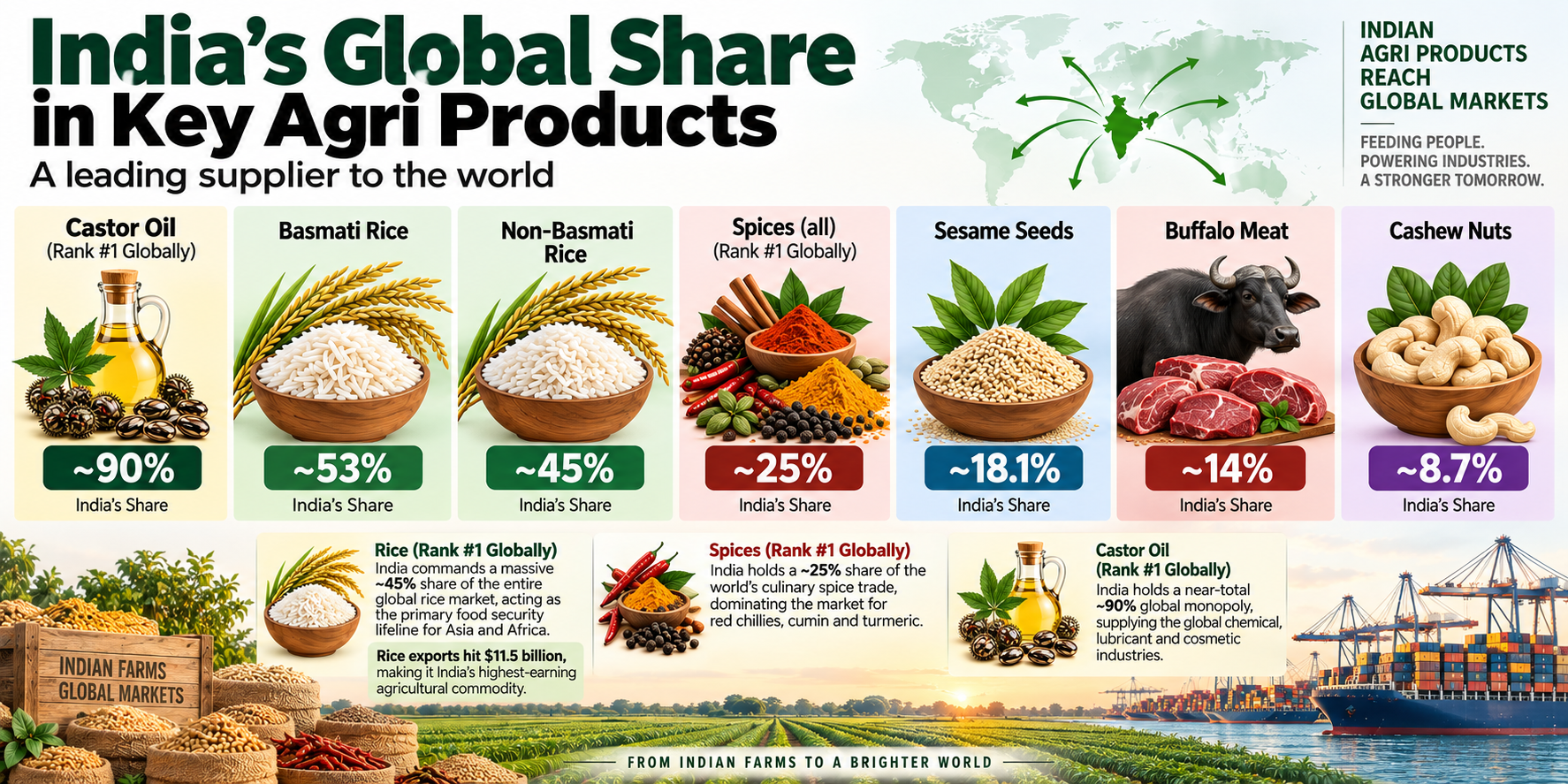
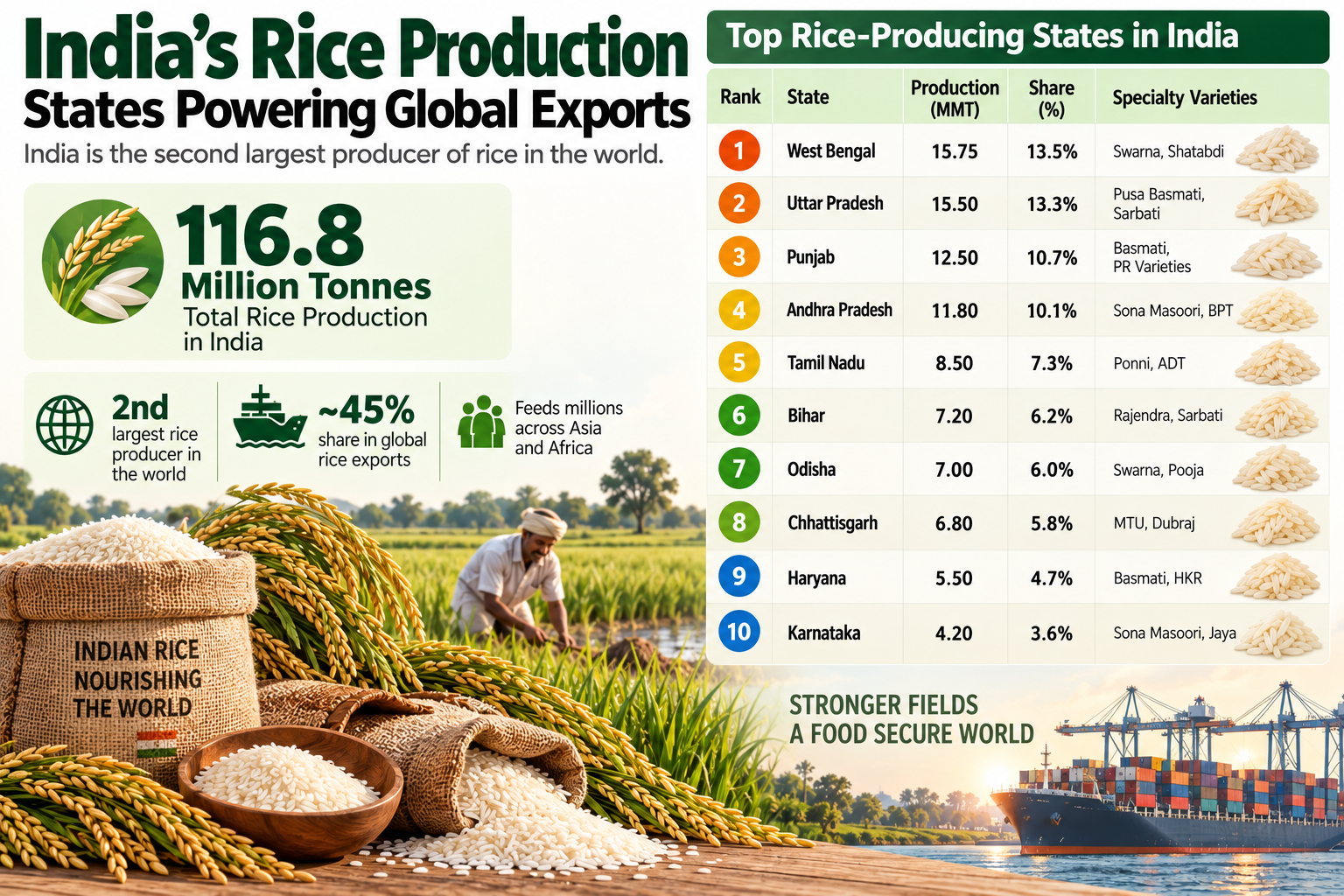
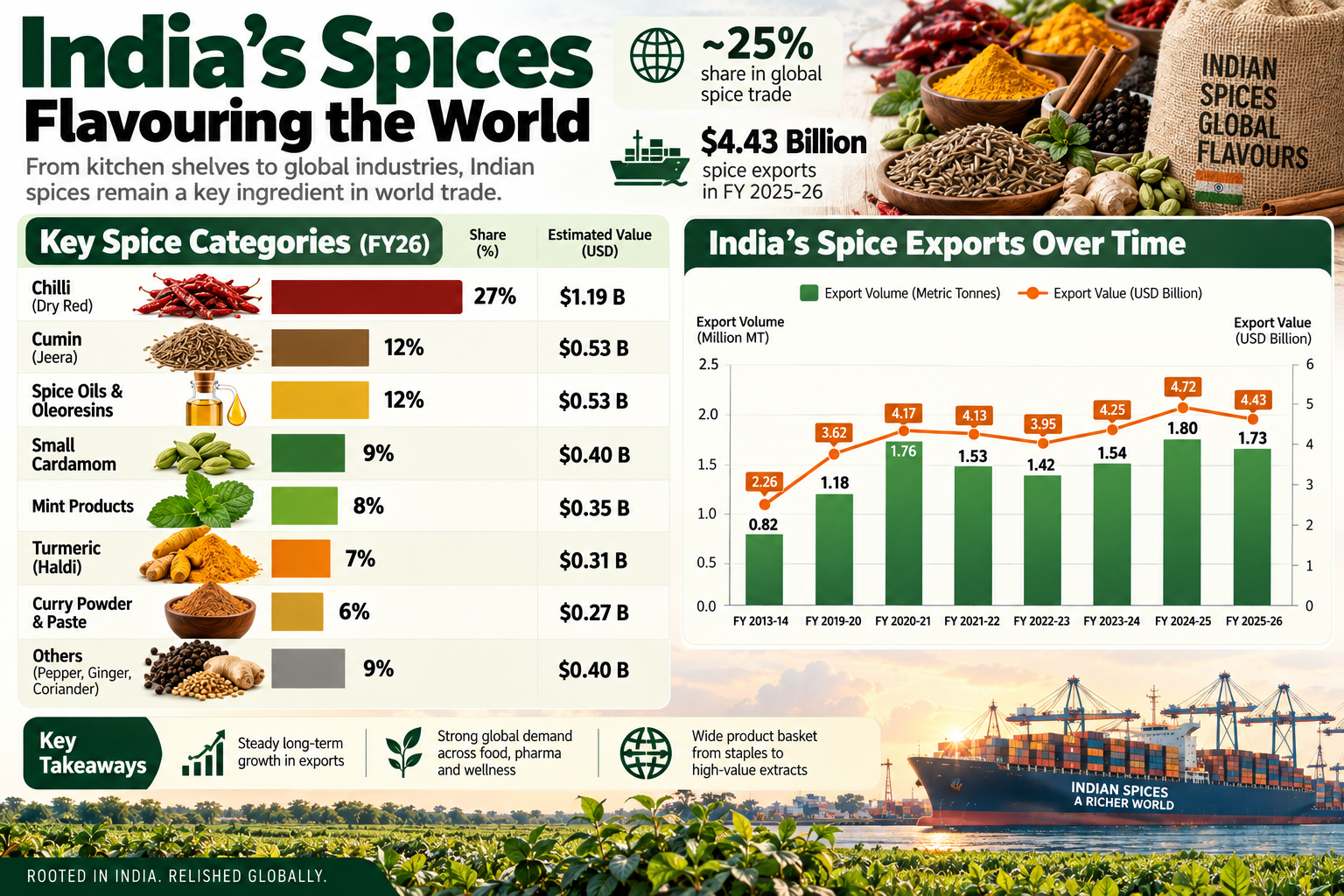
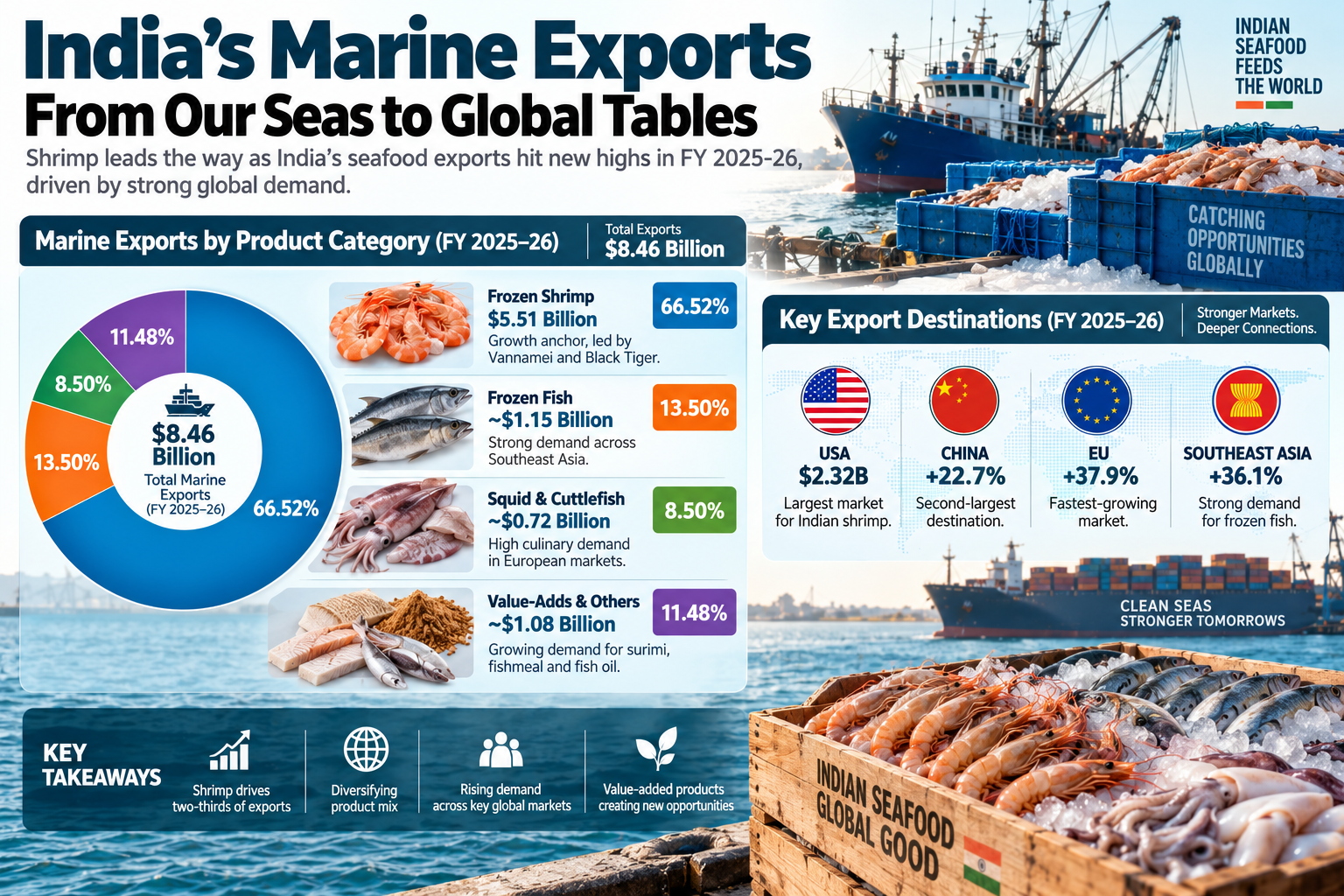
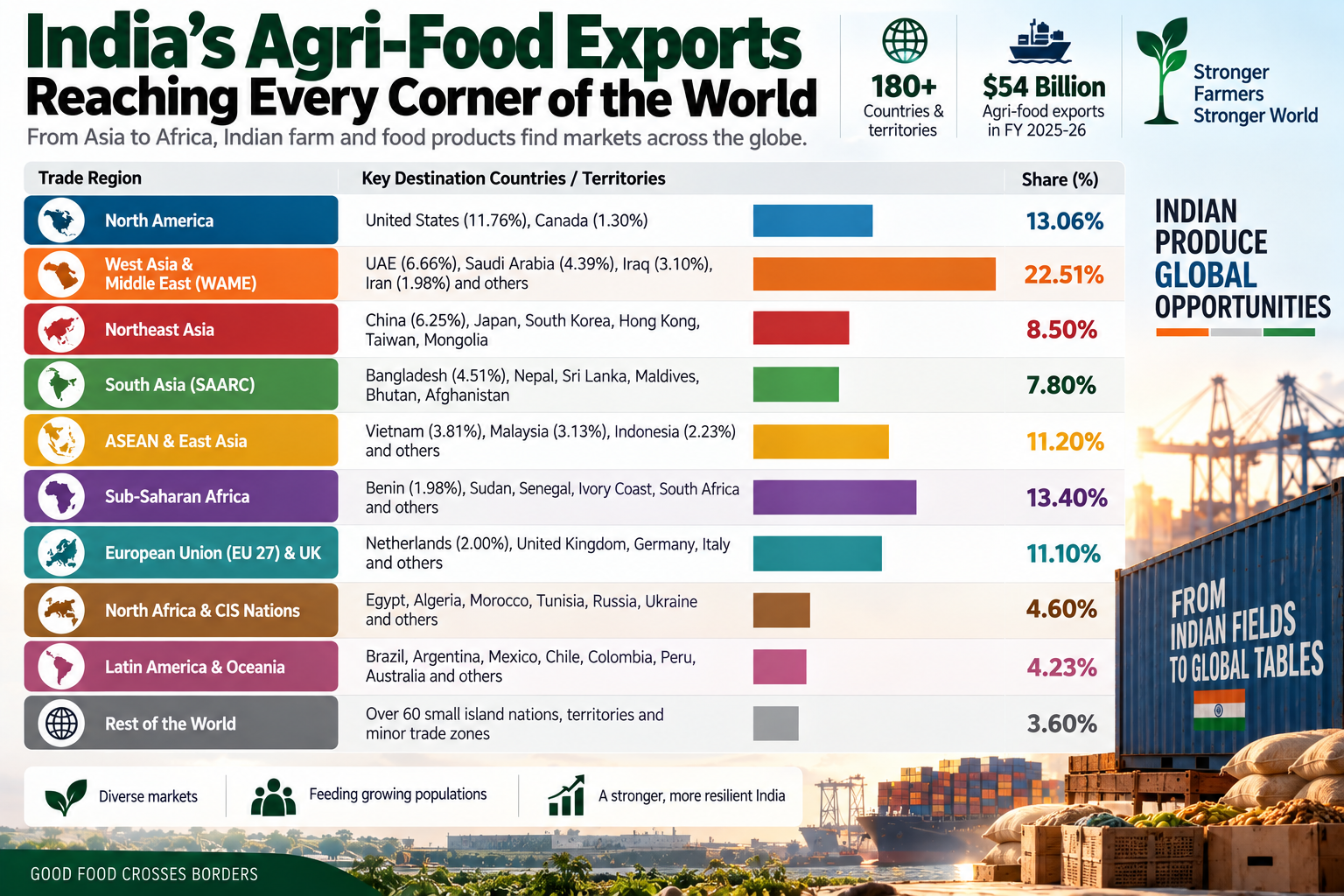
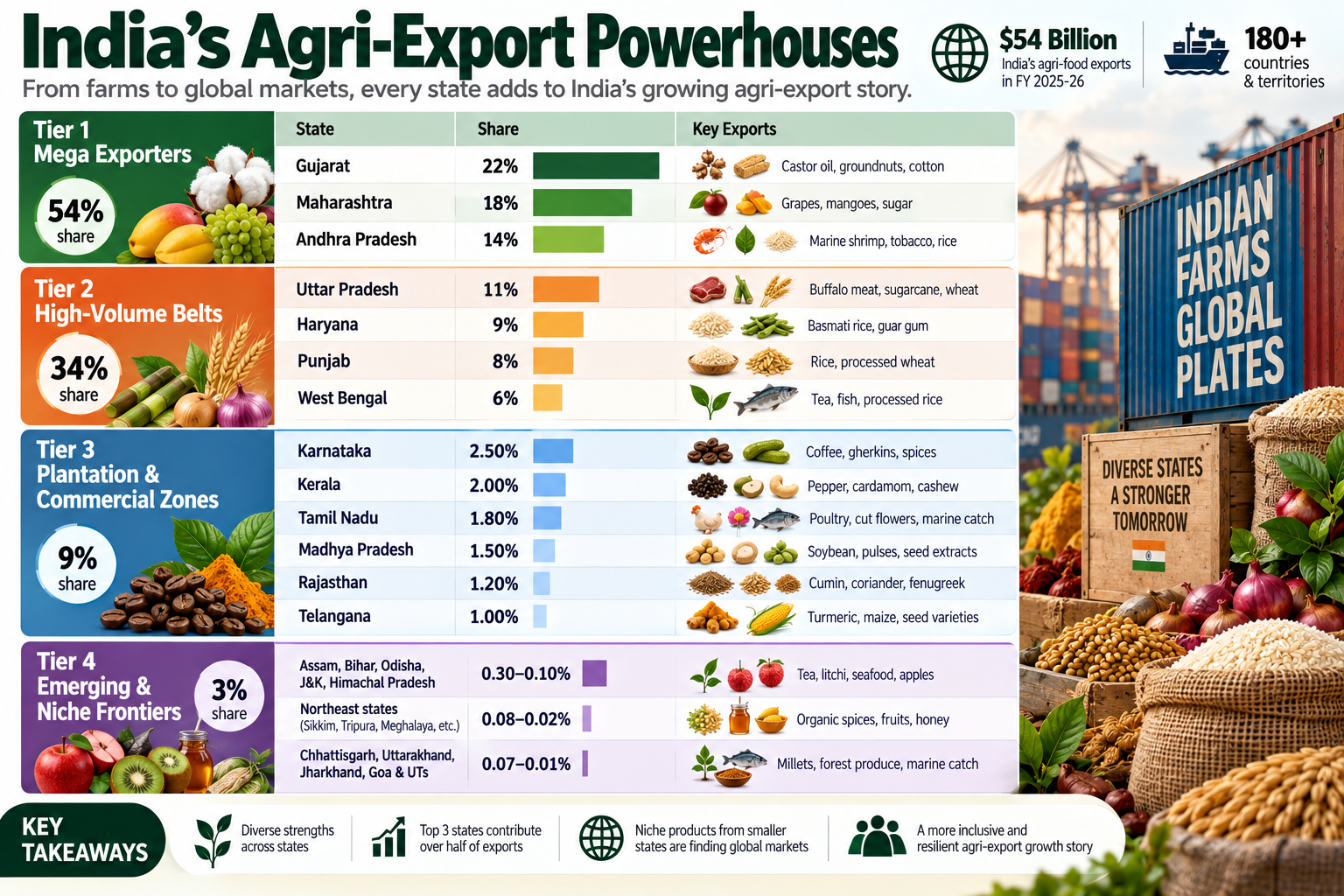
If you ever see “Made in India” on a bag of rice or a box of vegetables in a foreign store, do not be surprised. India is now the world’s seventh-largest agricultural exporter. In some crops, it ranks even higher. In fact, in a few, India is number one. Take a small example. Go to north Gujarat, to places like Mehsana and Banaskantha, in October. The fields look unremarkable: brown castor plants and spiky seed pods, nothing spectacular. Yet 9 out of every 10 litres of castor oil sold around the world originate from these fields. That oil finds its way into cosmetics, machine lubricants and medicines far beyond India. Most people using those products have never heard of Mehsana. Yet its farms are already part of the global marketplace. Look closely at the ten-year graph and a pattern emerges. Most of the major movements were driven by what was happening outside India rather than by changes on Indian farms. The fall in the second year came with declining global commodity prices, not a collapse in domestic farm production. The relatively steady numbers during Covid showed that food demand continues even when much of the global economy comes to a standstill. The strong years that followed were helped by the Ukraine war, which pushed many buyers towards India for foodgrain supplies. The one major dip driven by a domestic decision came in FY 2023-24, when India restricted exports of wheat, sugar and rice to protect its own food supplies. That decision says something important about India’s place in the global market. It is willing to benefit from global demand, but also willing to step back when domestic food security comes first. Some crops tell an even bigger story. Rice alone earned $11.5 billion last year. India accounts for about 45 per cent of global rice trade, covering both basmati and non-basmati varieties. Across large parts of Asia and Africa, Indian rice is not an occasional import or speciality. It is part of everyday meals. Spices are another major strength. Guntur’s red chillies, Rajasthan’s cumin, Kerala’s cardamom and Telangana’s turmeric are part of an industry that gives India roughly one-fourth of the global spice trade. Castor oil is an even more striking example. As we saw earlier, India accounts for close to 90 per cent of the world market. Fish and shrimp exports are growing rapidly too. Frozen shrimp alone brought in $5.51 billion, nearly two-thirds of India’s total seafood exports. Much of this shrimp is farmed along the coasts of Andhra Pradesh and Gujarat. The United States remains India’s biggest shrimp market, although higher tariffs have slowed that trade somewhat. Europe has picked up some of the slack. Squid and cuttlefish exports to the European Union jumped nearly 38 percent in a year, while China’s purchases of frozen fish rose by almost 23 per cent. Where does all this produce go? West Asia and the Gulf together account for about one-fifth of India’s agricultural exports, with the UAE, Saudi Arabia and Iraq among the leading buyers. North America follows closely, largely because of the United States. Bangladesh alone accounts for more than 4 per cent of India’s exports within the South Asian market, underlining another important point: some of India’s biggest customers are right next door. No single state is driving this story. Gujarat leads with about one-fifth of the country’s agricultural exports, supported by castor, groundnut and cotton. Maharashtra follows, with grapes, mangoes, pomegranates and sugar among its strengths. It is also a major player in processed food, including ready-to-eat products, mango pulp and wine. Andhra Pradesh ranks third, helped by its shrimp farms and chilli production. Then there are the smaller contributors: states such as Kashmir, Bihar, Sikkim and Nagaland. Their shares may be modest, but each represents an important source of income and opportunity for farmers in those regions. This growth is not happening by accident. APEDA, the government’s agricultural export promotion body, has launched a new initiative called BHARATI to help small agri-tech businesses connect with overseas buyers more quickly. The initiative was announced at Indusfood 2026 in Greater Noida, an event that attracted exhibitors and buyers from more than 100 countries. The Union Budget has also reduced some duties for fish and leather exporters to cushion the impact of high US tariffs. Meanwhile, trade negotiations with the European Union, which began in 2022, are reportedly nearing completion. A deal could give Indian agricultural producers access to another major consumer market. The basic work on the farm has not changed. It is still about sowing, watering, waiting for rain and harvesting. What has changed is what happens to the crop afterwards. Produce that once stopped at the local mandi can now reach a supermarket in another country within weeks. That is the real story behind the $54 billion figure. It is about a farmer whose produce can now travel farther than he ever will. So what does this mean for India? It means food reaching tables in America, Europe, the Gulf and Africa increasingly carries a piece of India with it. A shrimp farmer in Andhra Pradesh or a castor grower in Gujarat can now compete in global markets without ever leaving the village. India’s farm sector is no longer defined only by its role in feeding its own population. It is emerging as a major global supplier, with countries and consumers increasingly relying on Indian produce. That is a significant shift. And it has been built one harvest at a time.
Now look at the bigger picture. India’s total agricultural exports touched $54 billion in FY 2025-26, the highest ever. But reaching that level has been anything but a straight climb. The past decade has seen sharp rises, sudden falls and periods of relative stability.