India’s female workforce: Rising numbers, sectoral shifts, and the path to true parity
Visualisation
At a Glance
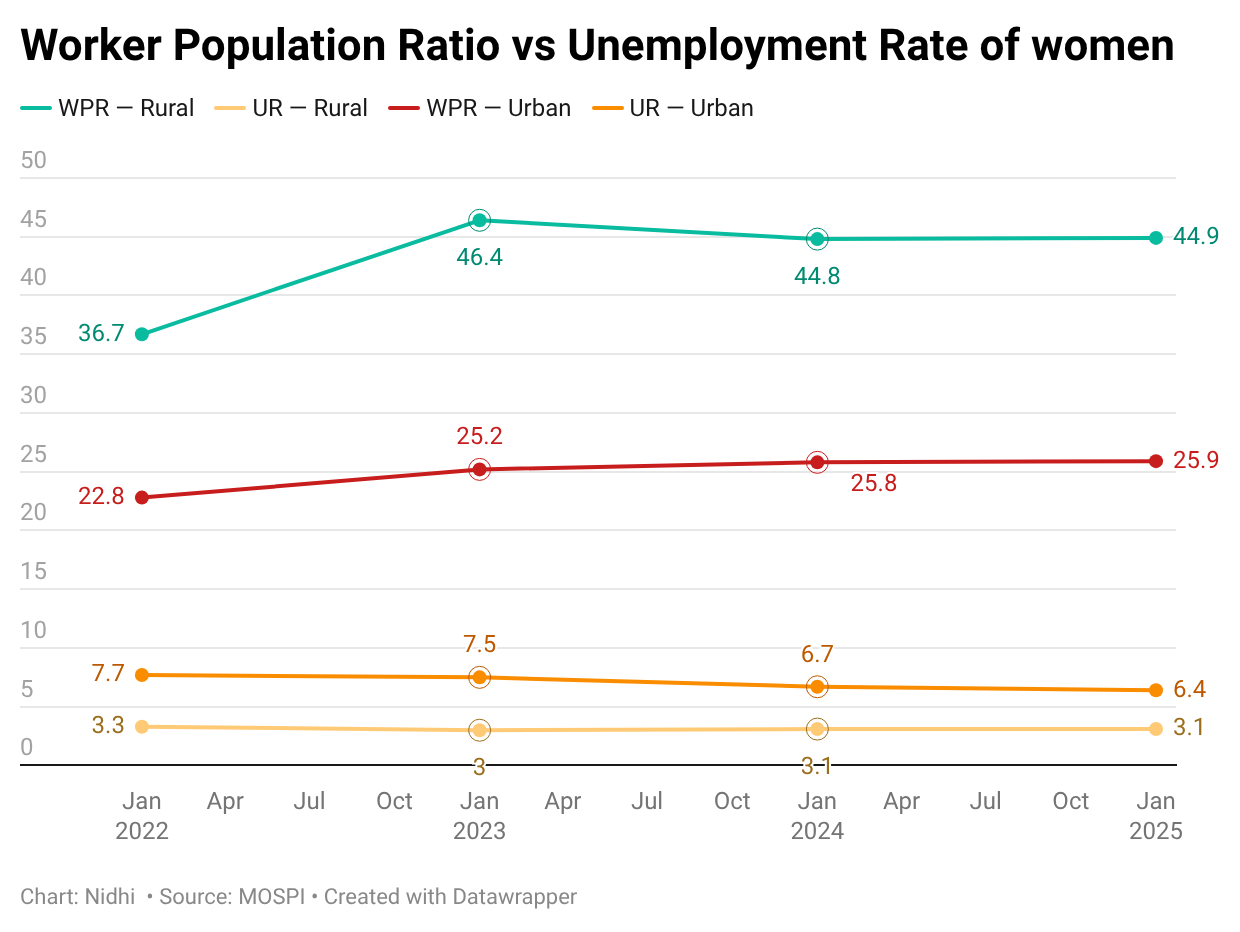
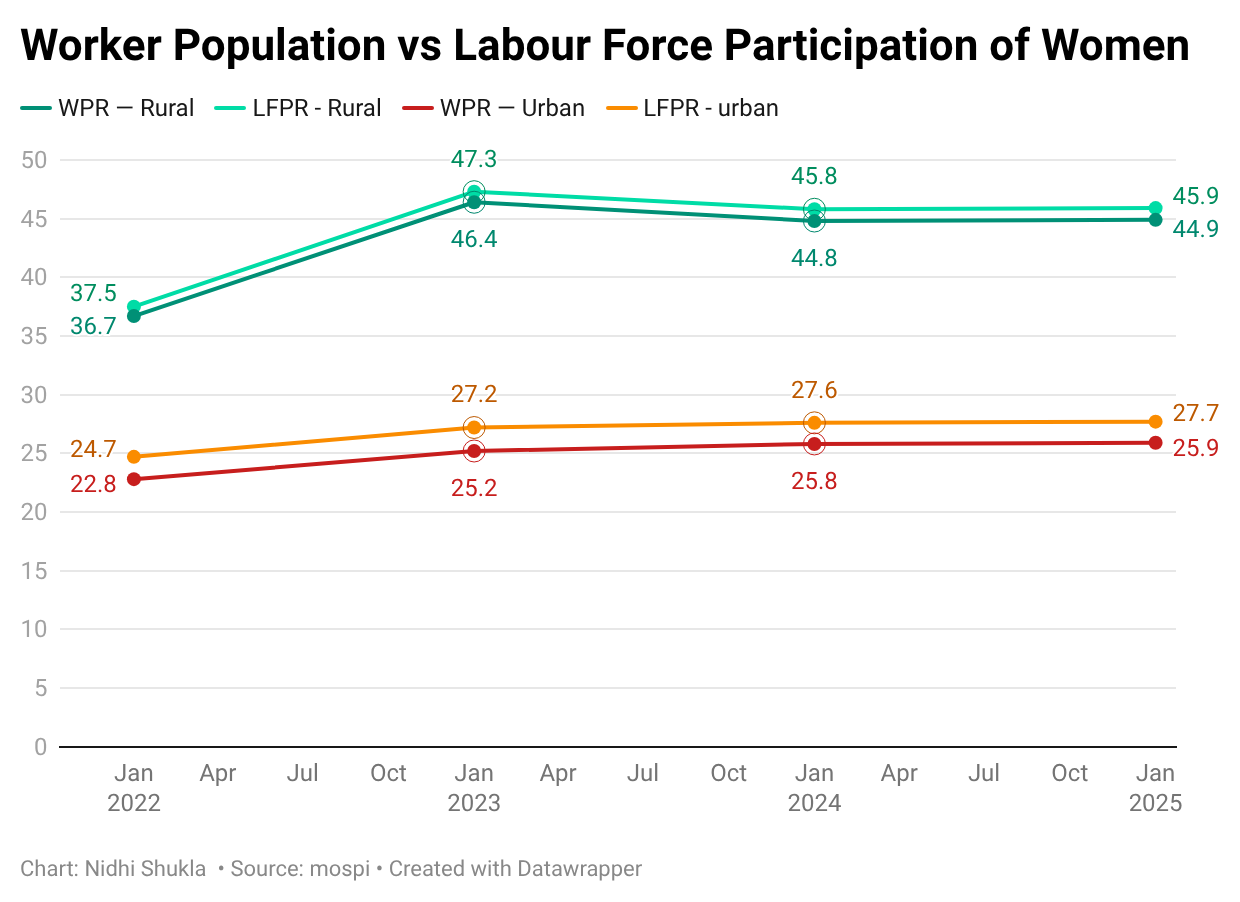
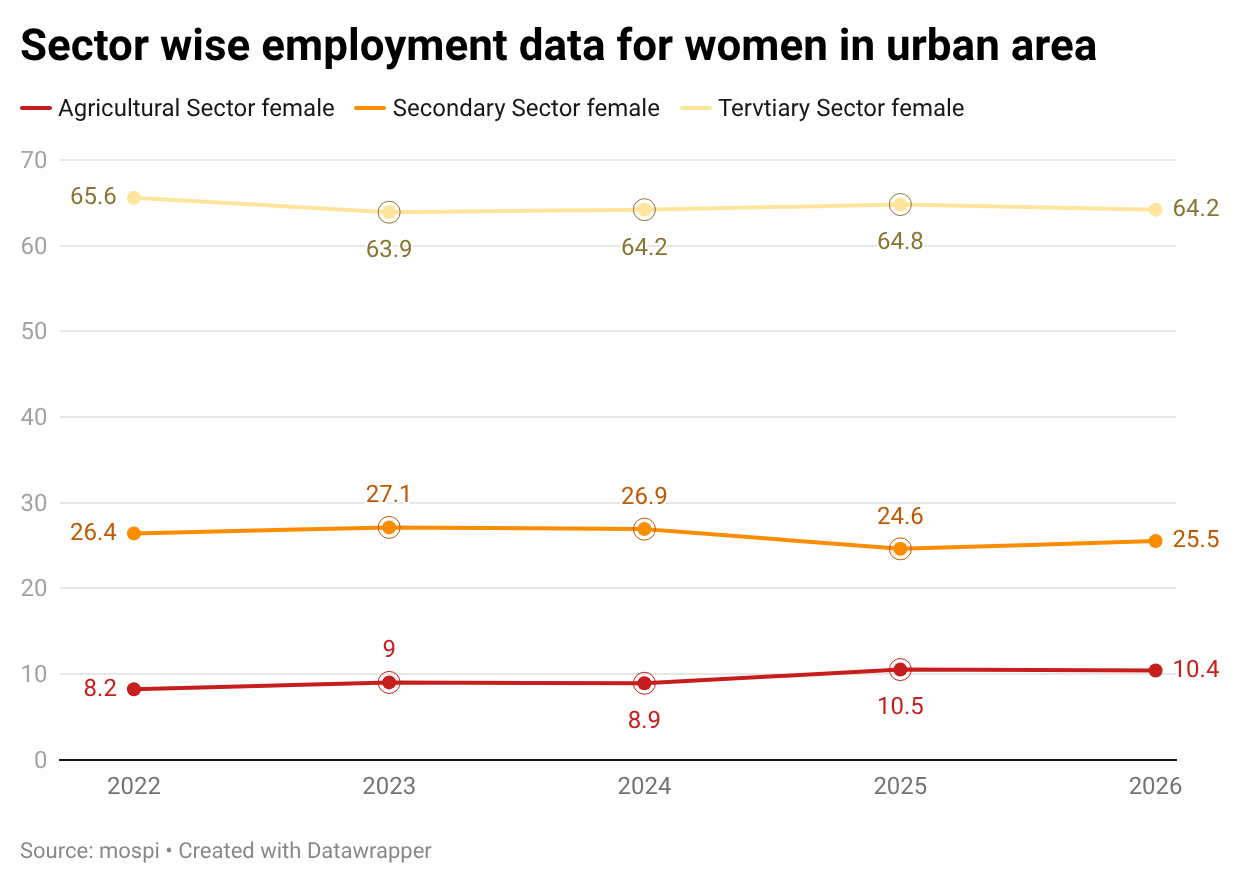
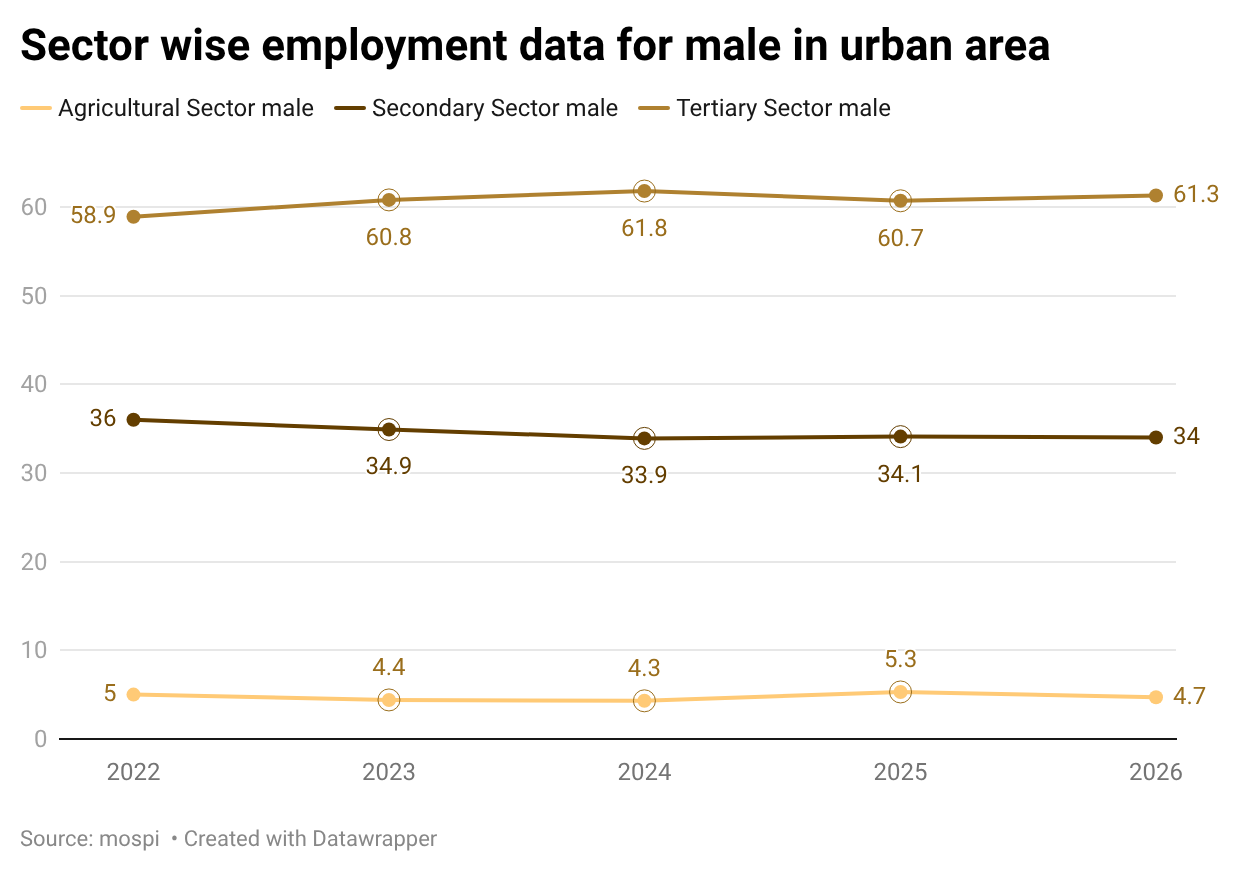
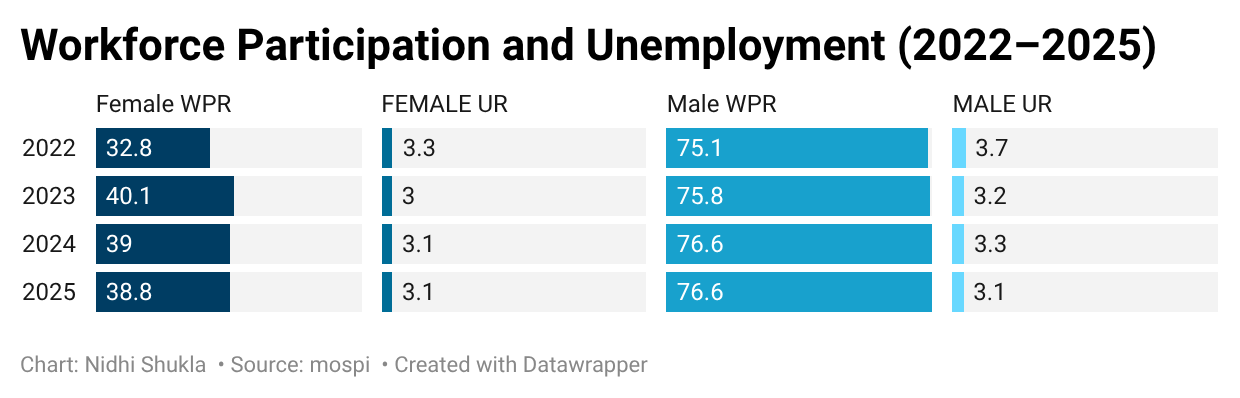
Driven by historical legacy, India’s female employment is expanding across rural and urban sectors, though occupational clustering and significant gender gaps remain to be bridged. The condition of women in the Indian workforce varies dramatically across different sectors, moving from high-volume manual labor to a steady climb up the corporate ladder. In the primary sector, women form the backbone of the rural economy, comprising nearly half of the agricultural labor force and driving the dairy industry, though many remain unpaid family helpers. In industry, women contribute 25%, concentrated primarily in textiles and light manufacturing while remaining underrepresented in core engineering roles. Meanwhile, the services sector presents a strong contrast, with women achieving significant entry-level representation in high-growth fields like IT, healthcare, and education. https://www.datawrapper.de/_/8opp7/ According to the Ministry of Statistics and Programme Implementation (MoSPI) data, the period from 2022 to 2025 shows rising employment growth for women alongside a continuous drop in unemployment. In rural areas, the share of working women rose significantly from 36.7% to 44.9%. In urban areas, female employment grew consistently from 22.8% to 25.9%. Simultaneously, female unemployment fell across both regions: urban female unemployment dropped from 7.7% to 6.4%, while rural rates remained low and stable, moving from 3.3% to 3.1%. These metrics highlight a clear, positive expansion in economic opportunity. https://www.datawrapper.de/_/fktmG/ From 2022 to 2025, participation grew smoothly across rural and urban landscapes. In rural areas, the female Labour Force Participation Rate (LFPR) surged from 37.5% to 45.9%, while the Worker Population Ratio (WPR) rose from 36.7% to 44.9%. Urban centres recorded steady https://www.datawrapper.de/_/wkoW1/ Looking toward 2026, services remain the primary employment driver in Indian cities. Women have proven particularly successful in service-oriented roles: 64% of urban working women are employed in services, compared to 61.3% of men. Conversely, manufacturing and construction employ 34% of urban working men but only 25.5% of women. Urban agriculture accounts for the smallest share, employing 10.4% of working women and 4.7% of working men. These figures illustrate how distinct sector trajectories shape career pathways across genders. https://www.datawrapper.de/_/CtrBg/ While overall female employment expanded from 32.8% to 38.8% between 2022 and 2025, a substantial gender gap persists. Compared to the 76.6% male employment rate, female participation remains roughly half, indicating significant room for structural progress. https://www.datawrapper.de/_/gSTlZ/ Collective efforts across government and society are bearing fruit, but the journey toward full economic parity remains incomplete. Achieving true gender equality requires equal representation at all leadership levels, ensuring every individual can thrive across any industry without barriers. While macro trends show women steadily entering urban services and rural agriculture, a closer look at the manufacturing landscape reveals a far more concentrated and informal reality. Rather than being distributed evenly across industrial roles, female industrial labour is heavily clustered in a handful of traditional, home-based, and highly gendered sub-sectors: 78% of all women in manufacturing are concentrated in just four industries, namely apparel, textiles, tobacco (bidi rolling), and food products. Dominance of custom tailoring: More than 1 in 3 women in Indian manufacturing works specifically in custom tailoring. Feminisation of specific industries: Women make up 93% of the workforce in tobacco manufacturing and 65% in apparel manufacturing. Informality and self-employment: Over 90% of women in manufacturing work in informal/unorganized jobs (often home-based self-employment), rather than organized factory jobs. SOURCE LINK = https://www.dataforindia.com/women-in-manufacturing/
gains as well, with urban female LFPR rising from 24.7% to 27.7% and urban female WPR climbing from 22.8% to 25.9%.
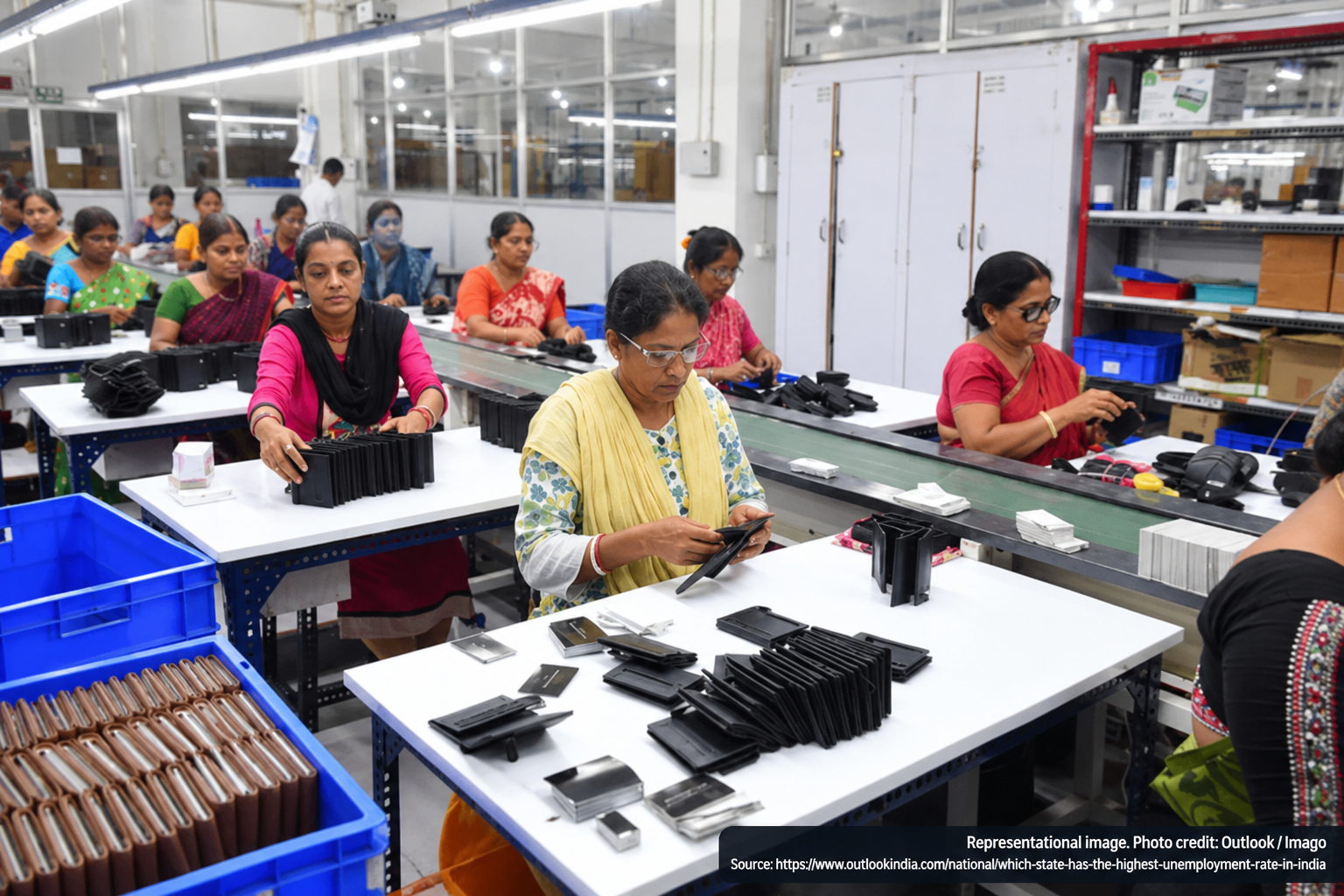
Heavy concentration in 4 sub-sectors: