India’s freight corridor moves from construction to full operation
Visualisation
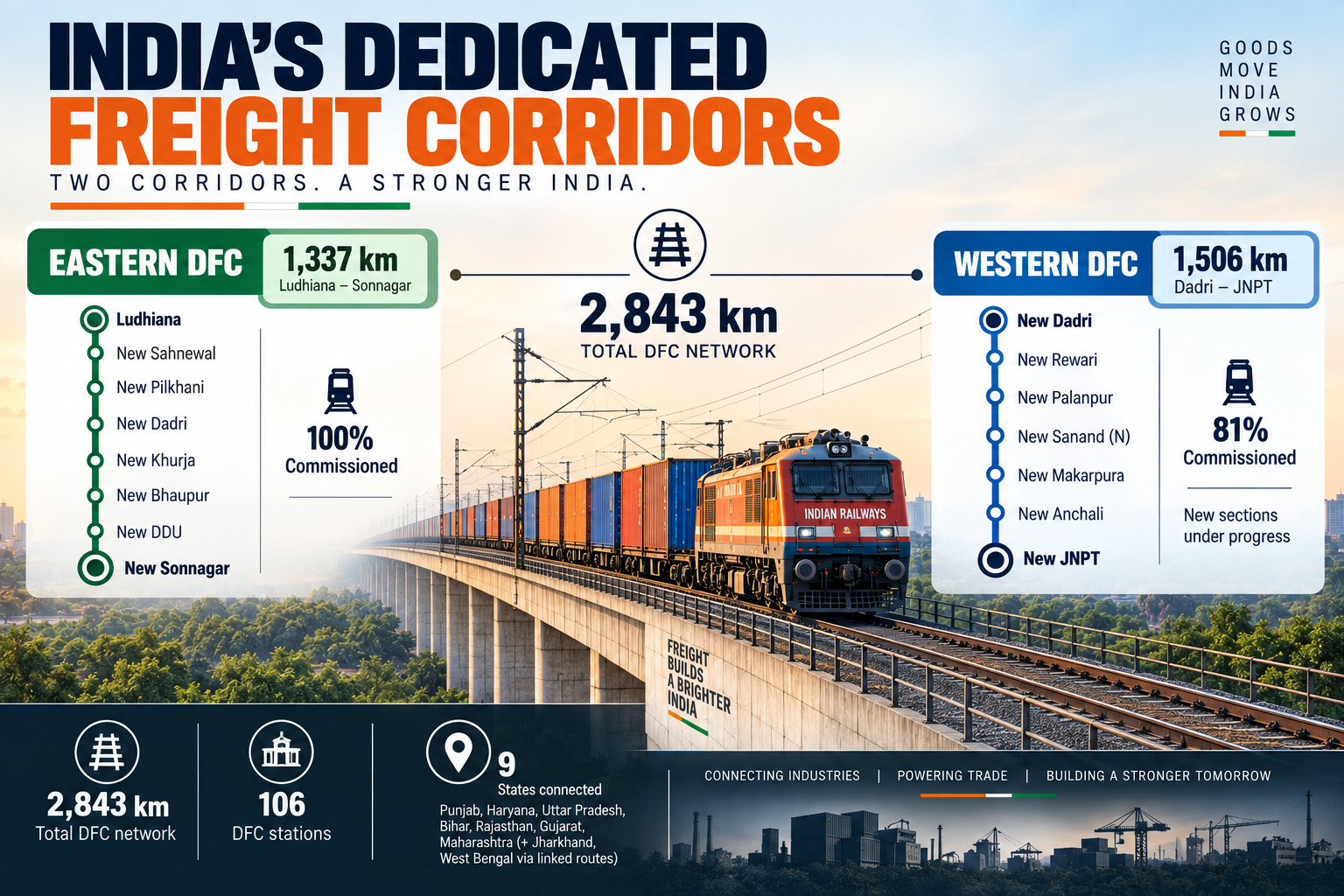
At a Glance
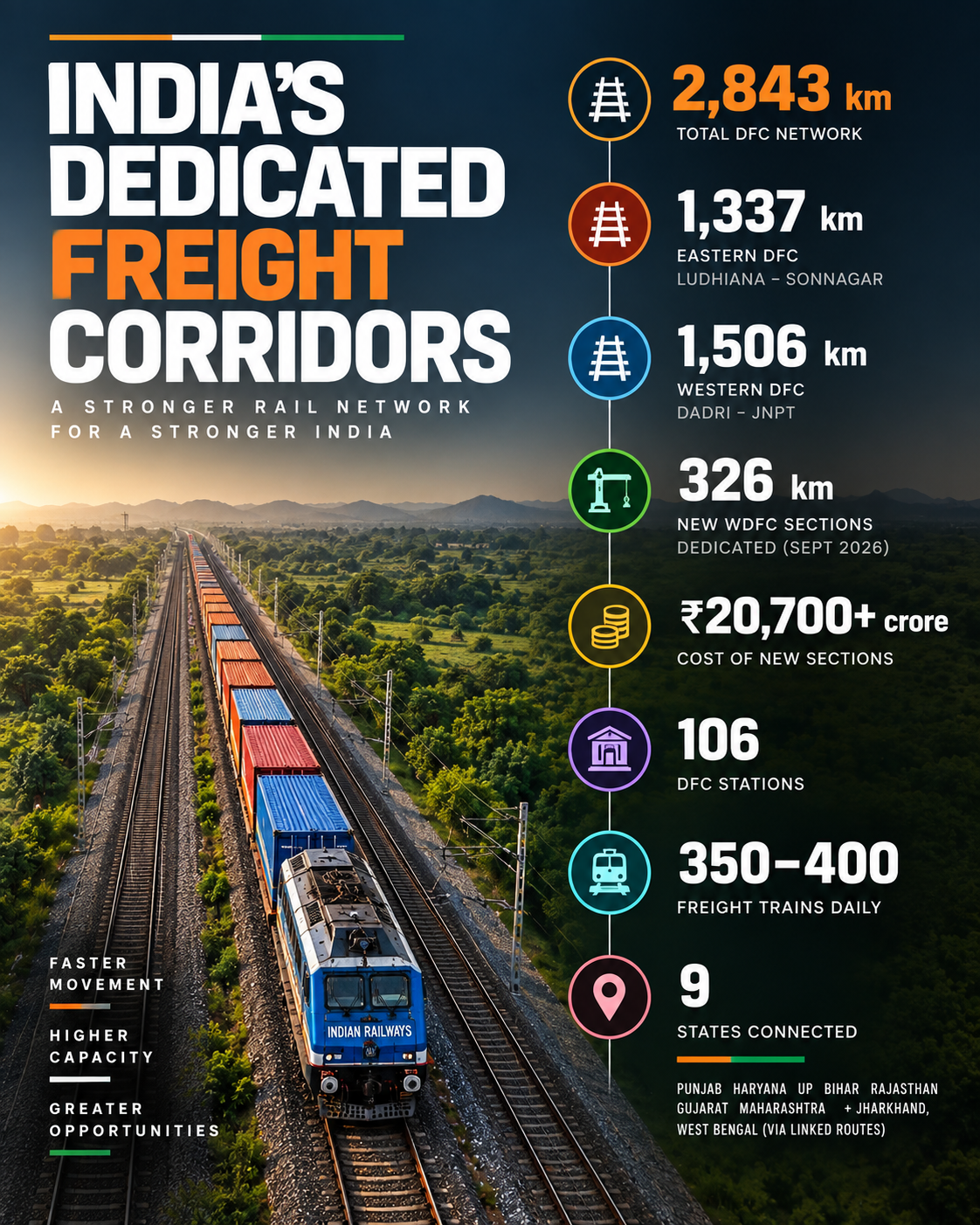
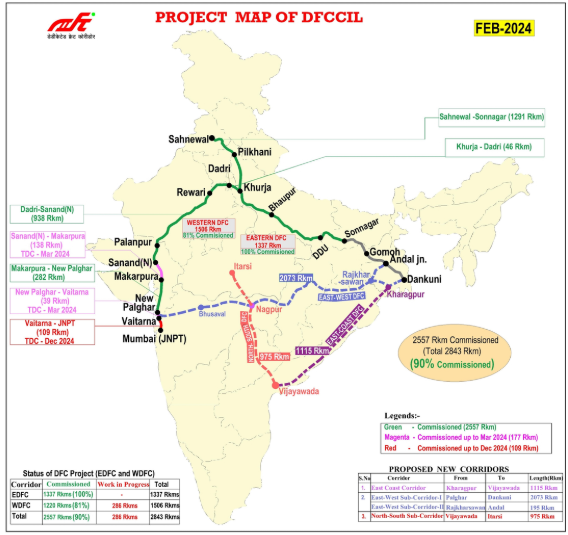
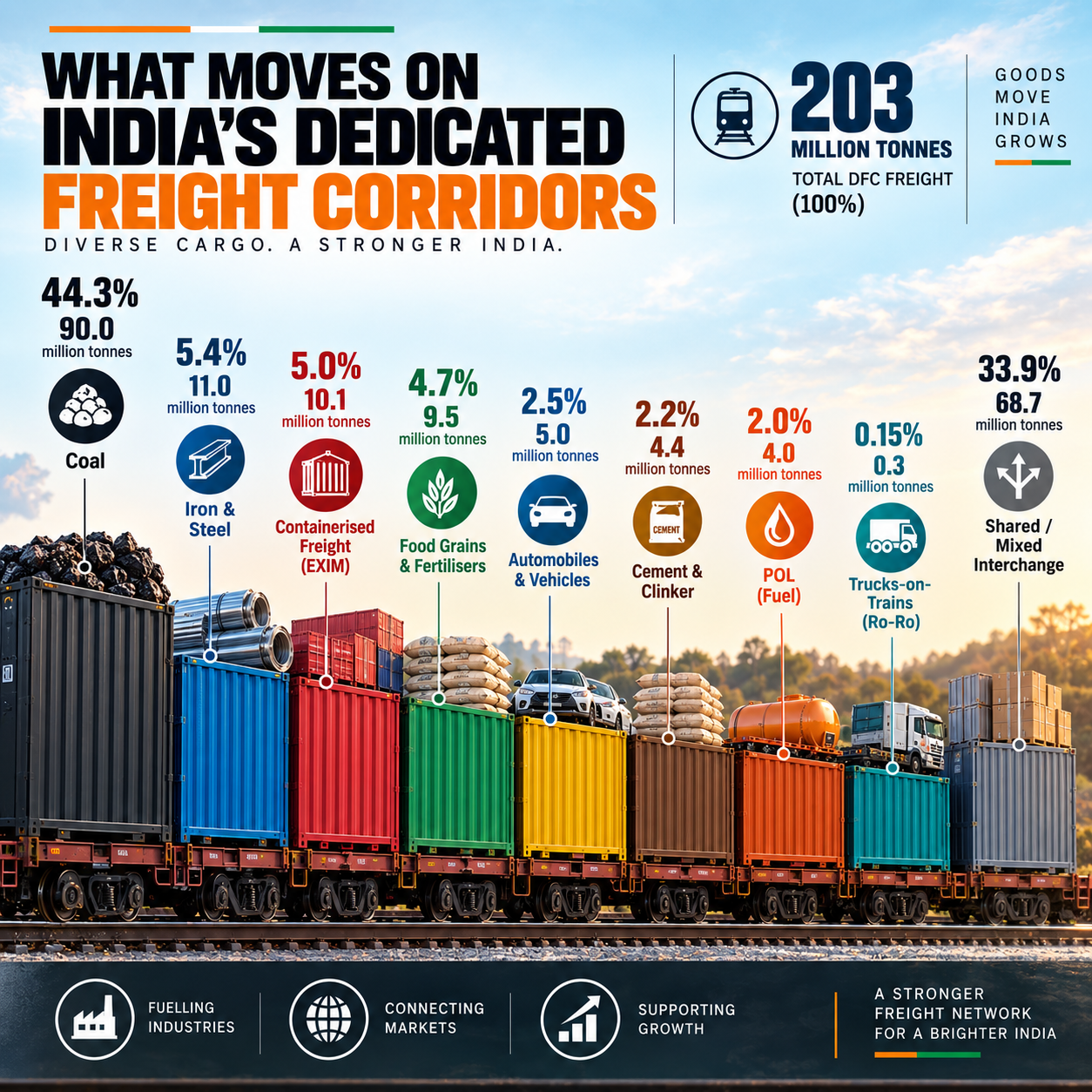
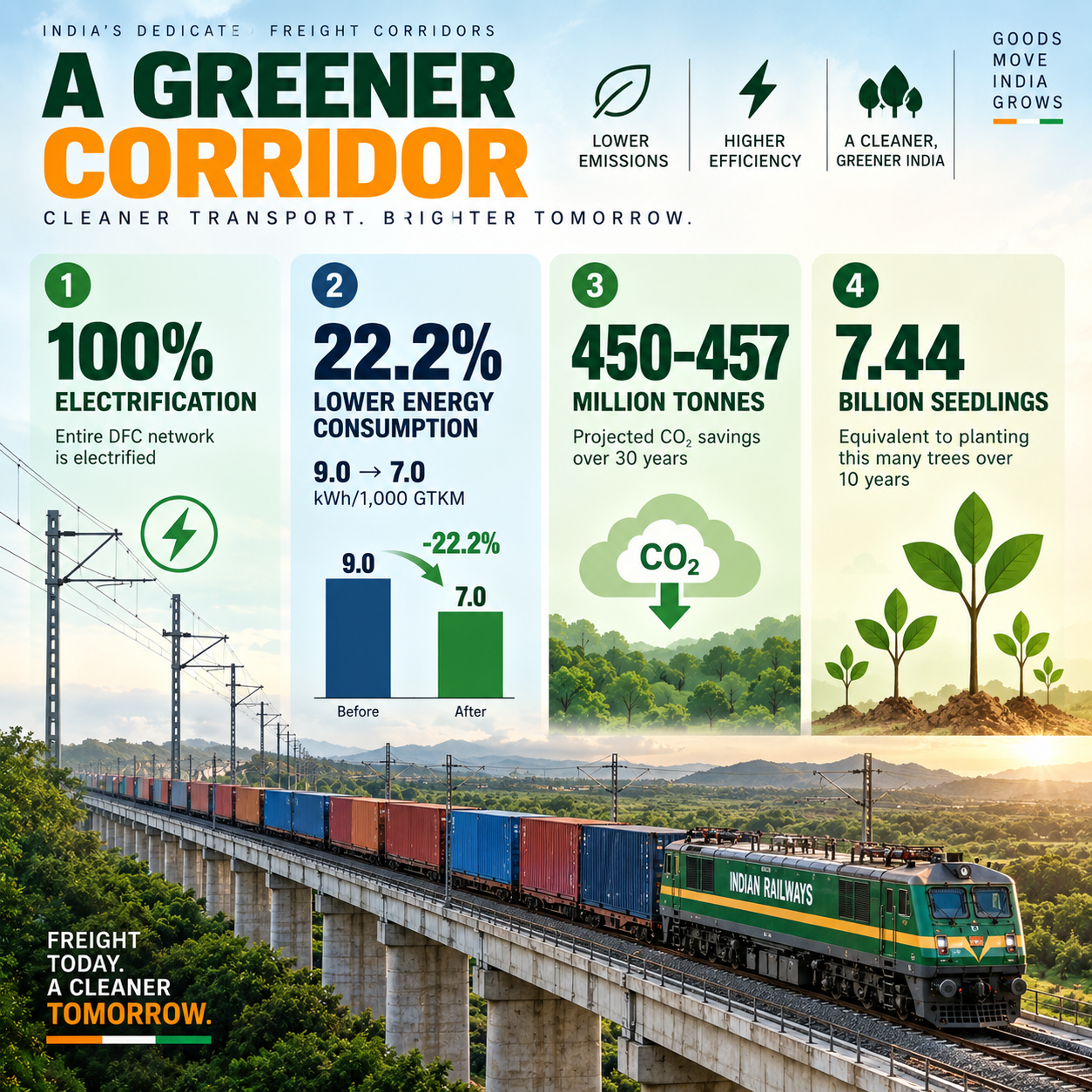
Prime Minister Narendra Modi on Tuesday, September 8, dedicated three sections of the Western Dedicated Freight Corridor (DFC) to the nation in Vadodara. The stretches, Sanand (North) to Makarpura, New Umbergaon to New Saphale, and New Saphale to JNPT, together cover 326 route km and were built at a cost of more than ₹20,700 crore. Their commissioning gives freight trains a direct corridor into the Jawaharlal Nehru Port Authority (JNPA), India’s largest container port. More significantly, it marks the completion of the entire 2,843-route-km Dedicated Freight Corridor network, bringing both its eastern and western arms into full operation for the first time. The project was conceived around a straightforward economic problem: India needed to move more freight, and move it faster, without forcing passenger and goods trains to compete for the same railway capacity. The government expects the corridors to speed up export-import cargo movement, reduce logistics costs and ease pressure on heavily used passenger routes, including Mumbai’s suburban railway network. The full impact of those gains will become clearer as traffic scales up. But even before the final sections were commissioned, the corridor had begun changing the way freight moves across some of the country’s busiest industrial and transport routes. The DFC network has two principal arms. The Eastern Dedicated Freight Corridor stretches 1,337 km from Ludhiana to Sonnagar and has been fully commissioned since mid-2023. The Western Dedicated Freight Corridor runs 1,506 km from Dadri to JNPT; its final sections became operational on Tuesday.Together, the two corridors connect 106 stations. According to the Dedicated Freight Corridor Corporation of India Ltd, the network currently handles around 350 to 400 freight trains a day. For decades, freight trains had to share railway lines with passenger services. Both competed for limited track capacity, with passenger trains generally receiving operational priority. The result was slower freight movement, longer transit times and severe constraints on how long or how fast goods trains could run. The idea itself is not recent. The Dedicated Freight Corridor project was approved in 2006. For several years, however, progress on the ground remained limited as the project worked through land acquisition, financing, contracts and construction challenges. The mix of cargo on the DFC shows how closely the network is tied to India’s industrial and energy economy. Coal is the single largest commodity, accounting for more than 90 million tonnes a year, or about 44% of total DFC traffic. Much of it moves from the eastern coalfields to power plants in northern India. Iron and steel, food grains, fertilisers, cement and petroleum products make up a large share of the remaining freight. Container traffic is also growing, particularly on the Western DFC, where the corridor is designed to handle double-stack container trains. The network also carries a significant share of rail-borne vehicle freight, underlining its role beyond traditional bulk commodities and linking manufacturing centres more efficiently with domestic markets and ports. Total freight on the DFC runs to about 203 million tonnes a year, close to 14% of India's rail freight overall, carried on roughly 4% of the country's track length. With the JNPT link now in place, container traffic in particular is expected to grow, since export cargo that used to move through Mumbai's congested yards has a more direct route inland. The Corporation’s revenue has grown alongside construction. It stood at ₹3,141 crore in FY 2022-23, rose to ₹4,485 crore in FY 2023-24 (a 42.7% increase, coinciding with the Eastern DFC's full commissioning and a rise in daily trains from 170 to 241), and reached ₹7,996 crore in FY 2024-25, up 78.2% on the year before, as more of the network stabilised and daily trains crossed 350. Each section that opened added measurably to earnings. Tuesday's dedication closes the last significant gap in that build-out. This is where the numbers make the strongest case for the DFC. The cost of moving freight has fallen from about ₹1.96 per tonne-km on the conventional network to roughly ₹1.35–₹1.40 on the DFC, a reduction of around 30%. That is also substantially below road freight costs, which can rise to about ₹11 per tonne-km for smaller vehicles. On some routes, the overall cost of moving freight has fallen by nearly half. Speed has improved just as sharply. Freight trains that averaged around 25 km/h on the conventional network can average close to 60 km/h on the DFC. The corridor can also accommodate longer and heavier trains: a single rake can stretch to about 1.5 km and carry as much as 13,000 tonnes of freight, roughly equivalent to the load carried by 1,300 ten-tonne trucks. The advantage, therefore, is not simply that trains move faster. Each train can move substantially more cargo at a lower unit cost, reducing the number of journeys required to carry the same volume of goods. The network runs entirely on electric traction, adding an environmental benefit to the gains in speed and carrying capacity. Energy consumption per tonne of freight has fallen by more than 22%. DFCCIL estimates that over its first 30 years, the corridor could avoid around 450–457 million tonnes of CO₂ emissions — an impact it compares with growing about 7.44 billion tree seedlings for 10 years. For the first time, the major freight belts stretching from Punjab and Haryana through Uttar Pradesh, Bihar, Rajasthan and Gujarat to Maharashtra are linked by a fully operational dedicated freight network. Jharkhand and West Bengal feed into it through connecting routes. At one end lie the coalfields and industrial centres of eastern India; at the other is JNPT, the country’s busiest container port. Between them sit some of India’s most important manufacturing and consumption centres. Completion matters because a freight corridor is only as effective as its unfinished links allow it to be. Until the final connection to JNPT was commissioned, container traffic to and from the port still had to use sections of the conventional, congested railway network. That weakened one of the central advantages of the DFC: moving freight over long distances without repeatedly entering mixed passenger-and-freight routes. That constraint has now been removed. Exporters, manufacturers, ports, power plants and logistics operators have access to a continuous dedicated route across the network rather than a patchwork of completed and incomplete sections. What had been built incrementally over more than a decade can finally operate as one integrated logistics system. The tracks are complete. What matters now is how much India moves on them. Two corridors, one system
What moves on it
The revenue numbers
Cost and efficiency
What changes now