India’s phone-making rise is reshaping the US market
Visualisation
At a Glance
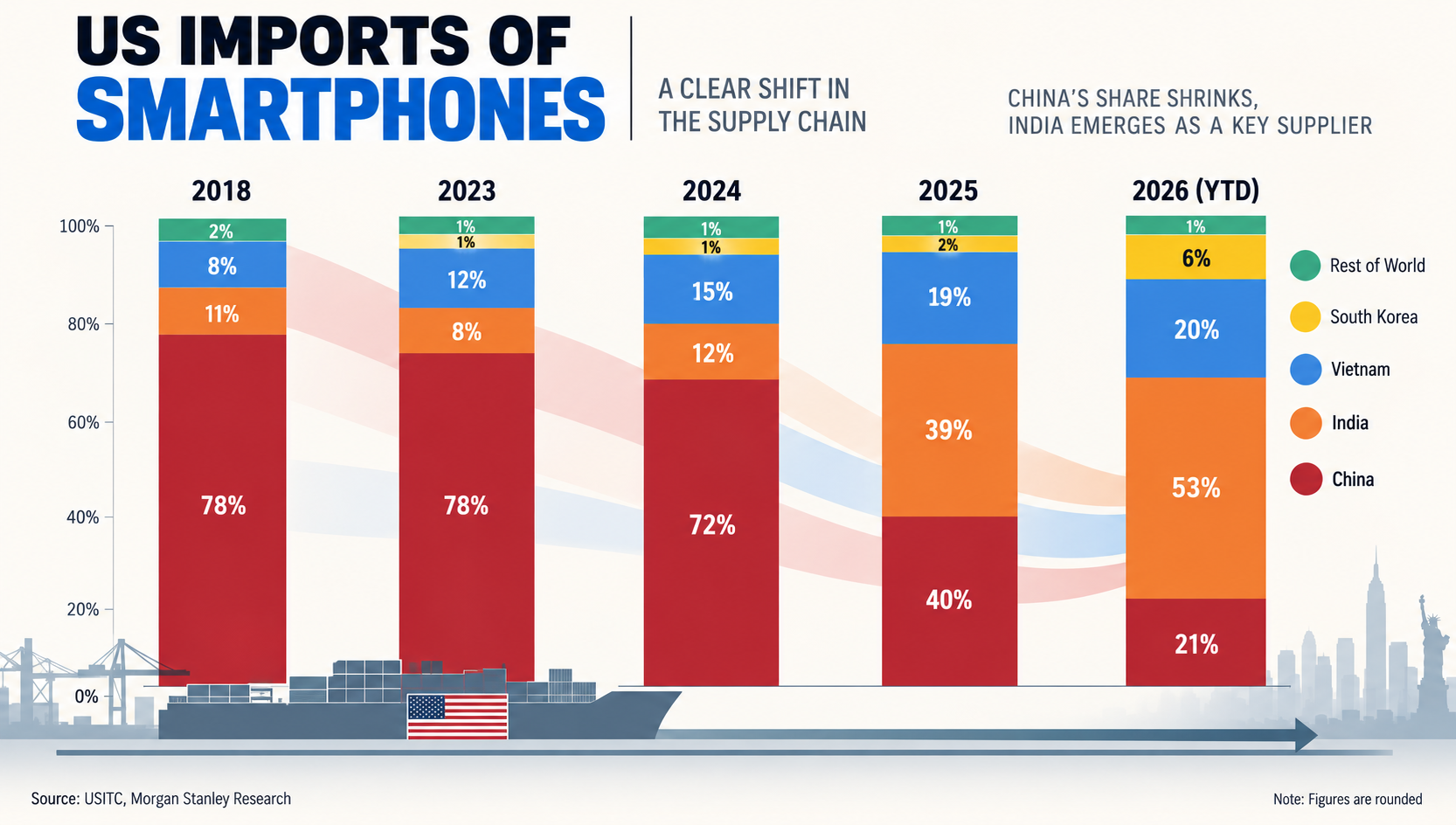
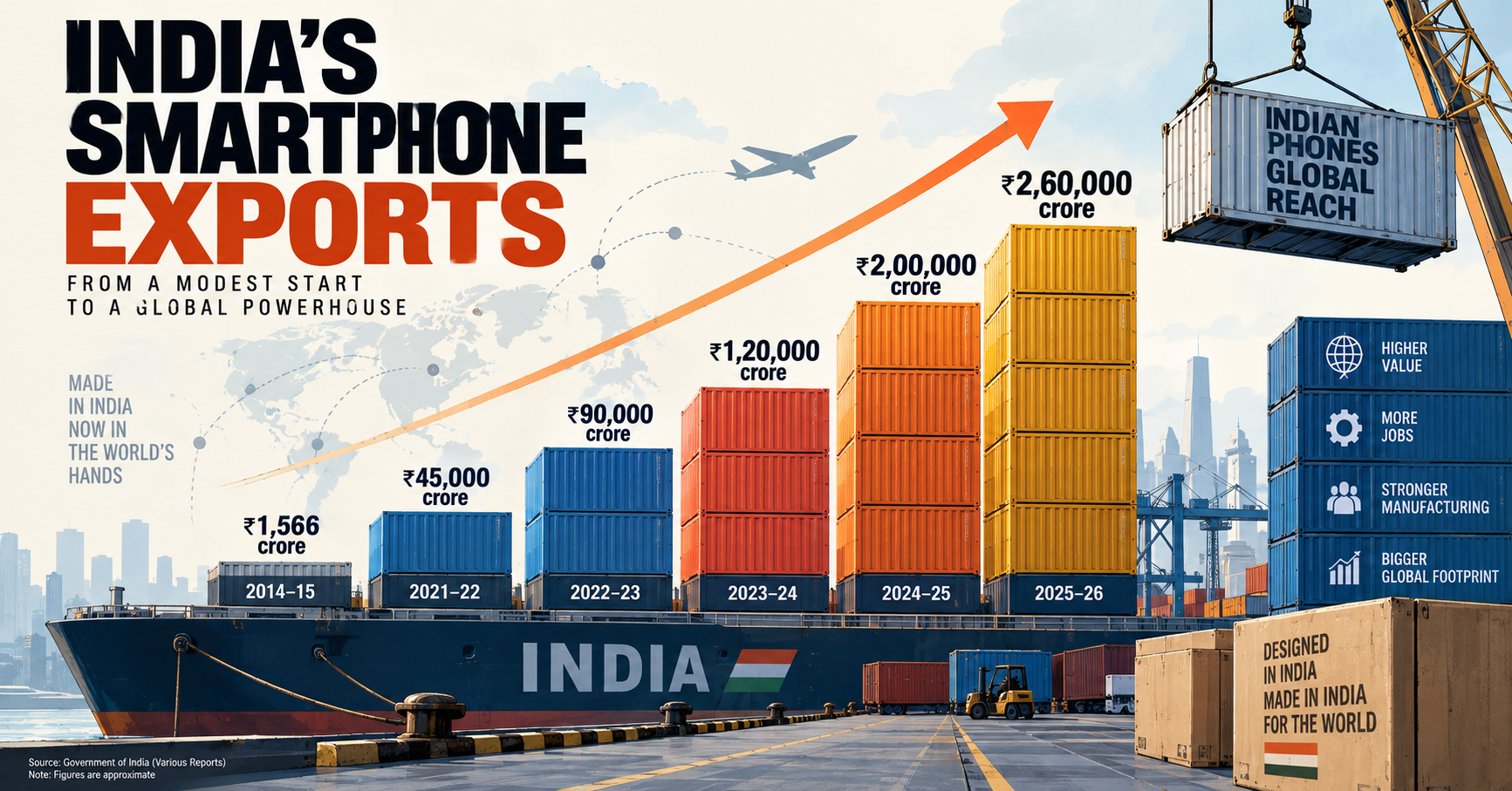
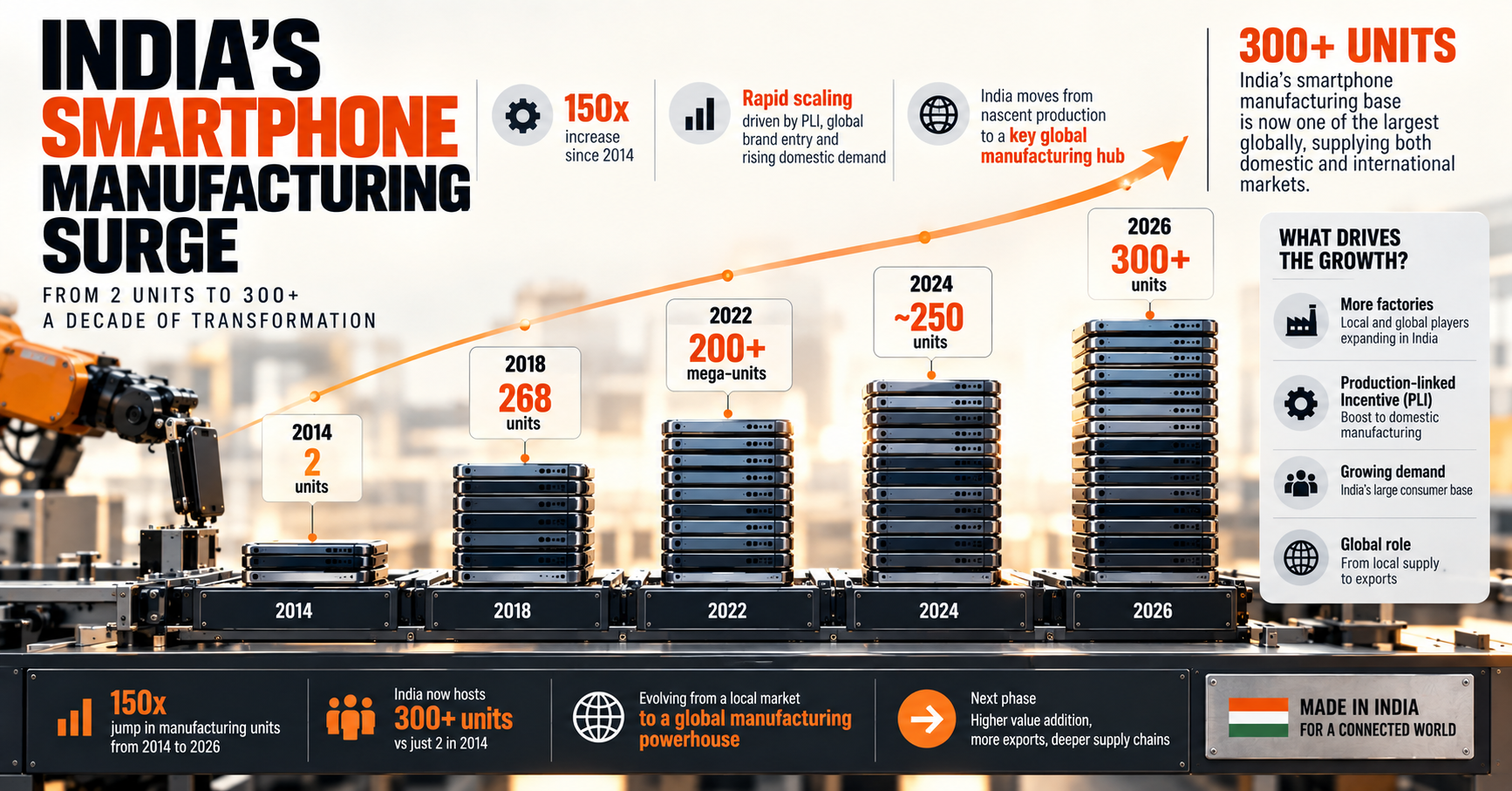
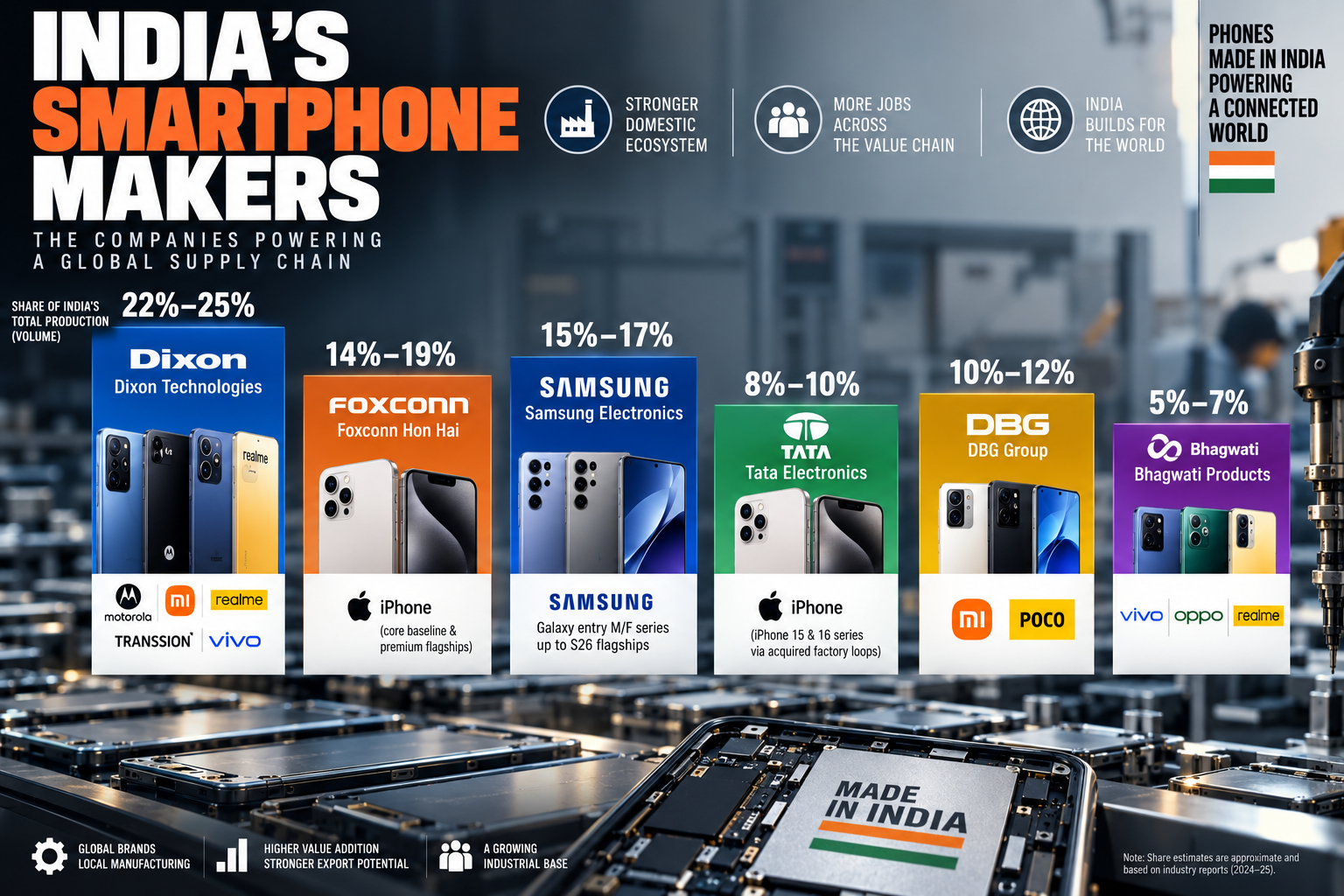
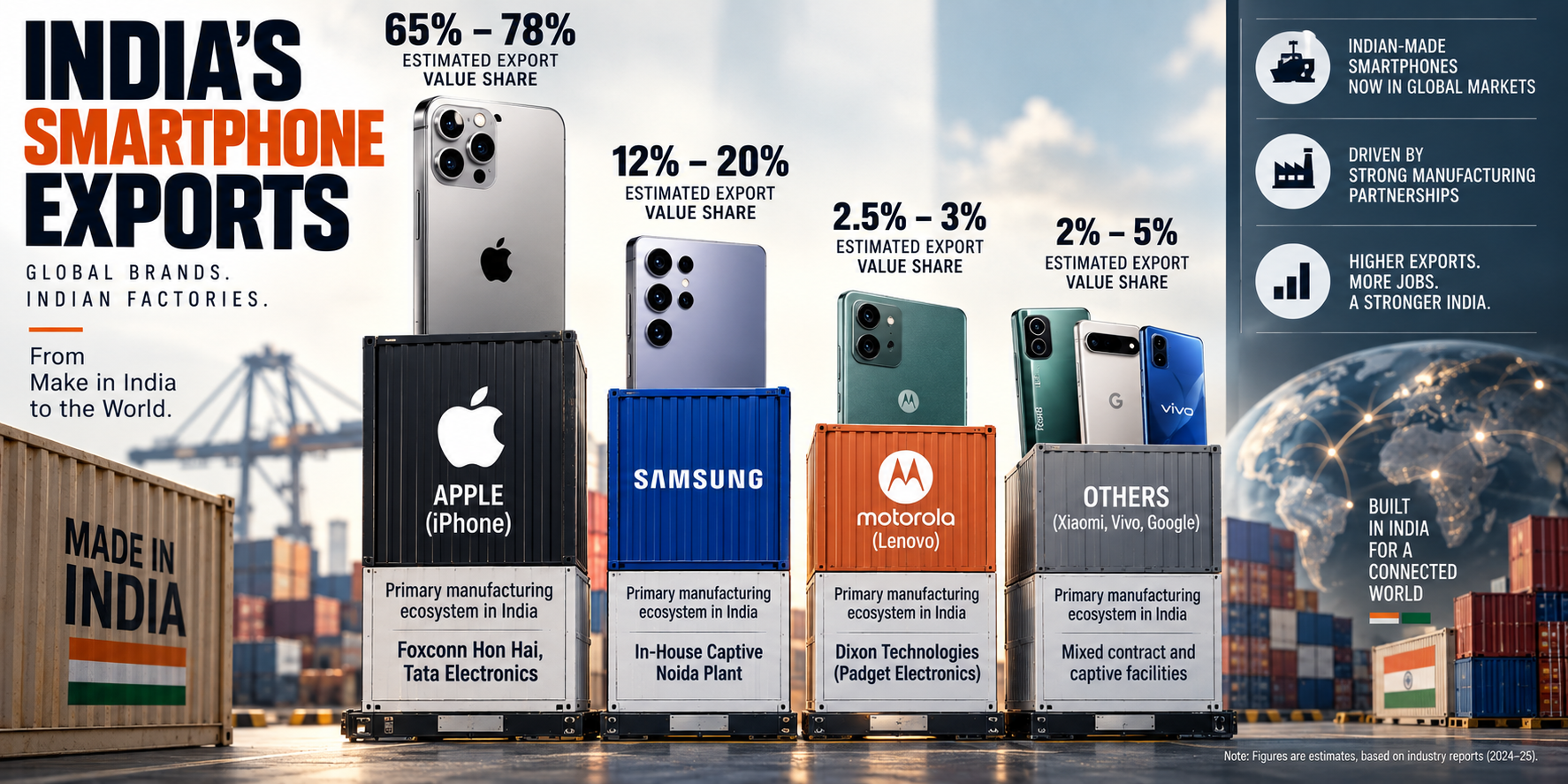
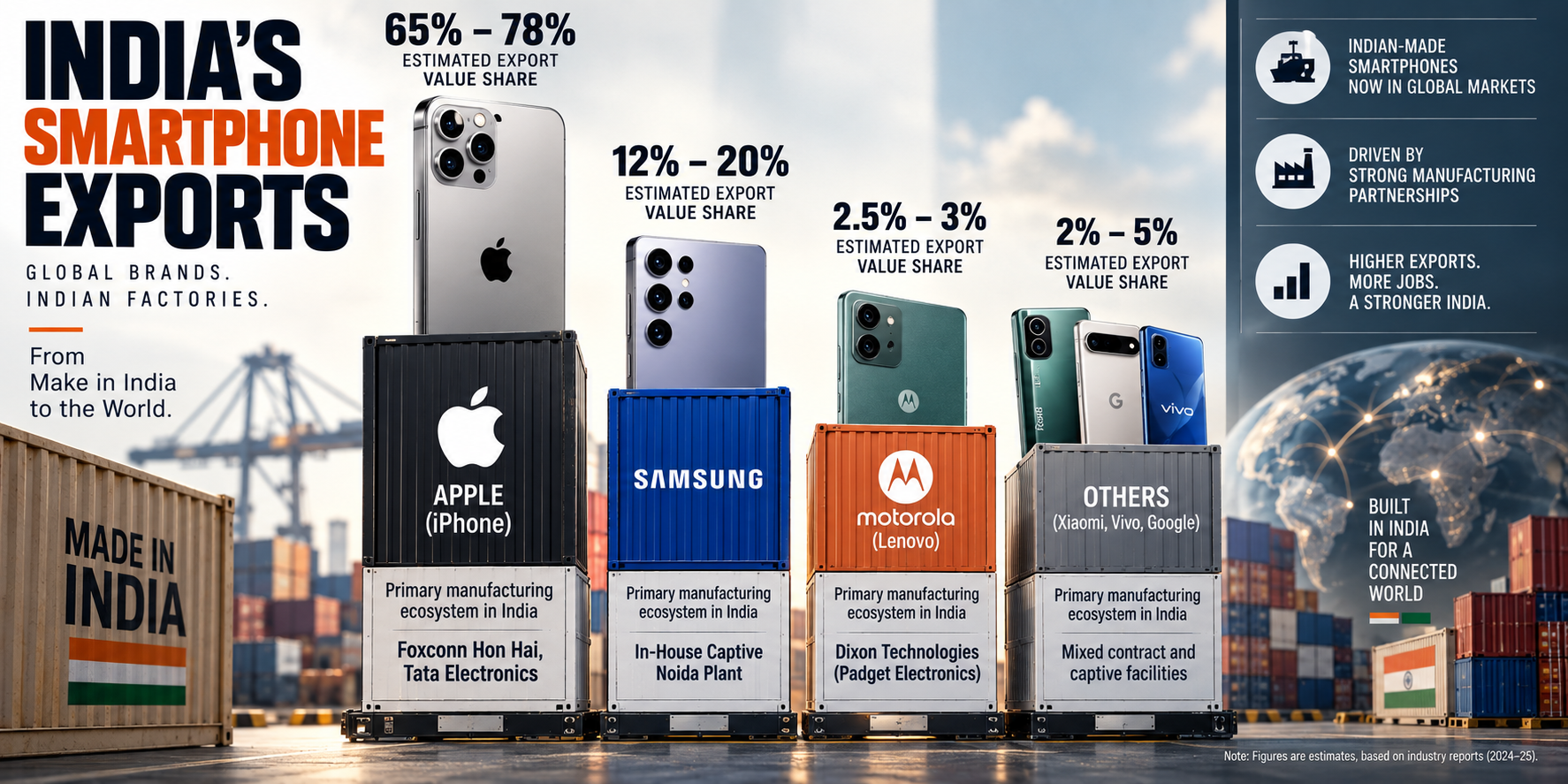
The numbers tell a remarkable story. In 2018, China accounted for 78% of US phone imports, while India’s share was virtually zero. Eight years later, the balance has changed dramatically. India’s share rose to 8% in 2023 and 12% in 2024. The real breakthrough came in 2025, when its share jumped to 39%. Early 2026 figures put India ahead of China, accounting for 53% of US phone imports. China’s share, meanwhile, had fallen to 21%. In the space of two years, India moved from a marginal supplier to the source of more than half the phones entering the American market. China, which once dominated these imports, saw its share fall sharply. This is more than a change in trade statistics. It marks a significant shift in the geography of smartphone manufacturing, with India emerging as a serious alternative to China in one of the world’s most important consumer markets. The transformation did not happen overnight. In 2014-15, India’s mobile phone exports were worth around ₹1,566 crore. By 2025-26, that figure had surged to ₹2.6 lakh crore, a 165-fold increase in eleven years. Production rose from 60 million to 335 million handsets, a 5.6-fold jump. Export value, however, grew far more rapidly. The takeaway is clear: India is not simply making more phones. It is making higher-value phones and exporting them at scale. That marks a deeper shift in its manufacturing story. A major push came from the Production Linked Incentive (PLI) scheme for large-scale electronics manufacturing, notified on April 1, 2020. The scheme offered companies a 4–6% cash incentive on additional sales over five years. The full 6% incentive applied to phones priced above ₹15,000, encouraging higher-value manufacturing. Twenty-two companies joined the first round, including Apple, Samsung, Foxconn, Wistron, Pegatron, Dixon, Lava and Micromax. Between 2022-23 and 2024-25, the government paid nearly $1 billion in PLI incentives to 19 eligible companies. More than 75% went to Foxconn, Tata Electronics and Pegatron, all manufacturing Apple products. The scheme was open to all eligible applicants. But Apple’s manufacturing partners emerged as its biggest beneficiaries. Apple’s manufacturing expansion is at the heart of India’s phone-export boom. iPhones account for 65–78% of India’s total mobile export value, making them the dominant product line. India now assembles roughly a quarter of all iPhones worldwide, up from 14% in 2024. Annual output has reached around 55 million units, a 53% year-on-year increase, while the value of India-made iPhones has crossed $22 billion. The growth has helped smartphones overtake refined diesel and cut diamonds as India’s biggest export category, marking a significant shift in what the country sells to the world. It is not just an Apple story. Dixon Technologies leads India’s phone production by volume, accounting for 22–25%, mainly making Motorola, Xiaomi, Realme and some Vivo models for the domestic market. Foxconn contributes 14–19%, largely through iPhone production, while Samsung’s Noida plant accounts for 15–17%. Tata Electronics, which took over a former iPhone factory, has quickly reached 8–10%. Together, these players show that India’s manufacturing base is broader than a single company or product. The export map is also beginning to widen. The US still accounts for 65–70% of India’s smartphone export value, but the UAE has emerged as an important distribution hub, taking 10–12% and supplying markets across West Asia and North Africa. The Netherlands and the UK provide additional gateways into Europe. The US remains the dominant market, but India is no longer dependent on a single buyer. Taken together, the numbers point to a sustained manufacturing shift. India has gone from supplying virtually no phones to the US to accounting for more than half its imports in less than a decade. PLI provided the financial push, while companies such as Foxconn, Tata Electronics and Dixon built the manufacturing capacity. Apple’s expanding India operations accelerated the trend. The result is a broader manufacturing ecosystem, with more than 300 production units, a growing supplier base and a shift towards higher-value smartphones. The numbers suggest this is not a sudden spike, but the outcome of policy, investment and manufacturing capacity coming together over several years.
A decade ago, India was barely visible in the US phone import market. Today, it supplies more than half of the smartphones America imports. The shift is one of the clearest signs yet of India’s growing manufacturing strength.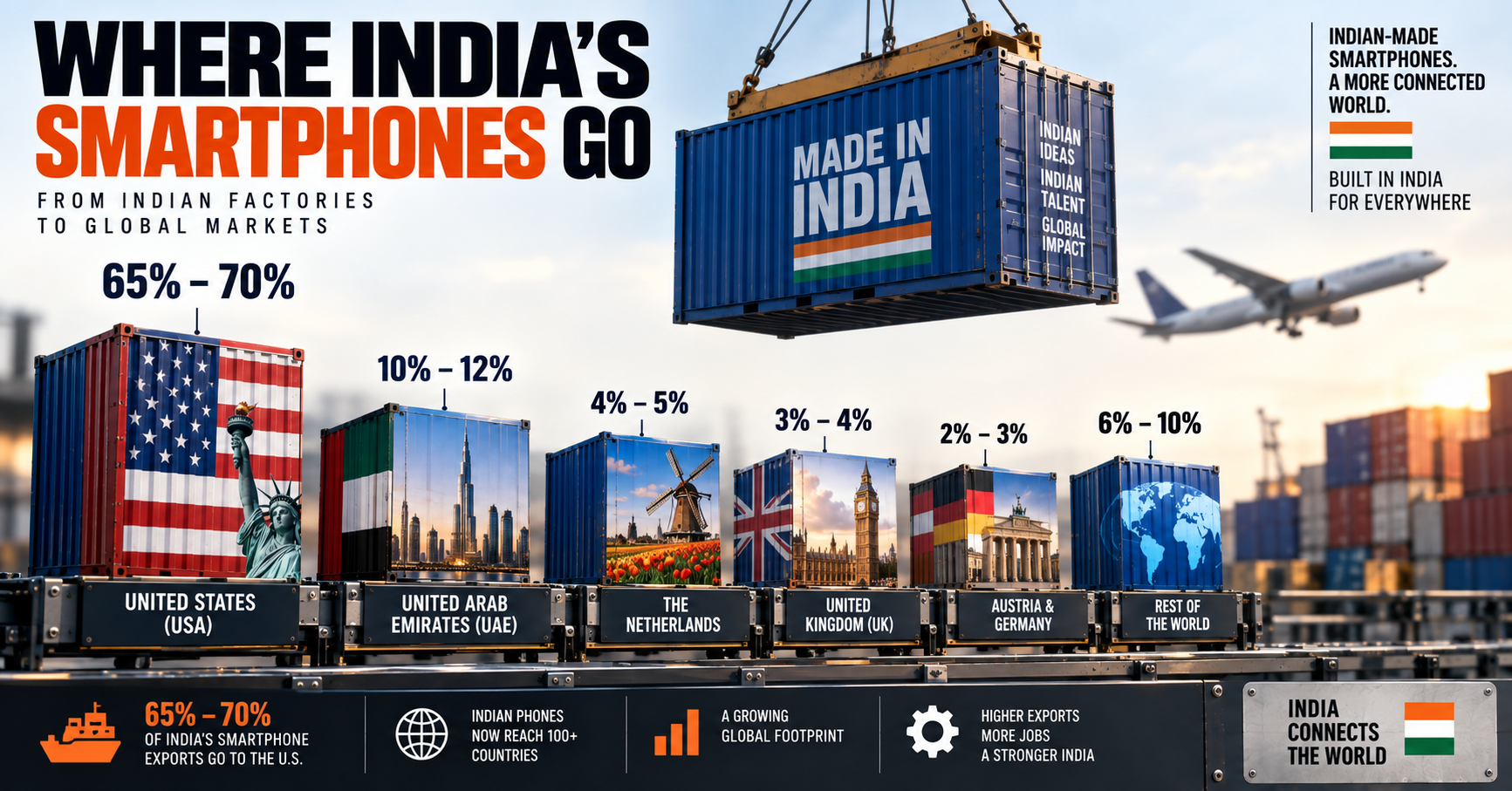
What the data means