India’s rural-urban family planning gap nearly disappears
Visualisation
At a Glance
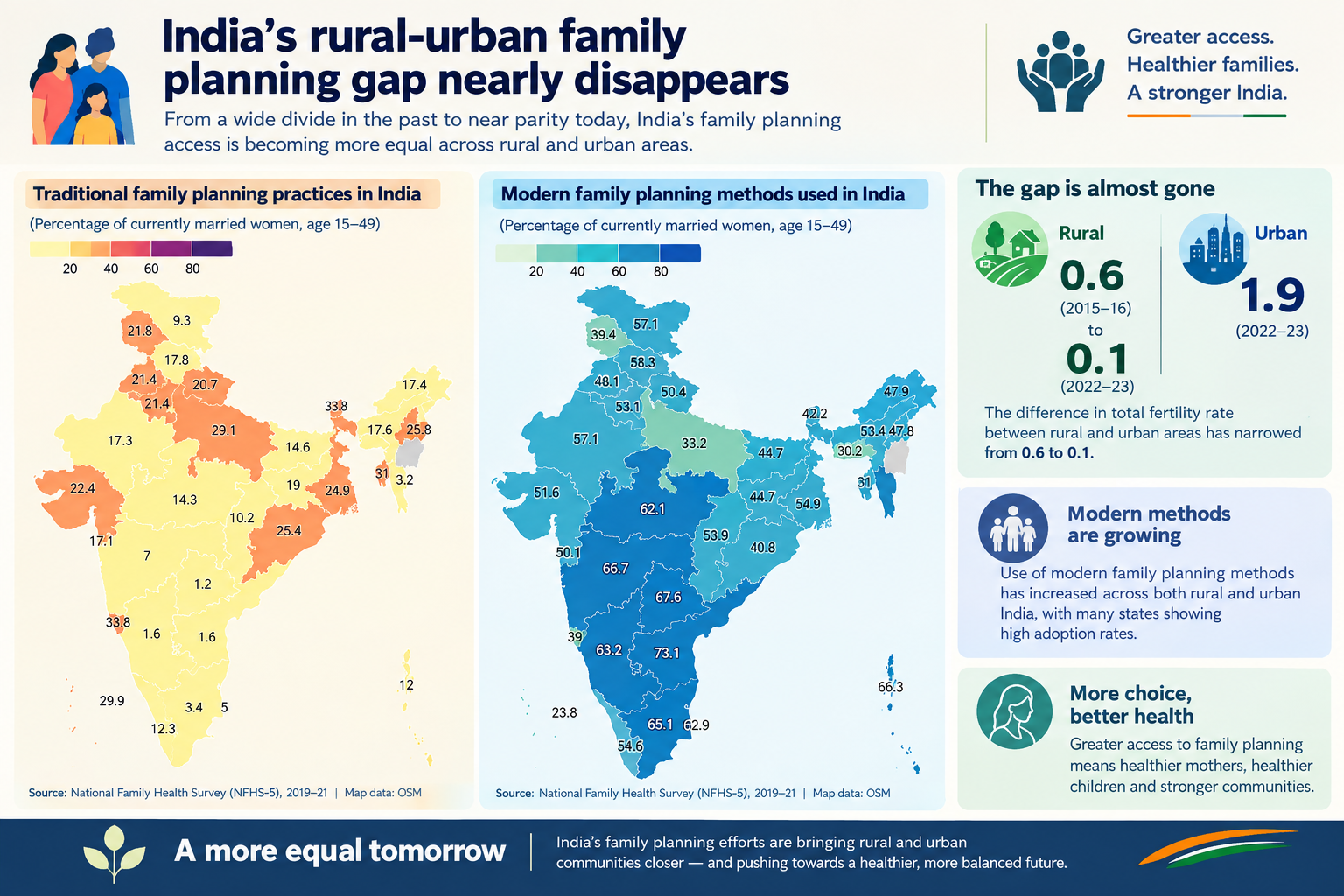
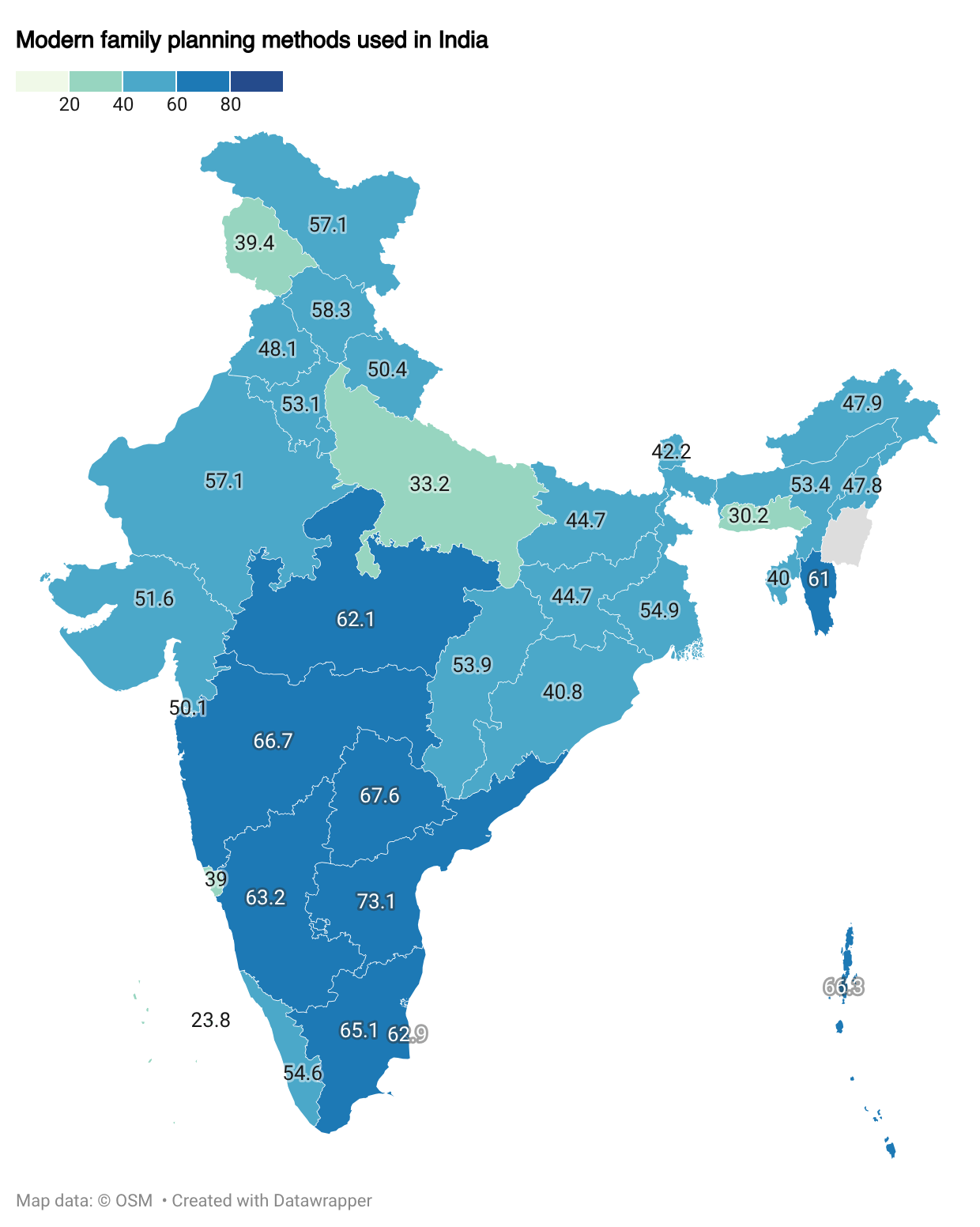
For a country where the rural-urban divide often shapes access to healthcare and social change, India’s family-planning numbers offer a surprise: rural and urban India are almost identical when it comes to modern contraceptive use. Modern methods are used by 52.7% of people in rural areas and 52.9% in urban areas, a gap of just 0.2 percentage points.
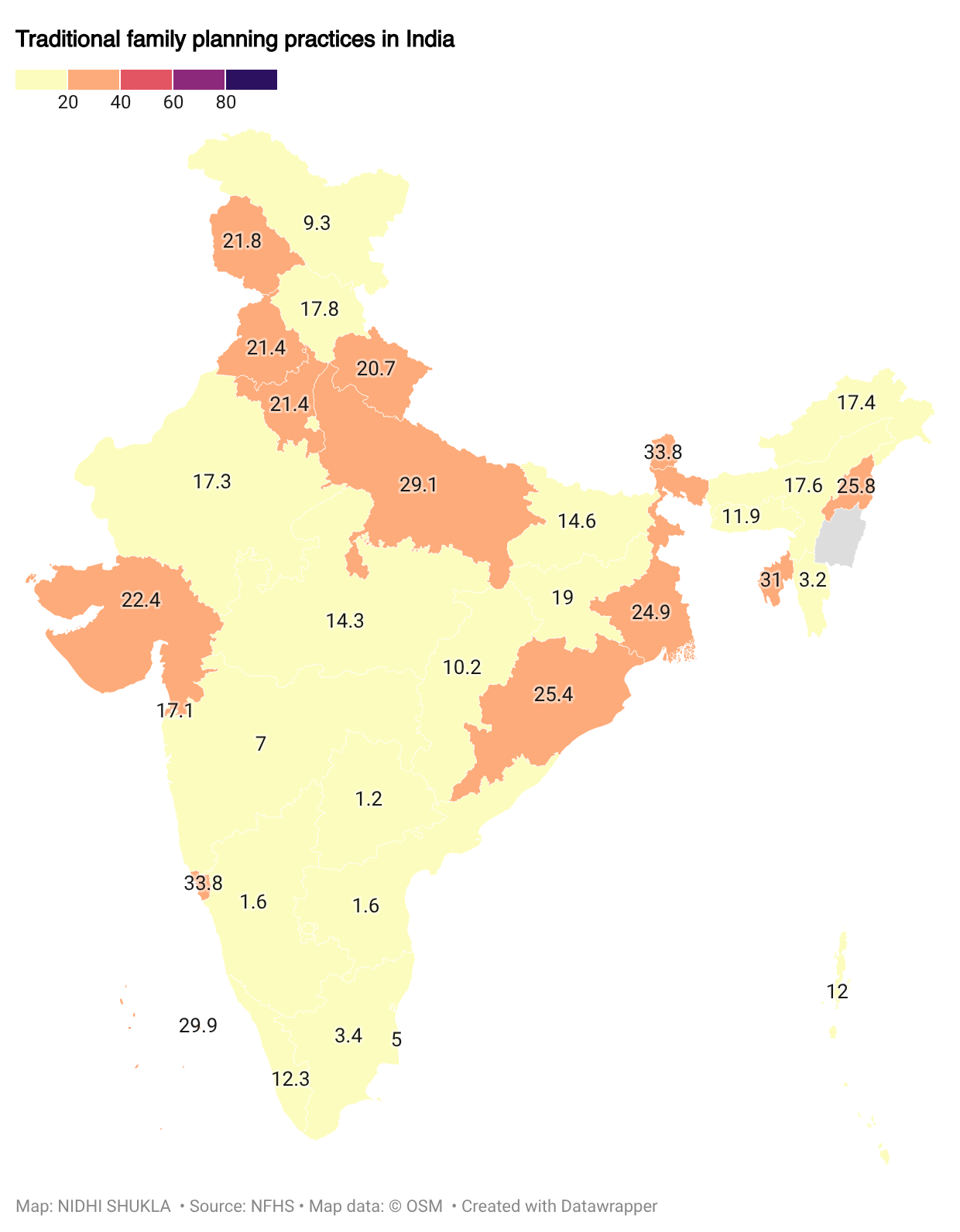
The bigger picture is equally striking. Across India, 52.7% use modern family-planning methods, compared with 16.4% using traditional methods. The numbers suggest that the shift towards modern contraception has moved well beyond cities, while traditional methods continue to remain significant in several states and regions.
https://www.datawrapper.de/_/803dU/
https://www.datawrapper.de/_/CrhmT/
The history India became the first country in the world to launch a national family-planning programme in 1952, initially focusing on reducing birth rates and stabilising population growth. Over the decades, the programme evolved from a population-control approach towards a broader reproductive-health and voluntary-choice framework, particularly after the National Population Policy of 2000. The long-term demographic shift is significant: India’s Total Fertility Rate (TFR) has fallen to 2.0 children per woman, according to NFHS-5 (2019-21), below the replacement level of 2.1. At the same time, use of any family-planning method rose from 53.5% in NFHS-4 (2015-16) to 66.7% in NFHS-5, while modern-method use increased from 47.8% to 56.4%. The data indicates substantial progress, although fertility decline cannot be attributed to the government programme alone, as education, urbanisation, healthcare access, rising incomes and changing social preferences have also influenced India's demographic transition. The Indian traditional family planning method is good for having a healthy family and a good society. It also has some problems. That’s why the government has taken a lot of initiatives to make citizens aware of family planning.
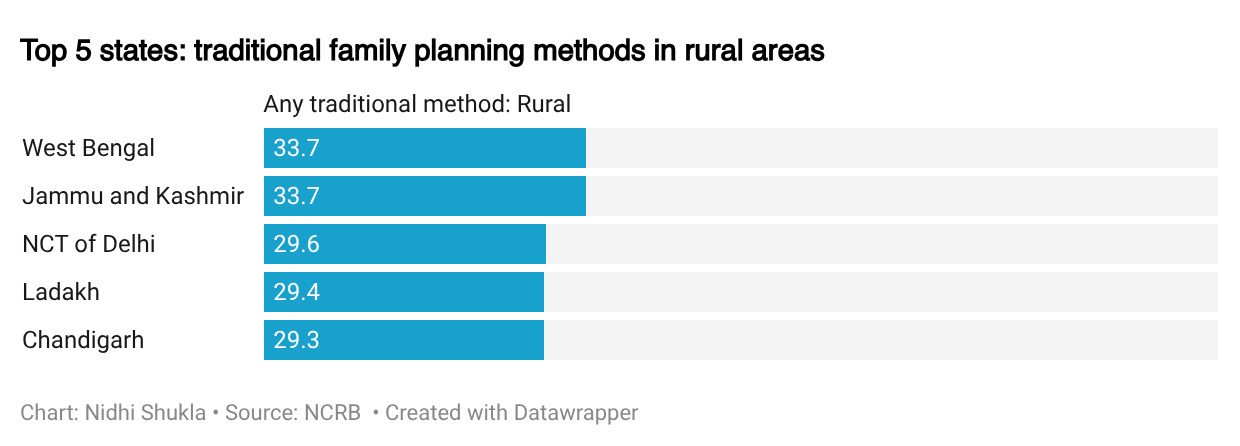
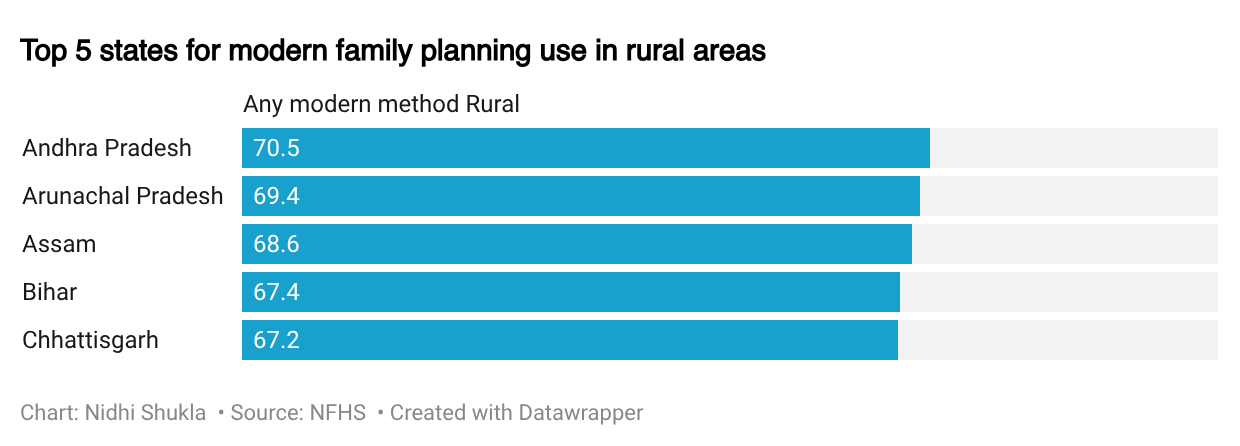
Planning a family could be a better step to have a better future for the family. It will help manage all the resources in the family. India needs to learn to adopt modern methods for family planning and maintain traditional family discipline. To promote family planning awareness, the government has taken initiatives in rural and urban areas. The numbers also point to a broader change in family-planning choices. Government programmes have sought to expand awareness, access and the range of contraceptive options available to couples. Mission Parivar Vikas (MPV), launched in 2016, initially covered 146 high-fertility districts across seven states. It promoted contraceptive awareness through initiatives such as Nayi Pehel Kits, Saas-Bahu Sammelans and Saarthi campaigns, while expanding the basket of contraceptive choices. Government data shows a sharp increase in the distribution or uptake of several methods since 2018-19. Injectable MPA doses rose from 9.9 lakh in 2018-19 to 44.62 lakh in 2023-24, an increase of more than four times. Centchroman use increased from 14.1 lakh strips to 130.04 lakh, or more than nine times. Total IUCD use rose from 56.6 lakh to 67.57 lakh during the same period. In 2023-24 alone, the government reported distributing more than 11.70 lakh Nayi Pehal Kits and conducting 4.70 lakh Saas-Bahu Sammelans. These figures show the expansion of the government’s family-planning programme and the growing reach of different contraceptive options. Traditional methods, however, continue to have a substantial presence in several parts of the country. In rural areas, West Bengal and Jammu & Kashmir record the highest reported use at 33.7% each. They are followed by NCT of Delhi at 29.6%, Ladakh at 29.4%, and Chandigarh at 29.3%. With roughly one in three respondents in some regions still relying on traditional methods, the national shift towards modern contraception does not mean traditional practices have disappeared. https://www.datawrapper.de/_/Ux94D/?v=2 The picture is different in states where modern methods are most widely used in rural areas. Andhra Pradesh leads at 70.5%, followed by Arunachal Pradesh at 69.4% and Assam at 68.6%. Bihar and Chhattisgarh record 67.4% and 67.2%, respectively. The figures show that modern family planning has gained substantial acceptance even in rural populations, although the reasons for differences between states can include healthcare access, awareness, availability and local family-welfare programmes. Families plan their future and provide better opportunities and care for their children.
Urban India shows another interesting pattern. Andhra Pradesh has the highest reported use of modern methods at 71.4%, followed by the Andaman and Nicobar Islands at 62.4% and Maharashtra at 61.3%. These figures show that the expansion of modern contraception is particularly strong in some states and territories, although higher adoption cannot be attributed to a single factor without examining other demographic and healthcare indicators.
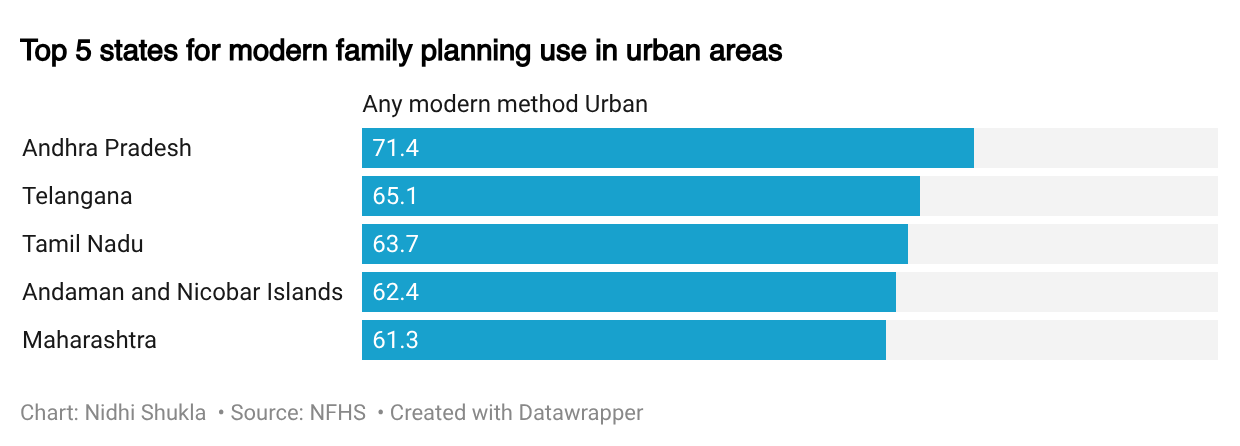
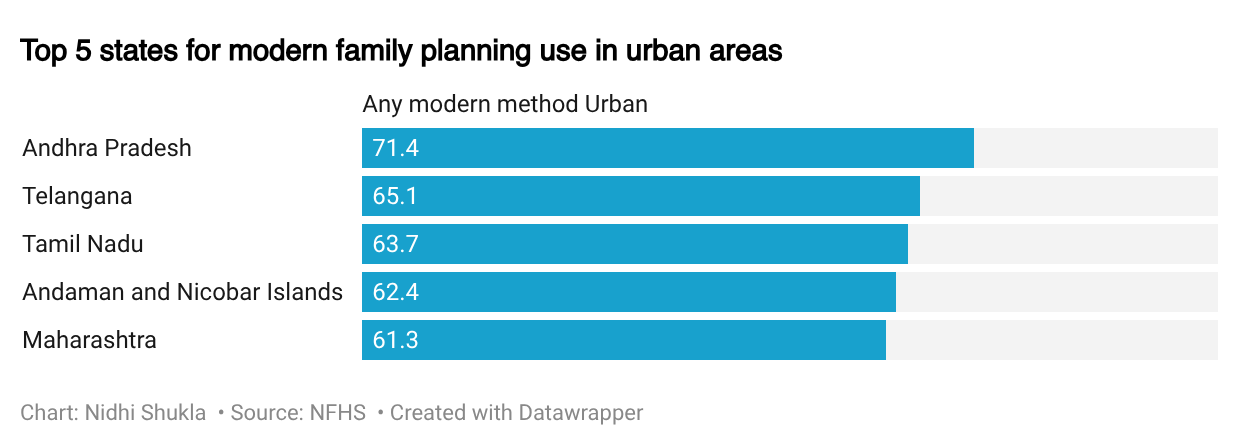
https://www.datawrapper.de/_/TjX0a/?v=3 Urban India shows another interesting pattern. Andhra Pradesh has the highest reported use of modern methods at 71.4%, followed by the Andaman and Nicobar Islands at 62.4% and Maharashtra at 61.3%. These figures show that the expansion of modern contraception is particularly strong in some states and territories, although higher adoption cannot be attributed to a single factor without examining other demographic and healthcare indicators.
https://www.datawrapper.de/_/1271v/?v=3 At the same time, traditional methods remain common in several urban regions. Tripura records the highest use at 38.6%, followed by West Bengal at 34.1%, Sikkim at 34%, Goa at 33.8% and Lakshadweep at 30.2%. The figures underline an important point: urbanisation and better access to healthcare do not automatically eliminate traditional family-planning practices. Choices continue to vary substantially between regions.
Sources
https://www.pib.gov.in/Pressreleaseshare.aspx?PRID=1813264®=48&lang=2
Frequently Asked Questions
1. How does modern family planning usage compare between rural and urban India?
The data shows that the rural-urban gap has nearly disappeared. Modern contraceptive methods are used by 52.7% of people in rural areas and 52.9% in urban areas. This is a difference of just 0.2 percentage points, proving that modern family planning has expanded well beyond major cities.
2. Which states show the highest reliance on traditional family planning methods?
Traditional family planning methods remain highly prevalent in specific regions, regardless of urbanisation. Rural areas: West Bengal and Jammu & Kashmir lead with 33.7% usage, followed by Delhi (29.6%) and Ladakh (29.4%).Urban areas: Tripura records the highest usage at 38.6%, followed by West Bengal (34.1%) and Sikkim (34.0%)
3. What major government initiatives have driven the increase in modern contraceptive adoption?
The primary driver has been Mission Parivar Vikas (MPV), launched in 2016. The government expanded the basket of contraceptive choices and raised awareness through local campaigns. Between 2018-19 and 2023-24, these efforts resulted in injectable MPA uptake increasing more than four times (from 9.9 lakh to 44.62 lakh doses). Centchroman use increased more than nine times (from 14.1 lakh to 130.04 lakh strips). The distribution of over 11.70 lakh Nayi Pehel Kits in 2023-24 alone.