Is ethanol the villain in the bittersweet tale of sugar prices?
Visualisation
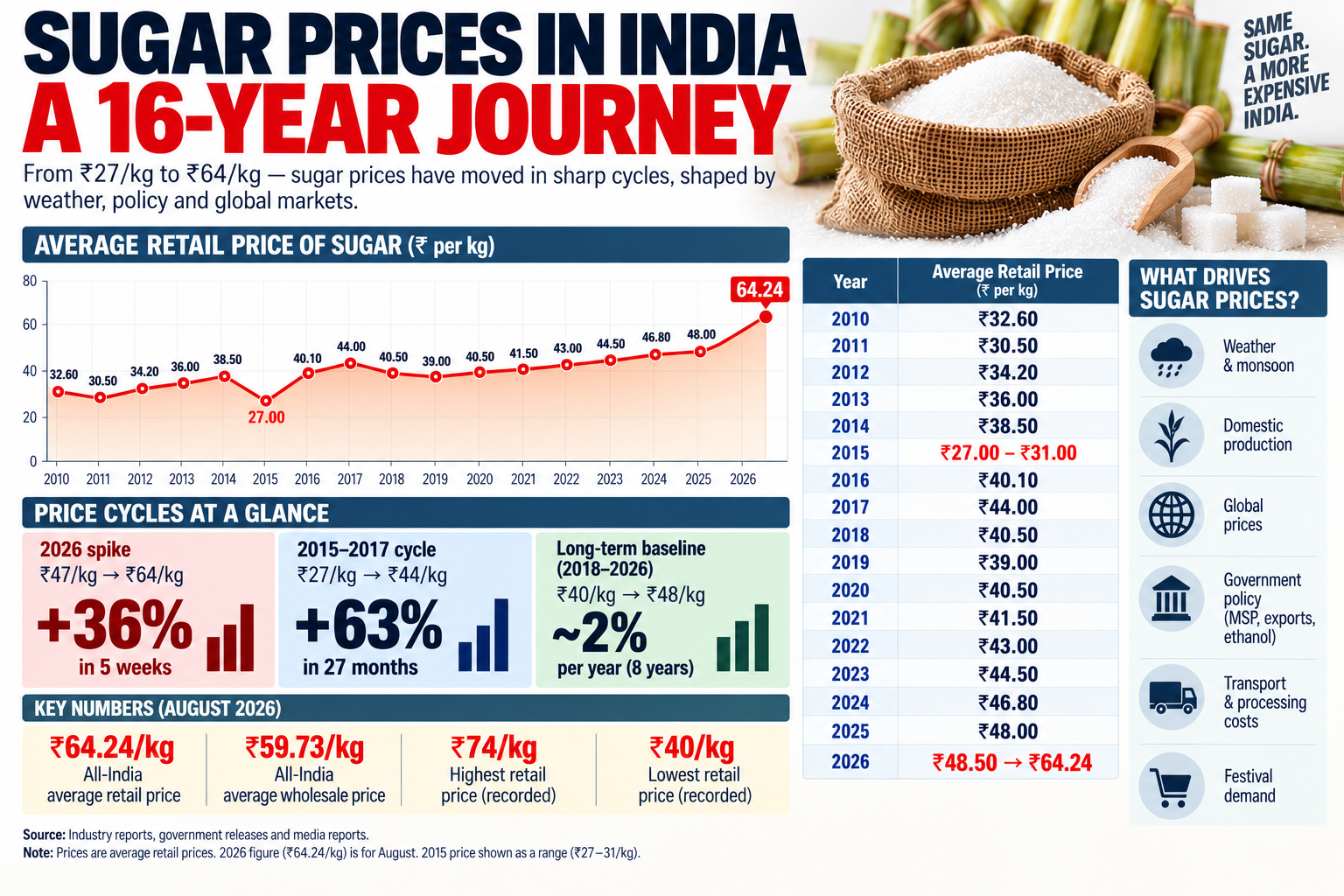
At a Glance
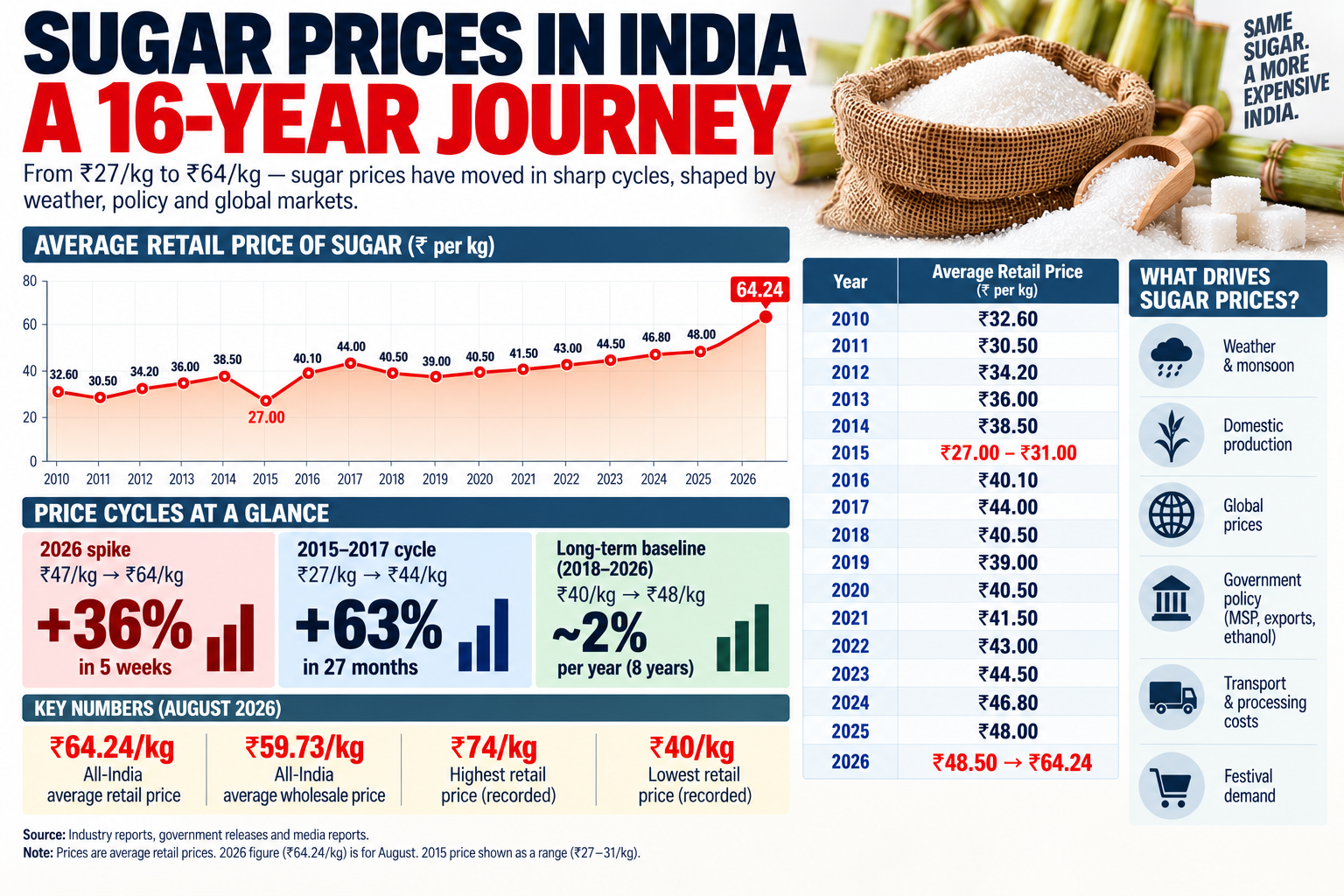
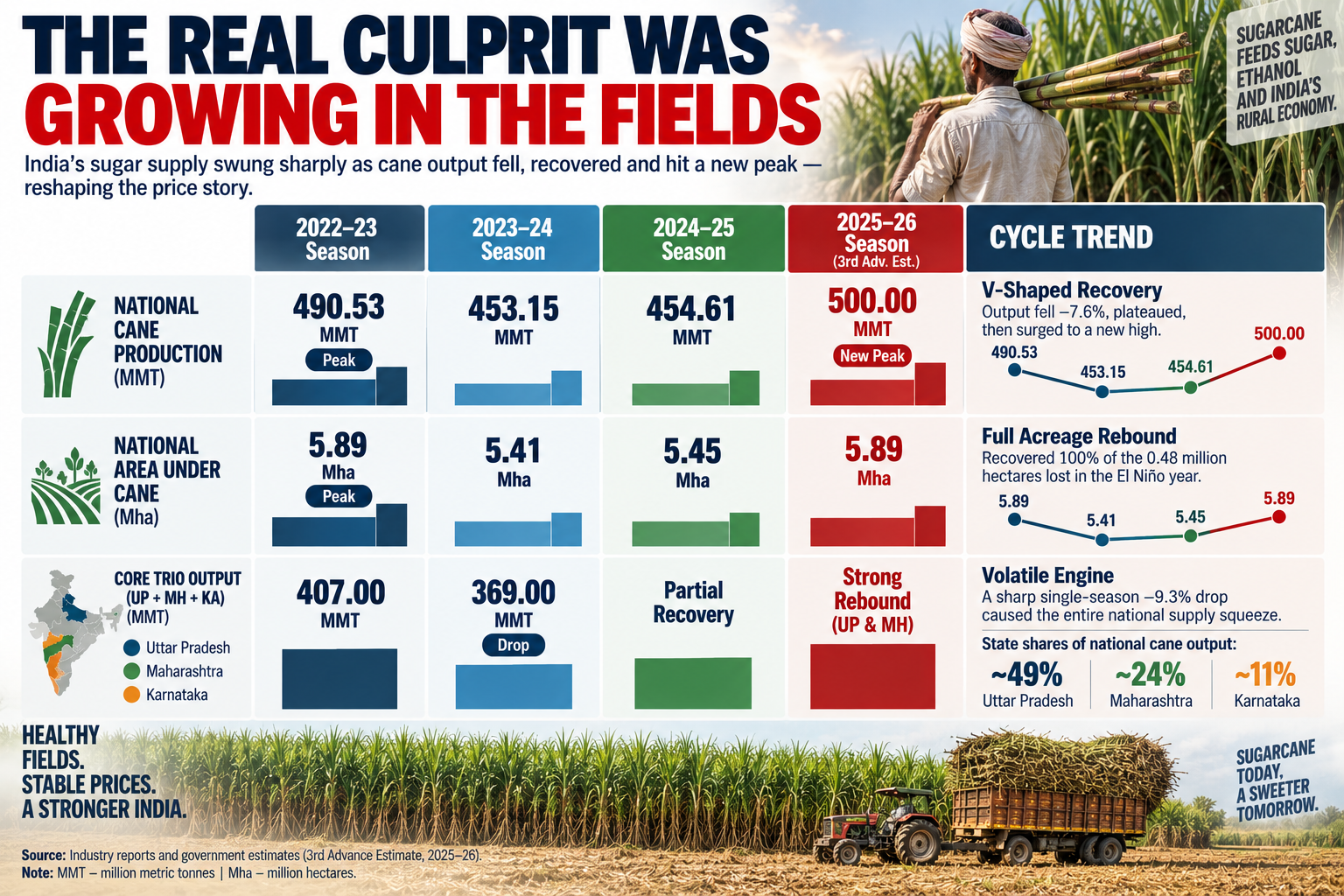
There is a certain irony in watching the price of something meant to sweeten our tea turn sour. Over a few weeks this monsoon season, sugar stopped being the boring commodity nobody argued about, and became the topic every dinner table, every mandi, and every political podium suddenly had an opinion on. The jump was steep enough to make even seasoned traders blink, and steep enough, more importantly, to reopen an old argument that India never quite settled: Does the country's ethanol ambition come at the cost of its sugar bowl, or is that just a convenient villain for a much messier plot? Let’s unpack the tale. Let's get the theatrics out of the way first. Prices did not creep up the way inflation usually does, on tiptoe, one rupee at a time. They sprinted. What took more than two years to happen the last time sugar went on a tear, happened in barely a month this time. That kind of speed does not just tighten household budgets, it tightens tempers, and tempers, in India, always go looking for a culprit before they go looking for a cause. Ethanol, with its complicated policy history and its slightly foreign-sounding acronym, E20, made for an easy target. Cane going into a fuel tank instead of a sugar sack sounds, on the face of it, like exactly the kind of thing that would leave shelves short and shoppers fuming. But, is it really so? The numbers tell a story with more nuance than outrage usually allows. The ethanol programme has indeed grown, and grown fast, hitting its 20% blending (E20) target years ahead of schedule. But growth is not the same as greed. What has actually happened is that maize has quietly muscled its way into the ethanol distillery, taking over a job that used to belong almost entirely to sugarcane. A few years ago, sugar-based feedstock supplied the overwhelming bulk of India's ethanol. Today, that share has shrunk to less than a third, while maize has gone from contributing nothing at all to becoming the single largest source in the ethanol blend. If sugarcane were truly being cannibalised for fuel, its slice of the ethanol pie should be growing, not shrinking. Instead, sugar’s own contribution to ethanol has fallen in absolute terms too, not just in percentage. That is not the profile of a programme quietly starving the sugar bowl; it is the profile of a policy that has, if anything, been weaning itself off cane. In sum, maize is primarily used for ethanol and not sugarcane. Thus, ethanol is not the primary reason for the jump in sugar prices. So if ethanol isn't the main villain, who left the sugar jar so empty because of the price rise? The honest answer is less cinematic: the weather, and the fields, simply did not cooperate. India's sugarcane output has been sliding since its 2022-23 peak, and the western belt that grows the bulk of the country's sugar has been particularly unlucky, taking a nine per cent hit in output in a single season before only partially clawing it back. A crop takes months to grow, be harvested, and be crushed, which means a bad season doesn't announce its damage immediately. It waits, quietly, and then shows up all at once in an empty warehouse just as festival demand peaks and everyone wants extra sugar for extra sweets. Add a dash of speculative hoarding by traders who can smell a shortage coming, and the ethanol theory starts to look less like the whole truth and more like a sub-plot that happened to be standing near the real story when the cameras arrived. That sub-plot, though, is not entirely innocent either. Even a shrinking slice of a pie still eats into it. Roughly a tenth of this season's sugar output was still funnelled toward ethanol, and in a year when the harvest was already thin, that tenth mattered more than it would have in a bumper year. Think of it less as the cause of the shortage and more as the extra weight that tipped an already wobbly scale. The government, to its credit, has not tried to dress this up as anything grander: officials have pointed squarely at lower cane output, weather damage, festive demand, and hoarding, while quietly working the levers available to them, from import windows to stockholding limits, to calm a market that had gotten ahead of itself. The lesson in all this is an old one dressed in new sugar crystals: complex problems rarely have single villains, however convenient one might be. Ethanol did not empty India's sugar bowl. A cranky monsoon, a shrinking cane belt, and a dash of old-fashioned hoarding did most of that work, with ethanol playing only a supporting, slightly overstated role in a drama that consumers are, for now, paying to watch. 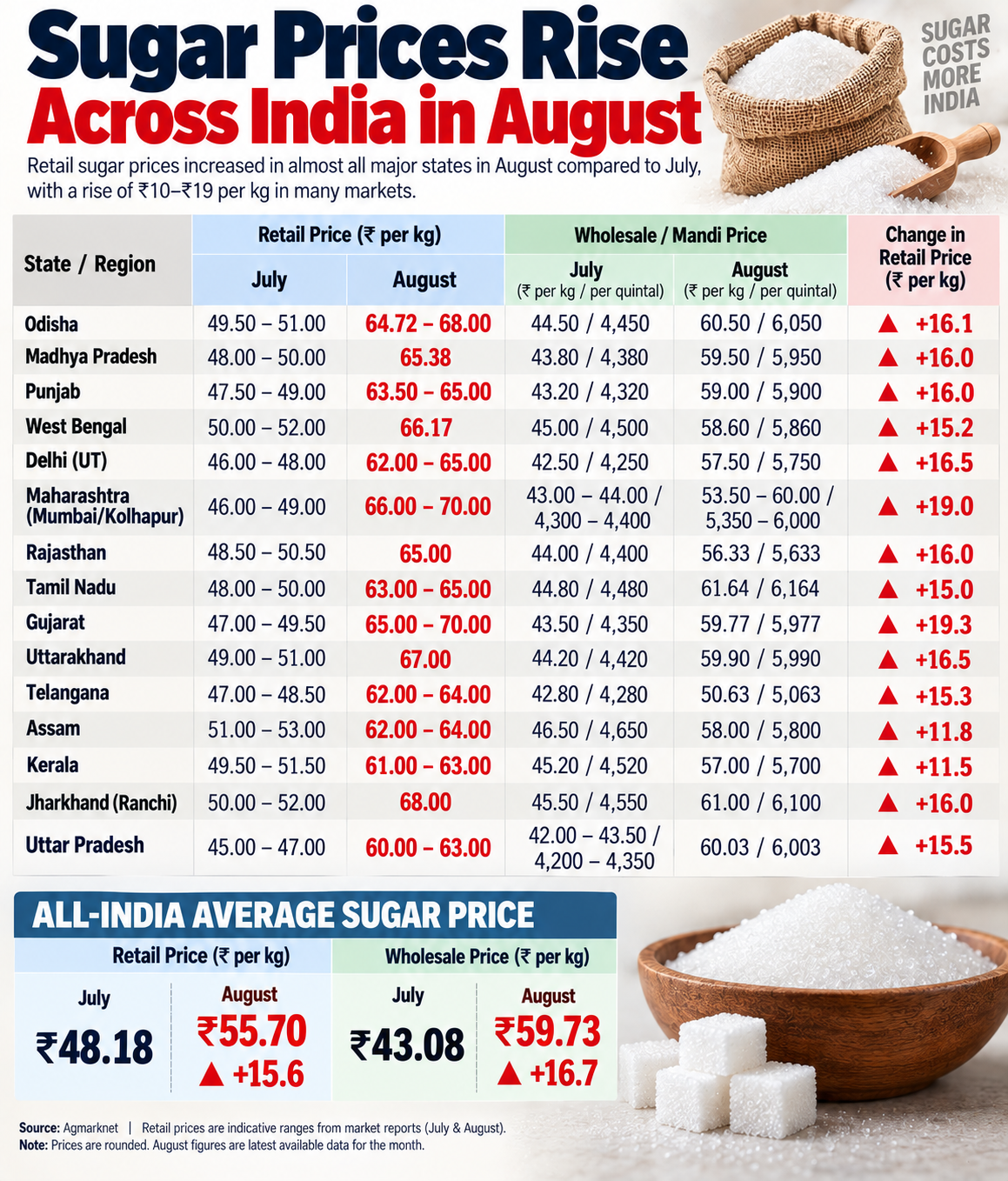
Speed Kills Even in Markets
The Usual Suspect, Cross-Examined
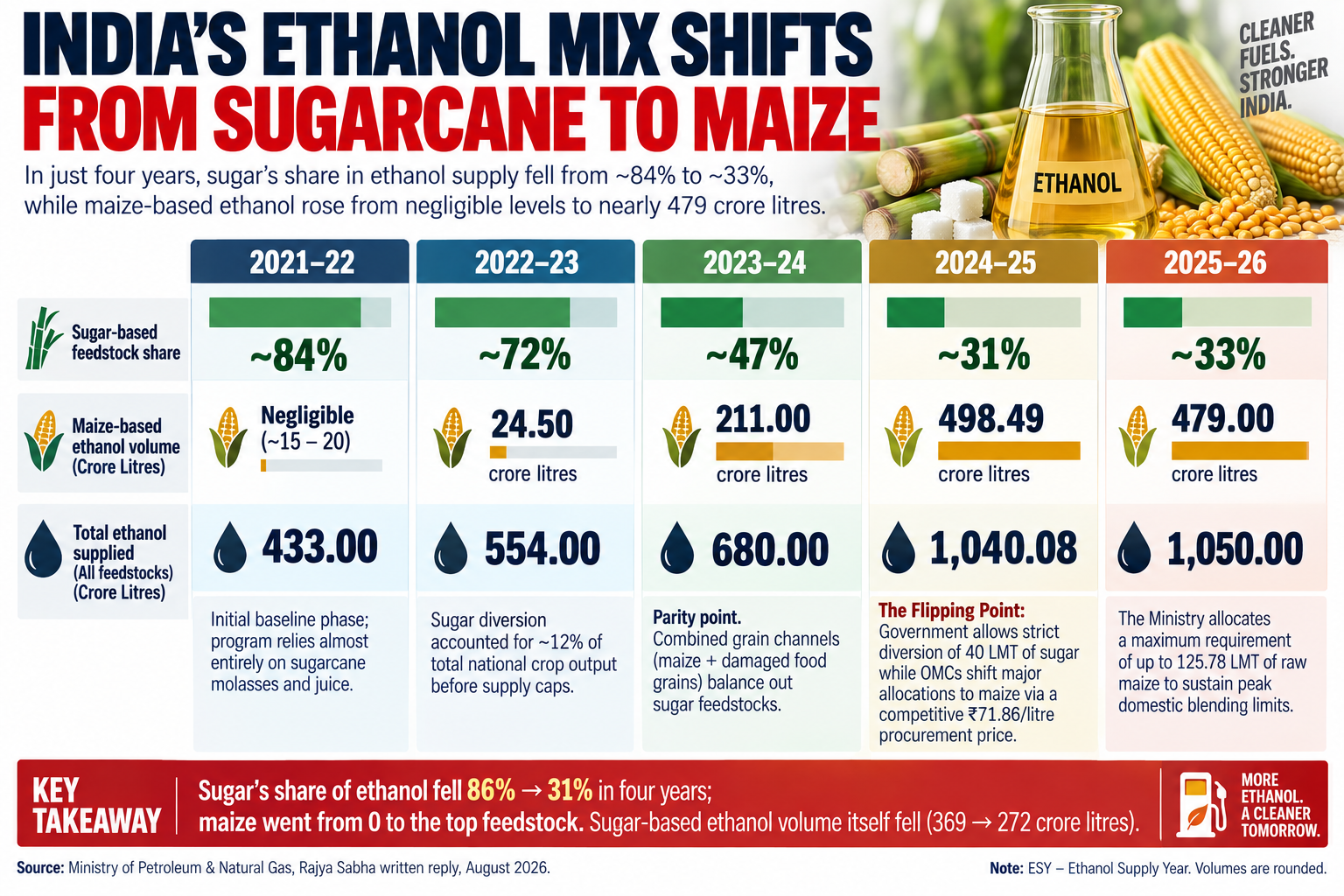
The Real Culprit Was…
A Supporting Role, Not the Lead
The Moral of the Story