Meta, cybercrime and child abuse: What India’s data reveals
Visualisation
At a Glance
Meta’s ad-moderation failure exposes digital safety gaps, while India’s rising child sexual abuse cases show that the threat extends far beyond social media.
Instagram has become a major part of how young Indians consume entertainment and interact online. That reach also gives platforms enormous responsibility over what users are shown. A recent BBC investigation has raised serious questions about whether Meta's advertising systems are doing enough to prevent illegal and exploitative content from reaching users in India.
According to Instagram's estimated advertising audience data, the platform had around 21.05 crore users aged 18–24 in India, comprising 14.58 crore males and 6.47 crore females. Among those aged 25–34, the estimated audience stood at around 21.19 crore, including 14.74 crore males and 6.45 crore females.

https://stats.napoleoncat.com/instagram-users-in-india/
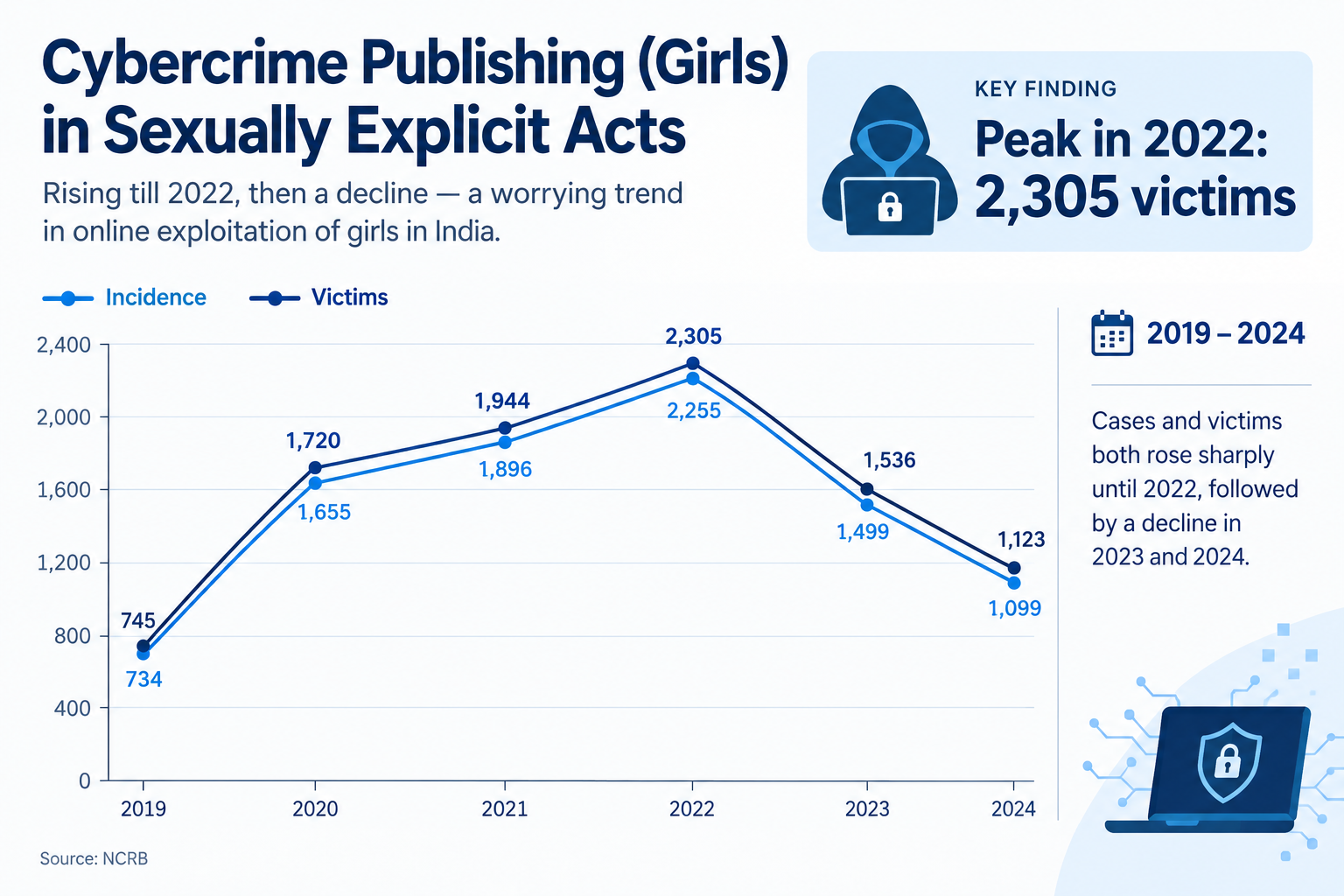
These numbers underline the scale of Instagram's reach among India's young and working-age population. But they should not be interpreted as evidence that almost every Indian youth uses Instagram. They represent the platform's estimated advertising audience, not a census of active users. That scale makes the findings of the BBC investigation particularly significant. Published in July 2026, the BBC Eye investigation found that paid advertisements promoting child sexual abuse material (CSAM) were appearing on Instagram in India and directing users to Telegram channels where such material was allegedly being sold for as little as ₹99. The BBC created an India-based test account and followed accounts posting sexually suggestive content. Within days, the account began receiving increasingly explicit advertisements, including advertisements depicting children in sexually suggestive situations. The investigation identified around 30 unique advertisements allegedly promoting CSAM, with some appearing through multiple advertiser accounts. The advertisements used terms such as “rape video” and “child video” and directed users towards Telegram. When the BBC reported one of the advertisements to Instagram, the platform initially said that it did not violate its guidelines. This raises a fundamental question about platform accountability. Paid advertisements do not simply appear on a platform by accident. They pass through an advertising and moderation system before publication. Meta itself says its systems review advertisements before they go live. The BBC investigation therefore points to a failure in those safeguards rather than merely the presence of illegal content posted by an individual user. The issue is not simply that such material existed online. It is that paid advertising mechanisms were reportedly used to promote and direct users towards it. https://www.datawrapper.de/_/KX6BK/ The scale of Meta's advertising business in India has also grown substantially. Meta India's gross advertising revenue rose from ₹18,308 crore in FY23 to ₹22,731 crore in FY24 and ₹29,392 crore in FY25. That represented annual growth of 13%, 24% and 29%, respectively. These figures cover advertising across Meta's platforms, including Facebook, Instagram and Messenger. They should therefore not be treated as Instagram-only revenue. https://www.datawrapper.de/_/QiviZ/ The numbers illustrate why advertising is central to Meta's business model. Advertising determines what content reaches users and how platforms monetise attention. That makes effective screening particularly important when advertisements involve illegal or exploitative material. The responsibility becomes even greater as social media, messaging services and other digital platforms become integral to everyday life. They have created new avenues through which offenders can target, exploit and manipulate users, including children and women. At the same time, it would be misleading to attribute India's wider cybercrime problem solely to social media. NCRB's cybercrime category covers a broad range of offences, including fraud, extortion, identity-related offences and sexual exploitation. The data therefore needs to be read in context. https://www.datawrapper.de/_/XjQnS/ NCRB data shows that reported cybercrime cases increased from 44,735 in 2019 to 50,035 in 2020. During the same period, cases involving the publication or transmission of obscene or sexually explicit material increased from 4,203 to 6,308, a rise of roughly 50%. The increase came during the COVID-19 pandemic, when dependence on digital platforms grew sharply. But the figures alone cannot establish that increased internet use or the pandemic directly caused the rise. Government data also recorded 1,102 cybercrime cases against children in 2020, compared with 305 in 2019. Separately, the National Cybercrime Reporting Portal received 13,244 complaints related to child pornography, rape and gang rape between March 1 and September 18, 2020. These were complaints received during a specific period, not a count of confirmed cases of child sexual abuse. Together, these figures point to the growing importance of the digital space in reporting and investigating sexual offences. But they do not establish that social media itself is the source of those crimes. This distinction is important because child sexual abuse is not confined to the internet. NCRB data shows that POCSO offences in which girls were victims rose from 46,005 in 2019 to 67,809 in 2024, an increase of about 47%. The figure crossed 52,000 in 2021 and 62,000 in 2022 before reaching its 2024 level. https://www.datawrapper.de/_/G0onh/ The broader trend changes how the Instagram controversy should be understood. Digital platforms can create new routes for exploitation, but sexual violence against children also takes place offline, often in circumstances that have nothing to do with social media. In other words, Instagram can be a facilitator in some cases, but it is not the explanation for the larger problem. The government response has also involved multiple institutions, reflecting the seriousness and complexity of the issue. The Ministry of Electronics and Information Technology (MeitY) is examining Meta's compliance with India's digital rules. The National Human Rights Commission (NHRC) is looking at the issue from a human-rights perspective. The National Commission for Protection of Child Rights (NCPCR) is examining Meta's responsibilities towards protecting children, including its obligations under POCSO. Delhi Police, meanwhile, is responsible for the criminal investigation after registration of an FIR. The issue is therefore being examined simultaneously through regulatory, human-rights, child-protection and criminal-law frameworks. NCPCR has also questioned whether Meta fulfilled its reporting obligations under Section 19 of POCSO after becoming aware of alleged child sexual abuse material. The government subsequently directed Meta to disable advertisements and content promoting or facilitating child sexual abuse material and sought an explanation from the company over how such advertisements were allowed to appear in the first place. The internet is not the problem. The challenge is ensuring that technological growth does not outpace accountability. The Instagram episode shows why platform responsibility cannot end with removing illegal content after it is reported. When paid advertisements are involved, the bigger question is how such content passed the platform’s safeguards in the first place. As more young people move online, platforms must be accountable for the systems they build, advertisers must be scrutinised,d and law enforcement must be equipped to act quickly. The goal is not to keep young people away from the internet, but to make it safer. The real measure of digital growth is not how many users a platform attracts, but how responsibly it protects them.


The problem goes beyond social media.

Four agencies, four different responsibilities
Technology cannot become an excuse.
Sources
Frequently Asked Questions
What did the BBC investigation find about Meta and child sexual abuse material?
The BBC investigation found that paid advertisements promoting child sexual abuse material (CSAM) were appearing on Instagram in India and directing users to Telegram channels where such material was allegedly being sold. The findings raised questions about Meta’s advertising-screening and moderation systems.
2. Is the rise in cybercrime against children caused by social media?
Not necessarily. NCRB data shows an increase in reported cybercrime and child-related sexual offences, but the data alone cannot establish that social media caused these crimes. Child sexual abuse also occurs offline, meaning platforms such as Instagram may be a facilitator in some cases rather than the cause of the broader problem.
3. What does NCRB data show about sexual offences against girls in India?
NCRB data shows that POCSO offences in which girls were victims increased from 46,005 in 2019 to 67,809 in 2024, a rise of about 47%. The trend highlights that child sexual abuse remains a wider problem extending beyond digital platforms.