Not a ‘sweet’ story: The making of a diabetic nation
Visualisation
At a Glance
Every few years, India runs a big health survey. It is called the National Family Health Survey, or NFHS. It checks how healthy Indian adults are. It looks at weight, blood sugar and blood pressure. Three rounds of this survey give us a clear timeline. NFHS-4 came in 2015-16, NFHS-5 in 2019-20, and NFHS-6 has just been released. Together, they show a pattern. This article looks closely at that pattern. It tries to explain what the numbers mean, not just what they are.
Obesity is rising steadily, and faster among women
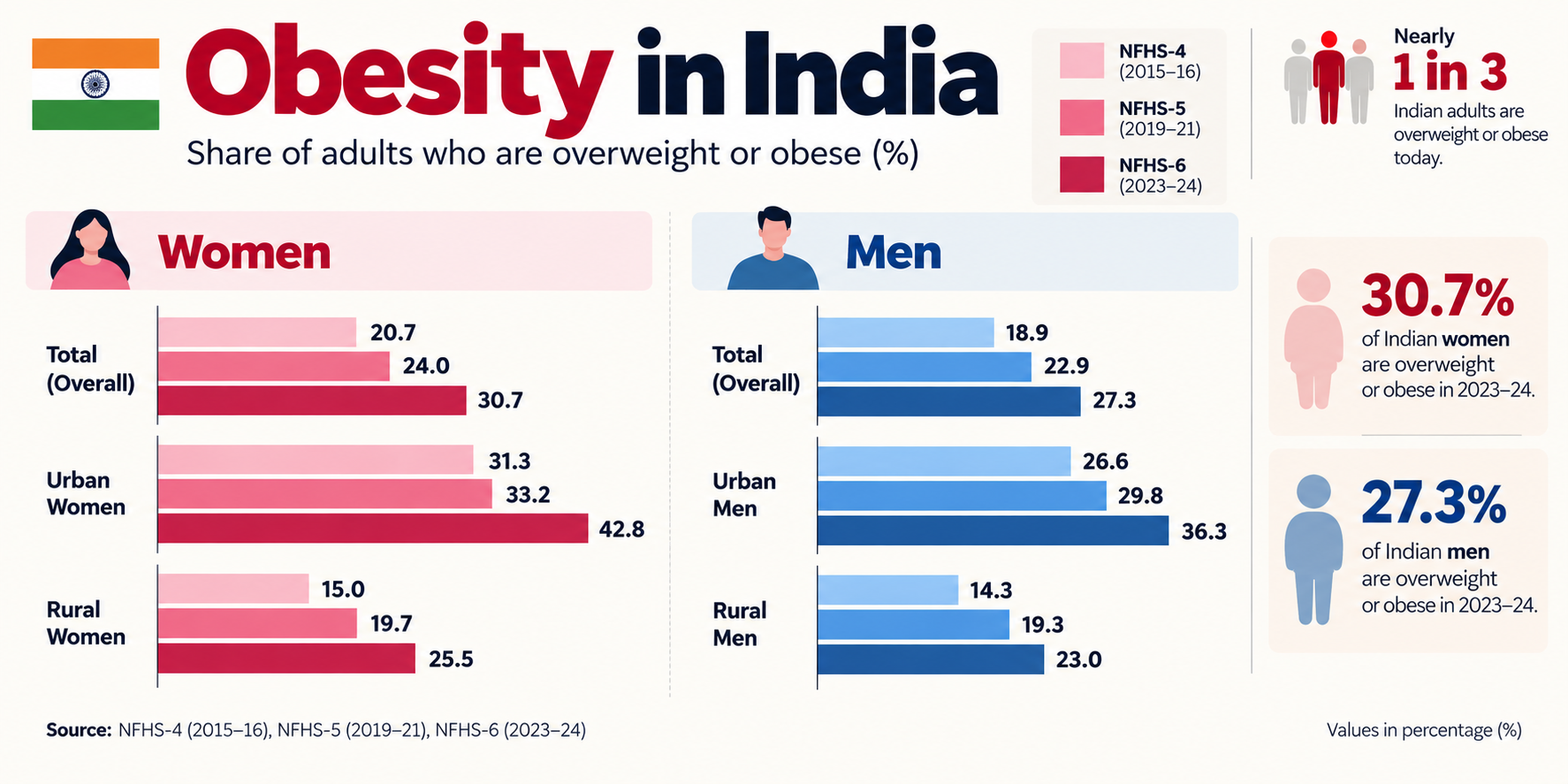
In NFHS-4, obesity stood at 18.6 per cent for men and 20.7 per cent for women. By NFHS-6, it climbed to 27.3 per cent for men and 30.7 per cent for women. This is not a small jump. It means almost one in three women in India is now overweight or obese. The rise among women is sharper than that among men. This tells us something important. Whatever is driving obesity – food habits, lack of exercise, or lifestyle change – it is affecting women more strongly. This could be linked to less physical activity outside the home, changing diets, or simply better detection over time. Any one explanation alone does not fully account for the scale of the jump.
Blood sugar is following the same upward path
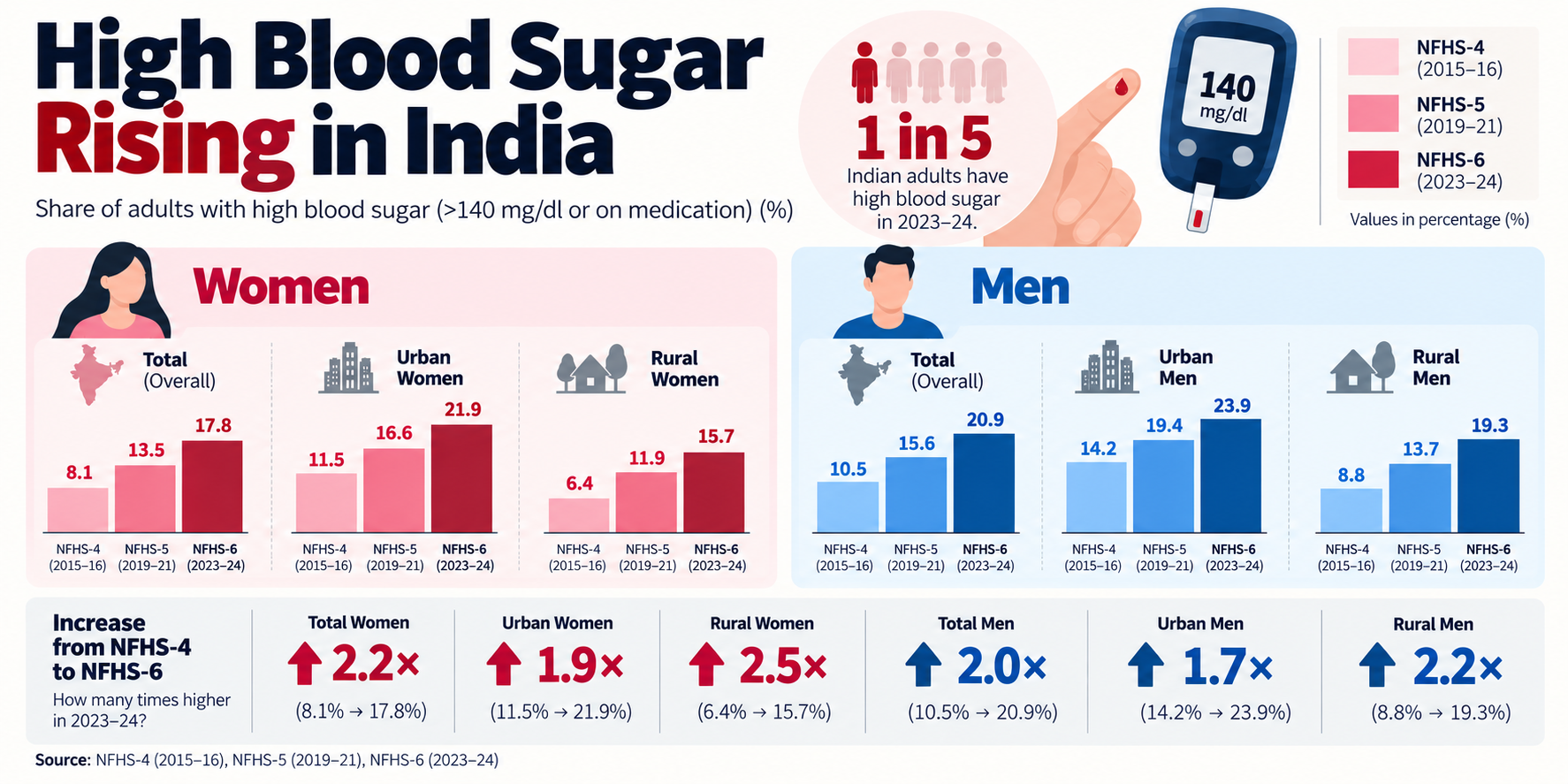
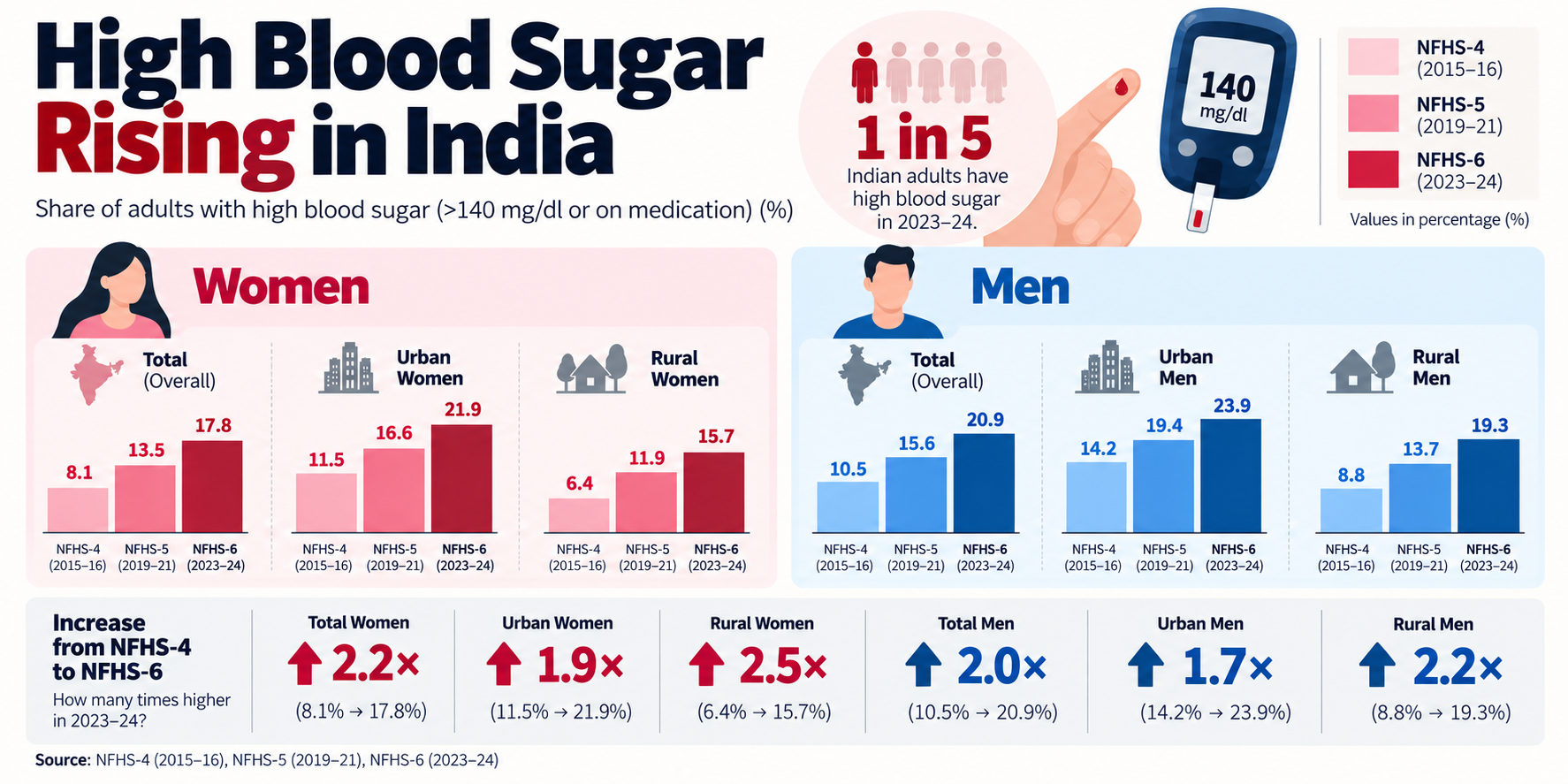
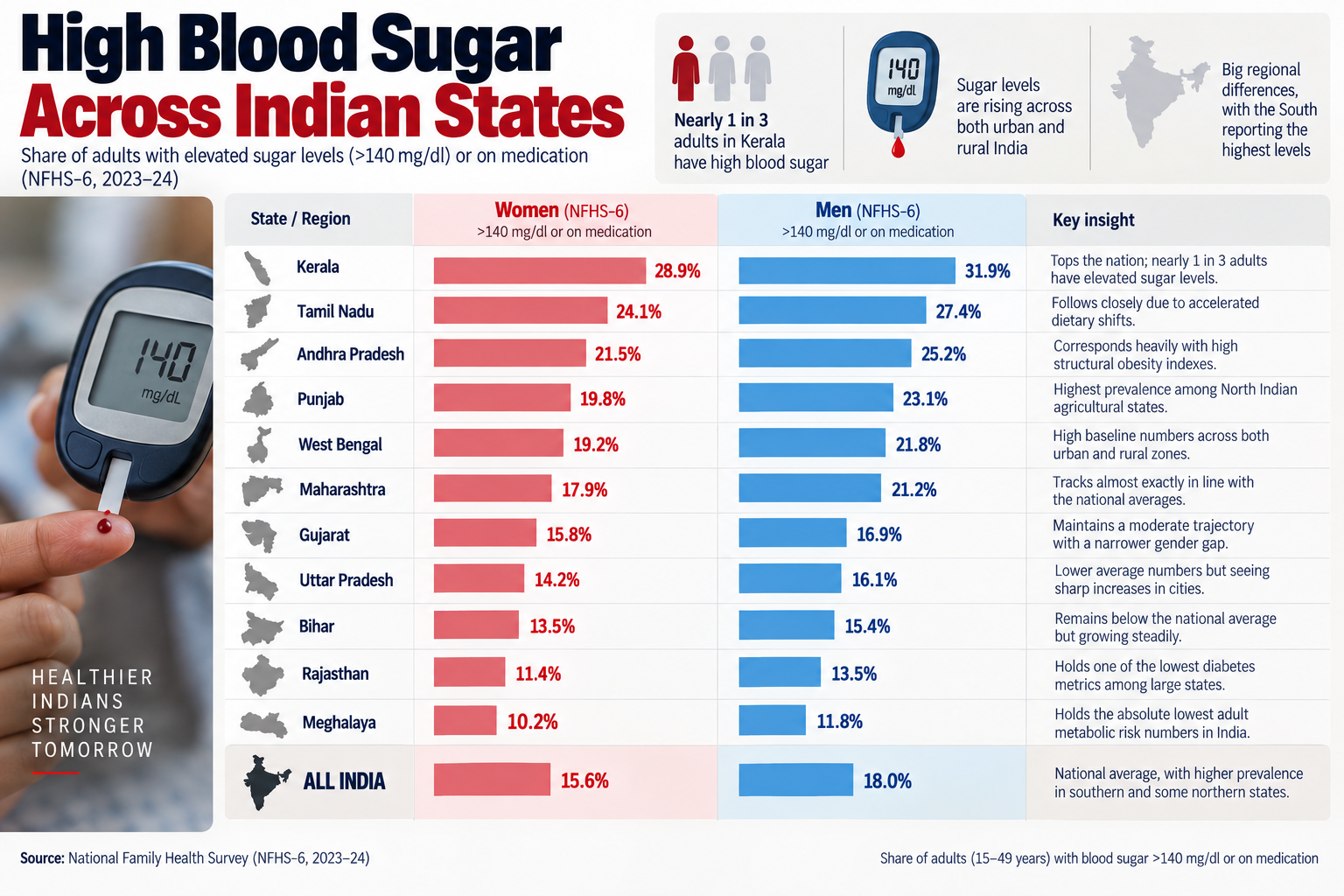
High blood sugar was 11.9 per cent among men and 8.6 per cent among women in NFHS-4. It is now 20.9 per cent among men and 17.8 per cent among women in NFHS-6. Blood sugar has almost doubled for both groups across these rounds. This matters because blood sugar is a direct warning sign for diabetes. When it rises alongside obesity, the two numbers reinforce each other. Weight gain is often the root cause of insulin resistance. Insulin resistance leads to high blood sugar. Seeing both numbers rise together is not a coincidence. It reflects one connected health problem, not two separate ones.
Hypertension is the one number moving the other way
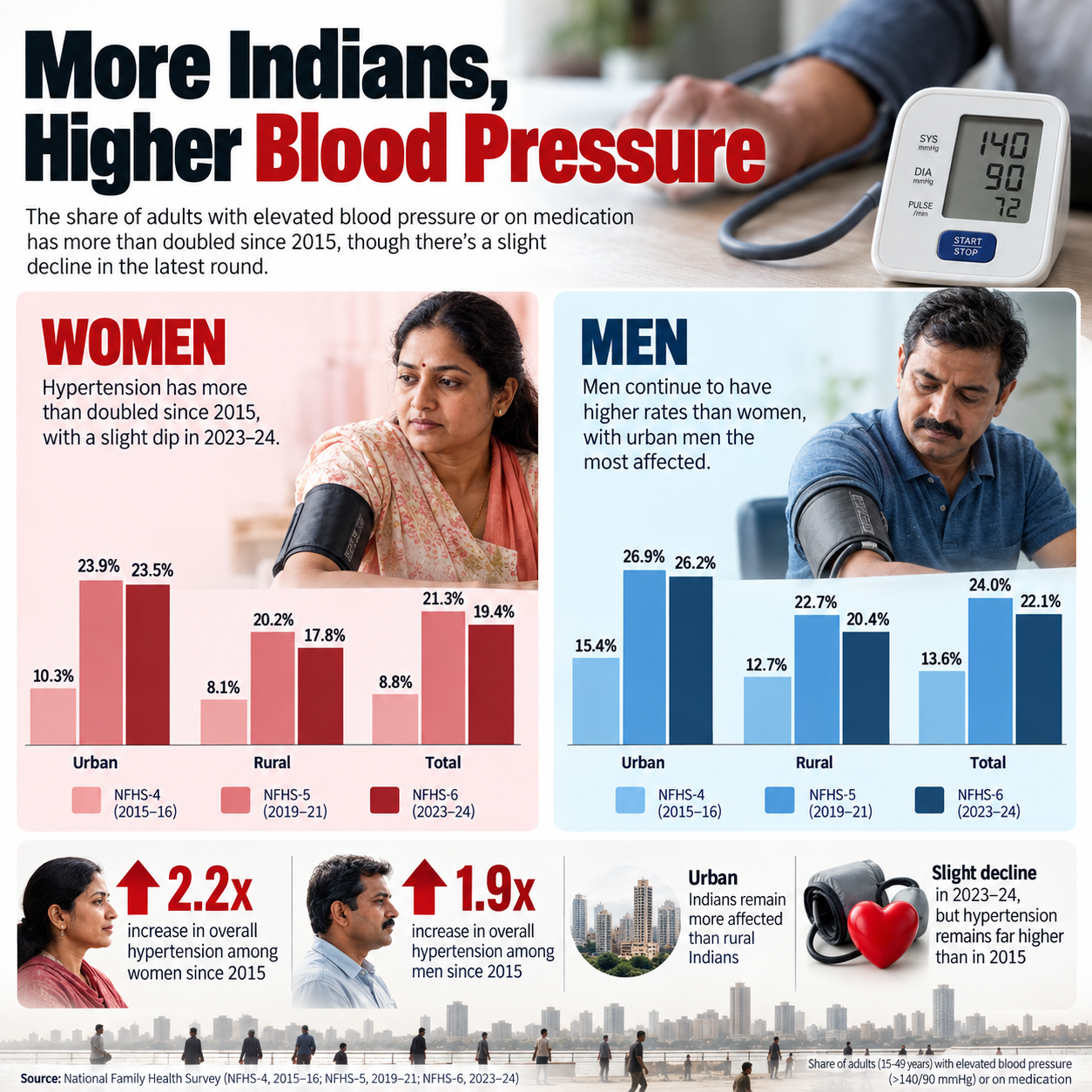
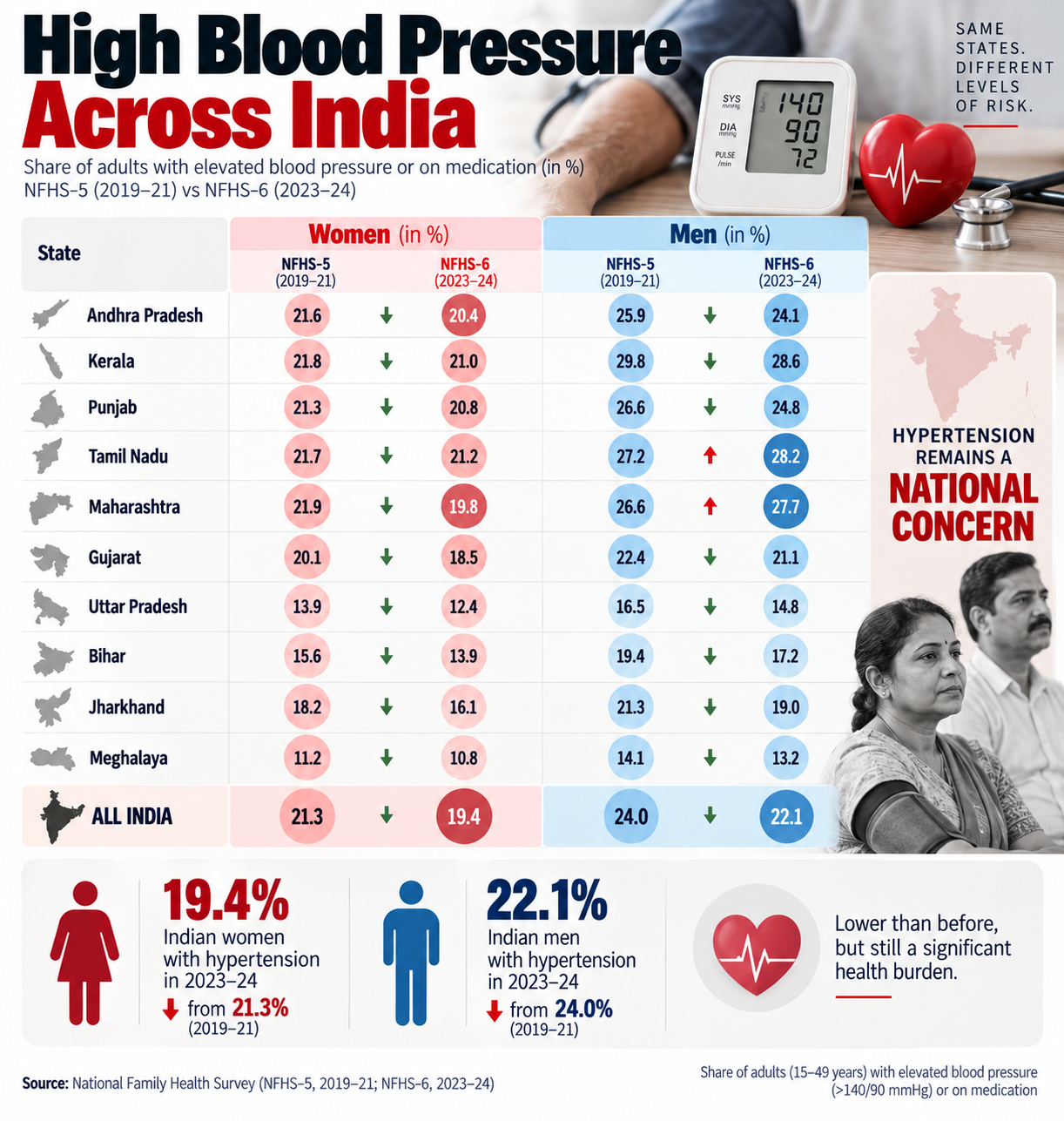
Between NFHS-5 and NFHS-6, hypertension dropped slightly. It went down from 24.0 per cent to 22.1 per cent among men, and from 21.3 per cent to 19.4 per cent among women. This is worth pausing on. Why would blood pressure fall while obesity and blood sugar rise, when all three are usually linked?
One likely reason is medication. More people may now be on blood pressure treatment, which brings numbers under control even if the underlying risk has not gone away. Another reason could be better awareness of salt intake specifically, separate from overall diet and weight trends. The dip should not be read as full good news. It may simply mean one risk factor is being managed better than the other two.
The rural-urban gap is closing, and that changes the story
Urban India has always shown higher obesity and blood sugar numbers. That much is expected. But rural India is catching up quickly. Rural women's obesity rose from 19.7 per cent to 25.5 per cent. Rural men's blood sugar rose from 14.5 per cent to 19.7 per cent. This is significant because rural healthcare access is usually weaker than urban access. If risk factors are rising in rural areas at this pace, the strain on rural health systems will grow too, and it may grow faster than those systems can respond.
Why the South Still Leads, and Why That Should Worry Everyone
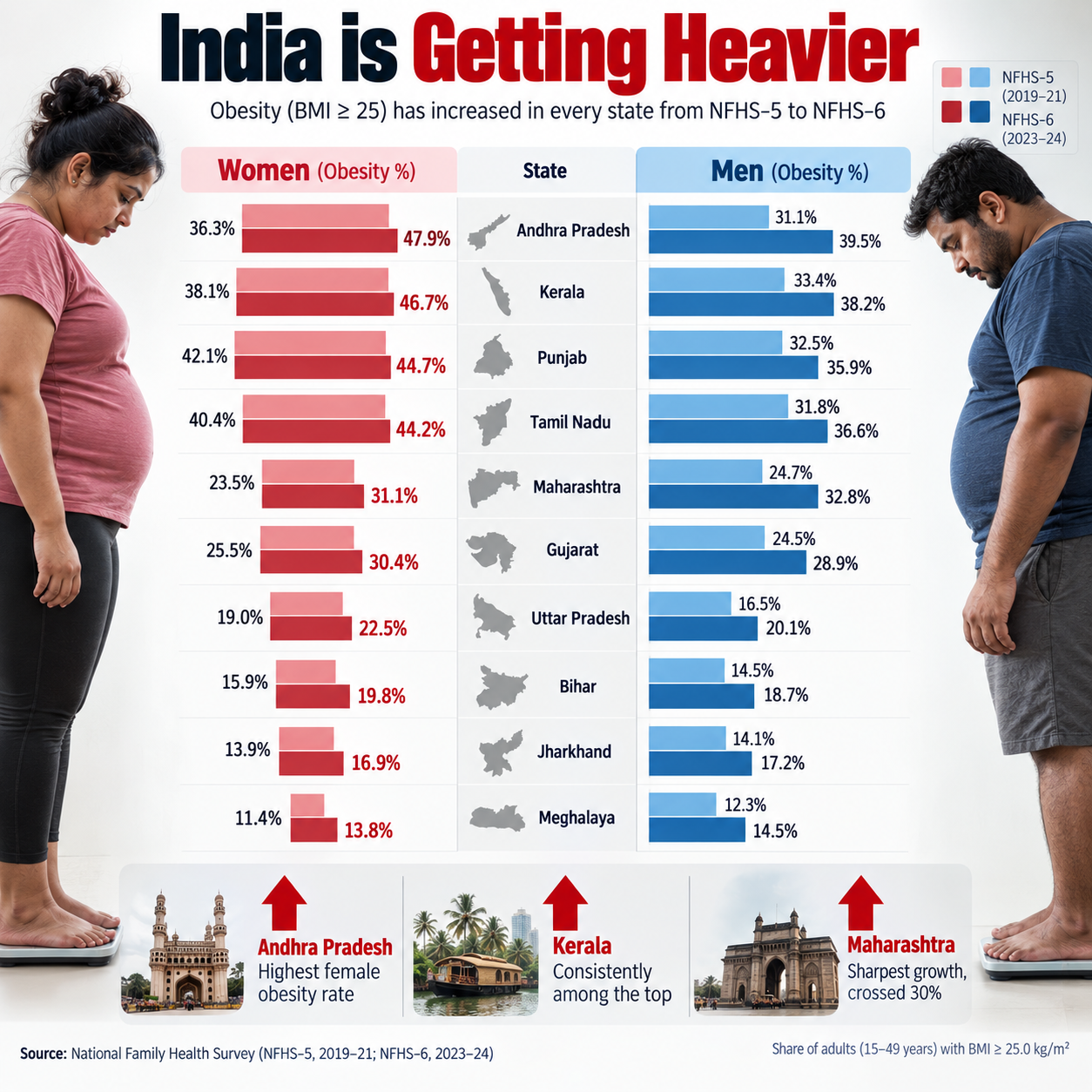
Southern states have long topped these lists. Kerala, Karnataka, Tamil Nadu and Andhra Pradesh show the highest numbers, again and again. It is tempting to see this as old news. But there is a warning inside it too. These states are often seen as more developed, with better healthcare and higher awareness. If they still show the highest disease burden, it suggests that development and awareness are not enough on their own. Better roads, more hospitals and more income do not automatically protect people from these diseases.
In some ways, prosperity itself is part of the problem. Motorised transport, processed food and desk-based work often come with rising income. The states leading in development are now also leading in lifestyle disease. That is a pattern other states will likely follow as they develop too.
India's position globally adds more weight to the pattern
The International Diabetes Federation's 2025 Diabetes Atlas puts India second in the world for total diabetes cases, with 89.8 million adults affected in 2024. Only China ranks higher than India. What stands out more is the diagnosis gap. Around 43 per cent of Indian adults with diabetes do not know they have it. This is a bigger concern than the raw numbers themselves. A rising health risk that stays undiagnosed cannot be treated early. It only surfaces once complications appear, at which point the cost, both medical and financial, is much higher.
Put all of this together, and a clear picture forms. India is not facing a single health problem. It is facing a mix of connected problems that feed into each other. Rising obesity leads to rising blood sugar. Rising blood sugar leads to diabetes. All of this raises the risk of heart disease, which remains the leading cause of death in the country. Each piece of data connects to the next. None of them stands alone. This is why looking at just one number, like obesity or blood sugar, without the others, gives an incomplete view. The real story is the connection between all these trends, moving together, in the same direction.
Data does not just describe a country. It reveals its direction. India's health data points toward a future shaped by lifestyle disease, not the infections and hunger that defined its past. This shift will not slow down on its own. Diets, habits and daily routines are changing faster than public health systems can respond to them. The next few years will decide whether India can catch up to its own numbers, through better screening, earlier diagnosis and real changes in how people live. Right now, the data suggests the country is moving faster than its defenses against this crisis are able to grow.