Partition in numbers: What happened to Hindus who stayed behind in Pakistan?
Visualisation
At a Glance
On the night of August 14, 1947, a new border cut through a land that had never had one. Trains ran in both directions, packed with people carrying what they could hold in two arms and leaving the rest behind. Some of those on the trains were Hindu families heading to India. Others chose to stay in the towns and villages that were about to become a new country, one declared as a homeland for Muslims under the two-nation theory the Muslim League had fought for.
It transformed the religious demography of the regions almost overnight. But the demographic story did not end with the mass migrations of 1947. Hindus who stayed behind became the first generation of a community whose numbers would continue to be measured, decade after decade, census after census.
In 1941, Hindus accounted for about one in seven people in Punjab, nearly 2.4 million. In Lahore, they made up roughly a quarter of the population. Temples stood alongside mosques and wells as part of the city’s everyday landscape. By Pakistan’s first census in 1951, Lahore’s Hindu population, once close to 180,000, had almost disappeared.
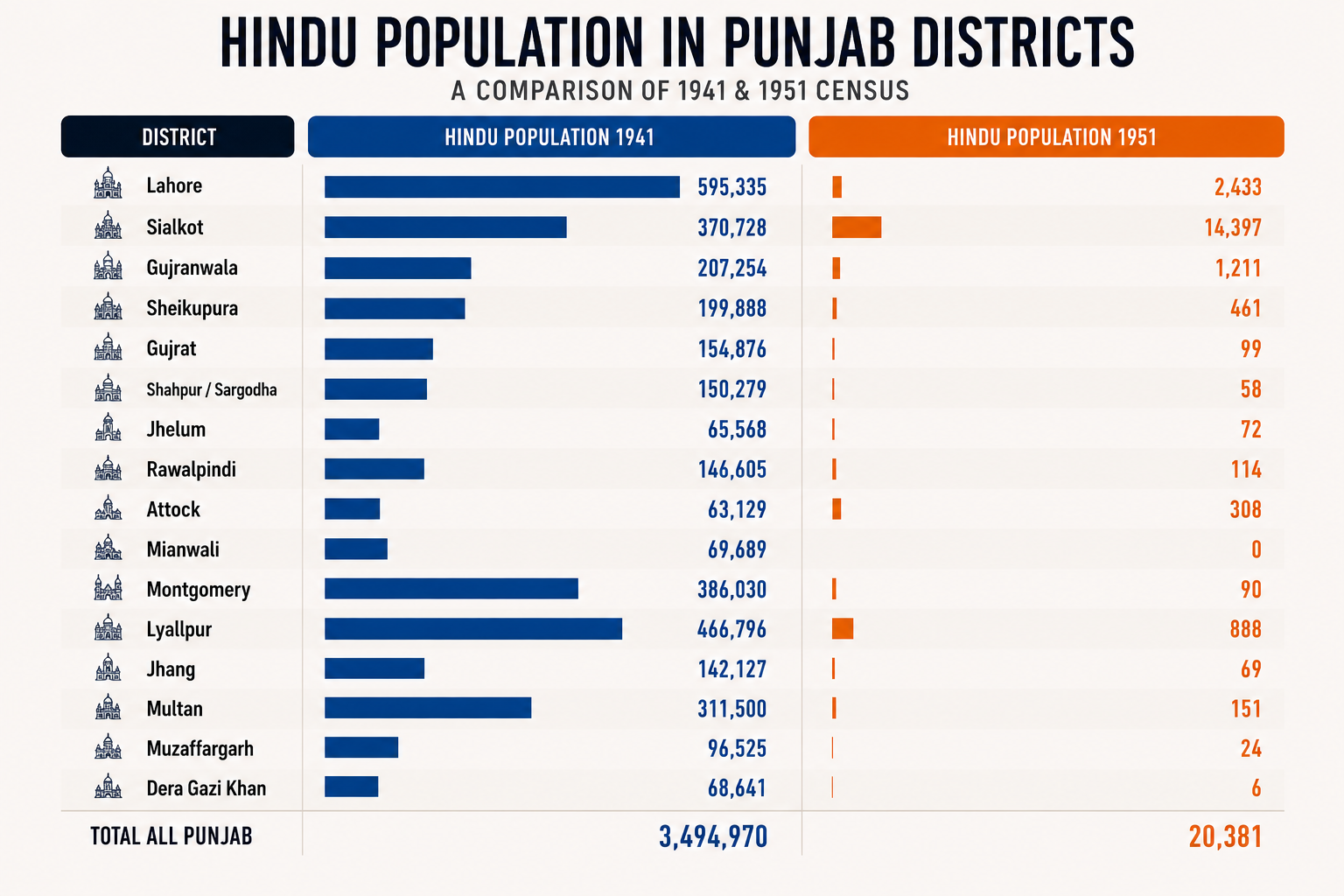
Sindh tells a similar story. In 1941, it had 1,279,530 Hindus, more than a quarter of the province’s population. By 1951, the number had fallen to 482,560. It shows a decline of nearly three in every four.
That is where the better-known Partition story ends. The less-known story begins after it. The census figures appear to tell a different story at first glance. Pakistan’s Hindu population shows a rise from 3.59 million in 2017 to 3.87 million in 2023. But that marginal increase masks a continuing demographic decline.
Pakistan’s total population grew by 15.8% during the same period, more than twice the 7.6% growth of its Hindu population. As a result, the Hindu share of the population fell from 1.73% to 1.61%.
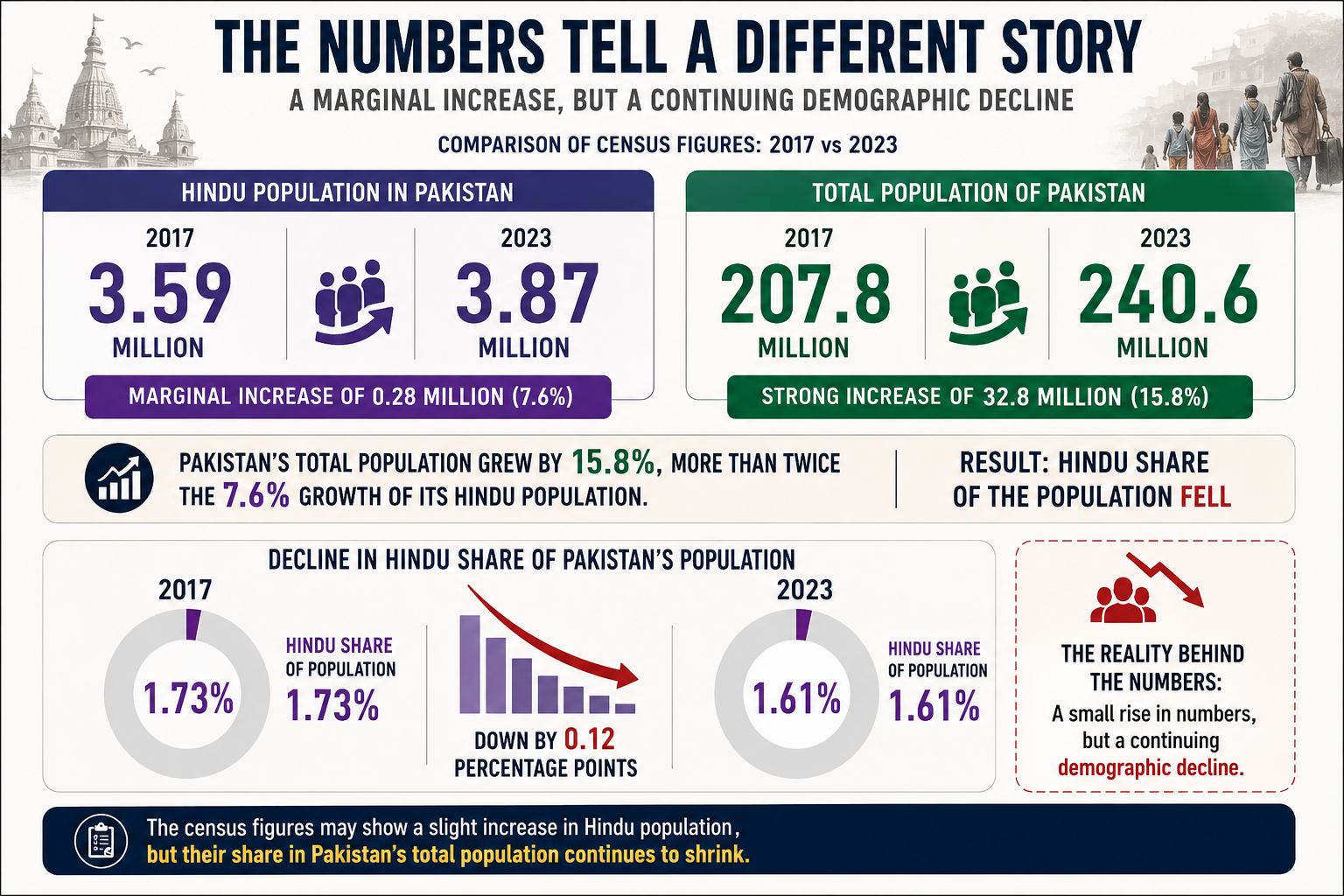
In other words, Hindus are increasing in number but losing ground demographically. Their population is growing more slowly than the country around them, steadily reducing their share of Pakistan’s population. On paper, the numbers are rising. In demographic terms, the community is shrinking.
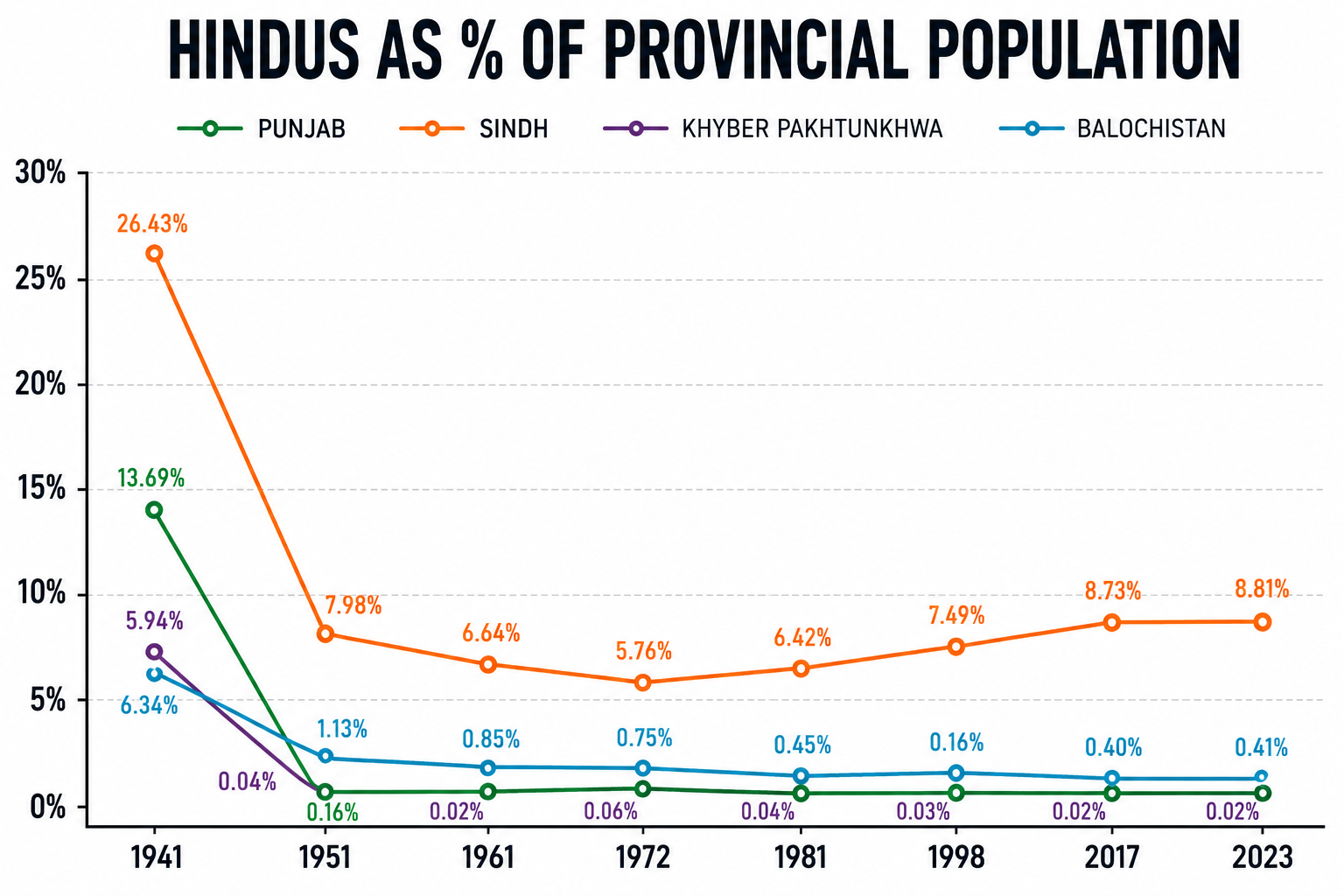
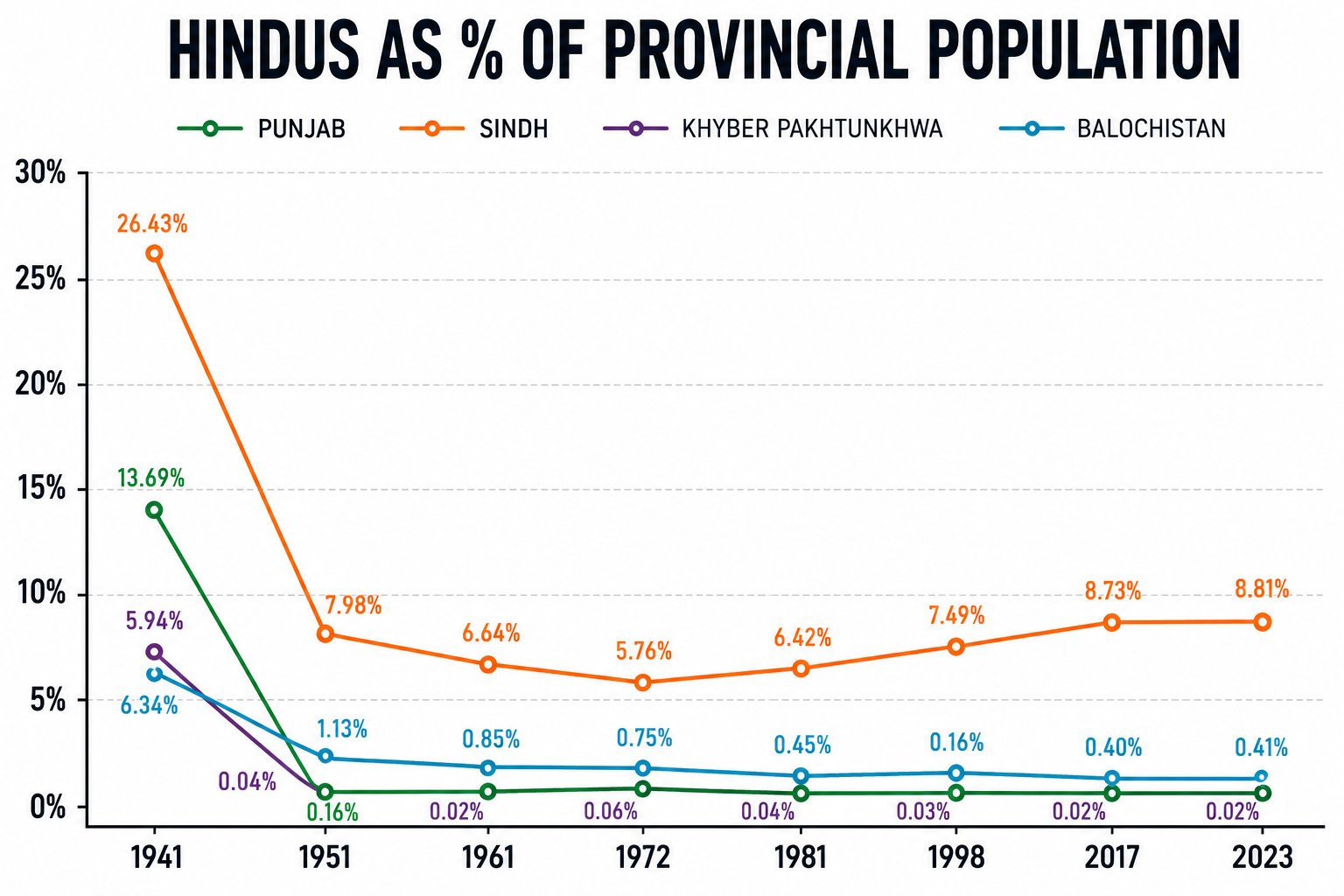
The decline is not uniform across Pakistan. In Khyber Pakhtunkhwa, it has been particularly sharp. Including the tribal districts merged into the province in 2018, its Hindu population fell from about 9,270 in 2017 to 5,470 in 2023. We see a loss of nearly four in every ten people in just six years.
In Punjab and Balochistan, the numbers were never large to begin with. Hindus account for just 0.20% of Punjab’s 127 million people and 0.41% of Balochistan’s 15 million, small minorities whose presence is barely visible in the wider population.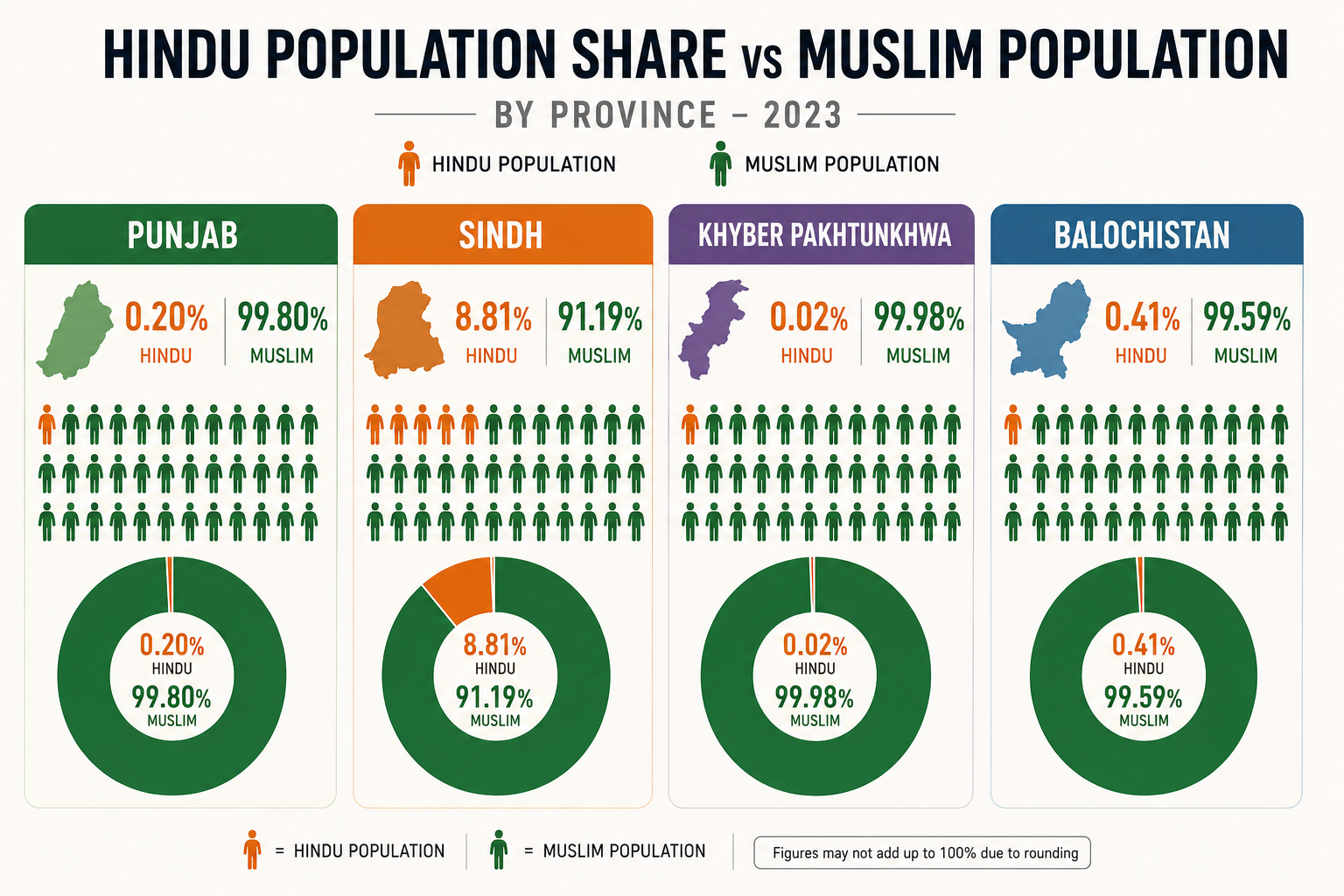
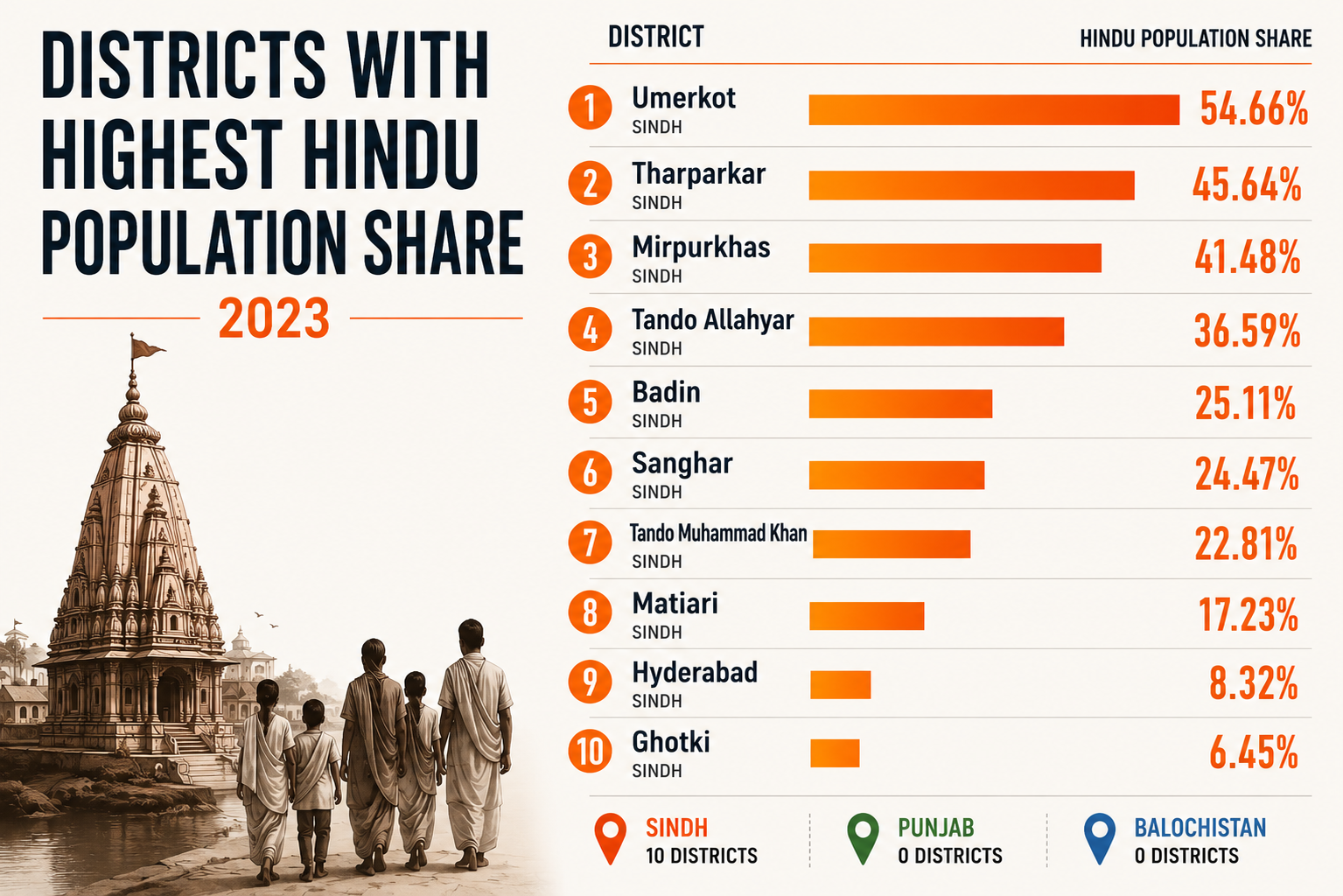
Pakistan promised its Hindus safety in 1947. Jogendranath Mandal, a prominent Dalit leader who became Pakistan’s first law minister, was among those who believed that promise. But within three years, he had become deeply disillusioned with the treatment of minorities. In 1950, he resigned from the cabinet and fled to India. His resignation was an early warning of what lay ahead.
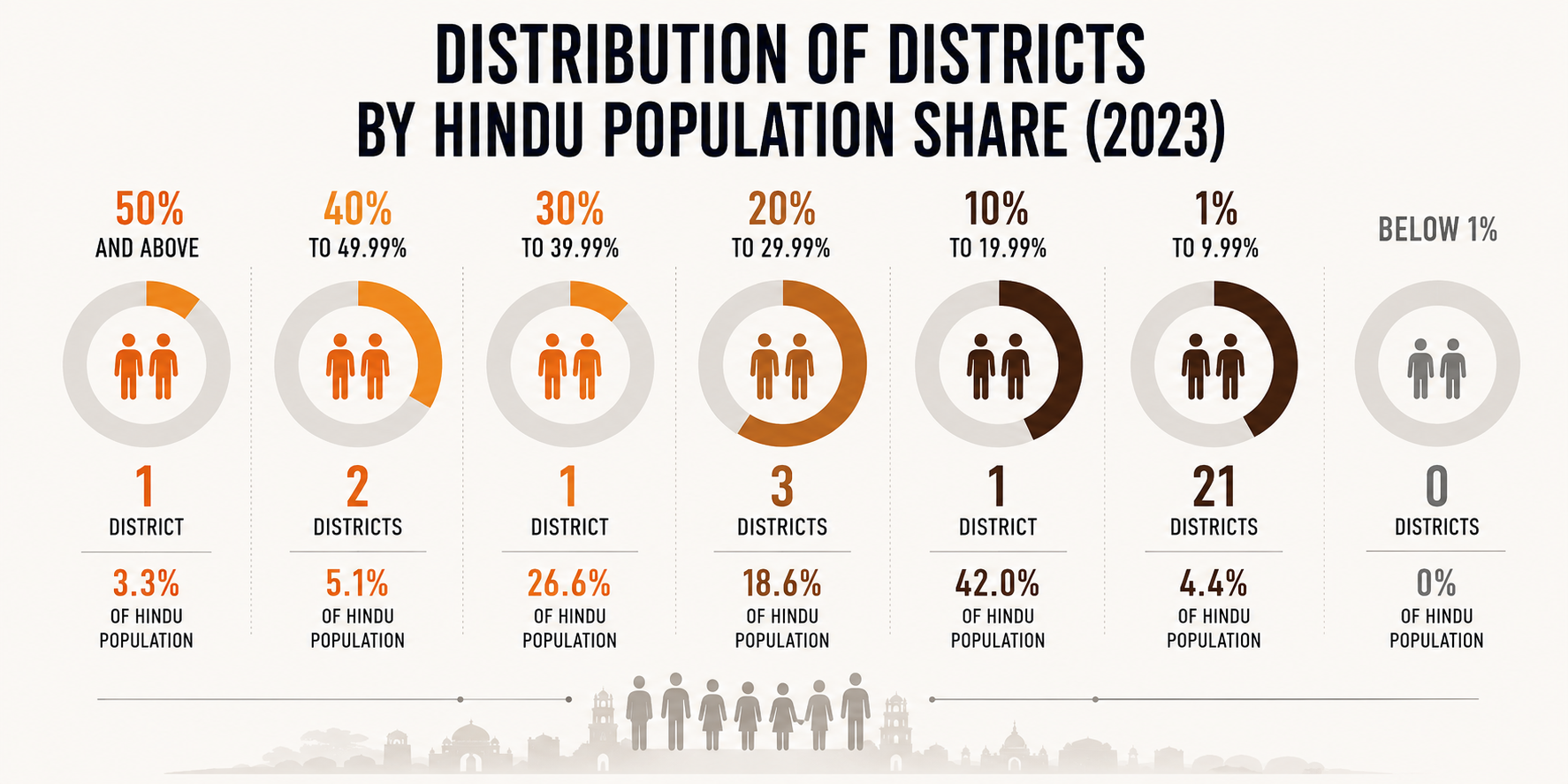
The decline was not only political. Temples that once numbered close to 1,300 have dwindled to fewer than three dozen that remain functional today. The census keeps recording the same drift, decade after decade. The population survives. Its share does not.
Pakistan’s own human rights institutions continue to document cases of forced conversion involving Hindu girls, even as the Constitution guarantees minorities equal citizenship. Next door, Bangladesh appears to be following a similar path.
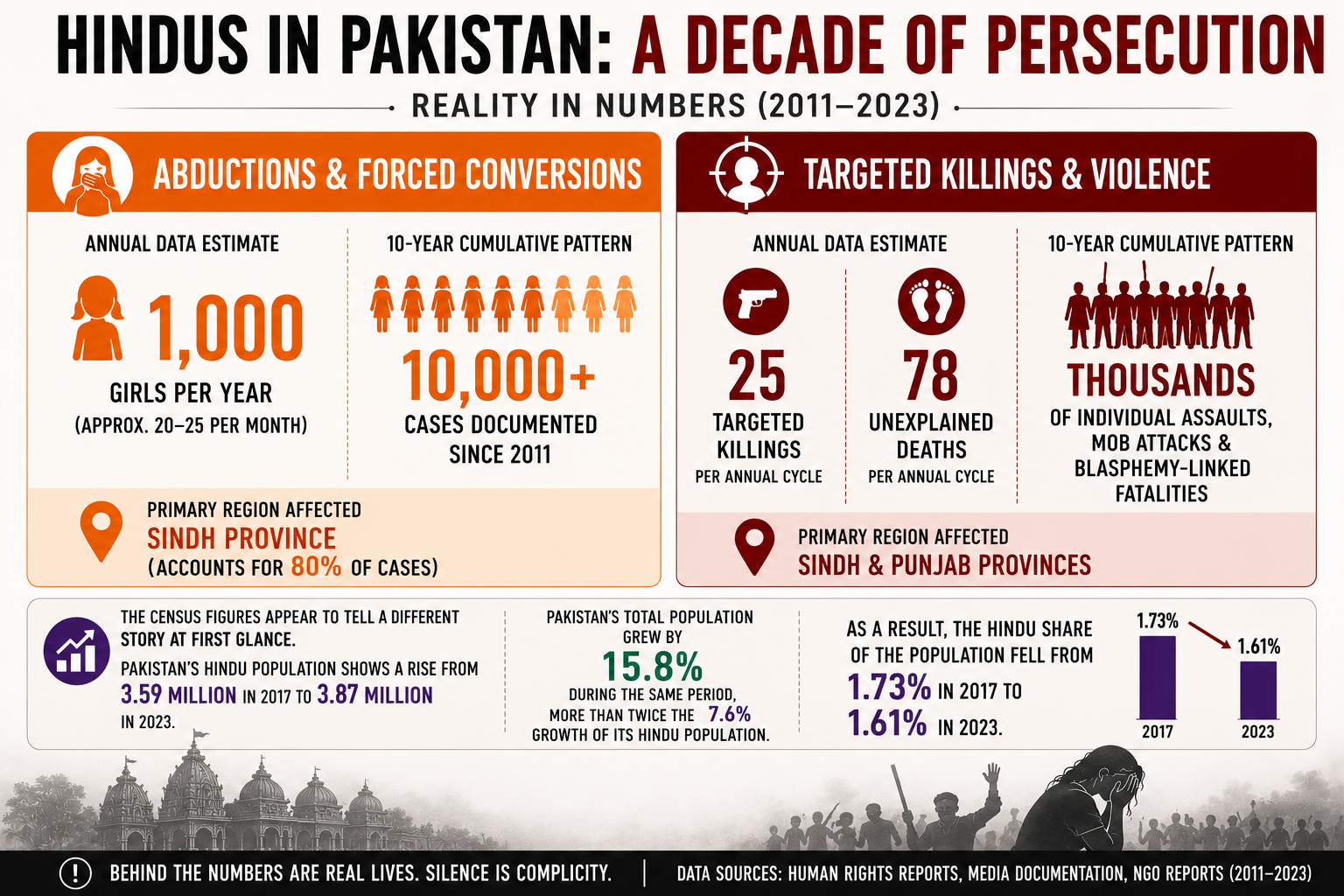
Seventy-nine years is long enough to stop calling a pattern a coincidence. The census tells a clear story about Pakistan’s Hindus: their numbers may rise in absolute terms, but their demographic weight has steadily declined. The evidence is there. The question is whether we choose to confront it or retreat into a “delulu” version of reality. Either way, it is Hindus who will ultimately bear the consequences.
Sources
Sources: -https://www.pbs.gov.pk/wp-content/uploads/2020/07/National-Census-Report-2023.pdf