Rapid demographic shifts and rising Muslim populations are reshaping modern Britain
Visualisation
At a Glance
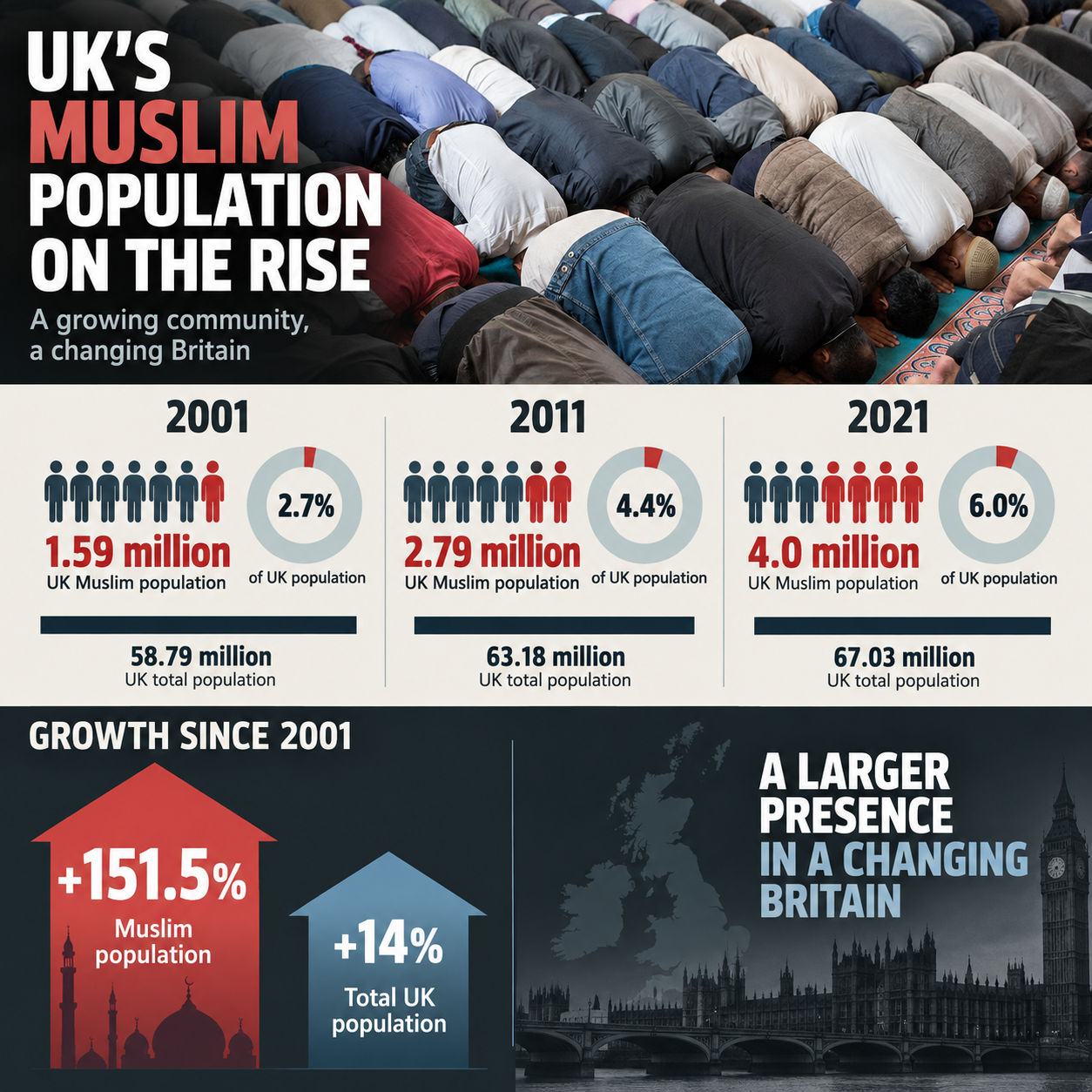
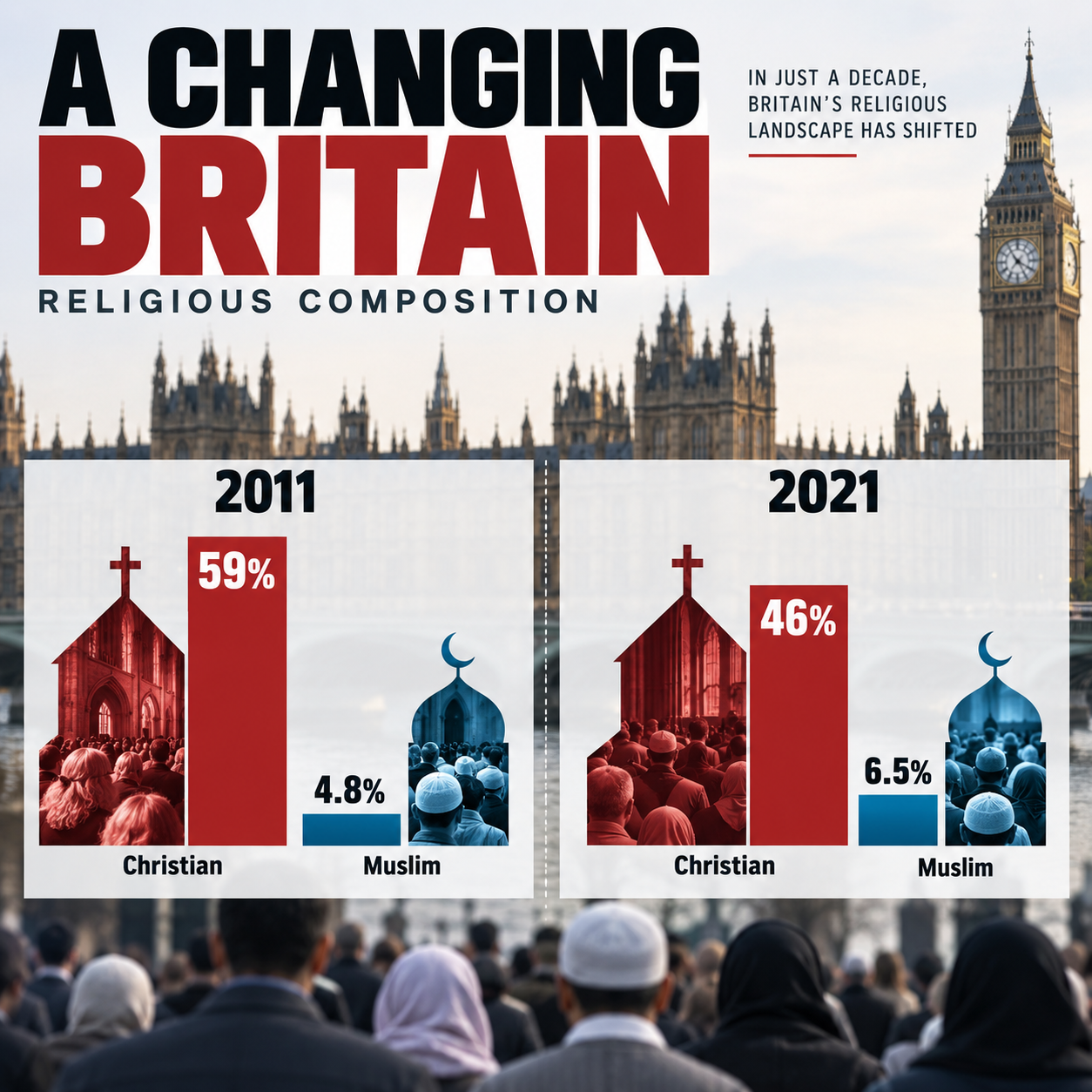
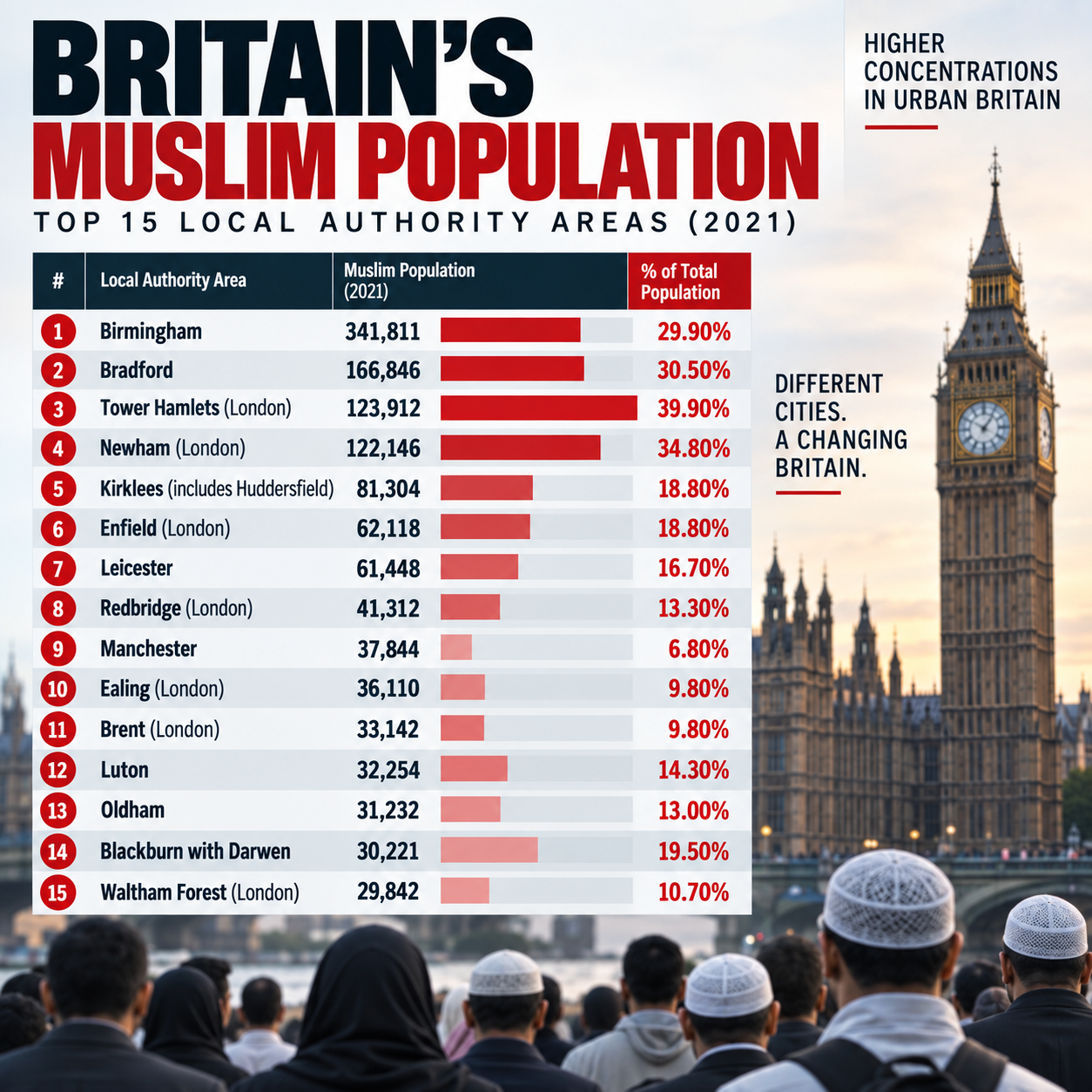
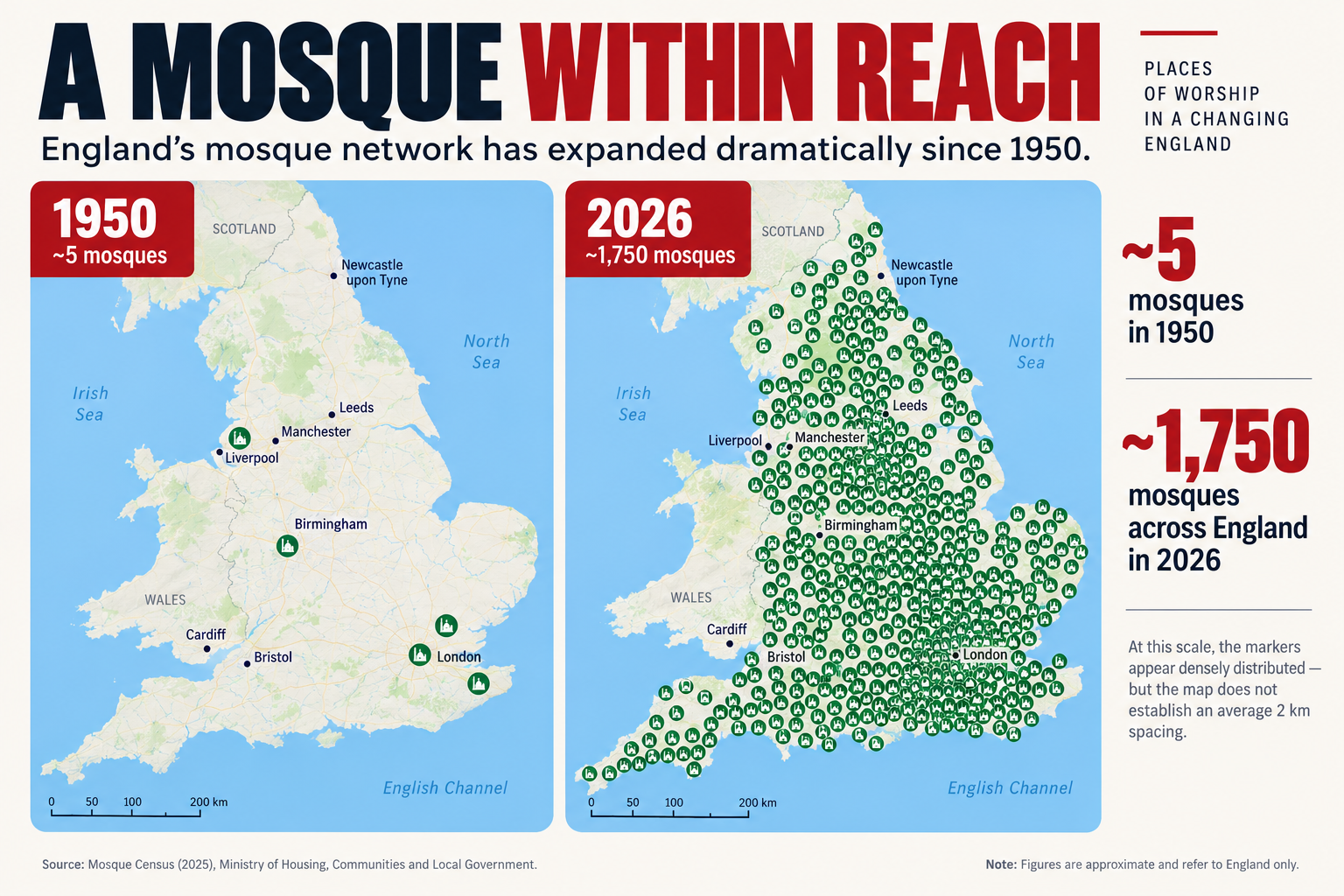
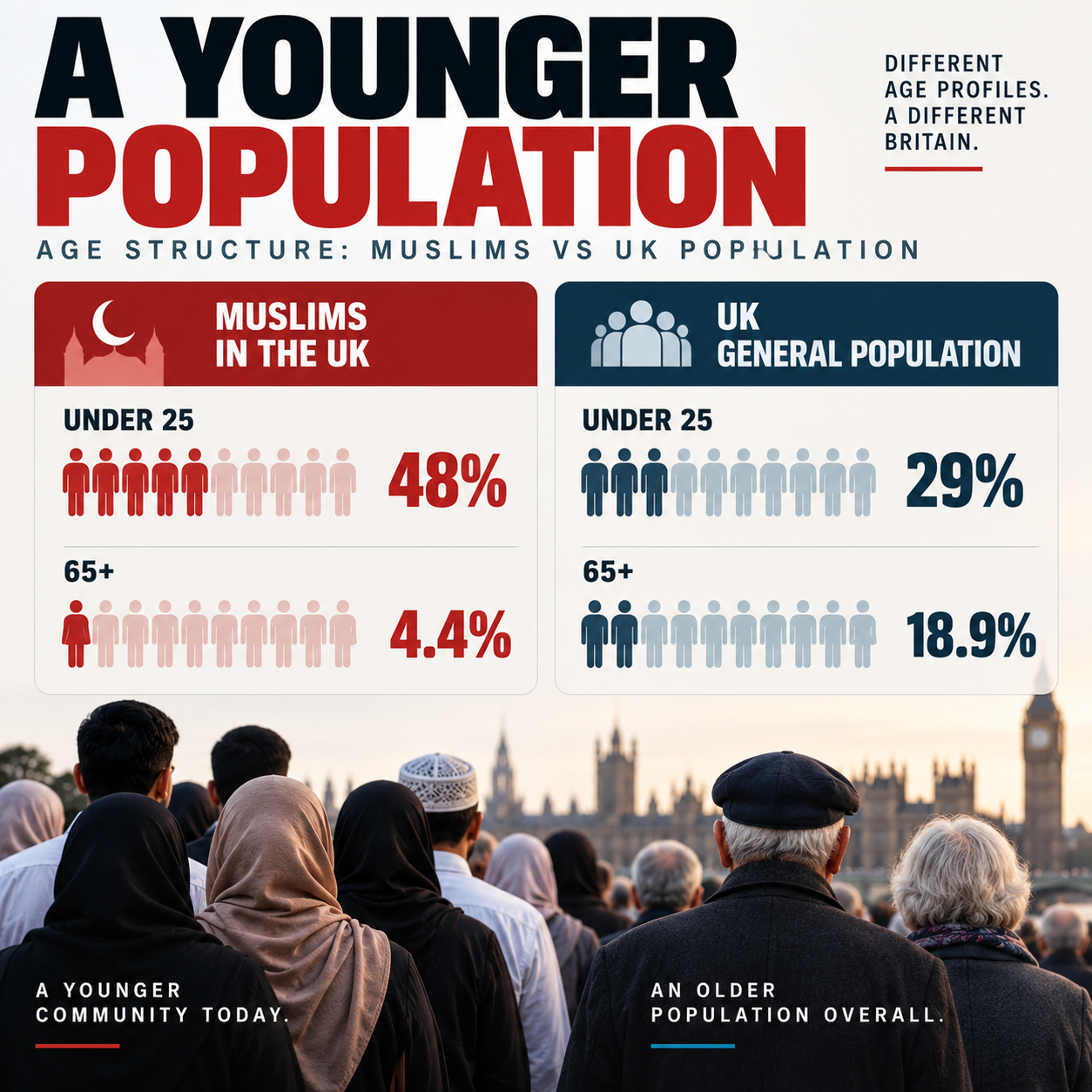
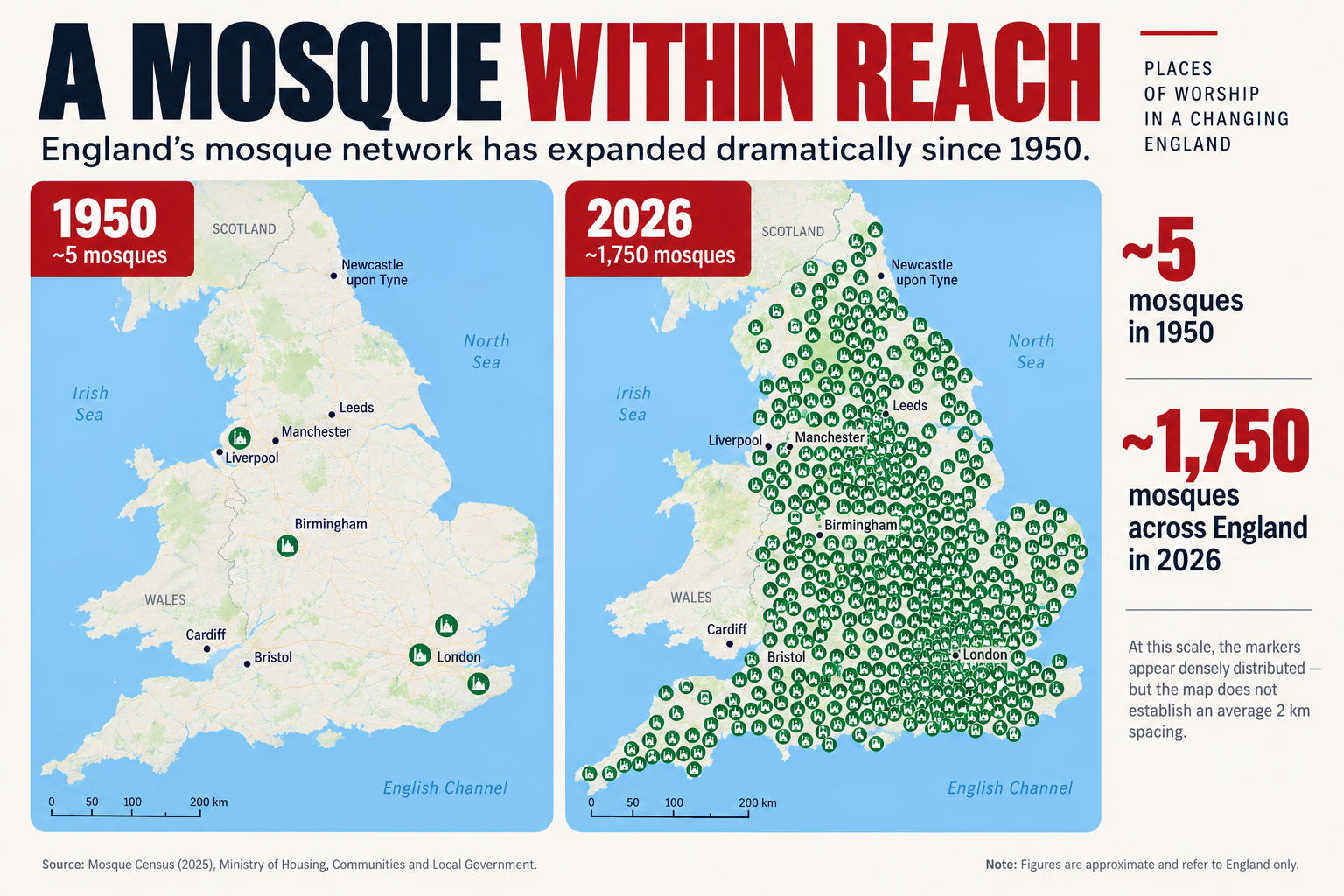
This year, Britain’s most popular name for a newborn boy was not Oliver or George. It was Muhammad. George had comfortably topped British baby-name lists for a decade, making the change difficult to imagine in 1990. In 2026, it is simply a fact on a spreadsheet, one line among thousands. But behind that line lies a demographic story that is far bigger than a name. That is where this story begins, because a name is rarely just a name. It is a family's choice, repeated across tens of thousands of households. Repeat it often enough and it stops being personal and becomes demographic: it becomes data. And follow the data far enough, and it usually points to a much larger story. Going back to where the numbers start Rewind to 2001. Britain counted its Muslim population that year and recorded 1.6 million people, or 2.7% of the total population. In most political conversations, that figure barely registered. Twenty years later, the 2021 census recorded just over 4 million Muslims, or 6.5% of the country. That is a 151.5% increase in two decades, a population that more than doubled while the country as a whole grew at a fraction of that pace. At the same time, another shift was taking place, largely away from the front pages. In 2011, nearly six in ten people in England and Wales identified as Christian. A decade later, that figure had fallen to 46.2%. For the first time since records began, Christians were no longer a majority in the land of Canterbury Cathedral and the coronation oath. Put those two figures together and the obvious narrative is one of one faith rising as another declines, almost like a demographic see-saw. It is an easy conclusion to draw, but the reality is more complicated. Where the growth lives Walk through Birmingham today and almost three in ten people you meet will be Muslim. In Bradford, it is closer to one in three. In Tower Hamlets, in East London, the figure approaches four in ten. These are not just numbers on a spreadsheet. They are part of the everyday character of some of Britain's largest cities. The geography becomes more striking when crime data is placed alongside the demographic picture. Major group-based child sexual exploitation cases have not appeared randomly across Britain. They have repeatedly surfaced in places such as Rotherham, Rochdale, Telford, West Yorkshire and Birmingham. In Rotherham, Operation Stovewood found that nearly two-thirds of designated suspects were of Pakistani background. A 2012 West Midlands Police profile, meanwhile, found that 62% of identified grooming suspects were Pakistani. Where authorities failed to recognize or confront these patterns of offending, vulnerable victims suffered the consequences. Faith in bricks and mortar Mosques offer a physical measure of this change. In 1900, Britain had roughly two mosques. By 1990, the number had risen to around 450. By 2021, it had passed 1,800. Current estimates put the figure at around 1,900 registered mosques, with more than 2,190 prayer spaces when smaller rooms are included. Most of this infrastructure (1,754 mosques) is in England. Scotland has 114, Wales 18 and Northern Ireland 9. Each mosque is more than a place of worship. It is also a marker of permanence. A community that builds institutions, schools, places of worship and social networks is not simply passing through. It is putting down roots. The youngest generation The strongest signal in the data comes from age. Nearly half of Britain's Muslims, 48%, are under 25, compared with 29% of the population overall. In a primary school classroom, college corridor or entry-level workplace in one of Britain's major cities, the chances of encountering a young Muslim are therefore significantly higher than the national average suggests. This is a young community within an ageing nation. Britain as a whole is getting older; its Muslim population is not. That gap matters because younger populations tend to have higher birth rates. Even without new migration, demographics can carry their own momentum. A country's next chapter is always shaped, at least partly, by the communities that continue to grow while others stagnate. Britain once ruled an empire on “which the sun famously never set”. The historical irony today is difficult to miss: a nation that once redrew borders across continents is now confronting a demographic transformation within its own borders. Immigration has changed Britain's cities, politics and public debate, while questions about integration, parallel communities, crime and pressure on public services have moved firmly to the centre of political discussion. Many British Muslims themselves openly debate the country's changing religious and demographic landscape. Yet Britain's story is not simply one of replacement, and neither can every social problem be attributed to immigration. The deeper question is whether a country that opened its borders without adequately planning for integration is now confronting the long-term consequences of those choices. Britain once sent its influence out into the world. Today, it is reckoning with a world that has arrived on its doorstep.