Record drug hauls redraw India's narcotics map
Visualisation
At a Glance
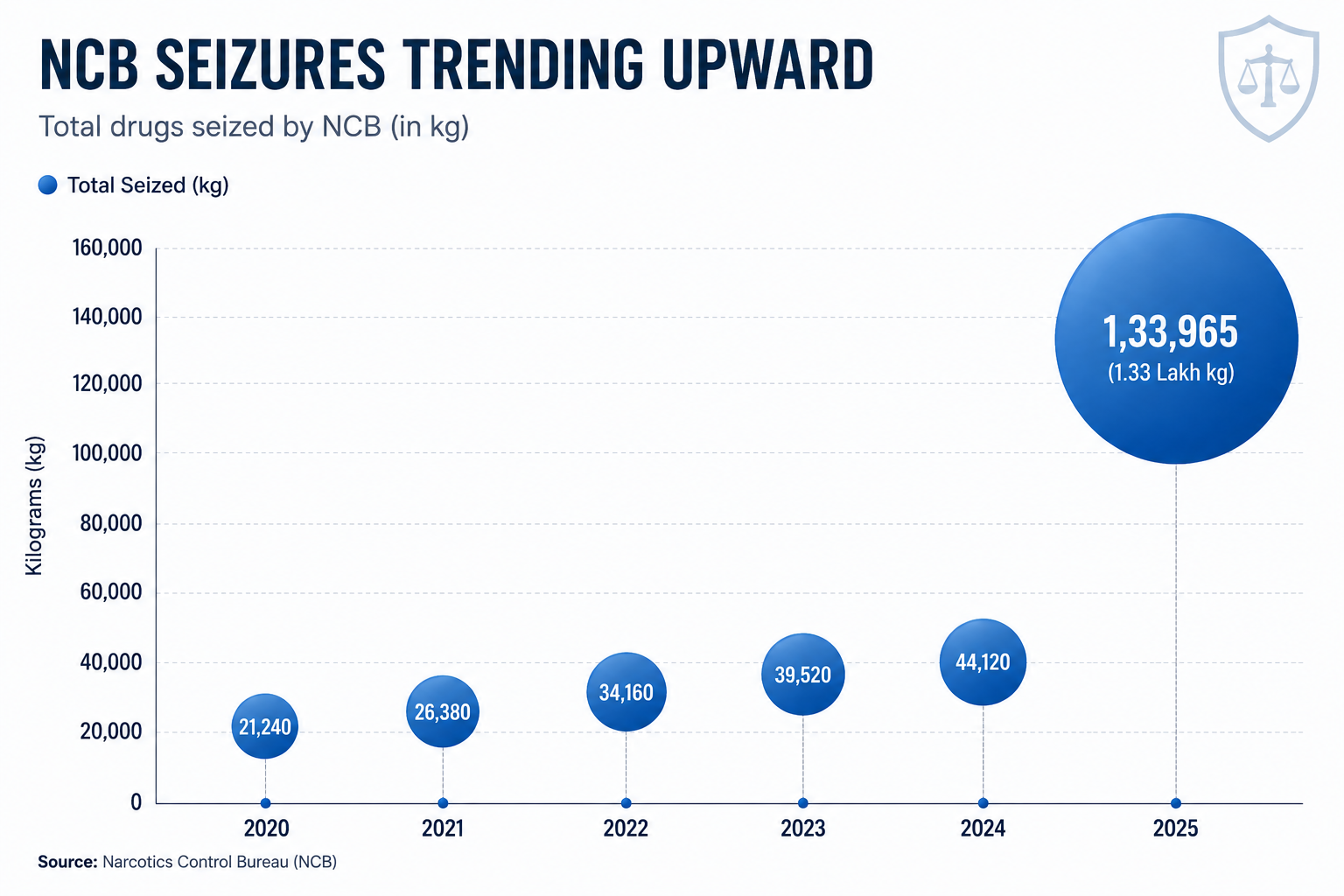
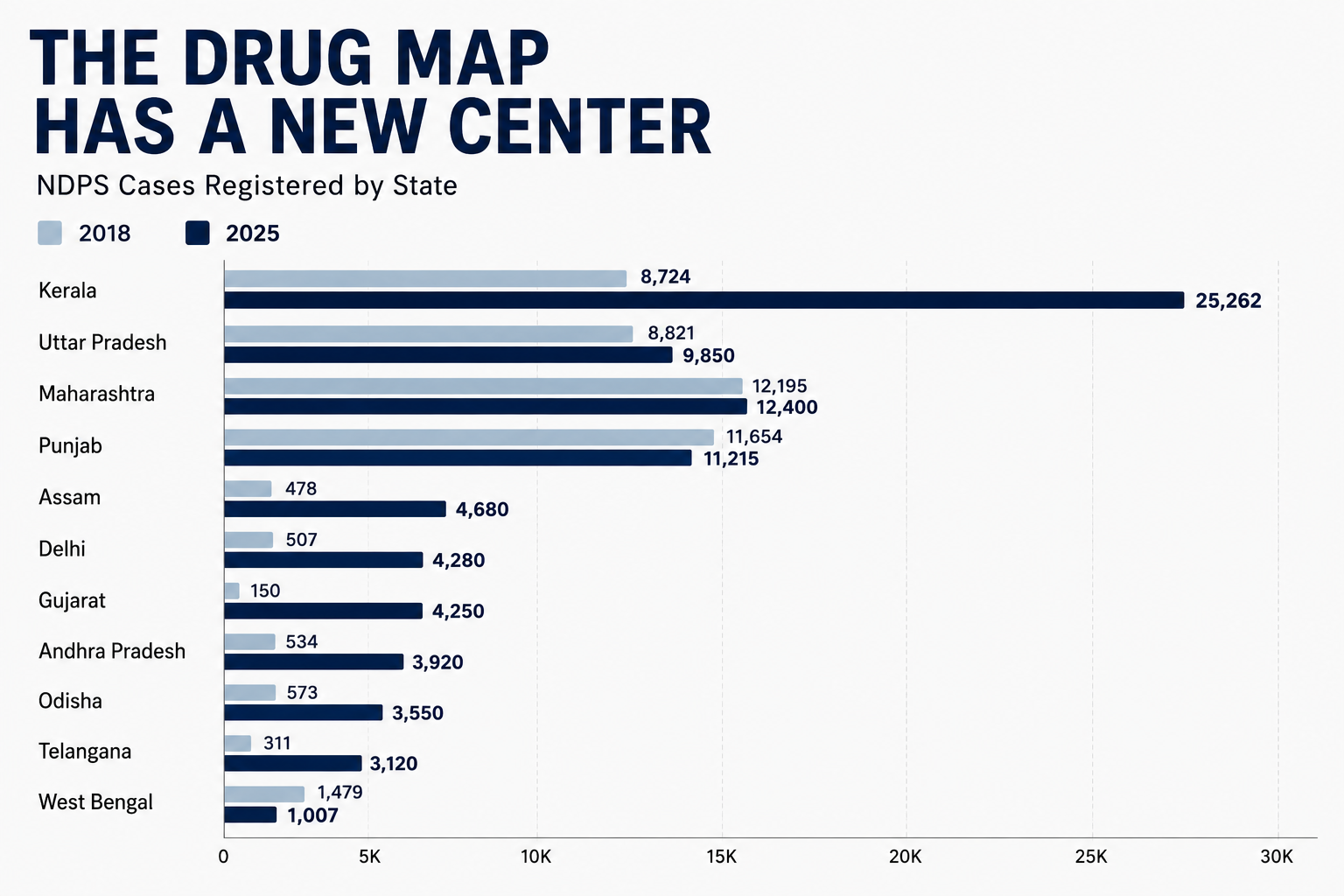
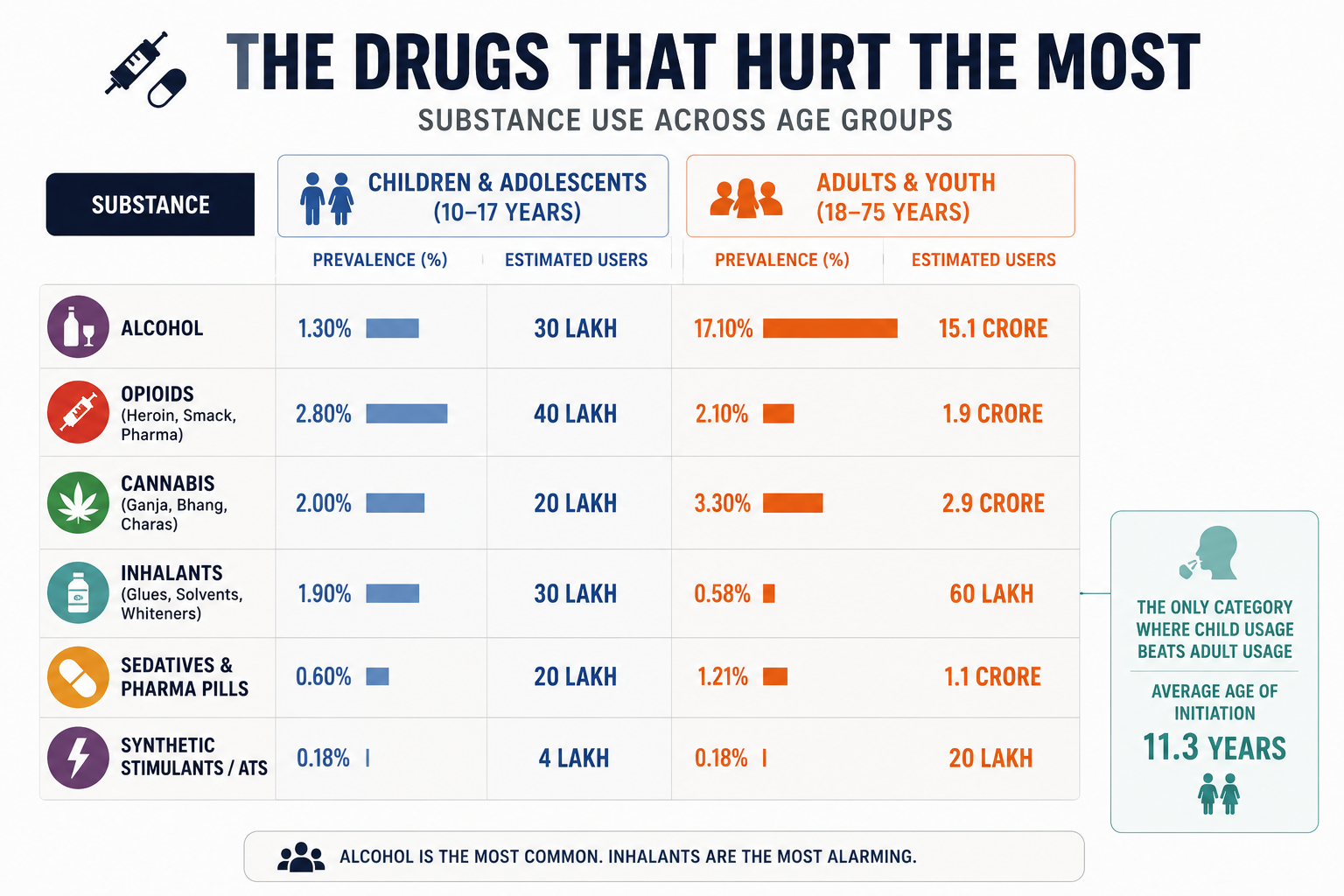
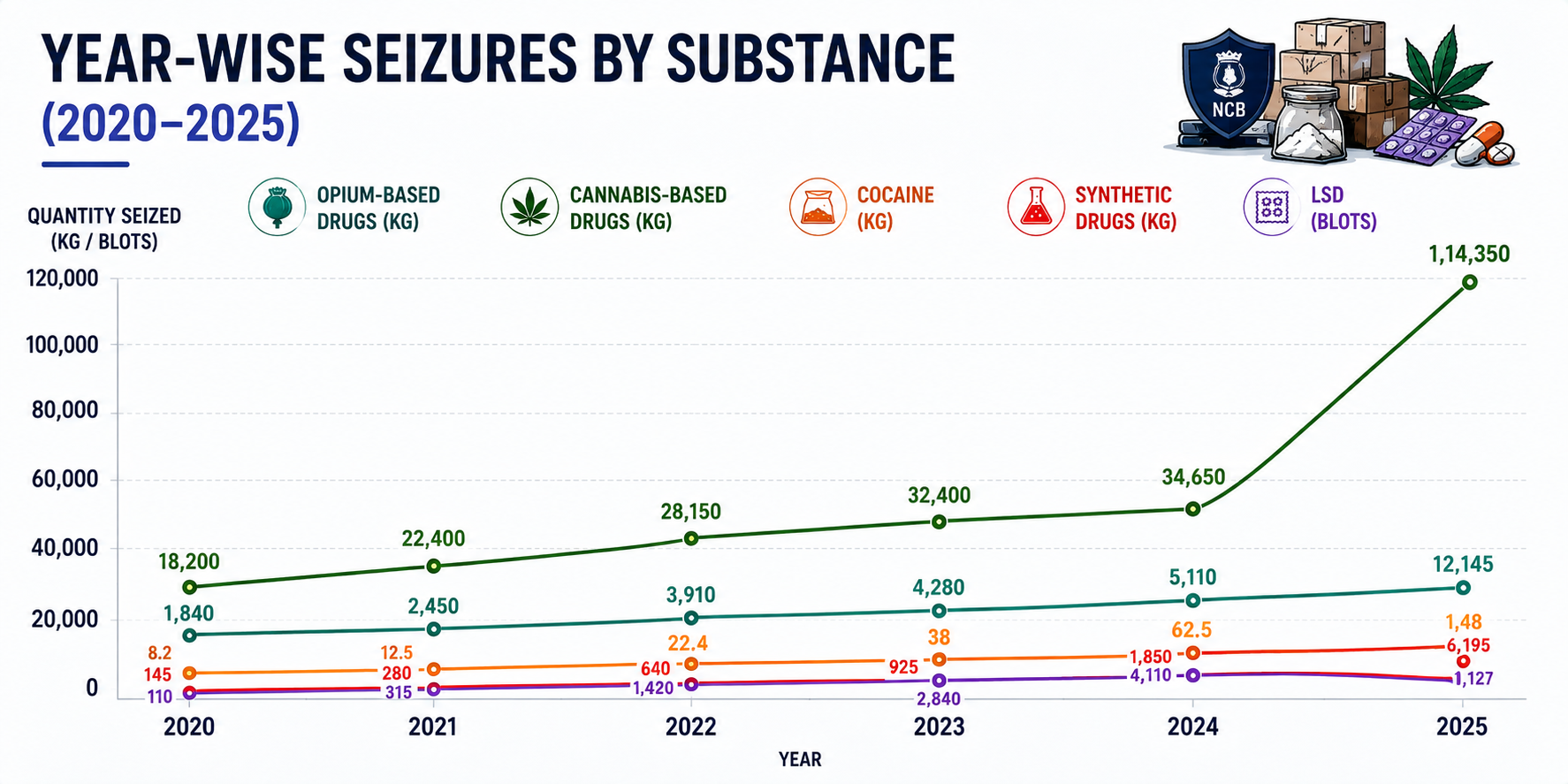
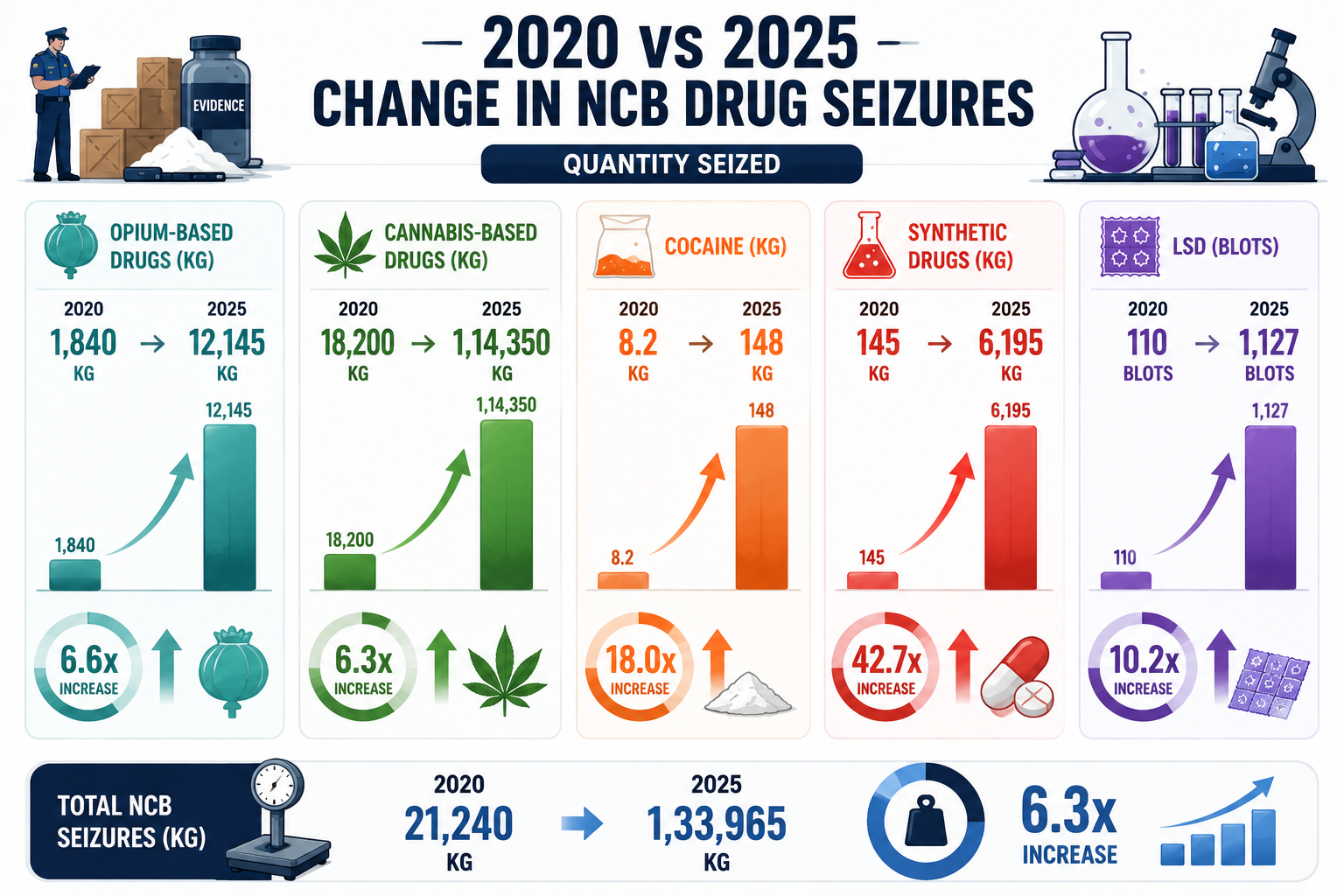
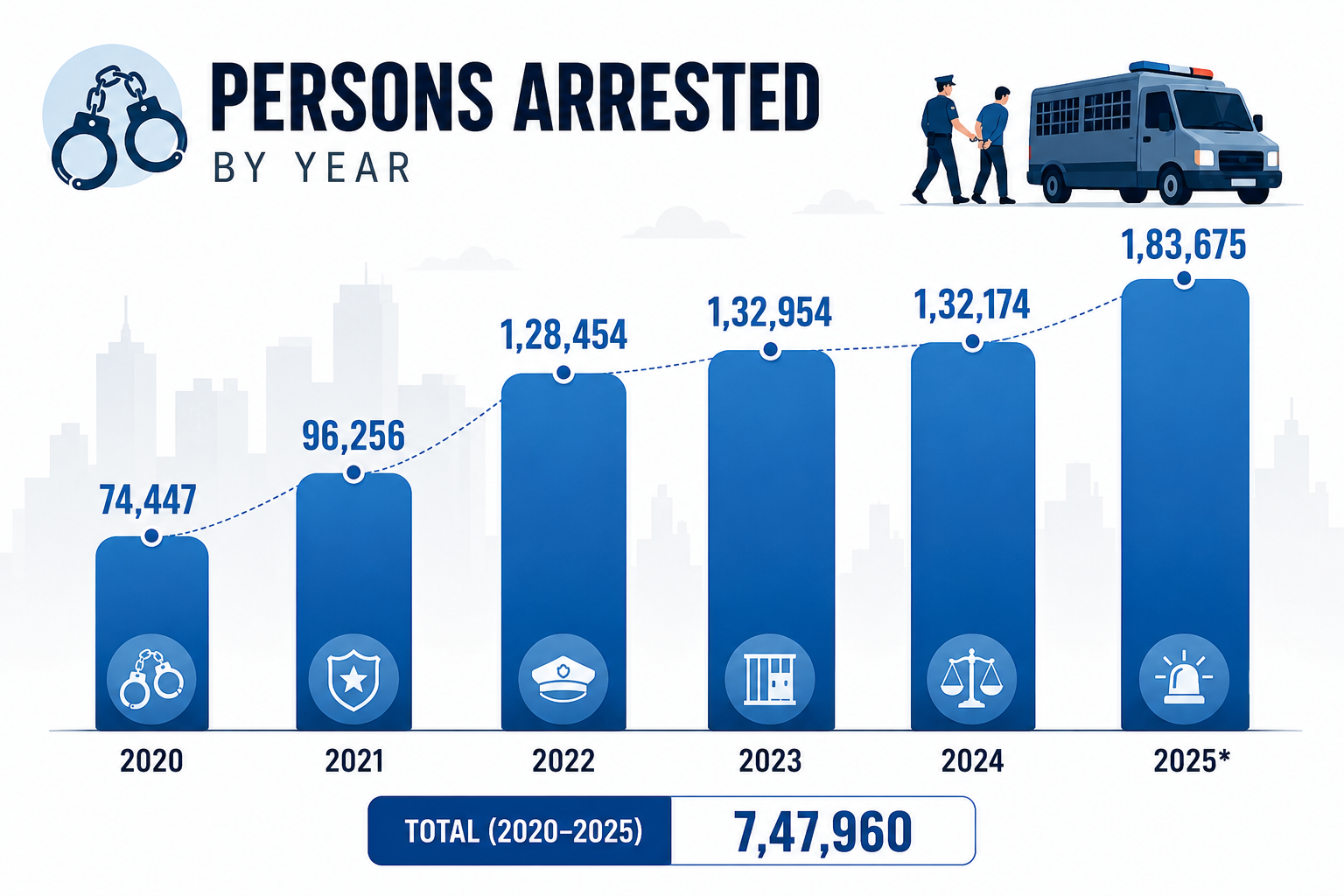
Somewhere along India's western coast, a steel container is sliced open under floodlights. Hidden among ordinary cargo lies a fortune in white powder. The photograph appears on front pages the next morning. The number beneath it is staggering. To many readers, it seems like undeniable proof that India's drug problem is getting worse. But a seizure is only a net pulled from the sea. A bigger catch can mean more fish. It can also mean a larger net, cast more often, by more hands. Over the past decade, India has been building a much bigger net. The quantity of narcotics seized has risen several-fold. The number of cases registered has climbed alongside it, year after year, until today's figures dwarf those of a decade ago. A steeper climb The numbers are striking. Ten years ago, India registered around 50,000 narcotics cases a year. Today, that figure is close to 1.5 lakh, roughly three times higher. In one year alone, the volume of drugs seized almost tripled, crossing one lakh kilograms. Yet a rising graph can tell more than one story. More seizures may reflect greater trafficking. They may also reflect stronger enforcement. When more containers are opened, more vehicles checked and more ports watched, more drugs are found. The line rises in either case. A careful reading keeps both possibilities in view. The map moves For years, India's narcotics story had a familiar geography. The northern belt, especially Punjab, dominated the headlines. That picture is beginning to change. Punjab's caseload has remained largely unchanged over the past decade. Gujarat, by contrast, has recorded a dramatic rise. Delhi, Assam, Andhra Pradesh and Telangana have steadily moved from the margins to the centre of the country's enforcement map. Kerala, almost overnight, recorded a fourfold jump in cases within a single year. Such sharp increases rarely point to demand alone. More often, they signal a state that has begun searching more aggressively. Punjab presents the clearest paradox. Long regarded as the epicentre of India's drug crisis, its official caseload has remained almost flat at around 11,000 cases. Yet field reporting and visual evidence suggest a far more persistent problem. The gap between lived reality and official records raises questions about administrative registration rather than enforcement alone. When the same machinery controls both detection and documentation, stable numbers may reveal as much about reporting practices as they do about the scale of the problem. The broader shift is unmistakable. A decade ago, five states accounted for nearly seven out of every ten narcotics cases. Today, they account for only about half. The challenge has not merely grown. It has spread The young at the edge Behind the trafficking figures lies another set of numbers, quieter but far more unsettling. The drugs causing the deepest damage are rarely the most glamorous. They are the cheapest and the easiest to find. Among children who abuse inhalants such as glue and industrial solvents, minors outnumber adults. On average, first use begins at around eleven years of age. That is not the beginning of addiction. It is the loss of childhood. The chemistry changes Alongside the traditional drug trade, another market has been expanding, one built not in fields but in laboratories. Here, the change is not just in volume but in the drugs themselves. Synthetic seizures have climbed steeply across five years. But the mix inside that rise keeps turning. Methamphetamine remains the giant. Most of it crosses the eastern border from Myanmar, and one drive in Delhi alone pulled in more than three hundred kilograms of crystal meth. Even so, this quantity slipped in the latest count. What surged instead was quieter and stranger. Ephedrine, the raw material from which such stimulants are cooked, leapt many times over. It was caught in bulk at chemical and pharmaceutical units, seized before it could ever become a drug. Methaqualone, an old sedative, multiplied too. Meanwhile the party favourites, ecstasy and ketamine, fell away. So the real story is not simply the rise of synthetic drugs. It is enforcement moving upstream, targeting the chemicals that make them before they reach the street. LSD adds its own quiet chapter, arriving on tiny blotter papers tucked inside parcels and books, almost weightless but capable of travelling far. For all the attention they attract, synthetic drugs still account for well under one percent of users. Their presence is growing, but their reputation has expanded much faster than their footprint. The catch and the silence Enforcement leaves behind a human trail as well. Over the past few years, nearly 7.5 lakh people have been arrested under narcotics laws, a little more than one arrest for every case registered. The profile of those arrested is revealing. They are rarely the kingpins. More often, they are couriers, street-level peddlers and users caught with small quantities. The criminal justice system finds it easiest to reach those at the bottom of the supply chain. What happens next is far less clear. The available data say little about how many of these arrests end in convictions. In a story driven by numbers, that missing figure may be the most important of all. India's narcotics landscape is changing. Seizures are rising. The coastline has become a major front line. The geography of enforcement is expanding beyond the traditional northern hotspots, with western and southern states playing an increasingly prominent role. Yet the data capture the hunt more clearly than the harm. A record seizure can be read as a sign of stronger enforcement or a larger illicit trade. The numbers alone cannot tell which is true. The realities that matter most lie beyond the charts. They are found in the child inhaling solvents in a narrow lane, the courier arrested for a network he barely understands, and the conviction data that remain absent from the public record. India is measuring its drug problem more closely than ever before. Whether it is solving that problem is a question the data still cannot answer. . What the map cannot show