The ₹3 Lakh Crore Silent Revolution: How India's Poor Quietly Rewrote Their Own Story
Visualisation
At a Glance
The ₹3 Lakh Crore Silent Revolution: How India's Poor Quietly Rewrote Their Own Story
Until 12 years ago, a bank account meant standing outside a branch that probably did not want you in. No collateral, no documents satisfied the clerk. There was no reason for the manager to bother. Crores of Indians lived and died without ever touching a passbook. On August 28, 2014, that changed on paper. What nobody expected happened. It changed the practice slowly to yield remarkable results. Picture a woman in a small Bihar village, the kind of place where the nearest bank branch is an hour's bus ride away. In 2015, if she had a Jan Dhan account at all, it likely held nothing – zero. The account existed because a government scheme demanded it, not because she trusted it. Today, walk into that same district, and something has shifted. It is part of a national phenomenon of the number of zero-balance accounts falling below eight per cent. The account is no longer a formality sitting in a drawer. It has become a habit. The account holds something – trust. Where the Money Started Talking Go back to 2015. Nearly eight out of every 10 Jan Dhan accounts sat empty. Zero balance. The scheme had given people a bank book, but nobody had given them a reason to trust it yet. An account opened under a government push isn't the same as an account a family believes in. That belief doesn't arrive with a ribbon-cutting. It gets built slowly, deposit by small deposit, over years of watching the money actually be there when you go looking for it.
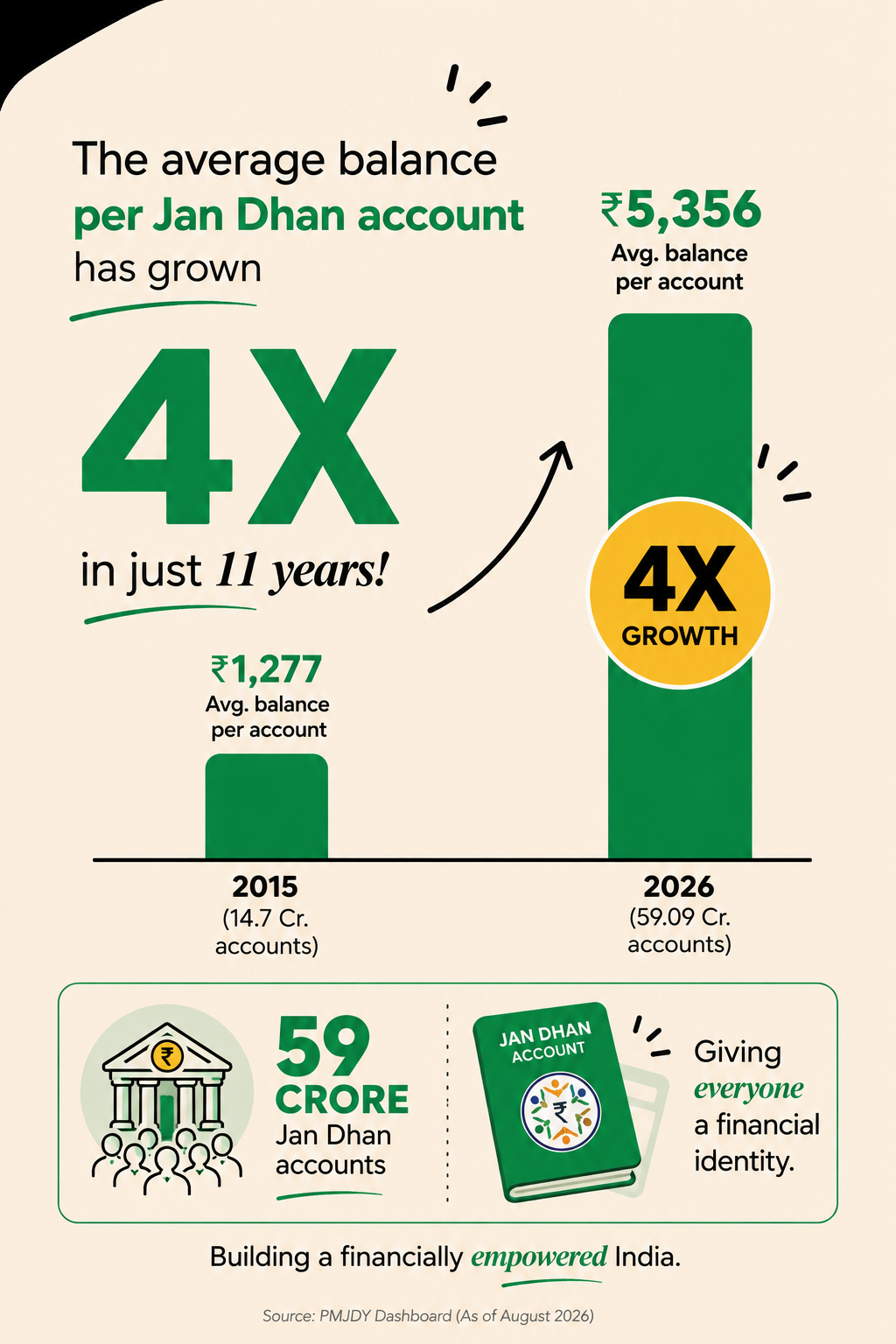
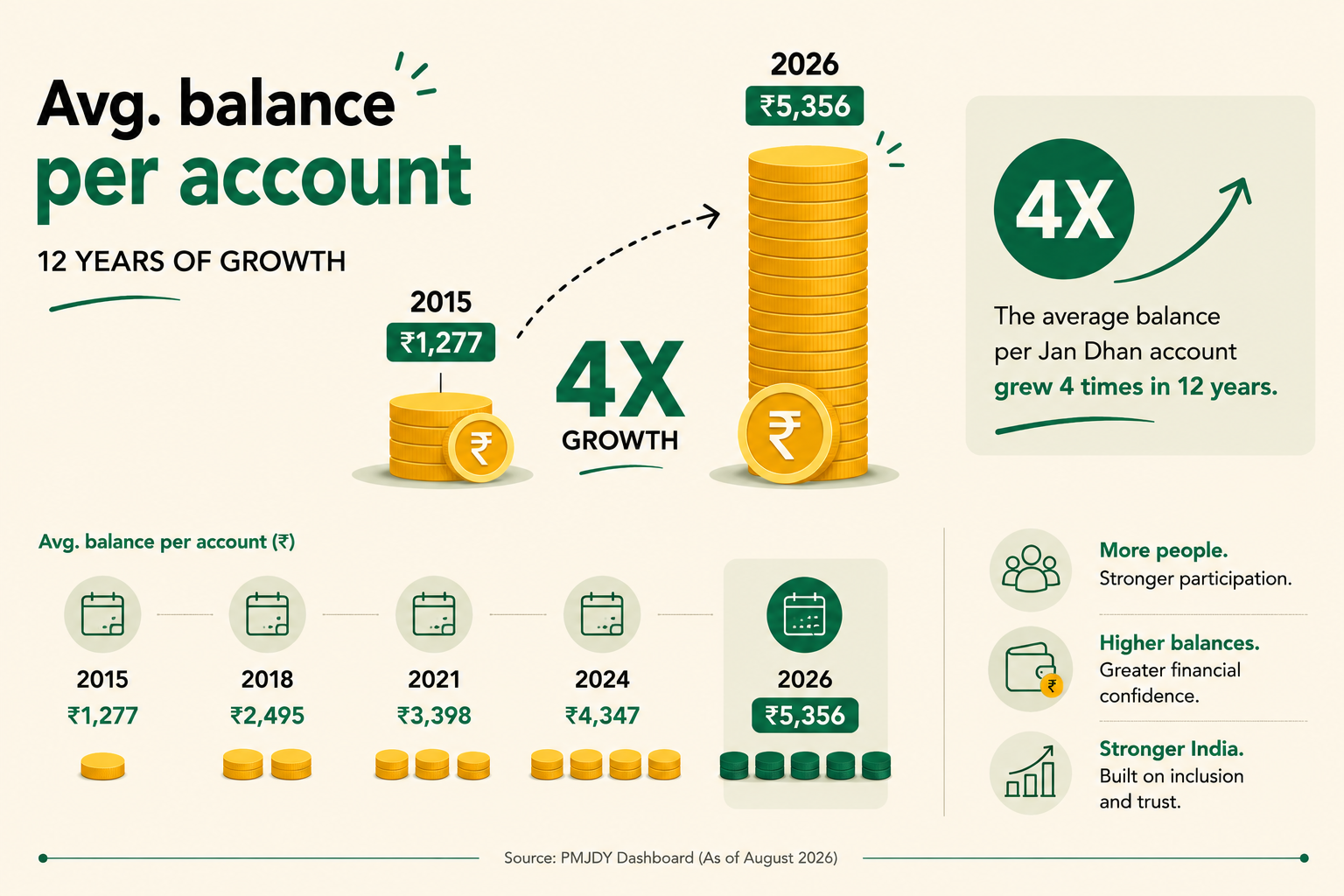
That's exactly what happened. Today, zero-balance accounts have dropped below 8 per cent. And here's the part that rarely makes it into any report: while the number of accounts grew at about 11.5 per cent a year between 2015 and 2026, the money deposited grew nearly two-and-a-half times faster, almost 27 per cent a year. People weren't just signing up. They were staying, and putting a little more in each time. The average balance per account has grown from around ₹1,277 to over ₹5,300. That's four times more money, held by people who were told for generations that saving wasn't something ‘their kind’ got to do.
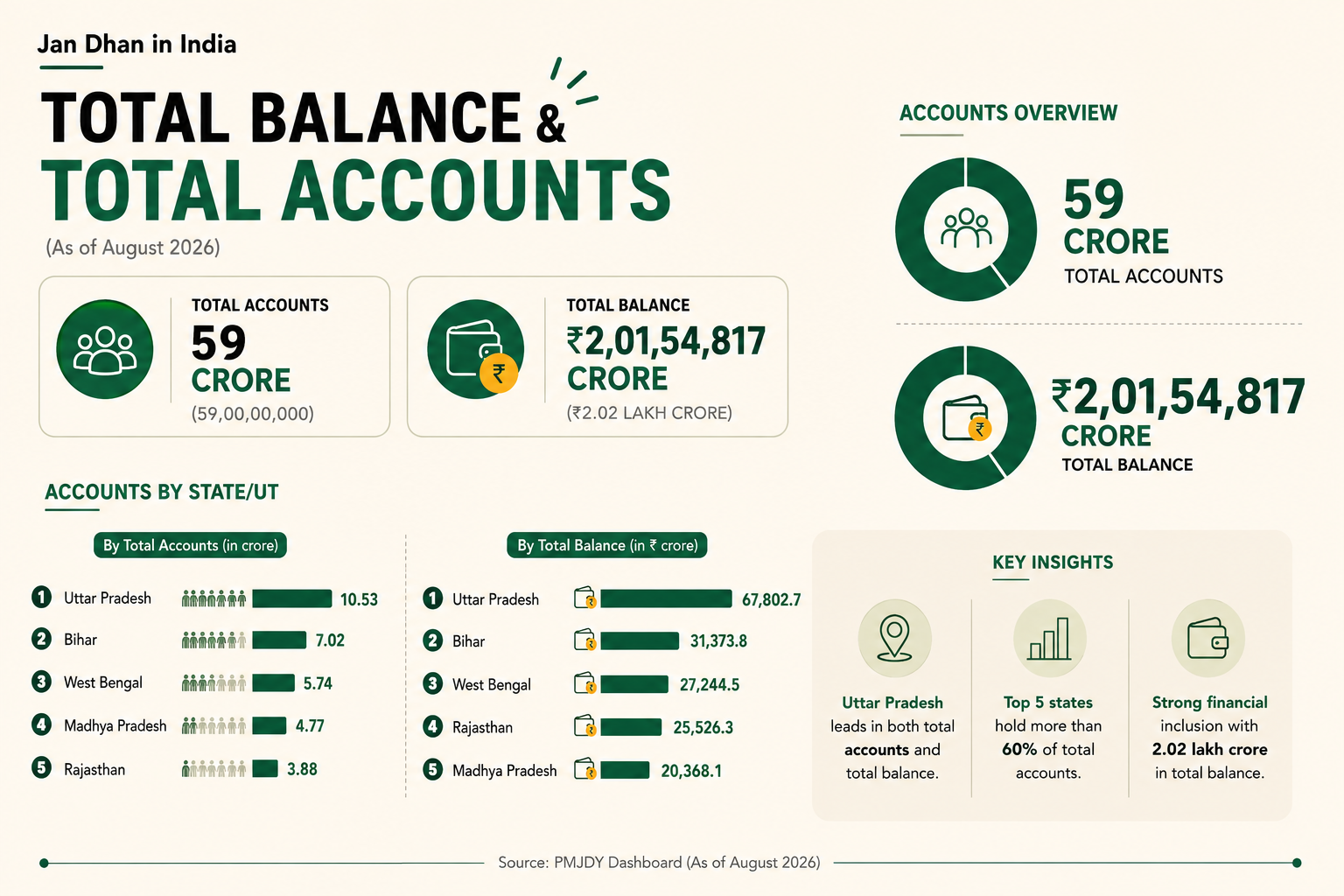
The States Nobody Expected to Lead If this were a story about India's richest states pulling ahead, it would barely be worth telling. It is not. Bihar, Uttar Pradesh, Madhya Pradesh and West Bengal – states that spent decades being described as unbanked, underserved, left behind – together hold nearly half of the Jan Dhan accounts in the country. Bihar alone carries more than seven crore accounts, holding over ₹31,000 crore deposits. These were the states where a bank branch used to be a rumor. What changed? For once, the map of financial inclusion in India was drawn from the ground up, not the top down.
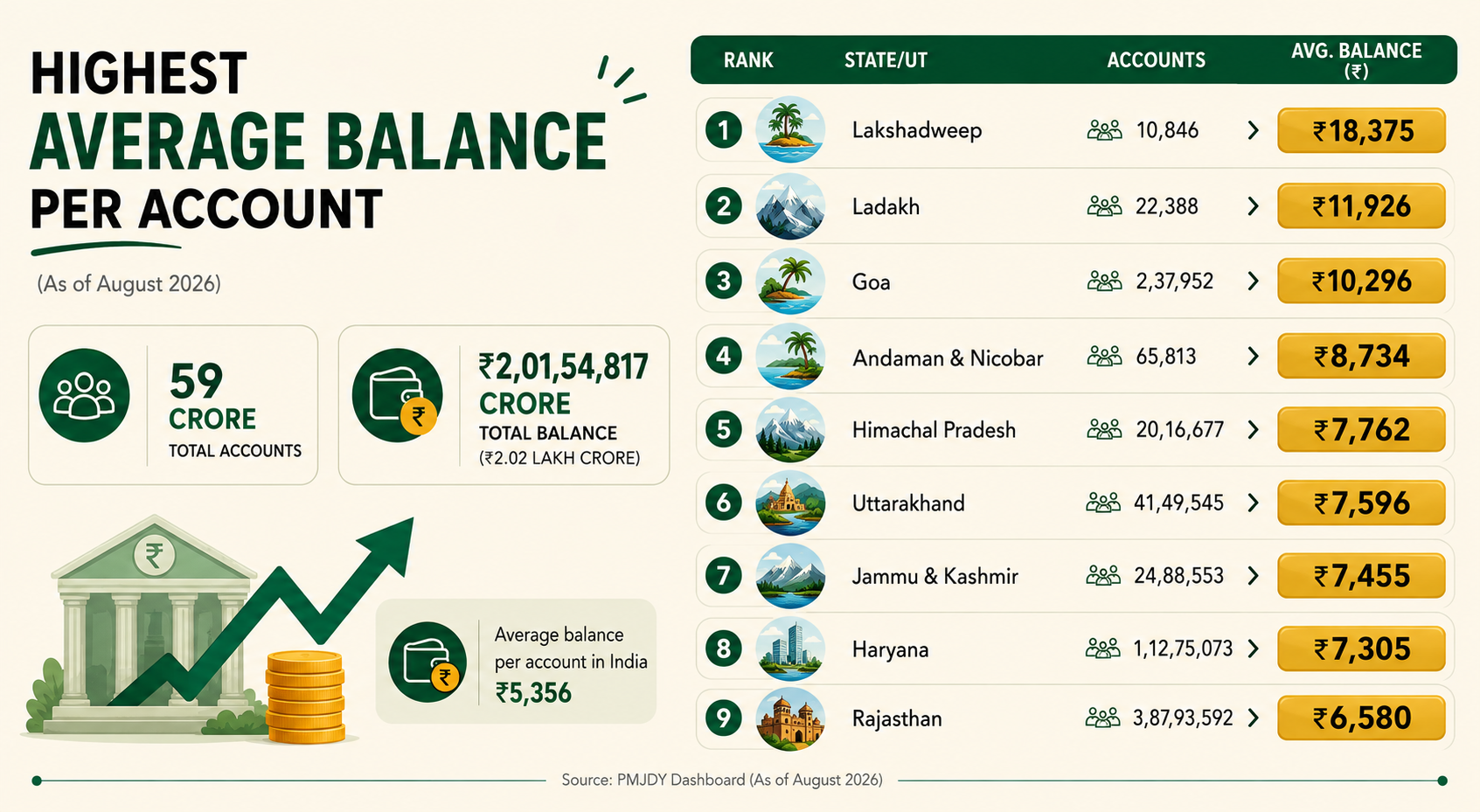
The balances tell a stranger tale still. It is not Maharashtra or Tamil Nadu sitting at the top when you look at how much money, on average, is left in each account. It is Rajasthan, Himachal Pradesh, Uttarakhand, Jammu and Kashmir – border and hill states, places shaped by remittances sent home by men working far away, and by pensions that arrive on time and are not touched. Meanwhile, some of India's more industrial states show thinner balances. Development, it turns out, does not automatically produce savings. Discipline does. And discipline showed up in places economists rarely go looking for it.
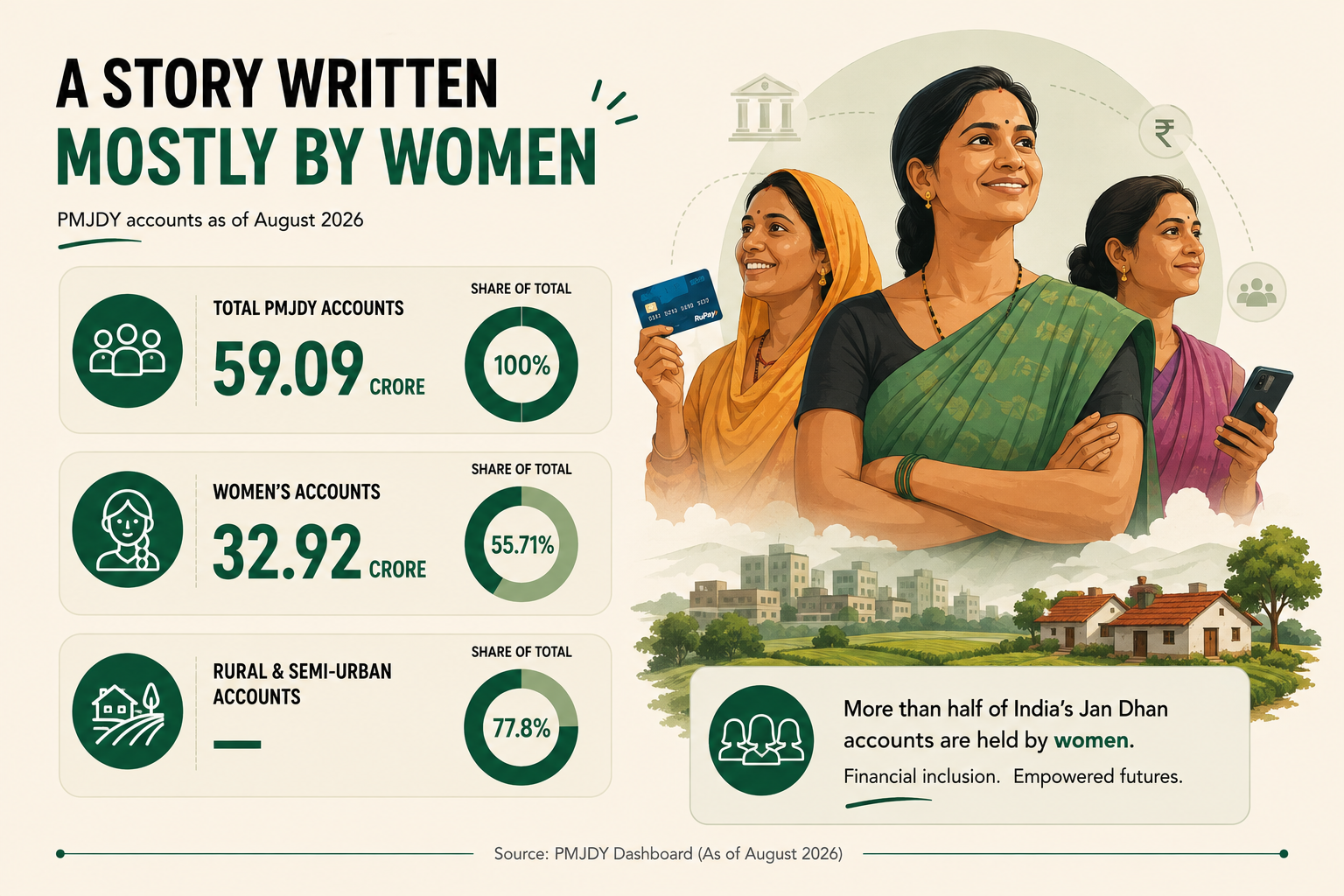
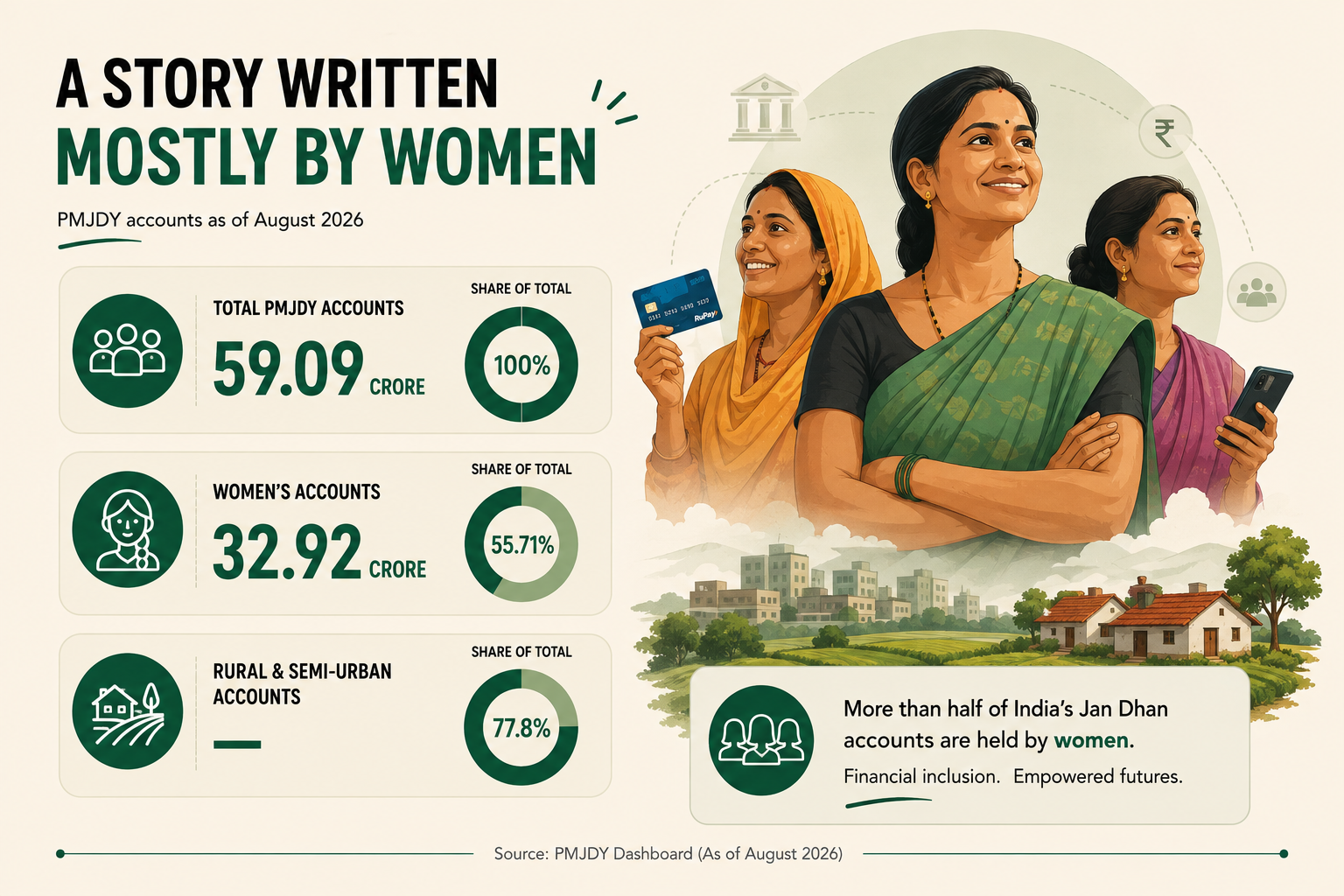
A Story Written Mostly by Women Strip away the aggregate numbers and one fact stands taller than the rest: nearly 33 crore of the 59 crore Jan Dhan accounts belong to women. Almost 78 per cent of all accounts sit in rural and semi-urban India. Put those two facts side by side and the scheme stops looking like a banking programme and starts looking like something closer to a quiet social movement – a rural woman, for the first time, holding money that a husband, a father, or a moneylender cannot simply take. The Capital Nobody Priced In Zoom out far enough and ₹3.16 lakh crore is sitting inside these accounts today. That is not spare change parked by the wealthy; it is wages, pensions, and subsidies belonging to people who were never supposed to have a formal financial identity. That money now sits inside the banking system, available to be lent, invested, counted as part of India's financial architecture. Twelve years ago, this population was seen as too poor to matter to a bank's balance sheet. Today, without much fanfare, they are quietly funding it. There's an old word for this idea ‘Antyodaya’, the upliftment of the person standing last in the queue, the one everyone else forgets to count. Jan Dhan was built on that word, and 12 years later, the ledger actually backs it up. The real anniversary here isn't the scheme's. It's the quiet one, the moment when a family that once hid money under a mattress decided, instead, to leave it in a bank and trust it would still be there tomorrow. Twelve years later, for 59 crore accounts and counting, the trust is the biggest outcome of Jan Dhan Yojana.