The many threads of India's handloom story
Visualisation
At a Glance
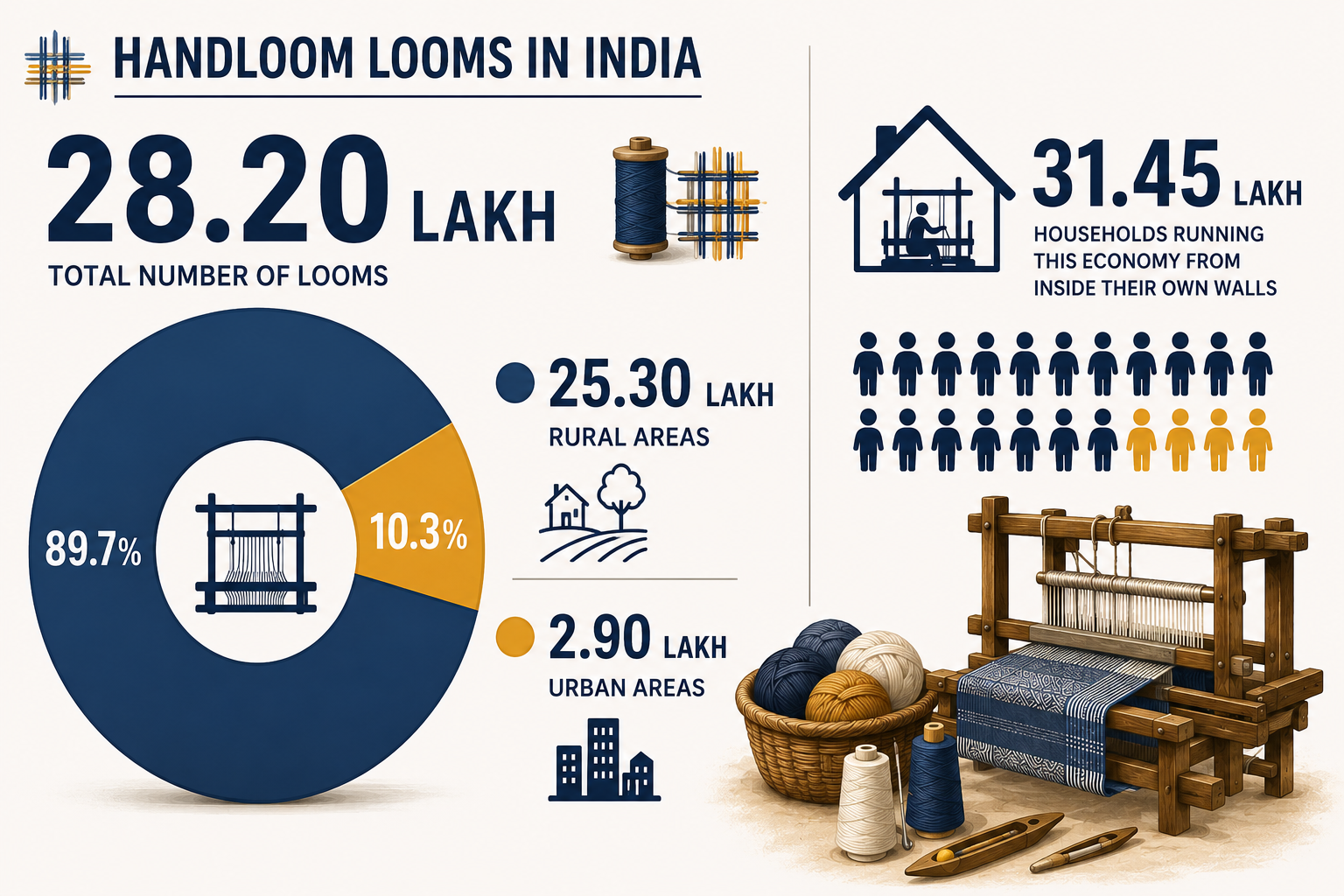
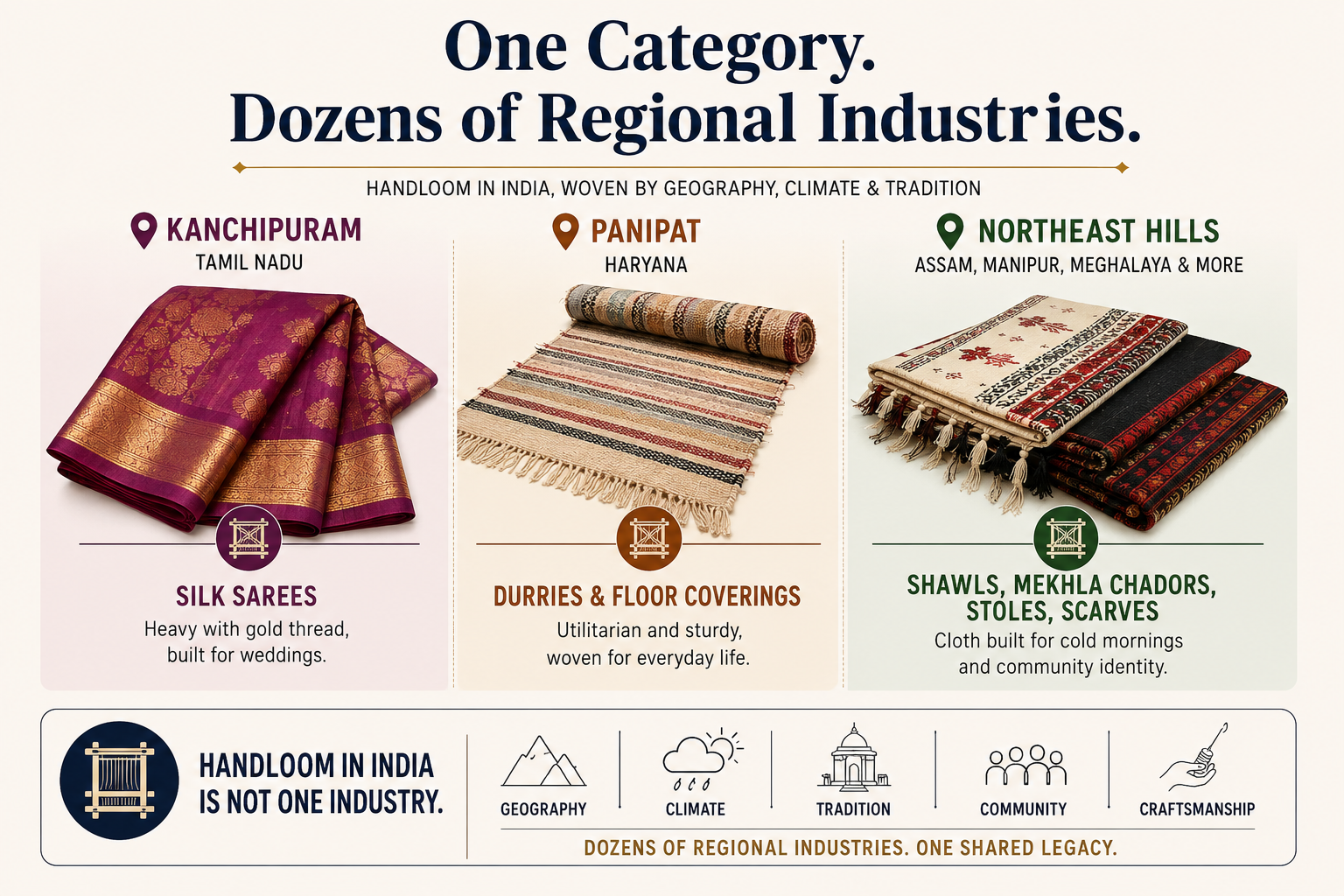
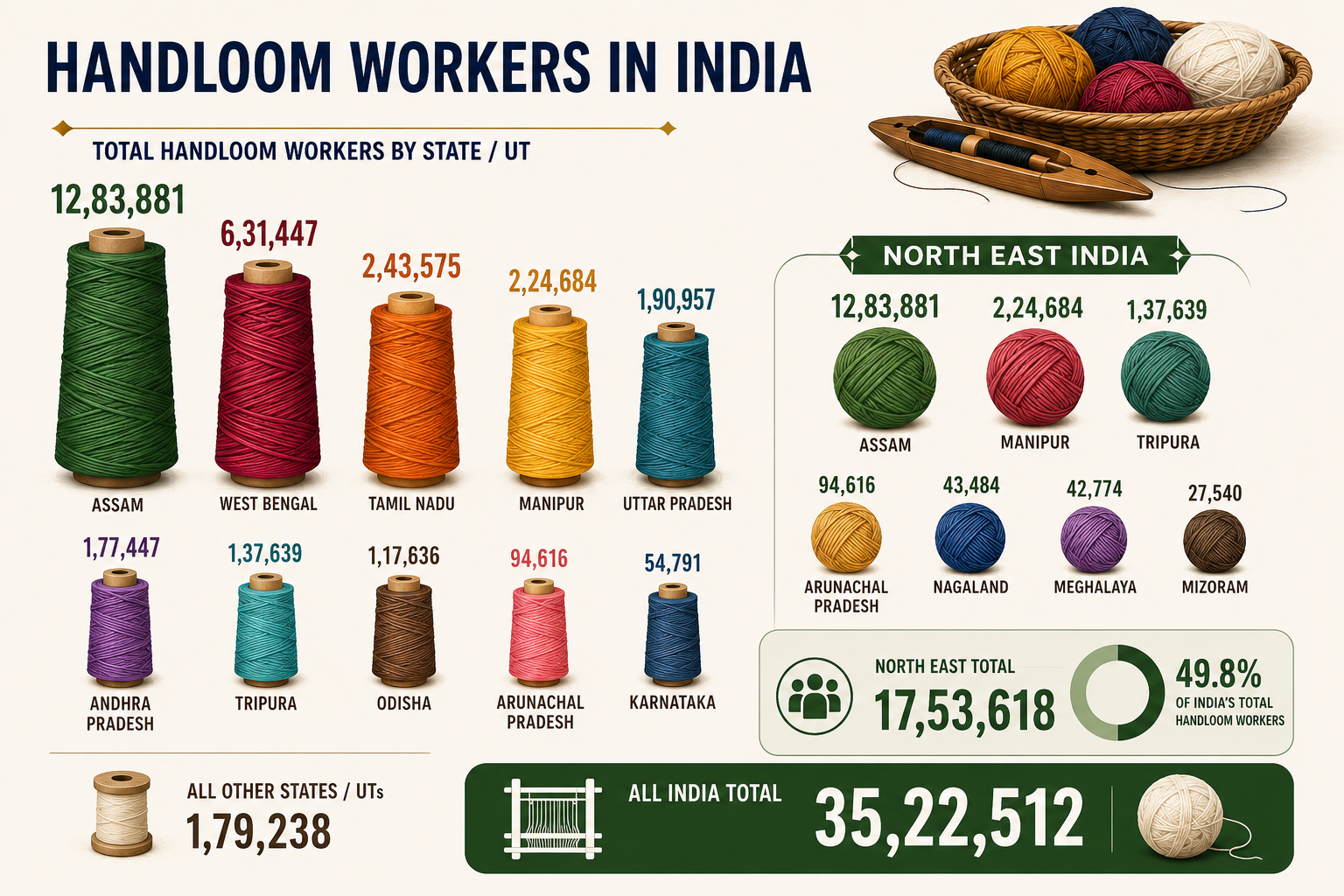
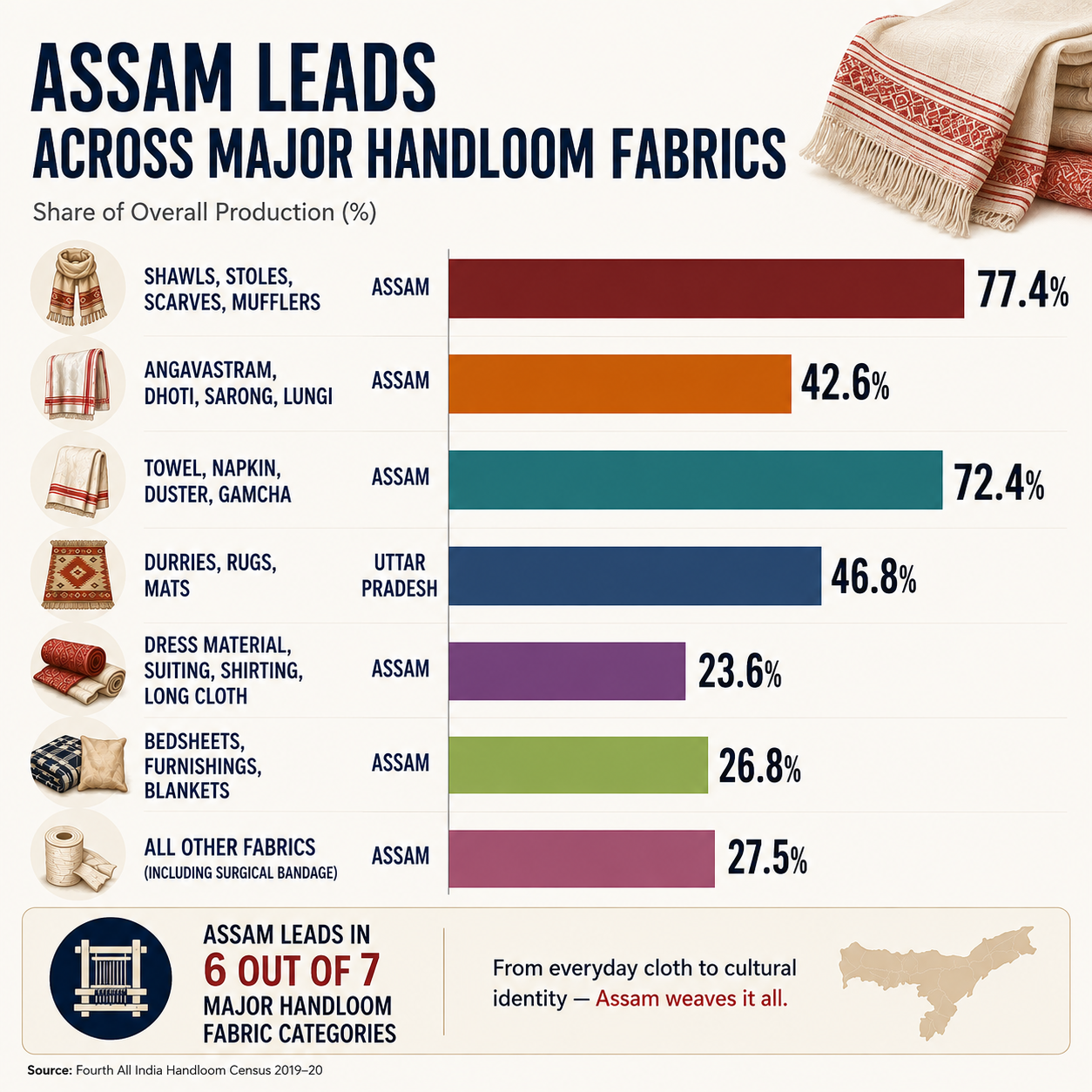
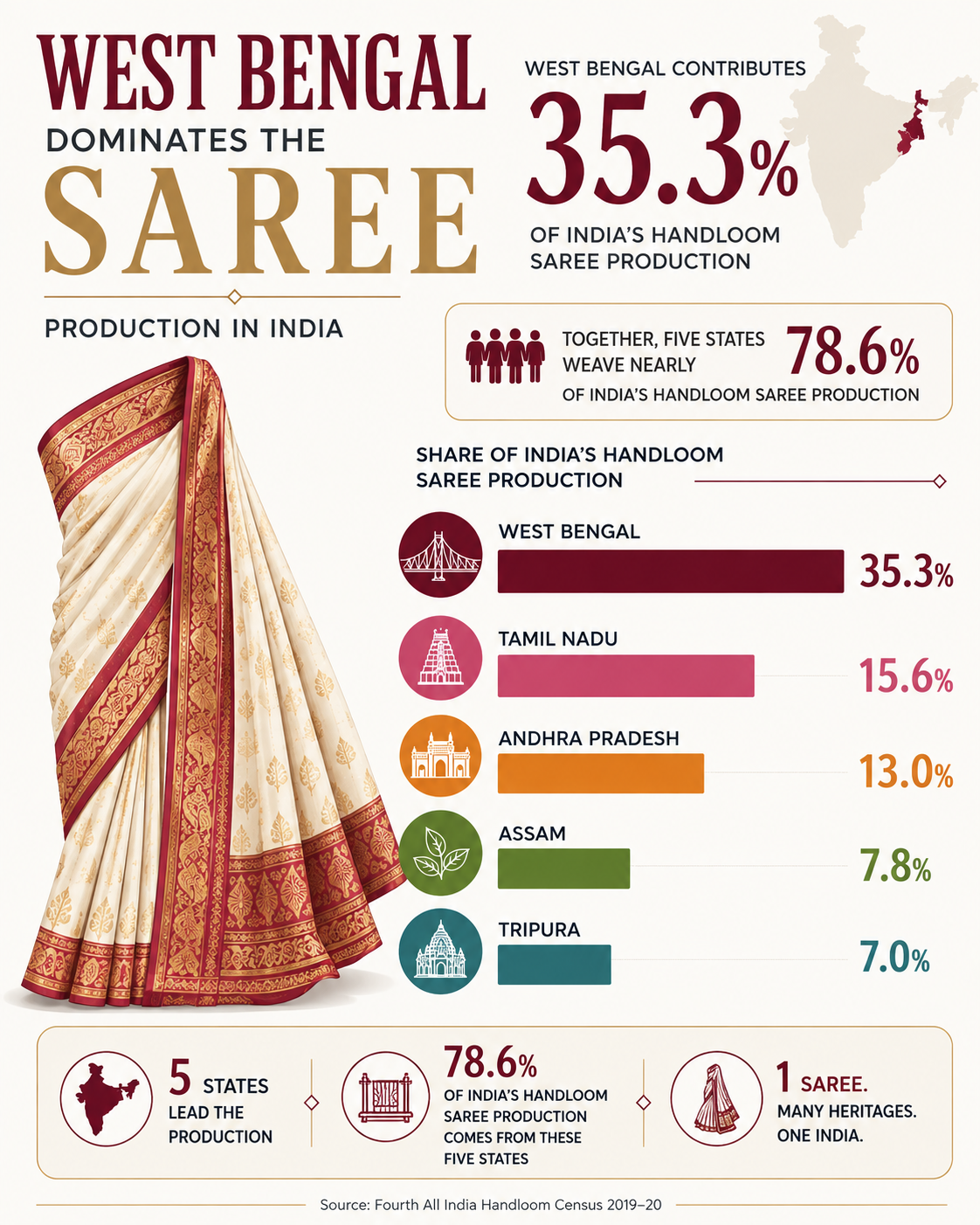
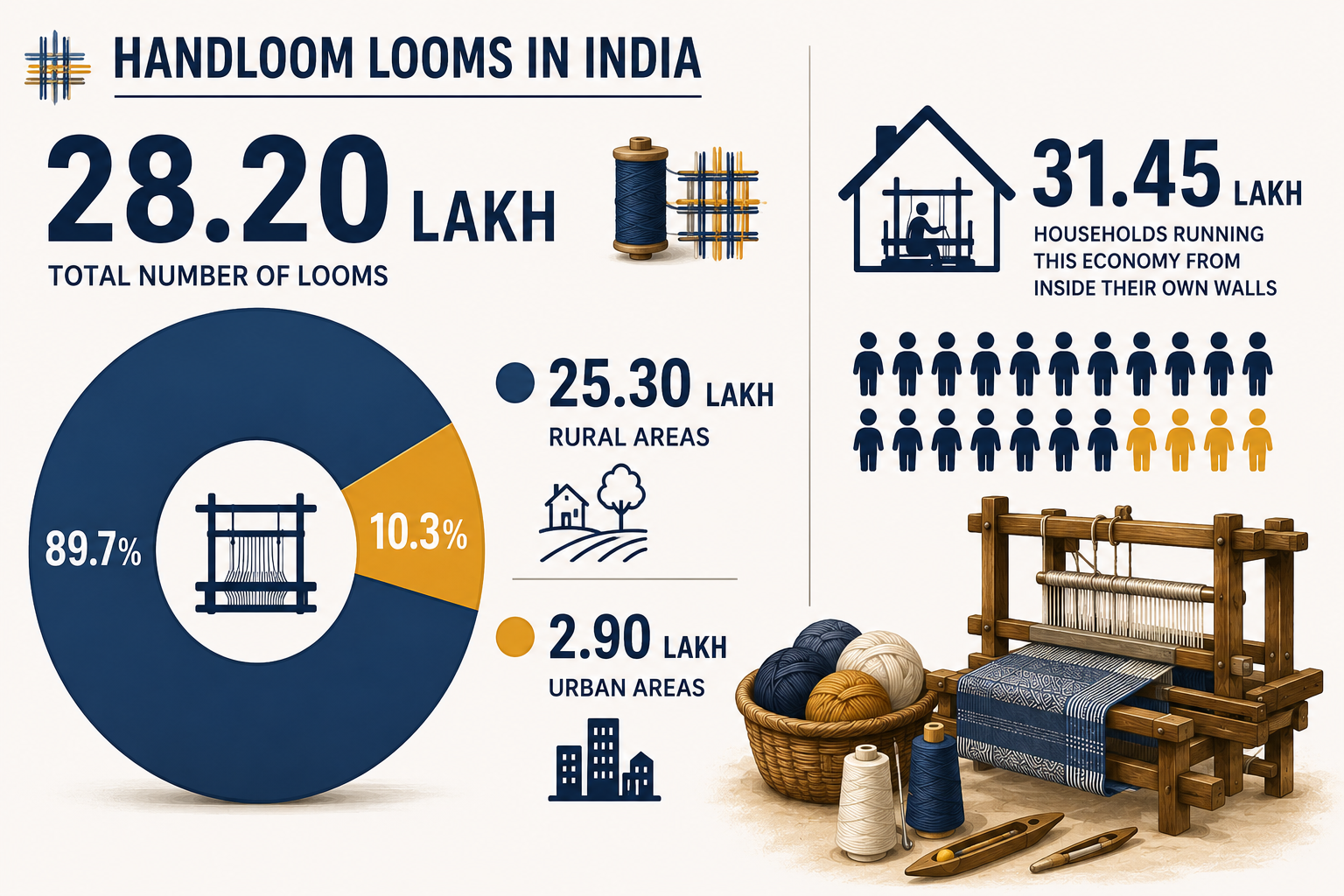
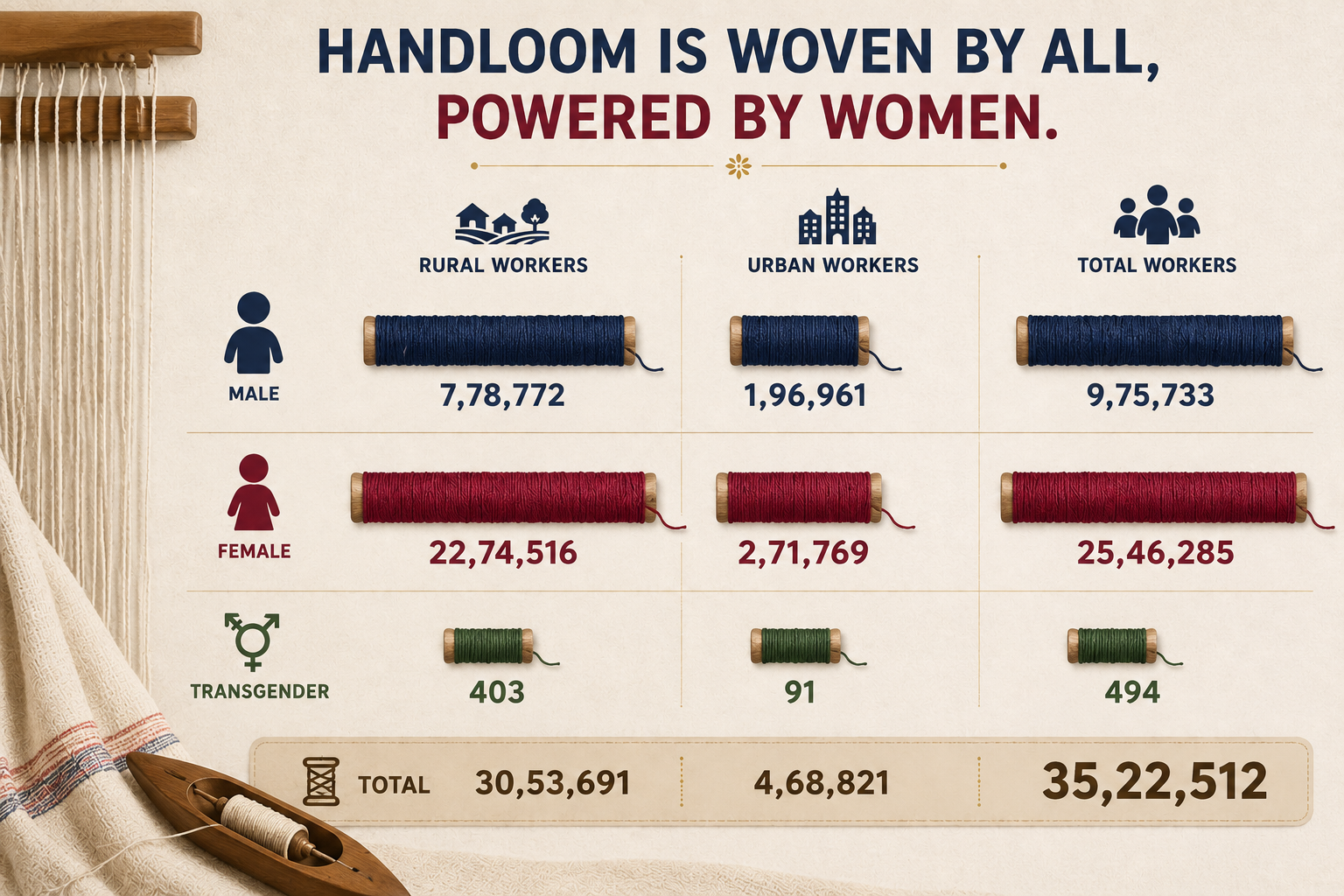
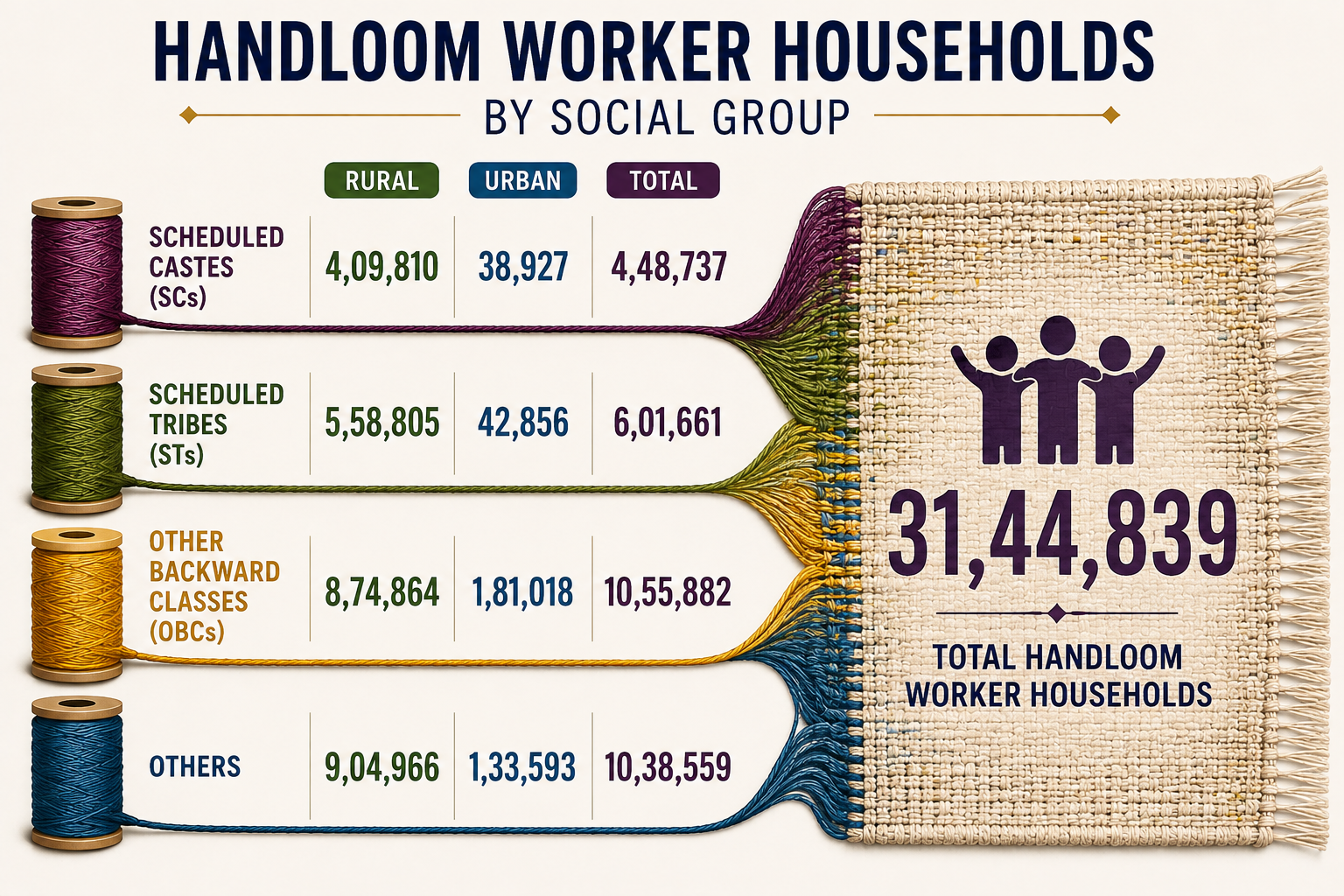
Before the sun clears the tea gardens, the loom is already at work. In a bamboo-stilted house somewhere along the Brahmaputra, a woman settles behind her loom, her feet finding the pedals by memory and her hands sending the shuttle back and forth in a rhythm shaped by years of practice. There is no factory siren here, no shift change, no punch card. The workplace is the home. The machine is furniture. And by the time the country wakes up and starts arguing about GDP and exports, she has already made something that will outlive both. This is where India's handloom story actually begins not in a ministry report, but in rooms like hers, repeated a few million times across the map. And when you finally step back and look at all those rooms together, a pattern emerges that no single weaver could ever see from her own doorway. Every region has its own textile fingerprint Ask a weaver in Kanchipuram what they make and the answer is almost reflexive silk sarees, heavy with gold thread, built for weddings. Ask someone in Panipat and you'll hear about durries and floor coverings, utilitarian and sturdy. Ask in the hills of the Northeast and the answer widens into shawls, mekhla chadors, stoles, scarves cloth built for cold mornings and community identity. Handloom in India was never one industry wearing different regional costumes. There are dozens of regional industries that happen to share a category, each one shaped by geography, climate, and centuries of local habit. The Northeast punches far above its size The Northeast may account for a relatively small share of India's population, but its presence in the handloom sector is disproportionately large. Assam alone is home to nearly 12.8 lakh handloom workers, more than a third of India's total handloom workforce of about 35.2 lakh. Assam is the heart of India's handloom economy The scale of that claim only becomes visible once you stop looking at any single product and start looking at the whole basket. A third of India's 35.22 lakh handloom workers live in Assam alone, a bigger share than West Bengal, Tamil Nadu and Manipur hold between them. Walk through the other categories towels and gamchas, bedsheets and furnishings, dress materials, and dhotis, even the miscellaneous "everything else" bucket and Assam's name keeps appearing at or near the top, again and again. West Bengal dominates the saree Nine hundred kilometres south-west, along the Bengal delta, the same instrument tells the opposite story. About a third of every handloom saree woven in India comes off a Bengal loom, a state that went deep instead of wide, refining one form for centuries until it became inseparable from its own name. Handloom is India's largest home enterprise Step back from the state-by-state map and a bigger truth surfaces, one that changes how the word "industry" should even apply here. Handlooms in India have no central campus, no assembly line, no single employer's name on a gate. Of India's roughly 28.2 lakh looms, close to 90 percent sit in rural homes, not factories. The handloom census counted 31.45 lakh households running this economy from inside their own walls. This is, more accurately, the country's largest home-based enterprise: millions of individual households, each simultaneously a workplace, a training ground, and a family. Women are the backbone Behind most of those doors sits a woman. The handloom census only confirms what any weaving village already knows. Of the 35.22 lakh people it counted, 25.46 lakh are women, more than seven in every ten. This is worth sitting with for a moment, because it inverts a lot of assumptions about how Indian rural economies are supposed to work. Nobody designed a scheme that put women at the centre of this craft. The handloom sector did not include women as an afterthought. In large parts of rural India, it was built around them from the start.She isn't the exception keeping this economy alive. She is most of it. Craft that belongs to no one, but to everyone The social composition of India's handloom sector is equally diverse. OBCs account for about 33.6 per cent of handloom households, followed by general-category families at 33 per cent, Scheduled Tribes at 19.1 per cent and Scheduled Castes at 14.3 per cent. The figures underline how widely weaving is spread across social groups. It has evolved in different regions and communities, with skills, techniques and designs passed down through generations. The loom, in that sense, has been a shared part of India's social and cultural fabric. That is the older story the loom keeps alive: unity that never asked for uniformity. A wooden frame never checked anyone's lineage before letting them work. Land could be denied, capital could be denied, but a loom, once in the house, simply stayed, passed hand to hand, indifferent to hierarchy. The thread here isn't cotton or silk. It's the idea that a civilisation holds together not by sameness, but by giving every community a seat at the same loom.
Sources
Tags
Frequently Asked Questions
How many people actually work in India's handloom sector?
Around 35.22 lakh people, according to the census, making it one of the largest home-based workforces in the country, not a boutique cottage industry.
Is handloom mostly a women's occupation?
Yes. Women make up more than seven in every ten handloom workers, roughly 25.46 lakh of the 35.22 lakh total, often as primary earners working from home.
Why does Assam dominate the conversation around handloom?
Because it isn't dominant in just one product. Assam leads in shawls, towels, bedsheets, dress material, and more, nearly 13 lakh workers strong, roughly a third of India's entire handloom workforce.