The Vastness of India's Electoral Footprint – Part One
Visualisation
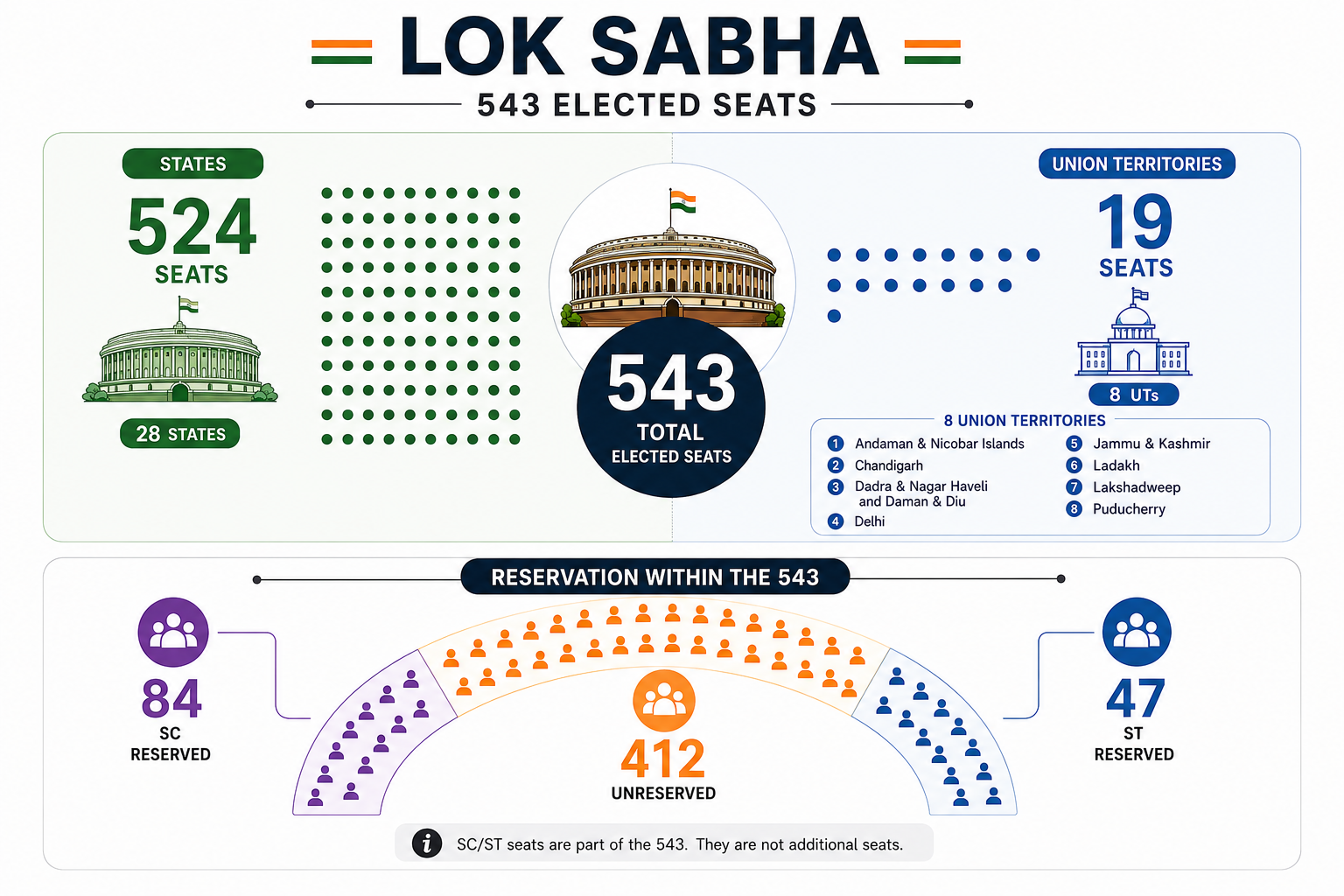
At a Glance
Long before apartment towers rose over our cities, Indian families often lived in sprawling ancestral homes. One courtyard. One kitchen. One roof. But many families.
Every branch of the family had its own little world. An uncle's family occupied the first floor, another lived upstairs, and grandparents stayed in the oldest room facing the courtyard. They raised children differently, argued over little things, and celebrated festivals together Yet whenever something truly mattered at a daughter's wedding, the sale of farmland, repairing the old house after the monsoon, or settling a dispute everyone gathered in the same room.
Not every voice carried the same weight. The branch with 15 people naturally had a greater stake than the branch with three. Nobody called it discrimination. It was simply understood: larger families represented more people. That was how the house remained together.
India's Parliament works much the same way. Only the house is unimaginably larger. A house with 543 voices. Imagine a home so large that it stretches from Kashmir to Kanyakumari and from Kutch to Kohima.
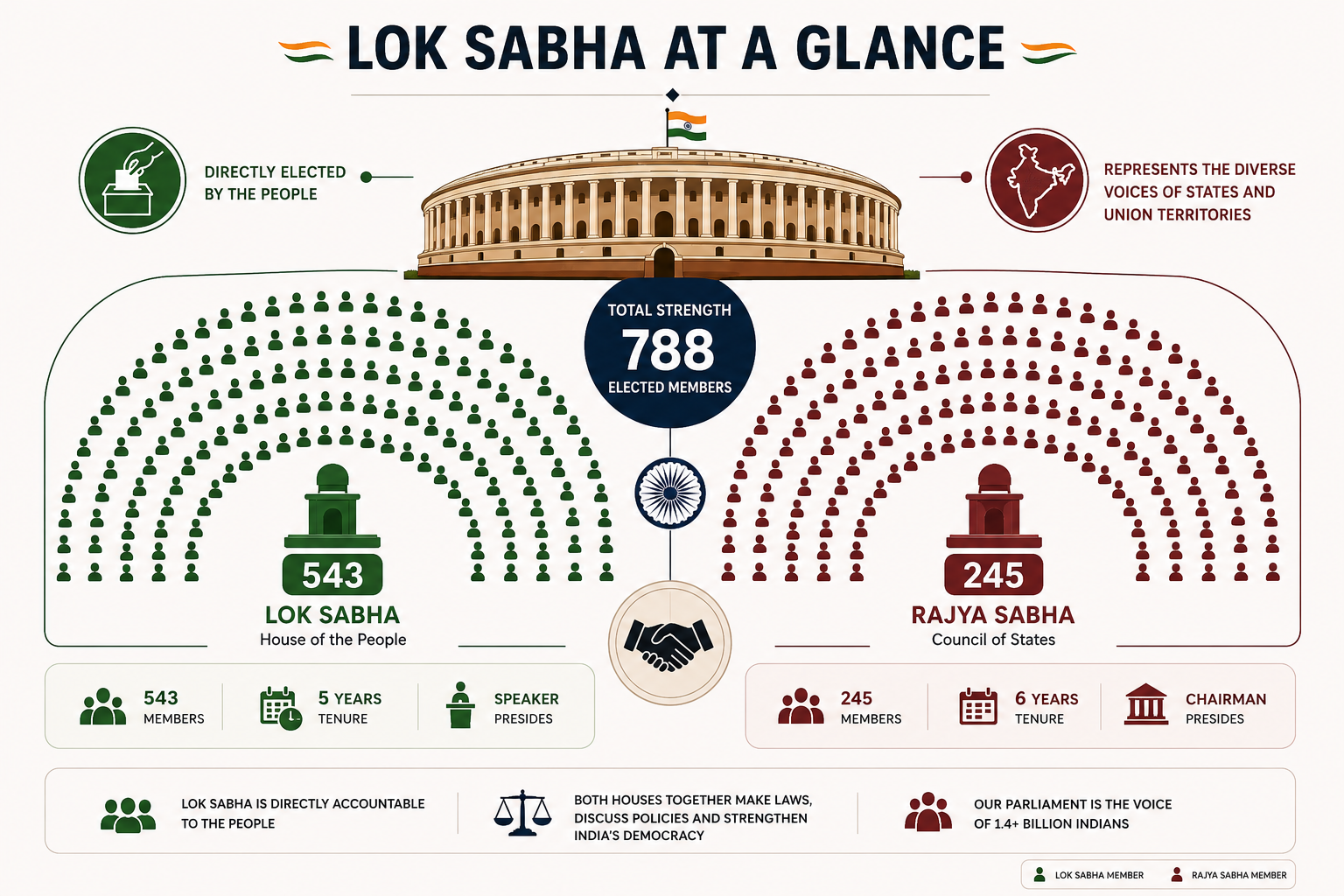
This House is Lok Sabha, where 543 elected representatives gather. They come from every corner of India, carrying with them the hopes, frustrations and aspirations of the people who elected them to represent the electors.
The Constitution allows this chamber to increase to 550 members, but today it remains at 543. Until 2019, two additional members represented the Anglo-Indian community through nomination. That chapter closed with the 104th Constitutional Amendment.
How the numbers actually add up
The Constitution's Article 81 currently caps the Lok Sabha at 550 members: up to 530 elected from the states and up to 20 elected from the Union Territories. Until January 2020, the cap stood at 552, because it also included two seats the President could fill by nominating members of the Anglo-Indian community. The 104th Constitutional Amendment ended that nomination, bringing the ceiling down from 552 to 550.
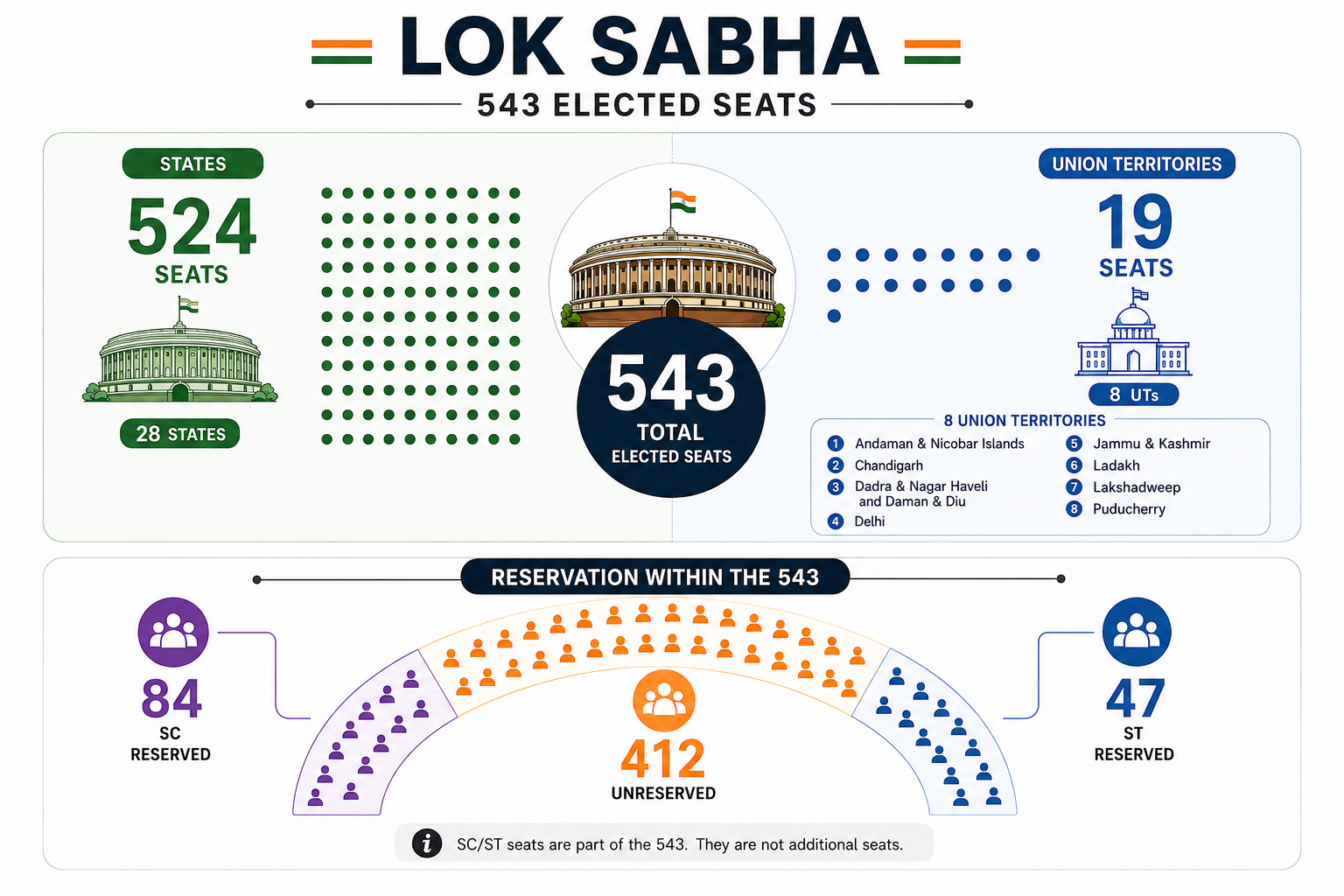
But the House doesn't actually use its full ceiling. Its current elected strength is 543 530 members from the states and 13 from the Union Territories, not the full 20 the Constitution permits. That's the real story behind the "missing" seats: they were never filled in the first place, not because of any hidden category.
The ‘Rajya Sabha’
Also called the Upper House, the ‘Rajya Sabha’ is calmer, less noisy, almost like the gathering of elders in an old family home. Most of its 245 members are not elected directly by the people but chosen by the elected members of state assemblies, and nominated. They arrive not through mass campaigns but through the confidence of their respective states.
Together, these two Houses bring nearly 800 people under one roof to steer the affairs of the world's largest democracy.
Some families hold more rooms than others
Walk through any old ancestral house and you'll notice something interesting. One branch occupies an entire wing. Another manages with just two rooms. Not because one family is more important than the other but because one simply has more people. India’s electoral system follows the same principle. Uttar Pradesh, home to more than 24 crore people, sends 80 members to the Lok Sabha and 31 to the Rajya Sabha. It occupies the largest political space in Parliament. Maharashtra holds 48 seats, West Bengal 42, Bihar 40, and Tamil Nadu 39 in Lok Sabha. These established, populous branches of the household have a long-standing say in courtyard matters. The smaller but important part of the family – Sikkim, Mizoram, and Nagaland – each send one representative to the Lok Sabha. Who measured these rooms? Every family evolves. Children are born. Some members move away. Others return. If the rooms in a house never changed while the family kept growing, sooner or later someone would find themselves sleeping in the corridor. That is why India conducts a Census every 10 years. After every Census, a Delimitation Commission is expected to redraw parliamentary constituencies so that the representation reflects where people actually live. For the first few decades after Independence, this happened as intended. Then came 1976. India made an unusual decision. The government froze the distribution of Lok Sabha seats using the 1971 Census. Chart: A reasoning was given. States that had successfully controlled population growth should not lose political influence simply because they had fewer births. Nor should states with rapidly rising populations automatically gain more seats. So the floor plan of Parliament was frozen, not for 10 years but till the year 2000. Later on, extension was given to this arrangement. Even when constituencies were redrawn in 2008, only their boundaries changed. The number of seats allotted to each state remained exactly where it had been in 1971. Overall, 50 years have passed by, the population has grown everywhere but representation remains frozen for 50 years. A House That No Longer Matches The Residents’ Growth Fifty years is a very long time. Children become grandparents. Villages become cities. States transform completely. Yet the parliamentary map has remained tied to parameters that existed half a century ago. Some states have grown enormously. Others have stabilised their populations. The rooms, however, stayed the same. Today, Parliament is preparing to reopen that long-locked conversation. The proposed Delimitation exercise could expand the Lok Sabha from 543 seats to around 850, while redistributing representation using more recent population figures, likely based on the 2011 Census. As India edges closer to delimitation, the arithmetic of representation has ignited a fierce political debate. While northern heavyweights like Uttar Pradesh are projected to see a substantial surge in Lok Sabha seats due to raw demographic expansion, official assurances from Union Home Minister Amit Shah maintain that southern states will not face a absolute seat reduction. Under proposed plans to expand Parliament's total capacity, the South is set to gain seats overall. Twenty-Eight heads of household Step outside Parliament and another layer of the story appears. India is not governed from Delhi alone. Each of the country's 28 states runs its own household. Each has its own Chief Minister. Its own cabinet. Its own legislature. Its own priorities. Some assemblies are enormous. Uttar Pradesh has more than 400 MLAs, making it one of the largest elected legislatures in the world. Others are intimate enough that every legislator could recognise every colleague without glancing at a nameplate. Different sizes. Different politics. Different problems. Yet every one of them forms an equal part of the Republic. That may be the quiet genius of the Indian Constitution. It understands that governing a family of five and governing a family of fifty require different arrangements but both are still families. Somewhere among these 28 households is one so small that its entire governing family could gather comfortably in a single room and yet it makes every decision, signs every law, and holds every debate with the same standing as the largest household beside it. Which family is it, and what does it teach about running a home on a smaller scale? That conversation begins in Part Two.