What do post-SIR draft electoral rolls of Maharashtra reveal?
Visualisation
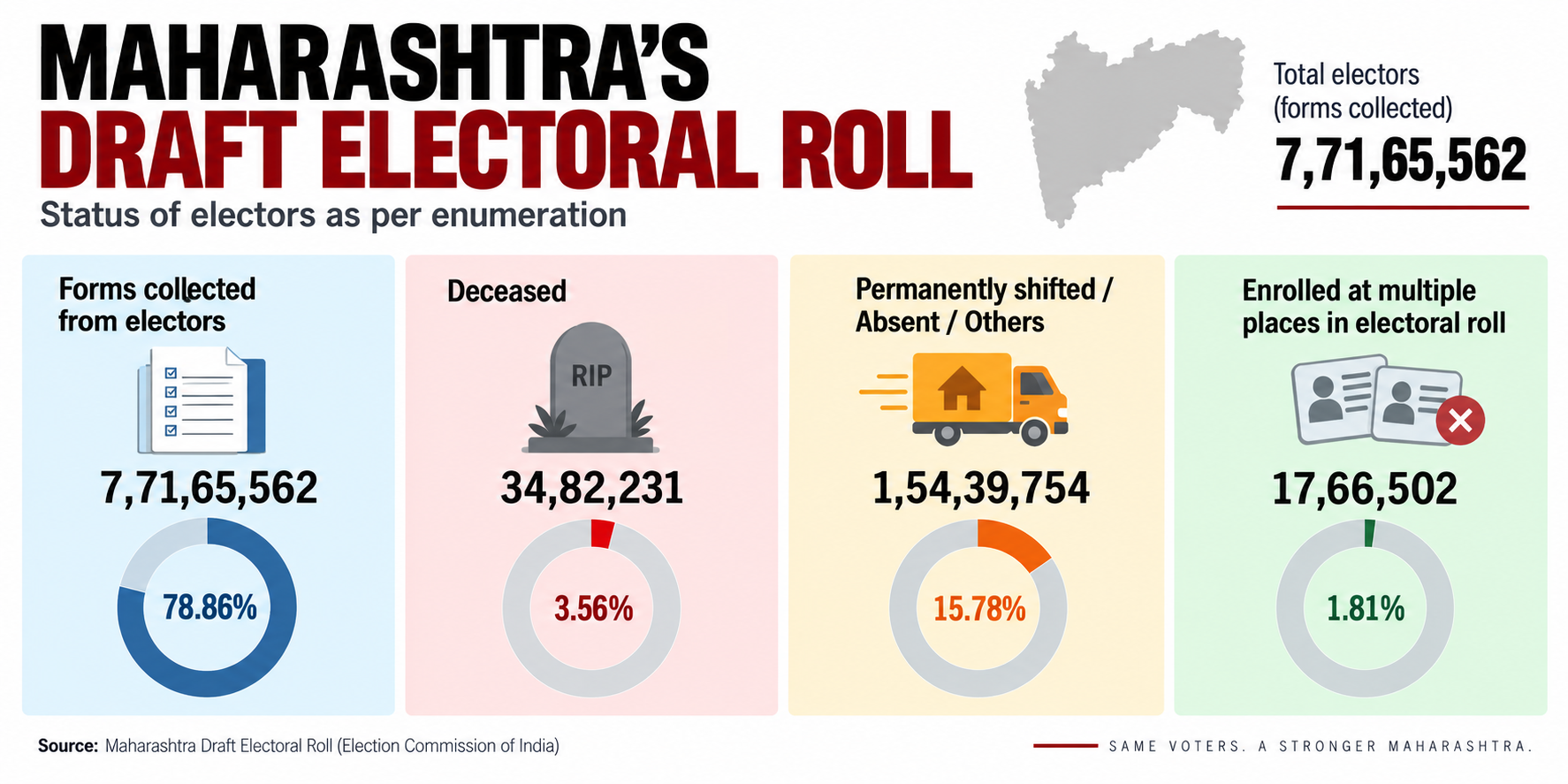
At a Glance
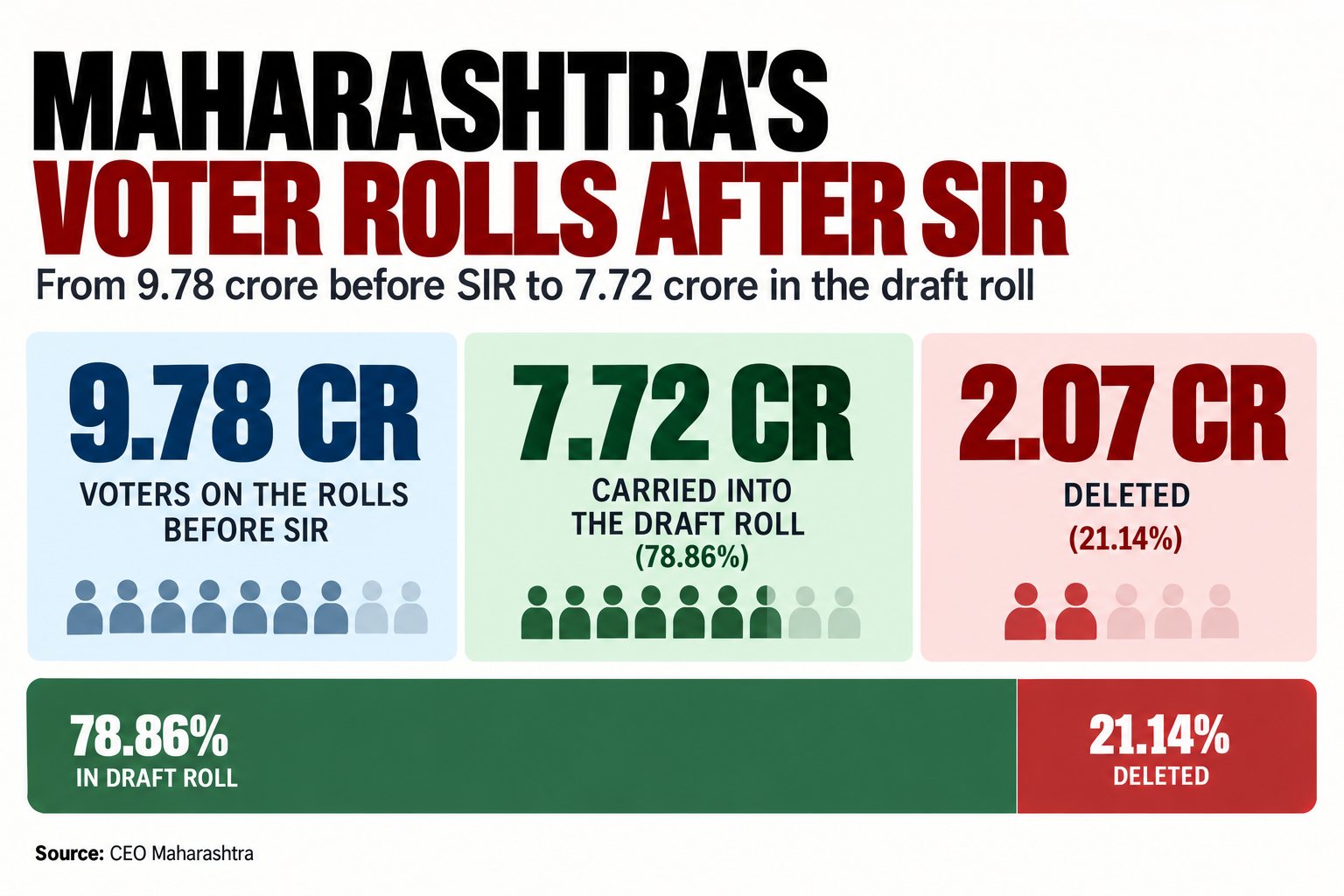
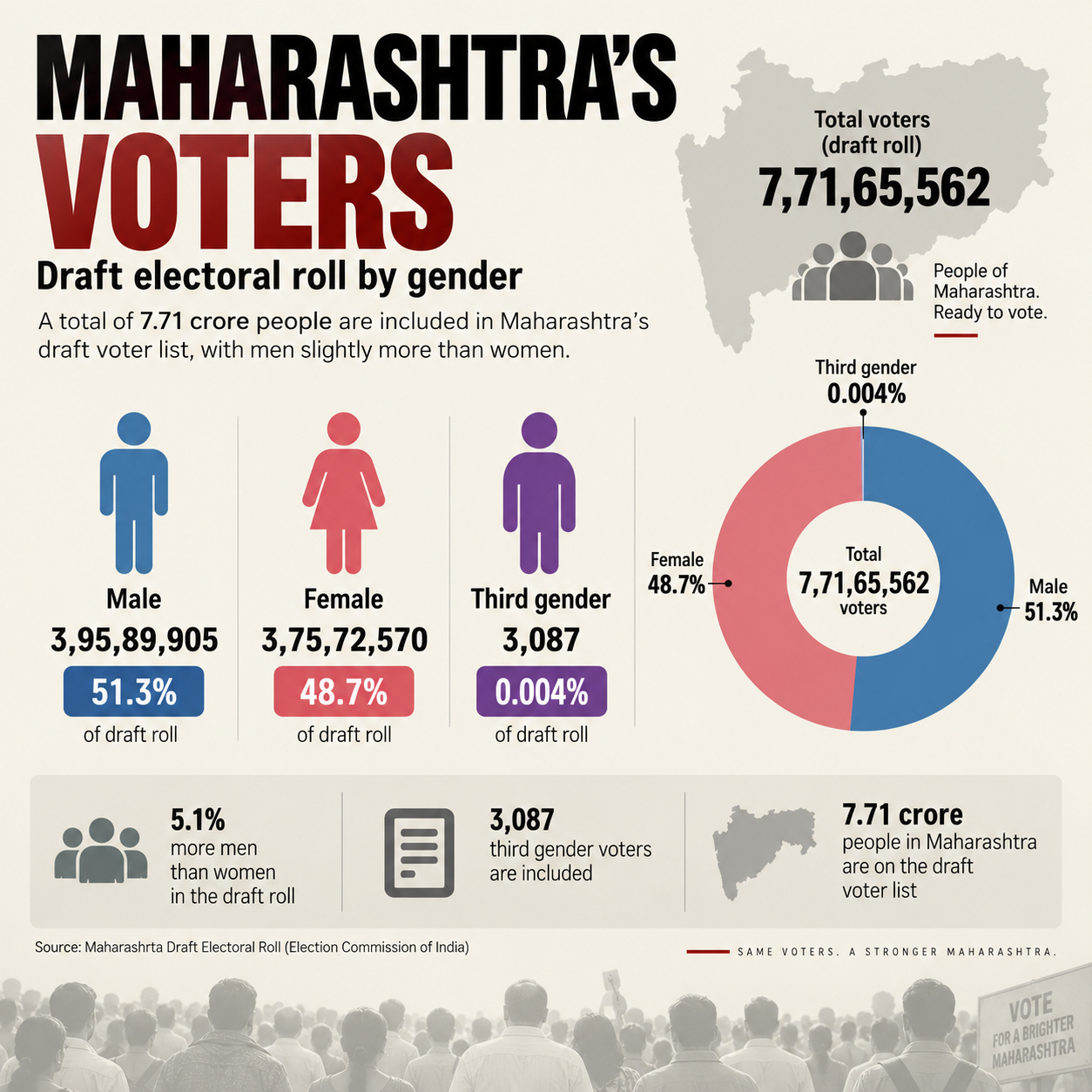
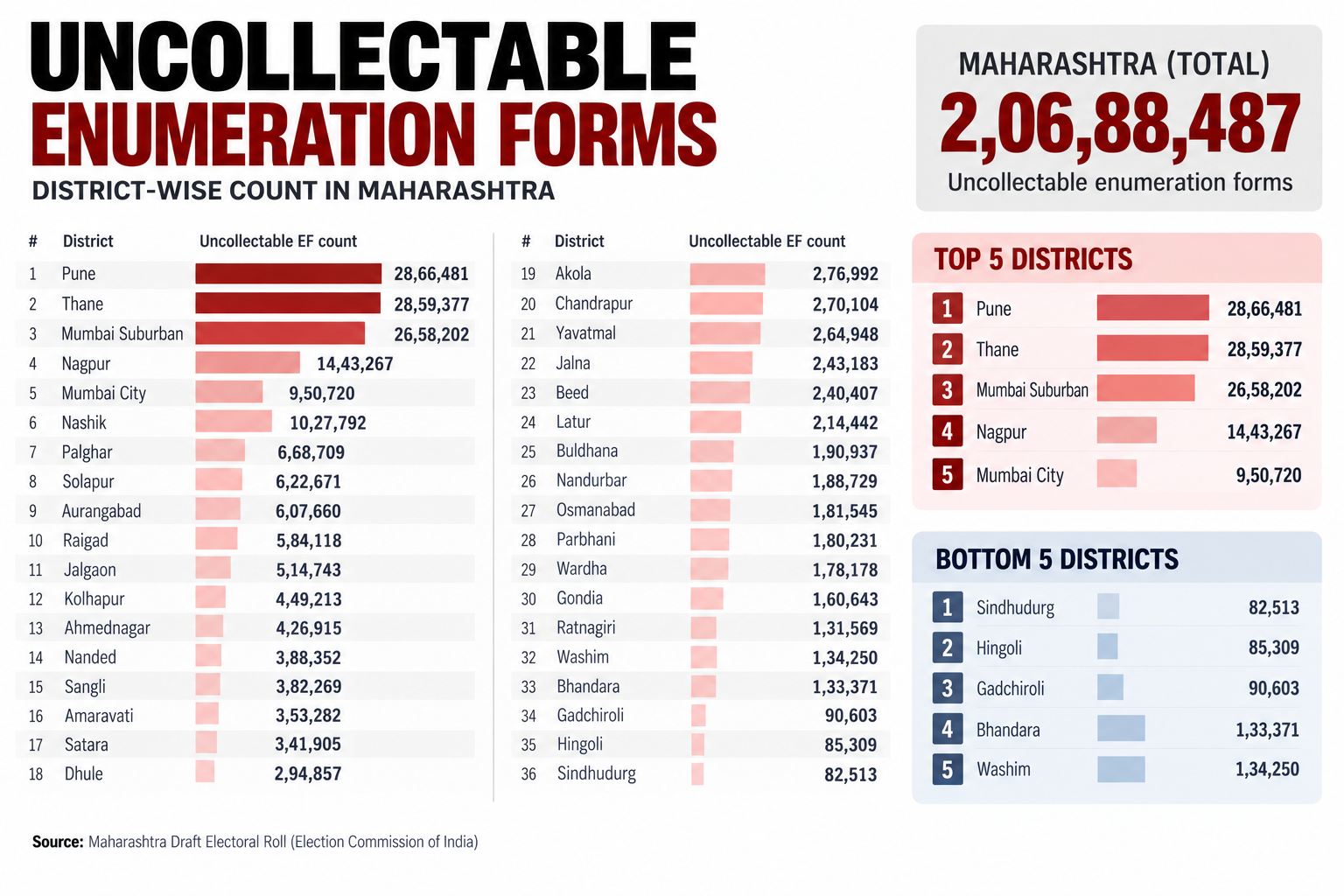
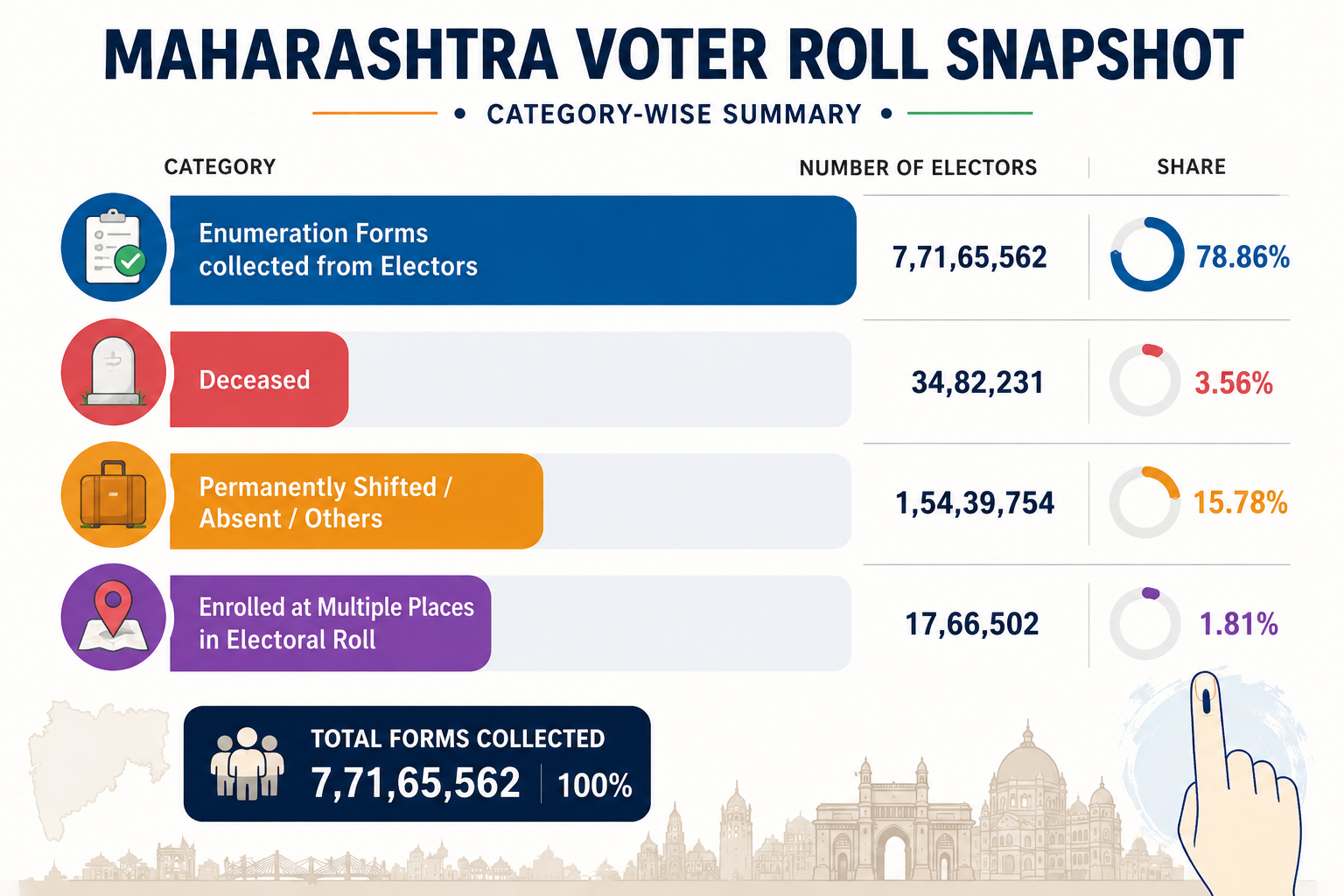
Every 25 years or so, the Election Commission of India undertakes a more intensive exercise than its routine annual voter list updates. Instead of simply adding new voters or making minor corrections, it asks every elector to verify their entry afresh. Maharashtra has now undergone one such Special Intensive Revision, or SIR after more than two decades. The exercise comes at a time when voter records, documentation and concerns over illegal migrants finding their way into the electoral rolls have drawn greater attention across the state. Authorities have reported cases involving suspected Bangladeshi nationals and Rohingya migrants, adding another layer to the debate over who appears on electoral rolls. From late June to mid-August, Booth Level Officers went door to door, verifying voters against the existing electoral rolls and collecting fresh forms. The draft electoral roll was published on August 31. What changed, what was removed and what remained on the list is the story of importance for everyone. Reading The Topline Numbers Start with scale, because scale is where this story lives. Before this revision, Maharashtra's electoral rolls carried 9.78 crore names. After it, the draft carries 7.72 crore. The difference, 2.07 crore, is not a rounding error or a clerical slip. It is one in five voters, state-wide, whose paperwork simply did not come back in time. Break the draft down by gender. The list holds 3.96 crore men, 3.76 crore women, and 3,087 third-gender electors, a ratio of roughly 949 women per 1,000 men. That ratio only describes who made it into the draft. The state has not released a gender split for the 2.07 crore deleted entries, so this data cannot say, one way or the other, whether the drive was harder on one group than another. That gap in the data is worth remembering as the story moves to geography, where the pattern gets much easier to see. A City Problem, Mostly Not every district lost the same slice of voters post-SIR. Line them up by pending share, and one pattern jumps out fast: the widest gaps between the pre-SIR electorate and the post-SIR draft rolls sit in the biggest cities. Pune tops the list at 38%, followed by Mumbai City at 37%, Mumbai Suburban at 34% and Nagpur at 31%. The figures show some of Maharashtra’s largest urban centres recording the widest gaps between the number of voters before the SIR and that after the SIR. Flip to the bottom and the map turns rural. Hingoli holds at a 9% gap. Buldhana also 9%. Ratnagiri saw a gap of 10%. The least gap is in villages where families stay put for generations, and where the local booth officer already knows most households by name. In cases where voters were not found at the enrolled address, the officials point to migration as the simplest explanation. Rented flats change hands fast in cities. Tenants shift for work and forget to flag it by applying for change in electoral rolls. Locked doors mean missed forms. None of that needs bad intent behind it. It just involves busy lives colliding with a tight deadline. Why were the names deleted? The 2.07 crore excluded from the draft electoral rolls now isn't one uniform category, and splitting it open changes the read on the whole exercise. Permanently shifted, absent, or otherwise untraceable voters account for 1.54 crore of them, nearly three-quarters of everyone left out. Deceased voters make up 34.82 lakh, about 17% of the shortfall. Multiple enrollment, the same person listed at more than one address, accounts for just 17.66 lakh, under 9%. Read against the whole prior electorate of 9.78 crore, the above factors mean that people who moved and never updated their entry constitute well over double the combined effect of deaths and duplicate listings. The data points toward migration as the dominant driver of the gap, not the smaller, more finite categories of death or duplication. What if your name is missing from SIR? First things first, don’t panic. Seeing your name missing from the draft roll does not mean your vote has disappeared. There is still a window to fix it before the final list is locked. There are steps that you can take before September 30, 2026. Let’s check what these steps are. 1. Check before you worry. 2. Name missing? File Form 6. 3. Turning 18 by October 1? 4. Name is there, but something is wrong? And yes, the dates matter. Claims and objections close on September 30. Officials will process them through October 29, with the final electoral rolls scheduled for November 4. So if your name is missing from the draft rolls, don’t assume you have been deleted permanently. Check first, file the right form, and give the system a chance to fix it. Why SIR is Important Maharashtra’s last ground up revision of this kind was carried out in 2002. Since then, more than two decades of deaths, permanent migration and duplicate registrations have created the possibility of outdated or overlapping entries that routine annual revisions may not fully address. The Election Commission’s stated objective is to identify and remove names of people who have died, permanently shifted or appear more than once, while ensuring that eligible citizens who have turned 18 or were previously missed are included. The exercise also comes amid concerns over undocumented migrants and their presence in electoral rolls. During the 2024 Maharashtra election period, a TISS professor had said that illegal migration from Bangladesh, Myanmar and Pakistan was affecting Mumbai’s electoral politics. A TISS study also examined claims about undocumented migrants possessing voter IDs and influencing electoral outcomes. These findings faced criticism over methodology. Therefore, they should be presented as reported concerns rather than established evidence. The SIR is, therefore, intended to create cleaner electoral rolls that more accurately reflect who is eligible to vote and where they are ordinarily resident. Four Steps To Take Before September 30, 2026
Search your name on the CEO Maharashtra portal https://ceoelection.maharashtra.gov.in/ceo/ or the ECI voter service app (https://www.eci.gov.in/voter-helpline-app ). Your EPIC number is the easiest way, but basic details can work too.
If you cannot find your entry, Form 6 is the route back in. You can submit it online or through your Booth Level Officer or Electoral Registration Officer, along with the required declaration and documents.
This is your window too. If you are eligible to register as a first-time voter, Form 6 is the form you need.
Use Form 8 to correct details such as your name, age or photograph. If you want to object to someone else’s entry, that is Form 7.